Cotton stands as one of the world’s leading crops and is typically gathered in a single pass at the close of the season using mechanized systems. To support efficient collection and maintain superior fiber quality, growers usually apply defoliants once roughly 60% of the bolls have opened. Because of uneven ripening, early-opening bolls leave their fiber exposed to environmental conditions for extended periods—often several weeks—before harvest, which lowers overall quality. In addition, large-scale harvesters are quite heavy and can compress soil in their paths, thereby decreasing hydraulic conductivity in wheel tracks and ultimately lowering yields. In contrast, robotic systems employing smaller machines enable multiple harvests throughout the season and allow seed cotton to be collected shortly after boll opening, thereby protecting fiber quality. These lighter machines are also far less prone to causing significant soil compaction. For these reasons, studies have been conducted to identify and overcome various obstacles to developing a robotic cotton harvester. The present work specifically centered on creating a robotic end-effector capable of removing seed cotton from open bolls on non-defoliated plants. Multiple design ideas were evaluated, with several constructed as prototypes and subjected to experimental testing. The optimal solution was a three-finger, moving-pinned belt underactuated end-effector. An improved version of this end-effector underwent indoor evaluation on a robotic testbed featuring a computer-controlled three-degree-of-freedom arm. Results showed the device could retrieve 66-85% of the seed cotton from a boll, with picking times ranging from 4 s in a basic, lower-efficiency setup to 18 s in a more precise, controlled-movement configuration. Future directions from this work involve integrating a depth sensor to enable autonomous boll detection, localization, and arm control.
Cotton contributes over $120 billion in annual U.S. revenue, making it a vital part of American agriculture [1]. Nearly 99% of U.S. cotton is collected using large, heavy mechanical harvesters [2]. The staggered timing of boll opening throughout the season creates notable harvesting difficulties. Once approximately 60% of bolls are open, producers commonly apply defoliants to prepare plants for efficient removal [3]. Harvest normally occurs 10 to 14 days following defoliation [4]. While traditional cotton harvesters perform well, single-pass operations with massive equipment pose significant limitations. Since fields are harvested in one go, fiber from early-opening bolls may remain exposed to weather for as long as 50 days, resulting in considerable declines in quality [5]. These machines are extremely heavy—for example, a 6-row John Deere round module harvester weighs 30 t [6]. The resulting soil compaction in wheel tracks reduces hydraulic conductivity and crop productivity in affected zones [7]. Furthermore, the substantial investment required means that at least 600-800 ha of cotton must be available to make ownership of one machine economically viable [5].
In recent years, agricultural robotics has gained significant interest across various cropping activities, including weeding and harvesting [6]. During the last four decades, extensive efforts have focused on building harvesting robots to replace manual and conventional mechanical methods, primarily targeting specialty crops such as fruits and vegetables [8-13]. Although robotic cotton harvesters may not match the speed of today’s large mechanical units, they offer clear benefits, including reduced equipment and maintenance costs, selective harvesting, and more adaptable scheduling windows [5]. Such systems could visit fields several times per season and collect seed cotton immediately upon boll opening. This approach would improve lint quality, eliminate the need for chemical defoliants, and minimize losses from prolonged exposure to harsh conditions [5]. Moreover, compact robots would avoid heavy soil compaction, and coordinated groups of them could potentially substitute for a single large conventional harvester [14].
A typical harvesting robot includes a vision system for detecting and locating objects plus a manipulator that guides an end-effector responsible for the actual picking action. Attached at the manipulator’s tip (commonly a robotic arm), the end-effector detaches the target (here, seed cotton within the boll) from the plant and deposits it into a collection unit, making it central to overall harvesting success and productivity. End-effector designs utilize a wide range of mechanisms—such as soft fingers, vacuum suction, oscillating saws, electrical discharge, twisting or rotating fingers, scissors, pruners, and thermal cutters—for grasping and separation [15-18]. Given the unique physical and biological traits of each crop, most harvesting end-effectors are purpose-built [13]. Nevertheless, all designs must incorporate adaptability to handle varying sizes and positions of the target.
To date, no commercial robotic cotton harvester exists [8], and published research remained limited until recently, with most studies emphasizing navigation and boll detection. Fue et al. [19] developed a robotic cotton harvester based on a ready-made rover platform, employing a suction-based end-effector fitted with rotating gears at the tip for grasping seed cotton. They achieved an 89% success rate with a 17 s cycle per boll under simulated field conditions. Performance dropped to 79% success at 38 s per boll when tested in a real defoliated cotton field. Maja et al. [20] utilized a Husky robot (ClearPath Robotics, Inc., Kitchener, Ontario, Canada) and focused mainly on navigation. Their system lacked boll detection and used a fixed-nozzle suction end-effector without active manipulation. In India, the startup GRoboMac (http://www.grobomac.com/) [21] is working on robotic cotton harvesters and has produced an end-effector comparable to that of Fue et al. [19], though extensive field trials have not yet been completed. In general, research teams working on robotic cotton harvesting have relied heavily on vacuum assistance in their end-effectors. Table 1 provides an overview of the key features of these three robotic cotton harvesters.
Table 1. Comparison among three robotic cotton harvesters.
Parameters | Harvester [19] | Harvester [20] | Harvester [21] |
Success rate | 89% under laboratory conditions; 79% in field conditions | Not specified | Not specified |
Detection hardware/Technique | ZED camera integrated with YOLOv3 algorithm | No detection mechanism implemented | Stereo vision camera; detection technique not mentioned |
End-effector design | Suction pipe combined with a rotating gear mechanism | Suction pipe | Suction pipe integrated with rotating gears |
Manipulator configuration | 3-DOF system consisting of 2 linear actuators along with the robot movement | Manipulator not available | 3-DOF manipulator with 2 revolute actuators and 1 linear actuator |
Cycle time (s/boll) | 17 s in laboratory testing; 38 s in field testing | Not reported | Not reported |
Power consumption of the end-effector | 2.5 hp | Not reported | Not reported |
Seed cotton differs markedly from other fruits regarding its physical structure. Most fruits consist of a single solid body, allowing an end-effector to manage the whole item by gripping any section. In contrast, a mature cotton boll contains four to five separate “locks” of seed cotton [22], each holding multiple seeds attached to thousands of fibers (Figure 1). Attempting to harvest one lock often leaves portions of that lock or entire neighboring locks behind. Consequently, this study measures robotic harvester performance using a weight-based picking ratio for each boll. A minimum picking ratio of 30% was set for a design concept to be deemed viable.
 (1)
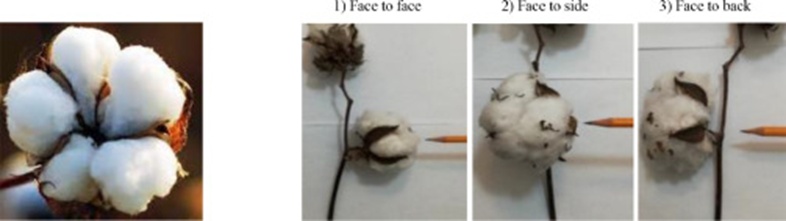
Figure 1. Left: a cotton boll with 5 locks; Right: possible orientations of a cotton boll on a plant: 1) the end-effector targets the face of the boll, 2) the end-effector targets the side of the boll, 3) the end-effector targets the back of the boll.
Since seed cotton lacks a single rigid structure, an effective end-effector must move the collected material from the harvest point to the storage area. At the same time, it changes shape, ensuring none remains on the plant or drops to the soil. Once the transfer is complete, the material must be released from the end-effector for collection. This release step is known as doffing.
When operating among undefoliated plants, leaves and stems create barriers that the end-effector must navigate to reach interior bolls. The device therefore needs to enter and withdraw smoothly through the plant’s outer foliage and branches.
Seed cotton resides inside the locks (Figure 1), while bolls themselves are surrounded by leaves, stems, and other plant parts. An end-effector with accurate targeting would extract only seed cotton, avoiding unwanted materials such as calyxes or stems.
The varied positions of cotton bolls on the plant further complicate effective collection. Figure 1 shows three common orientations relative to an approaching end-effector, with the pencil tip indicating the end-effector’s approach direction. The face-to-face position (case one) is optimal for removal, yet a capable end-effector must successfully handle seed cotton in all orientations.
Grasping only part of the seed cotton within a boll can cause stretching, resulting in the removal of just a limited amount while the remainder stays behind. To satisfy the listed design needs, the end-effector must continuously perform picking, transferring, and doffing to clear each boll of seed cotton fully.
Furthermore, practical deployment demands consideration of reduced power use and lower hardware expenses. Existing commercial and research end-effectors do not adequately suit robotic cotton harvesting, as they fail to tackle all the identified challenges. Hence, the main goal of this study is to develop and evaluate a new end-effector concept for robotic cotton harvesting. The specific aims are as follows:
1. To explore concepts and design, build, and test a preferred end-effector prototype for robotic cotton harvesting.
2. To test the prototype on a robotic platform to validate it against design requirements.
This investigation explored various concepts for the end-effector. Evaluation of the prototypes followed the flowchart shown in Figure 2. After reviewing manufacturing feasibility and projecting expenses to verify practicality and affordability, the decision centered on whether to build a basic prototype or use computer-aided design (CAD), based on production duration and cost. In numerous situations, a physical prototype was fabricated for the proposed idea. Any shortfall during the design phase triggered additional improvements to that specific approach, as shown in the optimization block in Figure 2. All prototypes underwent early assessment via trials involving 100 cotton bolls, where a picking ratio of 33% served as the lowest acceptable standard for deeming a prototype potentially workable. Figure 3 presents representative photos of the five main end-effector prototypes, and Table 2 compiles the trial outcomes.
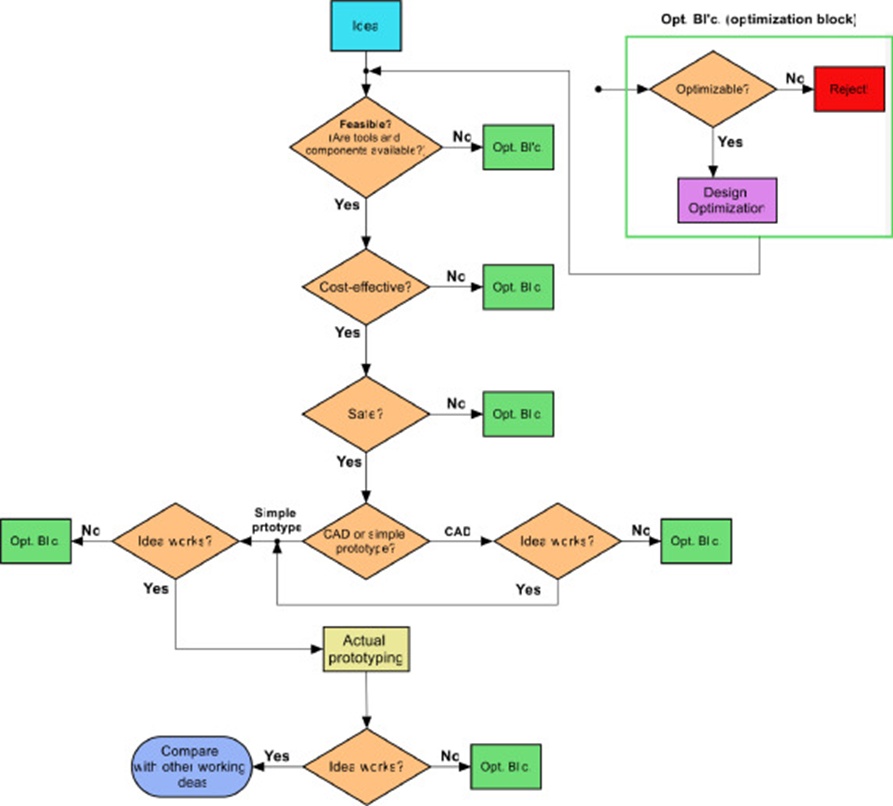
Figure 2. The flowchart of ideas evaluation; Opt. Bl’c: optimization block.
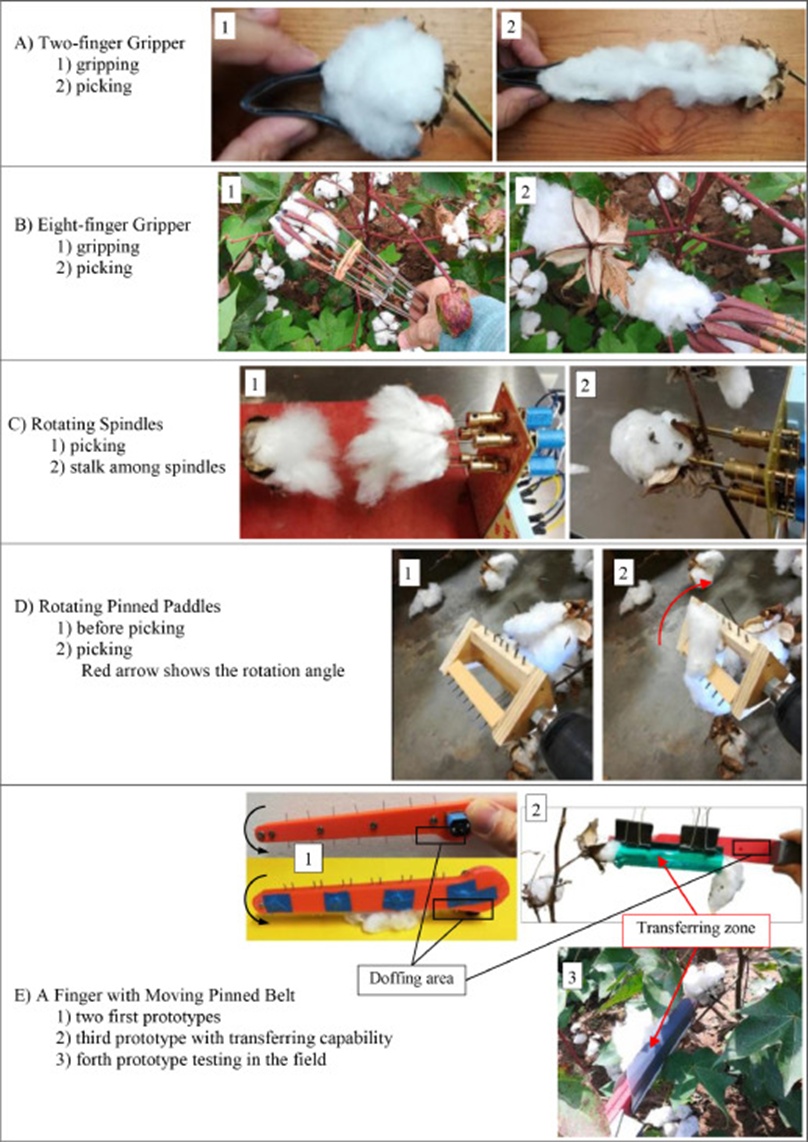
Figure 3. Five primary end-effector prototypes.
Table 2. Test results of five primary end-effector prototypes; the number of tested bolls and the number of attempts were 100 and 1, respectively.
Considerations | Meaning | A) Two-finger | B) Eight-finger | C) Rotating | D) Rotating Pinned | E) One Finger with | |||||
Picking ratio | Refer to Eq (1). | 22 | ✕ | 31 | ✓ | 57 | ✓ | 28 | ✕ | 39 | ✓ |
Transferring | a mechanism that transfers the | No transferring | ✕ | No transferring | ✕ | No transferring | ✕ | No transferring | ✕ | Had transferring | ✓ |
Doffing | removing the seed cotton | No doffing | ✕ | No doffing | ✕ | No doffing | ✕ | No doffing | ✕ | Had doffing | ✓ |
Penetration | penetrating through the plant | Not tested on | ✕ |
| ✓ | Branches went | ✕ |
| ✓ |
| ✓ |
Exit | The ability to come out of the | Not tested on | ✕ | It bent the whole | ✕ | Got stuck when | ✕ |
| ✓ |
| ✓ |
Targeting | Grasping just the seed cotton |
| ✓ | It grasped | ✕ |
| ✓ |
| ✓ |
| ✓ |
Boll orientation | The target bolls were at |
| ✓ |
| ✓ |
| ✓ |
| ✕ |
| ✓ |
loose and | The seed cotton got stretched |
| ✕ |
| ✓ |
| ✕ |
| ✓ |
| ✓ |
Other issues | - | - |
| It plucked off | ✕ | - |
| Pushing the boll | ✕ | Seed cotton got | ✕ |
Outcomes | The results to be considered | increase number of |
| Power gripping |
| Do not rotate |
| Move gripping |
| increase number of |
|
Robotic harvesting end-effector creation often begins by replicating human hand motions. For this reason, early development prioritized finger-based gripping tools. The opening proposal examined a pinching motion resembling a finger paired with an opposing thumb. To test the proposal, four layers of polyether ether ketone polymer were combined for an overall thickness of 1.7 mm. Sandpaper was applied to the contacting surface to produce a pivoting two-finger implement with strong friction, as depicted in Figure 3-A. This tool managed to secure seed cotton but showed poor removal performance, often seizing and extracting only a fraction of the seed cotton present in the boll (Table 2). As a result, the focus shifted to improving the picking ratio, likely by using additional active fingers.
Subsequent analysis focused on a gripper with more than two fingers. Selecting eight fingers aimed to simplify assembly while limiting the total to prevent major obstacles when navigating plant foliage. An assembled prototype of the eight-finger gripper is shown in Figure 3-B, designed to better surround and capture every bit of seed cotton within a boll. Operation involved the gripper opening wide to enclose the boll, tightening, and withdrawing rearward to pull out the seed cotton. While this model typically gathered a larger portion of seed cotton than the two-finger version (Table 2), it often resulted in branch flexing and boll injury — at times detaching the whole boll instead of isolating the seed cotton. In instances limited to seed cotton removal, remnants frequently stayed inside the boll. Doffing challenges (releasing seed cotton from the end-effector) also arose prominently. The core flaw was uncontrolled gripping force after finger closure, which caused the robotic arm to drag the entire assembly backward. This led to the conclusion that separate finger regulation could boost accuracy.
Advancing the idea of powered fingers, another proposal incorporated a spinning setup with several rotating spindles (Figure 3-C). Spindle technology is widely used in cotton-harvesting equipment worldwide. An end-effector modeled using this method could operate reliably and pose a reduced risk of injury to the boll or stem. Therefore, prototyping and assessment concentrated on the rotating-spindle end-effector idea. These rotating spindles prevented stem bending or boll damage (Table 2), although they often left some seed cotton behind and continued to cause doffing issues. Stems occasionally became caught and tangled in the spindles as well (Figure 3-C-2). A modified approach using rotating pinned paddles followed, promising superior seed cotton extraction via stronger pin contact and potentially streamlined doffing.
A spinning unit equipped with paddles bearing outward pins (Figure 3-D) was developed and prototyped. Assessments confirmed it avoided stem ingestion and jamming seen in the spindle model. Still, this setup produced a marked decline in the picking ratio (Table 2). Pins turning in a single direction would at times shove the boll laterally, leaving sections out of reach and lowering overall success. Boll orientation posed another restriction, as engagement occurred mainly on the side rather than at the tip. Successful use thus required Face-to-Side positioning (Figure 1). Doffing difficulties persisted. Findings from this prototype strengthened the case for an end-effector that provides precise finger control. The subsequent advance placed linearly traveling pins along a finger body, expected to minimize boll displacement, accommodate picking in multiple positions, and support smoother movement of gathered seed cotton.
Developing traveling pins for a finger shape linearly produced several prototypes (Figure 3-E). The finger body was 3D-printed, while the belt was driven by a 12V DC gear motor (Walfront, JGY-371, Shenzhen, Guangdong, China). This end-effector aimed to shift harvested seed cotton backward for release. A plastic chute visible in Figures 3-E-2 and 3 presses material against the pins to aid progression toward the doffing section. Early experiments demonstrated continuous execution of picking, transferring, and doffing actions (Table 2).
Compared with rotating pinned paddles, the picking ratio increased because the tool could approach bolls from both sides and the tip. Nonetheless, gathered seed cotton would sometimes lodge partway along the transfer path (Figure 4). Two primary concerns needed fixing: 1) inadequate picking ratio, 2) transfer complications. Experiments with the two-finger gripper indicated that additional fingers might improve the picking ratio. Suitable placement of those fingers could simultaneously fix the transfer shortcomings.
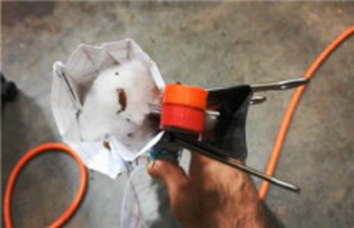
Figure 4. The picked seed cotton got stuck while transferring to the doffing area.
Earlier observations suggested that more fingers would raise the picking ratio and mitigate transfer troubles noted with the single-finger model. Greater finger quantity broadens the end-effector’s contact surface. Each finger furthermore can hold seed cotton along its length and at the extremity. Collectively, these traits support improved picking ratios. Once a boll is harvested, the end-effector must convey the seed cotton to the release location. In multi-finger tool development, fingers need coordinated action to draw cotton toward one shared spot for detachment. Lacking coordination, opposing pulls might occur, stopping belt rotation. With three fingers, seed cotton stays gripped in an approximately cylindrical form, allowing unobstructed transfer without entrapment. Positioning fingers in a circular pattern at 120-degree intervals creates ideal transfer space and a uniform opportunity for each finger. Thorough doffing requires all fingers to release at the identical spot; otherwise, material risks lodging between them, mirroring the single-finger outcome.
More fingers also enlarge the tip surface area, possibly impeding foliage navigation. Thus, the end-effector tip requires a slender profile for smooth entry. Figure 5 illustrates a diagram of the three-finger end-effector. Fingers link to a pivot joint, enabling expansion at the forward end to adjust for varying material thickness during extraction. In the picking phase, pins shift inward from outer positions near the tip, guiding seed cotton into the central gap between fingers and rearward to the doffing area.
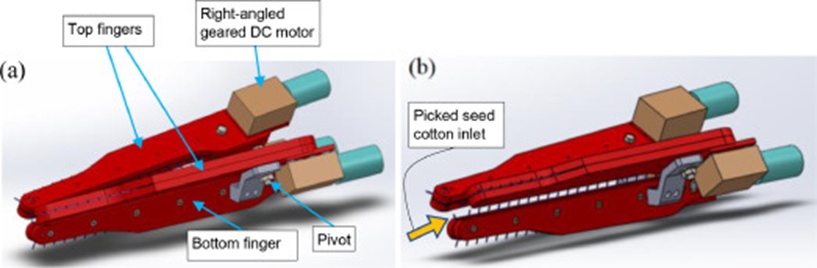
Figure 5. CAD model of a three-finger moving pinned belt with expandable fingers; (a) fingers are contracted, and (b) fingers are expanded.
As indicated earlier, most crops produce firm, solid individual fruits, such as apples, that are easily held and detached. Seed cotton, however, consists of several loosely joined fiber locks fastened to the seeds. Securing this mass at just one location before pulling can lead to partial stretching, incomplete movement, or leftover material in the boll. Multiple fingers are advantageous for gripping seed cotton at several sites simultaneously, greatly improving the prospects for total removal from the boll.
The performance and productivity of the end-effector depend heavily on two important measurements: pin height (Hpn) and finger tip diameter (Dfn) (Figure 6). A smaller Dfn allows smoother movement of the end-effector through dense plant foliage. In contrast, Hpn must be sufficiently long to engage the seed cotton firmly. Greater Hpn requires correspondingly thicker pin diameters (Dpn) to withstand the forces exerted by the gripped cotton. A GT2 timing belt (B & B Manufacturing, Inc., La Porte, IN) with a 6 mm width was picked for mounting the pins. After considering the belt type, available market options, and attachment methods, steel wire pins measuring 0.7 mm in diameter were chosen.
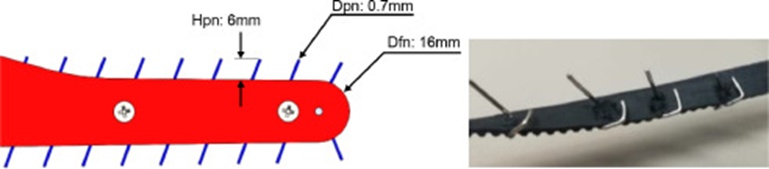
Figure 6. Left: the sizes of the pin and tip of the finger, Right: attached pins to the timing belt.
The spacing between the end-effector tip and the outer surface of a cotton boll (Figure 7-top-left) plays a vital role in achieving successful grasping. An excessively small gap can cause the pins to catch the hard calyx along with the seed cotton, whereas an overly large gap may result in insufficient fiber capture to extract the complete seed cotton mass.
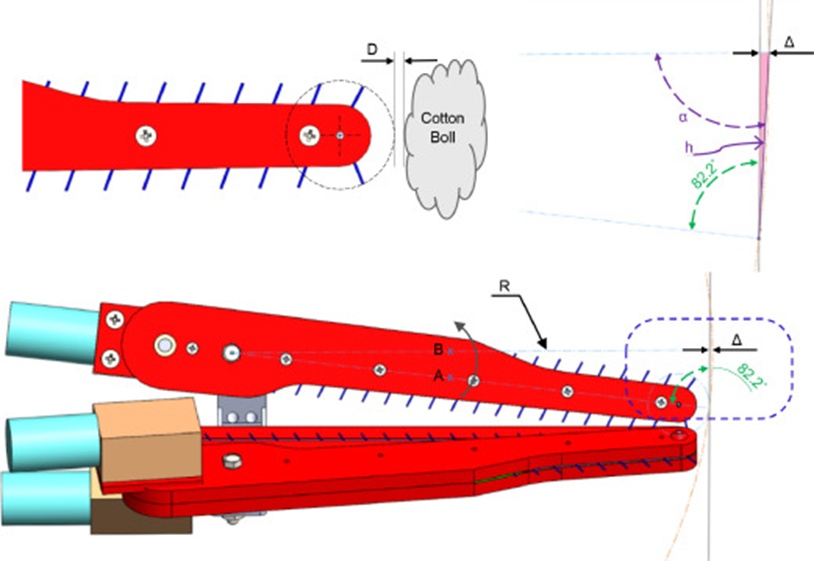
Figure 7. Top-left: The distance between the cotton boll and the end-effector; Bottom-left: The three-finger end-effector from the top view, the top finger’s expansion effect on its distance from the target; and Top- right: an enlargement of the blue dashed area on the bottom image.
With expandable fingers, the distance to the target varies slightly as the fingers adjust their relative positions. Still, the overall design aims to maintain nearly constant proximity to the target during expansion to ensure reliable fiber interaction. Figure 7 b provides a CAD top-view illustration of the end-effector. The orange-dashed line traces the upper fingertip’s path during expansion, showing a slight shift toward the target. A vertical gray line remains tangent to the boll surface. Δ indicates the forward shift of the upper finger during expansion, and h stands for the expansion distance, kept below 30 mm according to laboratory measurements. Larger Δ leads to an increase in D (Figure 7-top-left). Computation of Δ uses an isosceles triangle (marked pink in Figure 7-top-right), with α representing the angle between side h and the triangle base. The maximum Δ is therefore obtained from the following:
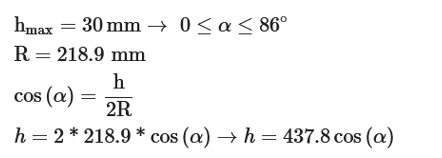 (2)
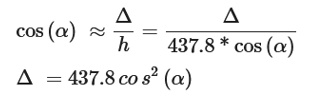 (3)
Maximum Δ is found by setting the derivative of Eq. 3 equal to zero.
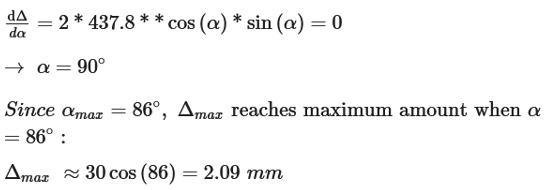 (4)
Based on the calculations, the upper fingers move 2.09 mm closer to the target as the gap increases by 30 mm. Such movement is considered negligible in terms of its influence on the picking ratio. In addition, laboratory tests demonstrated that the expansion generally remains below 15 mm; therefore, the corresponding advancement is usually under 2 mm.
Figure 8 illustrates the developed three-finger end-effector. The casing was produced using 3D printing technology, while the movable pinned belt is driven by a 12 V DC geared motor (Walfront, JGY-371, Shenzhen, Guangdong, China). The lower finger functions as the base connected to the manipulator arm, whereas the upper fingers are linked to the lower finger through a pivot joint. Two springs maintain the fingers in contact, enabling the gap between the upper and lower fingers to widen as required to achieve the target volume flow while still applying an inward force to sustain contact with the seed cotton. Although the spacing between the fingers can expand, this expansion is not actuator-controlled; therefore, the end-effector is categorized as underactuated, indicating that the number of DOF exceeds the number of actuators. A commercial illustration of an underactuated gripper is the three-finger gripper developed by Kinova Robotics [23], which can grasp objects of varying shapes and sizes. The upper fingers of the robotic cotton end-effector are specifically designed to doff seed cotton before the lower fingers. Once the upper fingers complete the doffing process, the lower finger continues transporting the harvested seed cotton toward the base of the end-effector before releasing it there.
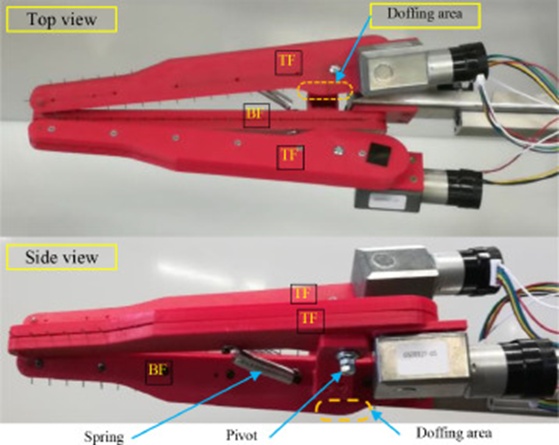
Figure 8. The three-finger configuration of the end-effector, TF: top finger, and BF: bottom finger.
Belts on the fingers operate in both forward and reverse modes. Reverse direction aids penetration by pushing aside leaves and branches during approach to the boll. An elastic fabric layer was wrapped around each finger’s pin channel to seal and prevent the entry of cotton fibers or dust into the internal components.
The three-finger collection tool was installed on a mobile test platform (Figure 9) to assess its suitability for use in a robotic cotton harvester. The platform incorporated an automated positioning mechanism using three linear actuators that supplied movement in three DOF. Control was provided by a GPU-equipped computer (Jetson TX2, Nvidia Corp., Santa Clara, CA, USA) that oversaw the actuators, end-effector operations, and limit switches.
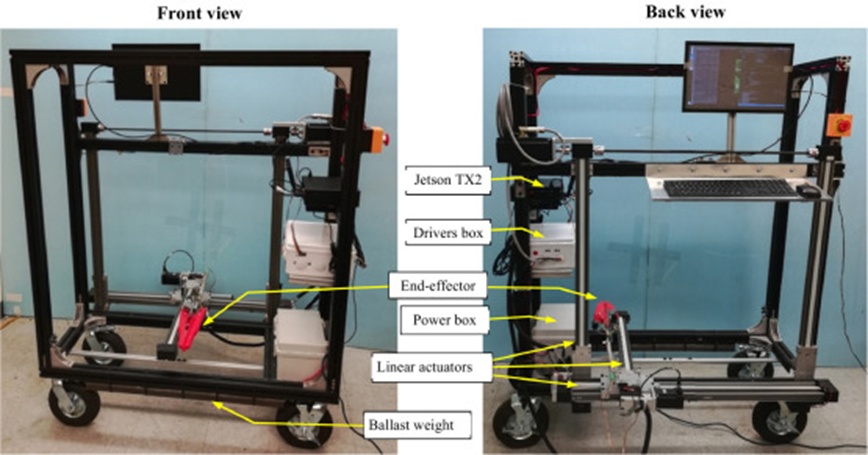
Figure 9. The fabricated platform to test the end-effector of the robotic cotton harvester.
Most previous studies have used DOF manipulators for robotic harvesting applications [13, 15]. Although a 2 DOF manipulator can also be implemented by treating the vehicle motion as the third DOF, maintaining precise control in such a setup is often problematic. Manipulators with more than 3 DOF can reach targets at different orientations more effectively and maneuver around obstacles more easily; however, increasing the number of DOF generally increases system cost while decreasing manipulation speed [13, 15]. Commercial robotic harvesting systems, such as Agrobot [24] and FFrobotics [25], are representative examples that employ DOF manipulators. In the present work, a robotic platform equipped with a 3 DOF manipulator was developed using three linear actuators supplied by igus Inc. (East Providence, RI) (Figure 9). Translation along the X- and Z-axes was achieved using two NEMA 23 stepper motors (igus Inc., East Providence, RI).
In contrast, movement in the Y-axis direction was generated by a NEMA 34 stepper motor (igus Inc., East Providence, RI). The available travel ranges in the X, Y, and Z directions were 60 cm, 54 cm, and 53 cm, respectively. The end-effector assembly was fixed to the actuator positioned on the Z-axis. To avoid overtravel, limit switches manufactured by Shenzhen Longruner Digital Co. Ltd. (Shenzhen, Guangdong, China) were mounted at both terminal positions of every linear actuator.
Figure 9 illustrates the robotic platform together with all attached subsystems. The platform’s chassis was fabricated from an aluminum framework. Since the robot operated under stationary conditions and experienced negligible dynamic loading during experimentation, the principal design parameter considered for the chassis was the cross-sectional moment of inertia. Extruded aluminum sections (Misumi, Schaumburg, IL) measuring 50 × 50 mm2 were selected. These sections had a cross-sectional moment of inertia of 38e+4 mm4, more than adequate to support the mass of the actuators and associated hardware. Because the structure incorporated four wheels for movement, a ballast mass was installed at the lower portion of the chassis on the side opposite the actuators. This arrangement balanced the platform and lowered the center of gravity, thereby enhancing operational stability.
Figure 10 presents the operational control scheme of the harvesting system. Signal transmission and reception between the Jetson TX2 computer and the robotic components were carried out via GPIO pins to control both the linear actuators and the end-effector, as shown by the yellow lines in Figure 10. The robotic system received electrical power from a 12 V battery (model and manufacturer information). A DC boost converter converting 12 V to 24 V was incorporated to provide the required supply for the stepper motors (for what control). For safety, two emergency-stop switches were integrated into the system, enabling rapid manual interruption of power to the manipulator in the event of unsafe conditions. Operation of the stepper motors was managed through three ST10-S micro-stepping drivers (Applied Motion Products, Inc., CA 95076, USA), which include advanced current management to minimize power consumption when the actuators are inactive. Additionally, the three 12 V DC motors integrated into the end-effector were regulated using a separate motor driver.
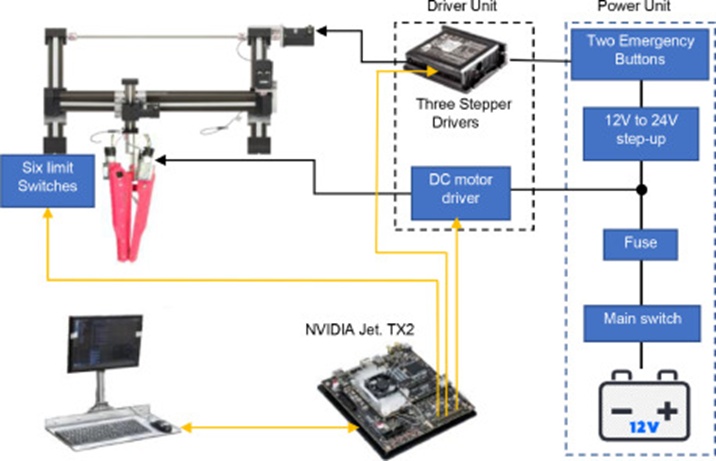
Figure 10. The power and signal circuits of the robot.
Keyboard inputs on the robot computer enabled remote manual control of the manipulator arm, while the end-effector operated under full autonomous system management.
During the post-harvest period, tests used artificial plants fitted with genuine cotton bolls. These bolls were wired to an aluminum support bar (Figure 11). Four treatment combinations were evaluated — two boll orientations versus the end-effector tip and two control strategies — each involving 100 bolls. The tested Boll orientations were Face-to-Face (tip aligned with the boll face) and Face-to-Side (tip aligned with the boll side). Control strategies included No Manipulation While picking (NMW), in which the end-effector was manually positioned so its center aligned with the boll center, operated for 4 seconds, and then retracted. Predefined Manipulation While picking (PMW) repeated the NMW sequence followed by additional end-effector movements across the boll’s open surfaces for expanded coverage and improved picking ratio [26]. Figure 12 details the PMW working process.
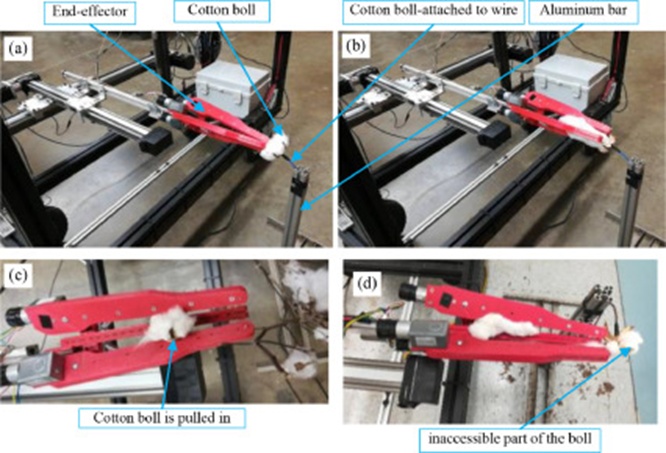
Figure 11. The end-effector while lab tests, Face to Side situation; (a) seed cotton is unpicked, (b) seed cotton is being picked, (c) whole cotton boll is pulled in, and (d) end-effector cannot get access to the rear part of the cotton boll in Face to Side situation.
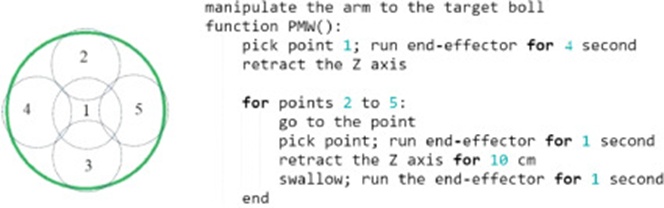
Figure 12. Left: cotton boll is divided into 5 parts; the end-effector targets point 1, then targets the remaining points consecutively; Right: the pseudocode for the multiball position (PMW) algorithm.
After every trial, collected and leftover seed cotton received weighing to the nearest mg. All attempts were completed except those in which the calyx was drawn into the mechanism (Figure 11c), which were manually halted and logged as failures. Picking duration was recorded with a stopwatch starting from initial boll contact until procedure completion, Z-axis retraction, and total motion stop.
The primary issues observed in earlier end-effector versions included incomplete harvesting, incomplete release, and incomplete internal material transport. The three-finger mechanism utilizing circulating pins successfully addressed these shortcomings. As a result, this concept underwent detailed engineering, physical construction, iterative enhancements, and comprehensive evaluation. Although the assembly phase required extended effort — notably the manual fixation of pins onto the belt — the overall process stayed manageable. Preliminary assessments confirmed the design’s ability to extract seed cotton effectively regardless of boll positioning. Its underactuated property further enabled flexible adjustment to varying thicknesses of seed cotton masses. Independent motor supply to each finger enabled isolated pivoting, minimizing power transmission issues between components.
Experiments demonstrated that the end-effector delivered solid picking ratios, with outcomes strongly influenced by the chosen control strategy. Table 3 summarizes the findings from the four distinct treatment combinations, covering two different boll alignments and two distinct control approaches.
Table 3. Results of four test sets.
Test mode | Picking time (s) | Losses |
| Picking ratio (%) | Average weight of a boll (g) | Total weight (g) | Losses |
| Picked bolls‡ (g) | # of calyx in failure | # of bolls | |
| Calyx ingestion failure (%) | Left on boll (%) |
|
|
| Calyx in (g) | Left on boll (g) |
|
| |||
1 | 4 | 8.6 | 25.2 | 66.2 | 5.910 | 591.024 | 51.027 | 148.809 | 391.188 | 10 | FF*, NMW | 100 |
2 | 18 | 9.2 | 6.0 | 84.8 | 5.988 | 598.832 | 55.156 | 35.965 | 507.710 | 11 | FF, PMW | 100 |
3 | 4 | 22.2 | 29.0 | 48.7 | 5.872 | 587.195 | 130.589 | 170.406 | 286.200 | 23 | FS†, NMW | 100 |
4 | 18 | 22.8 | 20.9 | 56.4 | 5.933 | 593.275 | 135.126 | 123.707 | 334.442 | 24 | FS, PMW | 100 |
⁎ FF refers to Face-to-Face orientation.
† FS refers to the Face-to-Side orientation.
‡ Picked Bolls refers to picking without failure.
When comparing paired boll orientation categories (1 vs. 3 and 2 vs. 4), Face-to-Face (FF) alignment consistently produced markedly higher picking ratios. The advantage amounted to 17.5% under NMW control and 28.4% under PMW control. This outcome aligns with expectations, as FF positioning provides superior exposure to the seed cotton within the boll.
Pairwise evaluation of control strategies (1 against 2 and 3 against 4) indicated that dynamic end-effector movement in the vertical and horizontal directions during operation enhanced picking ratios irrespective of orientation. However, this approach extended the operation duration to nearly triple the original length. The added motion lowered residual unpicked seed cotton by 19.2% in FF scenarios and 8.2% in Face to Side (FS) scenarios. The more modest gain in FS cases stemmed from the inability to reach the boll’s rear area through the limited left-right and up-down motions (Figure 11d).
FS alignment increased the probability of calyx ingestion because this positioning exposes the calyx more readily. Treatments 1 and 2 exhibited considerably lower rates of Calyx In failures than treatments 3 and 4.
The manipulation sequence itself did not cause any substantial rise in Calyx incidents. According to Figure 12, after an initial 4.0 s operation at the boll center, the end-effector advances to positions 2 through 5 for 1.0 s intervals each. This brief engagement window restricts opportunities for unwanted material intake. The system promptly ceases operation, withdraws the end-effector, and shifts to the next location upon detecting initial grasping.
Under both NMW and PMW modes, Calyx In failures occurred more than twice as often in FS alignment compared to FF alignment, primarily due to greater physical contact with the calyx in the sideways position.
These failures result in material losses of 9%-23%. One effective mitigation strategy is to introduce reciprocal back-and-forth motion during picking to shorten the time window for calyx entry. Since PMW mode produced no meaningful increase in such failures, the opening 4.0 s phase in the algorithm (Figure 12) could be segmented into several shorter intervals. For instance, running the end-effector for 1.0 s, pausing, retracting briefly, advancing again, and repeating would potentially decrease Calyx In events, though at the expense of extra repositioning time.
An experienced manual worker typically gathers around 300 lb of seed cotton during an 8-h shift (E. Barnes, personal communication, Jan. 20, 2022). Given that a typical boll holds 4.5 grams of seed cotton [27], this performance level corresponds to over 30,000 bolls daily, equating to just above 1.0 boll/s. The total cycle accounts for arm motions, actual picking, and plant-to-plant transitions. A practical small-scale robotic cotton harvester should aim to match or approach this benchmark of 1.0 boll/s.
To deliver real-world value, the developed end-effector must complete boll harvesting much faster than the deliberate low-speed lab trials, which prioritized close observation and equipment safety. The multi-step nature of PMW mode further prolonged durations when paired with cautious operating speeds.
Field deployment demands effective selective harvesting, which relies on machine vision (MV)- guided end-effector control. After each withdrawal, MV could capture and analyze images to identify leftover seed cotton locations and direct precise follow-up actions for maximized recovery. While this would boost picking ratios, it risks extending total time. Therefore, streamlining image processing with optimized pipelines (e.g., via the OpenCV library) on GPU hardware would be crucial to maintaining operational speed.
Power consumption represents another essential factor for field use. Vacuum-style end-effectors typically require at least 1 kW of power during operation [28]. By contrast, voltage and current measurements indicate that the three-finger moving-pinned belt end-effector uses only about 12 W. Vacuum units also perform material transport to storage. In contrast, a mechanical conveyance paired with this end-effector would likely require far less energy. Consequently, a complete mechanical solution should consume significantly less total power than a vacuum-based pneumatic counterpart.
Key topics identified for subsequent investigation include:
· Incorporating a camera system would support more accurate and timely seed cotton collection. An “eye-in-hand” configuration offers improved target visibility, although added volume from stereo cameras could hinder performance in dense foliage. A compact single-camera system combined with a distance sensor is a viable alternative.
· Rigid materials such as calyx can cause pin deformation. Targeted design adjustments may alleviate this concern.
· Installing a sensor for calyx detection on the end effector would help prevent accidental ingestion.
· PMW control yields superior picking ratios at the cost of extended duration, which could be shortened via higher-speed actuators and improved computational capabilities.
· Harvest environments frequently involve extreme temperatures, moisture, or dust. All robot elements must use materials that withstand such demanding conditions.
· Current finger housings are made from 3D-printed polylactic acid filament. Substitution with more resilient materials is recommended to withstand temperature swings and prolonged exposure to sunlight.
· Steel pins performed adequately in controlled tests but will require reinforced construction in future iterations to tolerate repeated plant collisions during actual field operations.
This work details the exploration, engineering, evaluation, and assessment of a new robotic end effector for cotton-harvesting applications. A range of potential designs was reviewed, culminating in the adoption of a three-finger moving pinned belt configuration that was fully engineered and realized. The completed prototype fulfilled essential performance standards, including picking ratio, material transfer, release, foliage penetration and withdrawal, accurate targeting, functionality across multiple orientations, and comprehensive clean harvesting. Integration of a dynamic control strategy that repositions the end-effector around the boll notably improved the picking ratio by enabling access to remaining seed cotton. Failures primarily caused by calyx ingestion occurred with greater frequency when bolls were oriented sideways relative to the end-effector. Although the advanced control approach increased the time per boll, ongoing refinements and optimizations have strong potential to reduce this duration.
We want to acknowledge Cotton Inc. for funding this project. We are also grateful to our colleagues at the BAEN Department at Texas A&M University and the ABE Department at Mississippi State University for their assistance and support.
None
This research was funded by Cotton Incorporated, Project No. 18-369.
None
Open Access The author(s) retain copyright. This article is licensed under the Creative Commons Attribution-NonCommercial-ShareAlike 4.0 International License. It may be shared and adapted for non-commercial purposes with appropriate attribution, an indication of changes, and distribution of adaptations under the same license. Third-party material may be subject to separate terms identified in its credit line. View the license at https://creativecommons.org/licenses/by-nc-sa/4.0/.
 Agro Intelligence Research Press