Digital twins are increasingly proposed as cyber-physical representations that may support precision agriculture through monitoring, simulation, prediction, optimization, and decision support. However, agricultural systems described as digital twins vary substantially in data quality, interoperability, synchronization, modelling depth, predictive reliability, decision functionality, validation, and operational governance. This article proposes a conceptual maturity framework that evaluates agricultural digital twins through capability progression rather than technology adoption alone. The framework begins with descriptive monitoring and advances through real-time farm representation, simulation and scenario analysis, prediction and optimization, and supervised autonomous decision support. Monitoring maturity depends on reliable sensing, remote sensing, Internet of Things integration, data fusion, spatial and temporal adequacy, traceability, and human-interpretable representation. Simulation and prediction maturity require explicit farm-system boundaries, calibrated models, uncertainty estimation, local validation, and evidence that analytical outputs remain valid for their intended context. Optimization maturity additionally requires transparent objectives, constraints, robustness assessment, and distinction between predictive accuracy and decision value. The highest proposed level permits only narrowly bounded and supervised decision initiation supported by human authority, explainability, safety mechanisms, governance, cybersecurity where relevant, and continuous feedback. The framework does not constitute a validated maturity standard or establish agronomic, environmental, economic, or autonomous decision benefits. Its principal contribution is an integrated structure for assessing capability readiness, identifying progression barriers, and preventing monitoring, simulation, prediction, or optimization functions from being overinterpreted as evidence of deployment-ready autonomy.
Precision agriculture increasingly relies on connected sensors, remote sensing, farm information systems, analytical platforms, and decision-support tools to represent agricultural variability and improve the timeliness of farm-management information. These technologies generate large and heterogeneous data streams concerning soils, crops, weather, water, machinery, livestock, and operational activities. Nevertheless, greater data availability does not necessarily produce a coherent or decision-ready representation of a farm system. Data may remain fragmented across devices and organisations, lack consistent semantics, arrive at unsuitable spatial or temporal resolutions, or be disconnected from the decisions they are intended to support. Smart-farming scholarship has therefore emphasised that value depends on the integration of data, analytics, stakeholders, and decision processes rather than on data volume or technological adoption alone [1]. This distinction is especially important for digital twins because the term is sometimes applied to systems that provide only dashboards, historical records, isolated predictions, or one-way data visualisation.
Internet of Things infrastructure provides an important technical foundation for agricultural digitalisation by linking sensors, gateways, communication networks, computing resources, and user-facing services. Connected devices may collect weather variables, soil conditions, crop status, water information, animal activity, and machinery states at intervals that were previously impractical. Yet an IoT monitoring architecture is not inherently a digital twin. It may transmit observations without constructing a structured farm representation, estimating unobserved states, maintaining physical–digital correspondence, or supporting simulation and feedback. Furthermore, connectivity loss, sensor drift, energy limitations, communication latency, security weaknesses, and incompatible data formats can undermine the reliability of apparently real-time systems. Agricultural IoT should therefore be interpreted as enabling infrastructure whose suitability must be evaluated in relation to data quality, interoperability, timeliness, provenance, and the intended management process [2]. These requirements create the foundation for maturity assessment but do not independently establish digital-twin capability.
A digital twin in precision agriculture can be understood as a dynamically maintained digital representation of a defined physical agricultural entity or process, connected to observations from that physical system and capable of supporting context-appropriate analytical or decision functions. This definition distinguishes a digital twin from a digital model, which may be updated manually or remain disconnected from the physical system, and from a digital shadow, in which information flows primarily from the physical system to the virtual representation without a corresponding decision or feedback relationship. It also distinguishes a twin from a farm management information system that records activities, a monitoring platform that visualises sensor values, and a single-purpose artificial intelligence model that predicts an outcome without representing the wider farm system. Agriculture-specific digital-twin research has highlighted the importance of physical–virtual correspondence, data exchange, virtual representation, analytical services, and interaction with farm-management processes [3]. These characteristics suggest that digital-twin status should depend on demonstrated relationships among data, representation, models, decisions, and feedback rather than on terminology selected by developers.
The diversity of systems labelled as agricultural digital twins creates a need for an explicit maturity framework. Some systems provide descriptive monitoring, whereas others incorporate real-time state estimation, crop or environmental simulation, predictive modelling, optimization, or control-oriented functions. Their readiness also differs in calibration, uncertainty estimation, interoperability, validation, explainability, human oversight, cybersecurity, and governance. Without a structured maturity concept, advanced labels may conceal weak data foundations, unvalidated models, or decision functions whose operational consequences have not been examined. Agricultural digital twins remain an emerging field in which integration, model updating, validation, and alignment with real agricultural decision contexts require further development [4]. Accordingly, this article proposes an original five-level maturity framework that links descriptive monitoring, real-time representation, simulation and scenario analysis, prediction and optimization, and supervised autonomous decision support. The framework is intended to structure capability assessment and research planning; it is not presented as an implemented standard, operational certification scheme, or proof of autonomous readiness.
Digital twin maturity in precision agriculture is defined here as the degree to which a digital representation of a farm system possesses reliable, integrated, validated, and governable capabilities for representing current conditions, analysing possible future conditions, supporting decisions, and, only within tightly bounded circumstances, participating in supervised action. Maturity is therefore not equivalent to the number of sensors installed, the use of cloud computing, the presence of machine learning, or the visual sophistication of a dashboard. A sensing system may observe physical variables without creating an explicit virtual representation. A farm information system may organise records without maintaining real-time synchronization. A digital model may reproduce selected processes without being updated from the farm, while a digital shadow may receive farm data without supporting bidirectional interaction. Progress toward a more mature twin begins when observations are used to update a functional representation whose entities, states, relationships, assumptions, and boundaries are explicitly defined [5]. Even then, the representation remains only one component of maturity and does not establish simulation, prediction, optimization, or control readiness.
Capability progression provides a more defensible basis for maturity assessment than technology inventories. Descriptive monitoring requires dependable observation and interpretation of farm conditions. Real-time representation adds data fusion, state updating, semantic integration, spatial and temporal alignment, and evidence that the digital state remains sufficiently synchronized with the physical system. Simulation maturity requires models that can reproduce relevant processes under defined assumptions, whereas predictive maturity requires evidence that future-state estimates are reliable for the intended context, horizon, and population. Optimization maturity requires validated objectives, constraints, trade-offs, and robustness checks in addition to predictive models. A system capable of generating an apparently optimal action may still be immature if it relies on uncertain states, omits important constraints, or lacks evidence that its recommendations improve decisions. Reviews of agricultural digital twins indicate that monitoring and representation are more commonly developed than validated prediction, optimization, and autonomous operation [6]. The proposed framework therefore treats maturity as cumulative but non-automatic: each advanced capability depends on the adequacy of earlier layers and must satisfy its own evidence requirements.
Agricultural context also shapes the meaning of maturity. Controlled environments may support dense sensing, stable connectivity, explicit climate-control variables, and clearly defined system boundaries, whereas open-field systems involve spatial heterogeneity, changing weather, incomplete observations, biological variability, and operational constraints distributed across larger areas. Greenhouse digital twins demonstrate how environmental sensing, crop representation, modelling, and control functions may be connected within a relatively bounded production environment, but they also reveal the continuing importance of calibration, model integration, system identification, and operational validation [7]. Similar caution applies to livestock, machinery, irrigation, and field-crop twins. A capability demonstrated in one crop, production system, climate, or equipment configuration cannot be assumed to transfer directly to another. Maturity assessment must consequently be use-case-specific and should identify the physical entity represented, the decision supported, the relevant scale, the update frequency, the expected users, and the conditions under which the twin is considered valid.
Cross-cutting requirements determine whether functional capability is trustworthy and sustainable over time. Data quality affects every level because inaccurate, incomplete, biased, or outdated observations can propagate through representation, simulation, prediction, and optimization. Interoperability is necessary to combine devices, models, platforms, and organisational data without semantic ambiguity or vendor dependence. Validation and calibration must be matched to the intended capability, rather than treated as a single final test. Human oversight must clarify who interprets outputs, approves recommendations, manages exceptions, and retains authority over physical actions. Governance must address data access, provenance, privacy where relevant, accountability, model updating, incident management, and permitted use. Cybersecurity becomes increasingly important when external connectivity or physical actuation is introduced. Reviews of smart-agriculture digital twins identify data integration, interoperability, privacy, security, and implementation governance as central challenges rather than peripheral technical details [8]. The maturity framework therefore embeds these requirements across all levels and establishes an explicit boundary against interpreting a maturity label as proof of agronomic benefit, operational readiness, or safe autonomy.
Descriptive monitoring forms the first maturity level because every more advanced function depends on the quality and relevance of observed farm conditions. Monitoring may draw on proximal sensors, weather stations, soil probes, machinery telematics, livestock wearables, irrigation records, manual observations, and other authorised sources. The objective is not to collect every measurable variable, but to observe the physical states required for a clearly defined farm-management question. Sensor selection, placement, calibration, maintenance, timestamping, metadata, and provenance determine whether measurements can be interpreted correctly. Internet-of-Things architectures can support distributed observation of crop, soil, weather, water, livestock, and equipment variables, but they also introduce risks associated with network availability, device energy, inconsistent protocols, communication delays, and security [9]. A Level 1 system should therefore distinguish direct measurements from derived indicators, identify missing or stale data, and provide users with sufficient context to judge whether the observations are fit for interpretation.
Remote sensing expands monitoring from individual sampling points to spatially distributed representations of fields, canopies, soil surfaces, and production zones. Satellite, aerial, and unmanned-platform observations may support assessment of crop development, vegetation condition, water-related stress, spatial variability, and other indicators relevant to precision agriculture. However, remote-sensing data do not provide a complete or inherently real-time representation of the farm. Their suitability depends on spatial resolution, temporal resolution, spectral characteristics, atmospheric and geometric correction, cloud conditions, revisit frequency, processing methods, and correspondence with ground observations. Reviews of remote sensing in precision agriculture show that these technologies can provide valuable spatial information while remaining constrained by scale mismatch, environmental interference, preprocessing requirements, and the need for field validation [10]. Within the proposed maturity framework, remote sensing can contribute to Levels 1 and 2 only when its resolution, uncertainty, timing, and relationship to physical farm variables are documented rather than assumed.
Progression from monitoring to real-time representation requires more than faster data transmission. The system must define the farm entities and processes being represented, harmonise measurements from different sources, align spatial and temporal references, manage data latency, and update the virtual state according to transparent rules. Interoperability is central because devices may use different units, communication protocols, naming conventions, data structures, and sampling frequencies. Data fusion must preserve provenance and uncertainty rather than concealing disagreement among sources. For example, soil measurements, weather observations, remote-sensing indicators, and crop records may describe related conditions at different depths, scales, or times. Combining them without explicit alignment can create an internally consistent but physically misleading state. Systematic assessment of smart-farming IoT solutions has identified recurring limitations in architecture standardisation, interoperability, security, scalability, energy management, and evaluation [11]. A Level 2 digital twin should therefore demonstrate that its representation is coherent, sufficiently current, semantically interpretable, and auditable, rather than merely connected.
A farm digital representation should communicate what is observed, what is estimated, what remains unknown, and when each state was last updated. It may include spatially organised soil and crop information, water-status indicators, weather conditions, machinery activities, livestock states where relevant, and relationships among farm entities. Machinery or livestock data should be included only when they are necessary for the defined system and when their collection is technically, ethically, and organisationally justified. Human interpretability is essential because users must be able to identify data provenance, uncertainty, sensor failures, state-estimation assumptions, and representation boundaries. Crop-monitoring digital-twin research illustrates the potential to integrate observations with dynamic digital representations, while also underscoring challenges in data reliability, model fidelity, real-time updating, interoperability, and validation [12]. The proposed framework therefore treats real-time representation as a distinct maturity level: it is more than monitoring, but it does not yet demonstrate that the system can simulate alternative futures, predict outcomes reliably, optimize decisions, or control farm operations.
Simulation adds a model-based layer to the real-time representation by enabling examination of how a defined farm system may behave under specified assumptions, parameters, boundary conditions, and scenarios. Relevant models may include crop models, hydrological models, soil-process models, or pest and disease models where these are appropriate to the intended use and adequately supported by evidence. A simulation component should specify the processes represented, the variables omitted, the spatial and temporal scale, the calibration data, and the conditions under which its outputs are considered valid. Agricultural systems science has long emphasised that useful modelling depends on integration among data, models, knowledge products, explicit system boundaries, calibration, sensitivity analysis, uncertainty assessment, and validation [13]. These principles are essential for digital-twin maturity because synchronization with live data does not correct an inadequate model structure. A Level 3 twin should therefore support scenario analysis while clearly distinguishing modelled possibilities from observed outcomes and operational recommendations.
Scenario analysis allows users to compare plausible alternatives, test assumptions, and explore system sensitivity without claiming that simulated trajectories will occur in the field. Crop models may examine growth or phenological responses under specified weather, soil, and management assumptions. Hydrological or water-balance models may examine water movement, availability, runoff, or drainage. Soil-process models may represent moisture, temperature, nutrient, or carbon dynamics, while pest or disease models may estimate how risk could develop under environmental and biological assumptions. Each model type introduces distinct requirements for parameters, calibration, scale, and validation. Simulation outputs should therefore include uncertainty information, sensitivity to assumptions, and an explicit validity envelope. The presence of a simulation engine does not automatically move a twin to predictive maturity because scenario consistency is different from evidence that future observations can be forecast accurately. Level 3 is consequently defined as an analytical exploration stage in which humans formulate scenarios, inspect assumptions, and interpret results without treating the model as proof of field performance.
Prediction estimates a future state or outcome using current and historical data through statistical, machine-learning, process-based, or hybrid methods. Potential functions include yield prediction, irrigation-demand prediction, nutrient-demand prediction, crop-risk prediction, and other context-specific forecasts. Predictive maturity should be assessed through data representativeness, outcome definition, feature provenance, prevention of data leakage, temporal and spatial validation, calibration, generalizability, and uncertainty estimation. The crop-yield prediction literature demonstrates substantial methodological diversity in crops, datasets, variables, algorithms, validation strategies, and reported metrics [14]. Accordingly, a reported accuracy value or favourable comparison within one dataset cannot independently establish that a prediction module is reliable for another farm, season, production system, or decision horizon. A Level 4 candidate system must communicate prediction intervals or other appropriate uncertainty indicators, detect out-of-domain conditions where possible, and identify when insufficient evidence should lead to abstention rather than a confident forecast.
Hybrid modelling may combine process knowledge with data-driven methods to improve predictive representation, constrain implausible outputs, or compensate for incomplete mechanistic models. Empirical work coupling crop models with machine learning has shown that such combinations may improve yield prediction within a defined context, while remaining dependent on study-specific data, calibration, geography, and evaluation design [15]. Likewise, high-fidelity three-dimensional or functional plant representations may strengthen the structural basis for agricultural digital twins and support simulation-oriented analysis, but representational detail alone does not establish predictive validity or management value [16]. The maturity framework therefore separates model sophistication from evidence quality. Advancement beyond Level 3 requires evidence that predictions are calibrated and valid for the intended context, while advancement toward optimization additionally requires explicit objectives, constraints, trade-offs, and evaluation of whether predictive information leads to defensible decisions. Simulation and prediction can improve decision-support readiness, but neither should be interpreted as proof of optimized outcomes, safe physical action, or autonomous farm-management capability.
Optimization represents a transition from estimating possible future states to comparing feasible actions under explicit objectives and constraints. In precision agriculture, relevant functions may include resource allocation, irrigation optimization, nutrient optimization, pest-management optimization where supported, and energy optimization where supported. These functions require more than a predictive model. They depend on a sufficiently reliable representation of the current farm state, validated forecasts, clearly specified objectives, operational constraints, uncertainty estimates, and procedures for handling conflicting goals. Precision-irrigation research illustrates this dependency because candidate irrigation schedules may draw on soil-moisture observations, crop state, weather information, evapotranspiration estimates, infrastructure capacity, and forecasts of water demand [17]. An optimization output should therefore be interpreted as a conditional candidate action rather than an inherently correct prescription. The objective function may omit agronomic, environmental, social, or operational considerations, while errors in state estimation or prediction may be amplified when the system selects an apparently optimal action.
Prescriptive analytics extends optimization by translating analytical outputs into recommendations, ranked alternatives, or conditional action proposals. A mature prescriptive component should state the evidence used, the objective being pursued, the constraints applied, the uncertainty surrounding expected outcomes, and the circumstances under which the system should abstain. Reinforcement learning has been proposed as a mechanism through which a digital twin may evaluate sequential decisions and adapt policies within a simulated or continuously updated environment. However, reinforcement-learning applications remain vulnerable to reward misspecification, incomplete state representation, distribution shift, unsafe exploration, and differences between simulated and physical environments. Reviews of reinforcement-learning-based agricultural digital twins indicate potential for adaptive decision support while also identifying unresolved requirements for safety, explainability, validation, and transfer to real agricultural settings [18]. Simulation performance therefore cannot establish that a learned policy is safe, beneficial, or operationally acceptable in the field.
Closed-loop control introduces a further maturity boundary because digital outputs may directly influence a physical process through an actuator, controller, machine, irrigation system, or environmental-control mechanism. This boundary requires verified sensing, current state estimation, equipment compatibility, safe operating limits, fallback modes, interruption procedures, and evidence that the system can detect and recover from failure. Agricultural robotics demonstrates that physical autonomy depends on coordinated perception, localisation, planning, control, communication, and machine safety under variable environmental conditions [19]. A prediction or optimization module should not be treated as closed-loop capable merely because it can generate an action value. The proposed framework permits physical actuation only when the action is narrowly bounded, reversible where possible, authorised for a defined operating envelope, continuously monitored, and subject to immediate human override. Unexpected conditions, stale data, uncertain state estimates, communication failures, or model drift should trigger abstention, escalation, or transition to a safe fallback state.
Supervised autonomous decision support is the highest proposed maturity level, but it does not represent unrestricted or unsupervised autonomy. Human authority must remain explicit through approval rules, override mechanisms, escalation pathways, accountability assignments, and the ability to suspend the system. Explainability should enable users to understand why an action was recommended or initiated, what information was used, which constraints were active, and how uncertainty affected the decision. Governance must address access rights, data privacy where relevant, cybersecurity, model updates, audit records, incident review, and responsibility for physical consequences. Responsible-innovation scholarship in smart farming shows that automation raises questions concerning power, accountability, transparency, privacy, inclusion, and changing professional roles [20]. Level 5 must therefore be interpreted as supervised decision support operating within a validated and governed boundary, not as evidence that farmers, agronomists, safety reviewers, or local expertise can be replaced. Table 1 summarises digital twin capabilities required for monitoring, simulation, prediction, optimization, and supervised autonomous decision support in precision agriculture.
Table 1. Digital Twin Capability Requirements for Precision Agriculture: Monitoring, Real-Time Farm Representation, Simulation, Prediction, Optimization, Prescriptive Analytics, Human Oversight, Validation, Uncertainty Communication, and Autonomous Decision-Support Boundaries
Capability domain | Core farm-management question | Required data or infrastructure | Digital twin function | Potential output | Failure risk | Validation or governance need | Maturity role |
Descriptive monitoring | What relevant physical conditions have been observed? | Calibrated sensors, remote sensing where appropriate, timestamps, metadata, maintenance records | Collects and organises direct observations | Time-series measurements, status summaries, anomaly flags | Sensor drift, missing values, biased placement, stale observations | Calibration, quality-control thresholds, provenance and maintenance governance | Foundation of Level 1 |
Real-time farm representation | What is the sufficiently current state of the defined farm system? | Harmonised multi-source data, common identifiers, entity model, time synchronization, fusion rules | Updates a structured digital representation of farm entities and relationships | Current state estimate with provenance and uncertainty | Desynchronization, semantic mismatch, duplicated events, misleading inferred states | Synchronization tests, latency thresholds, state-estimation validation, audit logs | Defining capability of Level 2 |
Spatial and temporal integration | Are observations aligned at scales suitable for the intended decision? | Georeferencing, sampling design, spatial layers, sampling frequencies, aggregation rules | Aligns observations and model variables across space and time | Scale-explicit state layers and trajectories | False fine-scale precision, missed events, inappropriate aggregation | Resolution-fit assessment and process-specific sampling validation | Readiness gate for Levels 2–4 |
Simulation and scenario analysis | How might the system behave under stated assumptions? | Calibrated process-based, data-driven, or hybrid models; parameters; boundary conditions | Runs explicit counterfactual or exploratory scenarios | Scenario trajectories and comparative outcomes | Model-form error, unrealistic assumptions, simulation treated as field evidence | Structural checks, calibration, sensitivity analysis, uncertainty assessment | Core capability of Level 3 |
Prediction | What future state or risk is estimated for the intended horizon? | Representative training and evaluation data, validated features, defined outcomes | Generates forecasts using statistical, machine-learning, mechanistic, or hybrid methods | Yield, water-demand, nutrient-demand, or risk estimates with uncertainty | Overfitting, leakage, distribution shift, poor calibration, misleading point estimates | Temporal, spatial, external, prospective, and calibration assessment as appropriate | Required for Level 4 |
Uncertainty communication | How reliable are observations, state estimates, simulations, predictions, and recommendations? | Measurement-error estimates, model ensembles, residual analysis, out-of-domain detection | Quantifies and communicates uncertainty and evidence limitations | Intervals, confidence categories, abstention or escalation flags | False reassurance, misunderstood probabilities, hidden model uncertainty | Coverage testing, calibration assessment, user-comprehension evaluation | Cross-cutting requirement for all levels |
Resource allocation and optimization | Which feasible option best meets explicit objectives and constraints? | Validated state and prediction modules, resource inventory, objectives, constraints, trade-offs | Searches for candidate allocations or actions | Ranked alternatives or constrained allocation plans | Optimization of incomplete objectives, omitted constraints, inequitable trade-offs | Robustness, feasibility, sensitivity, fairness, and stakeholder review | Core Level 4 capability |
Irrigation, nutrient, pest, or energy optimization where supported | Which bounded management option is preferable under the stated model and constraints? | Domain-specific observations, validated forecasts, permitted actions, infrastructure constraints | Compares feasible domain-specific actions | Candidate schedules, allocations, or management alternatives | Propagation of model error into consequential recommendations | Local calibration, field evaluation, expert review, safety and compliance checks | Optional Level 4 modules; bounded Level 5 inputs |
Prescriptive analytics | What action is suggested, why, and with what uncertainty? | Validated predictions, optimization outputs, explanations, decision rules, uncertainty estimates | Converts analytical outputs into recommendations or ranked choices | Recommendation with rationale, alternatives, confidence, and constraints | Automation bias, hidden value judgements, recommendation accepted outside validity envelope | Decision-impact evaluation, explanation testing, human-factors assessment | Level 4 decision support |
Closed-loop control boundary | Under what conditions may a digital output change a physical process? | Verified sensors, controller, actuator, safety limits, fallback state, authenticated communication | Executes a narrowly bounded action and observes feedback | Limited and reversible actuation where feasible | Physical harm, cascading failure, inability to recover, cyber compromise | Hardware-in-the-loop testing, fail-safe validation, override and rollback testing | Restricted Level 5 capability |
Supervised autonomous decision support | May the system initiate an approved action while preserving human authority? | All prior capabilities plus operating envelope, authorisation rules, audit logs, incident procedures | Selects or initiates pre-authorised actions and escalates uncertainty or anomalies | Supervised action, abstention, safe fallback, or request for human review | Unsafe distribution shift, automation bias, unclear accountability, uncontrolled actuation | Local prospective validation, continuous surveillance, cybersecurity review, incident governance | Highest proposed level; no unsupervised-autonomy claim |
Human oversight, explainability, and governance | Who retains authority, understands the output, and is accountable for consequences? | Role definitions, user interfaces, access rules, explanations, override mechanisms, governance policies | Makes decision authority, evidence, assumptions, and limitations inspectable | Reviewable recommendation, decision trace, escalation record | Nominal oversight, misunderstood outputs, privacy violations, responsibility gaps | Usability testing, role-based access, governance audit, periodic oversight review | Mandatory across Levels 1–5 |
The proposed framework defines five maturity levels. Level 1—Descriptive Monitoring collects and presents quality-assured observations without claiming a synchronized virtual counterpart. Level 2—Real-Time Representation integrates observations into a structured and sufficiently current representation of defined farm entities, processes, and relationships. Level 3—Simulation and Scenario Analysis uses calibrated models to examine plausible system behaviour under explicit assumptions without treating simulated results as observed outcomes. Level 4—Prediction and Optimization generates validated forecasts and constrained candidate decisions while preserving human approval authority. Level 5—Supervised Autonomous Decision Support permits only narrowly bounded, pre-authorised, monitored, and reversible action where appropriate, with human override, governance, safety mechanisms, and abstention procedures. Reviews of implemented precision-agriculture systems demonstrate substantial variation in integration, analytical depth, decision functions, and practical completeness, supporting capability-based assessment rather than a binary distinction between digital and non-digital farming [21]. Figure 1 illustrates the proposed maturity progression from descriptive monitoring to supervised autonomous decision support in precision agriculture digital twins.
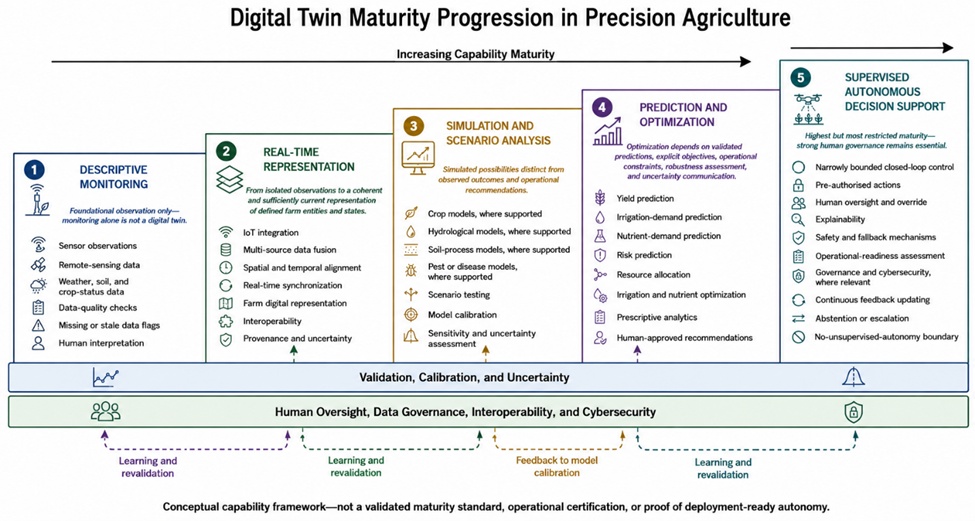
Figure 1. Digital Twin Maturity Progression in Precision Agriculture
Alt-text description:
A conceptual maturity ladder showing five levels of agricultural digital twin maturity: descriptive monitoring, real-time representation, simulation and scenario analysis, prediction and optimization, and supervised autonomous decision support, with validation, uncertainty, governance, and human oversight increasing across levels.
Progression across the five levels is cumulative in capability but not automatic in practice. A system should not progress because a new algorithm, sensor, platform, or actuator has been added. It should progress only when the relevant capability has been demonstrated for a clearly defined intended use and when dependencies inherited from earlier levels remain adequate. A Level 3 simulation module, for example, cannot compensate for unreliable Level 1 observations or a poorly synchronized Level 2 representation. Similarly, a validated prediction does not establish that an optimization objective is appropriate, and a feasible optimization result does not prove that physical actuation is safe. The organisational context also matters because digital agriculture changes relationships among farmers, advisers, technology developers, service providers, researchers, and data intermediaries. Social-science research on digital agriculture highlights the importance of skills, trust, institutional arrangements, power relations, labour, knowledge, and changing decision roles [22]. Maturity assessment should therefore examine who can understand, challenge, authorise, and remain accountable for digital-twin outputs.
Each progression boundary introduces stronger validation and communication requirements. Movement from Level 1 to Level 2 requires evidence that heterogeneous data are interoperable, spatially and temporally aligned, and used to maintain a coherent farm-state representation. Movement to Level 3 requires calibrated models, documented assumptions, sensitivity analysis, and a validity envelope. Movement to Level 4 requires predictive reliability, uncertainty estimation, objective transparency, operational constraints, robustness assessment, and evidence that outputs are useful for the intended decision. Movement to Level 5 requires an approved operating envelope, verified sensing and actuation, cybersecurity where relevant, fail-safe behaviour, human override, incident response, and continuous monitoring. Infrastructure, costs, competence, trust, connectivity, organisational readiness, and institutional support can limit practical progression even when an advanced technical component is available [23]. These factors should be treated as operational-readiness conditions rather than as substitutes for technical validation.
The proposed levels are an organising framework rather than a universal ranking of farm systems. Higher maturity is not inherently preferable for every application. A transparent Level 1 monitoring system may be more appropriate than a poorly validated Level 4 optimization system, particularly where data are sparse, risks are high, connectivity is unreliable, or human decision processes already perform well. Different modules within the same farm architecture may also occupy different levels. A crop-monitoring component may maintain real-time representation while an irrigation module supports validated prediction and a machinery component remains descriptive. Reviews of digital twins across agriculture and forestry show heterogeneous combinations of monitoring, simulation, prediction, optimization, and control, together with persistent challenges involving validation, interoperability, security, and implementation [24]. The framework therefore permits modular maturity profiles and requires that every level be reported together with its system boundary, intended use, evidence base, limitations, and human-oversight arrangement.
The proposed digital twin maturity framework evaluates how data, representation, modelling, decision functions, governance, and feedback are orchestrated around a defined agricultural problem. It begins by specifying the physical farm system, the management question, the stakeholders, the spatial and temporal scales, and the decisions that the twin is permitted to support. This problem definition prevents a platform from claiming maturity outside the entities and processes it actually represents. The framework then evaluates the data infrastructure, including sensing coverage, remote-sensing suitability, connectivity, metadata, interoperability, data ownership, latency, quality control, and provenance. Agricultural digital-twin orchestration requires coordination among data acquisition, virtual representation, analytical models, decision services, user interaction, and feedback rather than a collection of independent technical components [25]. The maturity assessment consequently examines the quality of relationships among components as well as the presence of each component.
After system and data assessment, the framework evaluates monitoring capability and real-time representation separately. Monitoring assessment asks whether the variables needed for the intended use are observed with sufficient accuracy, coverage, frequency, and traceability. Real-time-representation assessment asks whether those observations update a coherent and interpretable farm state through explicit entity definitions, alignment rules, data-fusion procedures, and latency limits. This separation prevents dashboards or sensor networks from being labelled as mature twins without evidence of physical–digital correspondence. Crop-specific digital-twin research demonstrates the potential value of individualized agricultural representations and local updating, while also showing that evidence remains tied to the crop, site, model, data, and application examined [26]. The framework therefore requires local calibration and explicitly prohibits generalising maturity or decision readiness from a single domain-specific implementation without additional evidence.
Simulation-readiness assessment examines whether models reproduce relevant farm processes within a documented validity envelope. Prediction-readiness assessment separately examines whether forecasts are calibrated, transferable to the intended context, and accompanied by suitable uncertainty information. Optimization-readiness assessment then examines objectives, constraints, trade-offs, feasibility, robustness, and the possibility that a mathematically optimal output may remain agronomically, environmentally, economically, or socially incomplete. Autonomous decision-support readiness is evaluated only after these stages and only for a narrowly bounded operating envelope. Comprehensive agricultural digital-twin reviews identify data integration, modelling, simulation, prediction, optimization, interoperability, security, and validation as interconnected but incompletely resolved capability areas [27]. The framework converts these areas into progression gates so that the presence of an advanced analytical method cannot conceal deficiencies in data, representation, model validity, or operational governance.
Human oversight, validation, uncertainty communication, interoperability, governance, safety, and operational readiness are treated as continuous assessment dimensions rather than final-stage additions. Human-oversight design specifies who receives outputs, who can challenge them, who authorises consequential decisions, how exceptions are escalated, and who can disable the system. Validation and calibration planning link evidence requirements to the intended capability and risk. Uncertainty communication requires the system to distinguish direct observations, inferred states, simulated outcomes, predictions, recommendations, and unsupported conditions. Interoperability and governance review addresses semantics, interfaces, data permissions, privacy where relevant, cybersecurity, auditability, and accountability. Safety and operational-readiness review examines failure modes, fallback behaviour, equipment constraints, maintenance, incident procedures, and change control. Digital twins may support analysis of environmental or resource-management alternatives, but maturity alone cannot establish sustainability, profitability, agronomic benefit, or autonomous decision safety [28]. These outcomes require separate, context-specific evaluation.
Feedback updating closes the framework by comparing observations and outcomes with the assumptions, state estimates, simulations, predictions, and recommendations that preceded them. New information may trigger sensor recalibration, data-pipeline repair, state reconciliation, parameter updating, model retraining, modification of objectives or constraints, revision of the validity envelope, or suspension of a capability. Every substantive update should be versioned and subjected to appropriate regression testing so that adaptation does not bypass validation. The final no-autonomy-claim boundary states that neither an overall maturity level nor success within a limited use case constitutes certification for unsupervised farm control. The framework is intended to guide research design, capability reporting, procurement evaluation, system comparison, and responsible implementation planning. Table 2 presents the proposed digital twin maturity framework for precision agriculture. Figure 2 presents the proposed digital twin maturity framework for precision agriculture, integrating data infrastructure, monitoring, real-time representation, simulation, prediction, optimization, supervised decision support, validation, governance, and feedback updating.
Table 2. Proposed Digital Twin Maturity Framework for Precision Agriculture: Descriptive Monitoring, Real-Time Representation, Simulation and Scenario Analysis, Prediction and Optimization, Supervised Autonomous Decision Support, Validation, Human Oversight, Governance, Feedback, and Operational Boundaries
Framework stage or maturity level | Core purpose | Required input | Maturity function | Potential output | Validation need | Failure risk | Feedback mechanism | Decision boundary |
Problem and farm-system definition | Define the physical entity, management problem, intended users, scales, and exclusions | Farm context, stakeholder roles, intended use, spatial and temporal scope | Establishes the system boundary against which every capability is judged | Intended-use statement, entity map, decision boundary | Farmer, agronomist, engineering, and stakeholder review as appropriate | Ambiguous scope, omitted processes, unintended reuse | Periodic revision when context or intended use changes | No claim outside the defined system and decision context |
Data infrastructure assessment | Determine whether relevant data are available, reliable, interoperable, governed, and timely | Device inventory, remote-sensing sources, schemas, connectivity, metadata, access rules | Establishes whether a credible monitoring foundation exists | Data-readiness profile and gap register | Device, connectivity, provenance, permission, and quality verification | Incomplete, inaccessible, biased, insecure, or unstable data foundation | Maintenance logs, recurring data audits, issue escalation | Data availability does not imply permission or fitness for every use |
Level 1 — Descriptive Monitoring | Observe and present relevant physical conditions without claiming a synchronized twin | Calibrated sensors, authorised data sources, timestamps, metadata, quality rules | Establishes a traceable descriptive evidence layer | Measurements, status summaries, anomaly or missing-data flags | Calibration, coverage, completeness, timeliness, and representativeness assessment | Sensor drift, missing variables, stale data, misleading proxies | Sensor maintenance, recalibration, sampling redesign | Monitoring alone does not constitute a digital twin |
Level 2 — Real-Time Representation | Maintain a coherent and sufficiently current representation of defined farm entities and states | Level 1 data, common identifiers, entity relationships, fusion rules, synchronization policies | Demonstrates physical–digital correspondence and state updating | Current farm-state representation with provenance and uncertainty | Synchronization, latency, semantic, alignment, and state-estimation testing | Stale or internally inconsistent state, false precision, semantic mismatch | Reconciliation with physical observations and update logs | Representation does not establish simulation or prediction |
Level 3 — Simulation and Scenario Analysis | Explore possible system behaviour under explicit assumptions | Level 2 representation, calibrated models, parameters, boundary conditions, scenario definitions | Adds process or data-driven scenario capability | Scenario trajectories, comparative alternatives, sensitivity information | Structural checks, calibration, sensitivity, uncertainty, and out-of-sample evaluation | Simulation treated as field evidence, unrealistic assumptions, parameter instability | Parameter revision and model recalibration using new evidence | Supports exploration, not direct prescription or control |
Prediction readiness assessment | Determine whether future-state estimates are reliable for the intended horizon and context | Representative labelled data, outcome definitions, forecast horizon, validated features | Qualifies prediction modules before optimization use | Forecasts, risk estimates, prediction intervals, out-of-domain warnings | Temporal, spatial, external, prospective, calibration, and subgroup evaluation as applicable | Overfitting, leakage, distribution shift, poor uncertainty calibration | Drift monitoring, retraining triggers, post-forecast comparison | Prediction does not establish decision value |
Level 4 — Prediction and Optimization | Generate validated forecasts and constrained candidate decisions | Prediction-ready models, explicit objectives, constraints, resource information, trade-offs | Integrates forecasting, uncertainty, optimization, and prescriptive analytics | Ranked alternatives, candidate allocations, recommendation with rationale | Robustness, feasibility, sensitivity, fairness, and decision-impact assessment | Optimization of an incomplete objective, omitted constraints, automation bias | Human feedback, outcome comparison, objective or constraint revision | Humans retain approval authority |
Autonomous decision-support readiness assessment | Determine whether a narrowly bounded action may be initiated safely under supervision | Validated Level 4 modules, actuator interface, operating envelope, safety case, authorisation rules | Assesses eligibility for supervised action rather than unrestricted autonomy | Readiness decision, restricted operating envelope, or rejection | Local prospective testing, hardware-in-the-loop, human-in-the-loop, fail-safe and cybersecurity evaluation | Physical harm, cascading error, unsafe distribution shift, accountability failure | Continuous surveillance, incident reporting, rollback, suspension | No unrestricted or unsupervised physical control |
Level 5 — Supervised Autonomous Decision Support | Permit only pre-authorised, bounded, monitored, and reversible action where appropriate | All prior capabilities plus verified actuators, fallback states, override, audit logs, incident procedures | Executes or initiates approved actions while preserving human authority | Supervised action, abstention, escalation, or safe fallback | Local prospective validation, continuous monitoring, override and recovery testing | Unsafe actuation, nominal oversight, cyber compromise, failure to recover | Real-time feedback, post-action review, incident investigation | Level does not establish deployment readiness or unsupervised autonomy |
Human oversight design | Allocate interpretation, approval, override, escalation, and accountability roles | User roles, expertise, workflow, risk classification, response-time requirements | Makes decision authority explicit across all levels | Oversight protocol and responsibility map | Usability, comprehension, workload, override, and response testing | Automation bias, delayed intervention, unclear responsibility | User feedback, simulation drills, role and interface revision | Human authority cannot be removed by a maturity label |
Validation and calibration planning | Match evidence requirements to capability, intended use, and risk | Model type, data, farm context, acceptance criteria, change history | Creates evidence gates between levels | Validation plan, acceptance thresholds, recalibration triggers | Independent or prospective evaluation where appropriate | Selective validation, unsuitable metrics, hidden local dependence | Scheduled recalibration and revalidation after material changes | No progression without predefined evidence criteria |
Uncertainty communication | Make measurement, state, model, forecast, and recommendation uncertainty visible | Error estimates, model ensembles, intervals, residuals, domain checks | Supports informed interpretation, abstention, and escalation | Confidence categories, intervals, limitations, warning or abstention signal | Calibration and user-comprehension testing | False reassurance, misunderstood probability, hidden uncertainty | Compare predicted and observed coverage and revise communication | High uncertainty may block recommendation or action |
Interoperability and governance review | Assess technical, semantic, organisational, privacy, access, and accountability conditions | Schemas, APIs, identifiers, data agreements, access controls, audit policies | Supports durable integration and responsible data use | Conformance record, governance responsibilities, access conditions | Interface, semantic, provenance, privacy, and access audits | Vendor lock-in, unit error, unauthorised use, accountability gap | Version control and periodic governance review | Technical access does not authorise every analytical or operational use |
Safety and operational readiness review | Determine whether operation can remain within approved reliability, security, and recovery limits | Hazard analysis, equipment constraints, maintenance plan, cybersecurity assessment, fallback procedures | Separates analytical maturity from operational readiness | Readiness restriction, safety conditions, or deployment prohibition | Failure-mode, stress, recovery, security, maintenance, and override testing | Undetected degradation, unsafe persistence, inability to recover | Incident learning, maintenance, patching, revalidation | Higher analytical maturity does not automatically establish operational readiness |
Feedback updating and no-autonomy-claim boundary | Update the system responsibly while preventing capability inflation | Post-decision observations, outcomes, drift indicators, user feedback, incident records | Supports controlled learning and preserves the framework’s interpretive boundary | Updated state or model, revised validity envelope, suspension, or confirmed limitation | Change-control review and regression testing | Uncontrolled model change, self-reinforcing error, maturity used as certification | Versioned updates, rollback, champion–challenger comparison, claim review | Framework supports assessment and planning, not benefit certification or unsupervised farm control |
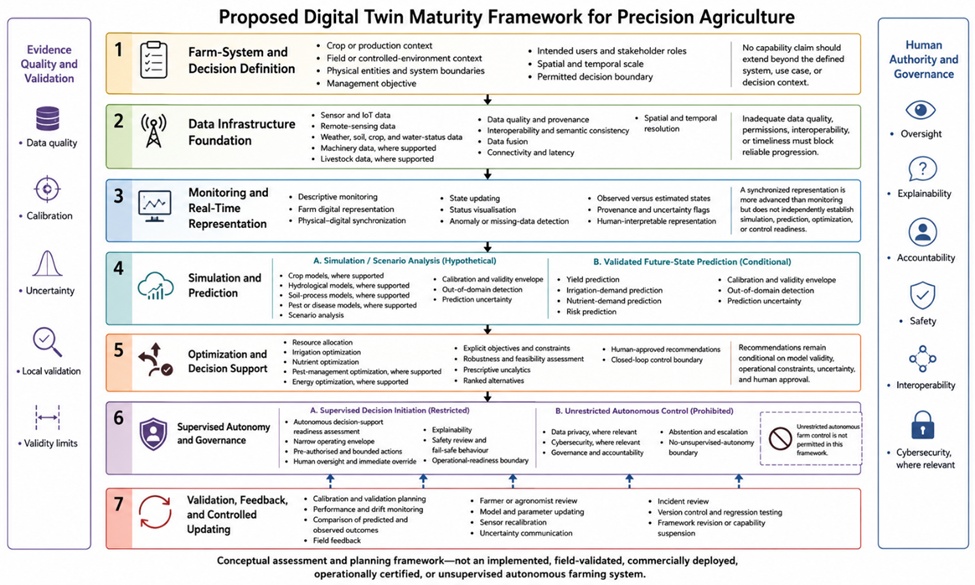
Figure 2. Proposed Digital Twin Maturity Framework for Precision Agriculture
Alt-text description:
A conceptual framework showing farm-system definition, data infrastructure, monitoring, real-time representation, simulation, prediction, optimization, supervised decision support, validation, governance, human oversight, safety boundaries, and feedback loops.
For farmers, agronomists, advisers, and farm managers, the framework may provide a common language for distinguishing monitoring tools from synchronized representations, simulations, predictions, optimization services, and supervised action systems. Rather than asking whether a product or research prototype is a digital twin, users can ask which capability is demonstrated, what data support it, how recently the representation is updated, where uncertainty is displayed, what validation has been completed, and who retains decision authority. For developers, researchers, equipment providers, and platform designers, the framework encourages modular reporting of data foundations, interfaces, model assumptions, calibration procedures, validity limits, failure responses, and human-oversight mechanisms. It also highlights the need to design for interpretability, contestability, and workflow compatibility rather than assuming that technical sophistication will ensure acceptance. Digital agriculture is embedded in changing professional roles, knowledge relationships, institutional arrangements, and power structures, making sociotechnical evaluation necessary alongside technical evaluation [22].
Implementation research should examine how maturity assessments perform across open-field agriculture, protected cultivation, livestock systems, machinery operations, irrigation systems, and mixed farming contexts without assuming that one maturity profile fits all domains. Future work should develop transparent assessment instruments, evidence thresholds, reporting templates, and inter-rater procedures for judging data quality, synchronization, model readiness, prediction validity, optimization robustness, and supervised-control safeguards. Economic feasibility should be assessed separately from technical capability because connectivity, sensing, maintenance, integration, training, and validation costs may prevent a technically advanced system from being operationally appropriate. Adoption studies identify infrastructure, affordability, skills, institutional support, trust, and perceived value as important influences on digital-agriculture uptake [23]. Research should therefore test whether maturity reporting improves procurement decisions, reduces capability overstatement, and helps stakeholders select systems proportionate to their needs and risk tolerance.
Further research is also needed on interoperability, cybersecurity, model updating, uncertainty communication, and governance across organisational boundaries. Shared semantic models and auditable interfaces may improve portability, but they must preserve provenance, access conditions, privacy where relevant, and responsibility for derived decisions. Validation studies should investigate temporal and geographic transfer, model drift, rare-event behaviour, failure recovery, human override, and the consequences of recommendations rather than focusing only on model accuracy. Sustainability teams and policymakers may use the framework to identify where environmental or resource-efficiency claims require separate outcome evidence, lifecycle assessment, or examination of rebound effects. Critical scholarship on agricultural digital twins cautions that environmental opportunities remain dependent on system boundaries, implementation conditions, evidence quality, and the wider consequences of digital infrastructure [28]. These implications are research and implementation considerations, not agronomic, operational, financial, legal, or engineering deployment advice.
This article proposes a conceptual digital twin maturity framework for precision agriculture that links descriptive monitoring, real-time farm representation, simulation and scenario analysis, prediction and optimization, and supervised autonomous decision support. The framework treats capability progression as cumulative but conditional on data quality, interoperability, spatial and temporal adequacy, synchronization, calibration, validation, uncertainty communication, explainability, human oversight, governance, safety, cybersecurity where relevant, and controlled feedback updating. It distinguishes digital twins from sensing systems, dashboards, digital models, digital shadows, farm information systems, isolated prediction tools, and unvalidated control systems. The proposed levels are intended to support transparent capability assessment, research planning, system comparison, and responsible decision-support design rather than to certify products or rank every farm toward greater automation. Digital twin maturity should therefore be judged by demonstrated and context-appropriate capability progression, together with explicit operational and human-authority boundaries, rather than by technology labels alone. No level independently proves agronomic benefit, environmental sustainability, economic value, operational readiness, or safe unsupervised autonomy.
None
None
None
None
Open Access The author(s) retain copyright. This article is licensed under the Creative Commons Attribution-NonCommercial-ShareAlike 4.0 International License. It may be shared and adapted for non-commercial purposes with appropriate attribution, an indication of changes, and distribution of adaptations under the same license. Third-party material may be subject to separate terms identified in its credit line. View the license at https://creativecommons.org/licenses/by-nc-sa/4.0/.
 Agro Intelligence Research Press