Smart farming increasingly operates through digital platforms that connect farm machinery, sensors, remote-sensing services, advisory systems, agricultural inputs, data analytics, and decision-support applications. Although these arrangements may improve coordination and service integration, their governance implications cannot be evaluated through technological functionality or productivity expectations alone. This article develops an original conceptual model for examining platform governance in smart farming as a socio-technical problem involving data power, platform dependency, value creation, value capture, farmer autonomy, and accountability. The model begins with platform ecosystem mapping, actor identification, and agricultural data-flow analysis. It then assesses how data access, control, portability, interoperability, asymmetry, algorithmic influence, switching costs, and service bundling may shape dependency relationships. A parallel value pathway distinguishes ecosystem value creation from value capture and distribution among farmers, platform operators, technology providers, advisers, suppliers, complementors, cooperatives, and public institutions. Farmer autonomy is examined through decision rights, informed participation, practical agency, human oversight, trust, digital inclusion, and access to contestation and remedy. The model further links identified risks to governance mechanisms such as data stewardship, transparency, auditability, interoperability requirements, participatory governance, farmer representation, accountability structures, and dispute resolution. Its main contribution is a structured framework for evaluating smart farming platforms through power, dependency, distribution, and agency rather than platform performance alone. The model supports conceptual analysis and research design but requires contextual implementation and empirical validation.
Smart farming is increasingly organized through interconnected digital infrastructures that collect, process, exchange, and interpret information across farms and agricultural value chains. These infrastructures include sensors, machine telematics, remote-sensing services, farm management systems, cloud platforms, decision-support tools, and data-driven advisory applications. Their integration can extend digital coordination beyond individual fields or enterprises by linking farmers with equipment providers, input suppliers, advisers, technology firms, researchers, and other service actors. Smart-farming data architectures may consequently develop as relatively closed proprietary configurations or as more open collaborative arrangements, with different implications for data exchange, partner choice, service integration, and dependency [1]. Platform governance therefore concerns not only the operation of a technical interface but also the organization of relationships among actors, data resources, decision processes, and value flows.
A platform-governance perspective is necessary because digital agriculture is not reducible to the adoption of isolated technologies. It involves changes in agricultural work, expertise, market relationships, knowledge production, privacy expectations, ownership claims, institutional responsibilities, and the distribution of decision-making authority. Social-science scholarship on digital agriculture has accordingly identified power, data ownership, privacy, skills, labour, economics, innovation systems, and responsible governance as interconnected domains requiring systematic attention [2]. These domains become especially important when a platform acts as an intermediary between multiple agricultural services, because the operator may influence which actors participate, what data can circulate, which applications are compatible, how recommendations are generated, and how benefits and risks are allocated. Platform governance should therefore be distinguished from narrower data governance: data governance focuses on the rules and practices surrounding data, whereas platform governance also addresses ecosystem participation, service coordination, algorithmic influence, value capture, accountability, and exit conditions.
The political implications of agricultural digitalization further complicate assessments based primarily on innovation and efficiency. Digital technologies may redistribute information, bargaining capacity, surveillance capability, expertise, and commercial advantage among farmers, corporations, workers, advisers, and rural institutions. Research has raised concerns about market concentration, unequal access, changes in labour and knowledge, ownership disputes, and the possibility that some digital configurations reinforce existing inequalities or create new forms of dependence [3]. These concerns do not demonstrate that all platforms are inherently exploitative, nor do they negate potential operational, environmental, or informational benefits. They instead indicate that similar technical capabilities can produce different outcomes depending on contractual arrangements, data practices, institutional safeguards, market structure, farmer capabilities, and opportunities for participation and contestation.
Claims that precision technologies or digital farming will necessarily deliver sustainable or socially beneficial transitions remain politically and institutionally contingent [4]. Platform functionality may create useful services without ensuring that farmers retain meaningful data control, receive an equitable share of value, understand algorithmic recommendations, or possess realistic alternatives when service relationships become unfavorable. The objective of this article is therefore to propose a conceptual model that links platformization, agricultural data flows, data power, platform dependency, value creation, value capture, farmer autonomy, governance risks, governance mechanisms, accountability, and feedback. Its conceptual contribution lies in distinguishing these dimensions while explaining their relationships. The model is intended to structure analysis and policy discussion rather than to serve as an empirically validated assessment instrument, a legal-compliance framework, a platform certification scheme, or a guarantee of farmer autonomy.
Platformization refers to the growing organization of agricultural technologies, services, transactions, and information flows around digital intermediaries that establish technical interfaces and participation rules. The supply side of digital agriculture includes established agricultural firms, machinery manufacturers, software developers, telecommunications providers, analytics companies, start-ups, input suppliers, financial actors, and public or research organizations. These actors may compete, collaborate, form partnerships, or bundle their capabilities within wider service ecosystems. Reviews of agricultural digitalization show that this transformation is driven by heterogeneous suppliers, business strategies, partnerships, infrastructure conditions, and capability asymmetries rather than by a single technological pathway [5]. A digital agriculture platform may therefore operate as a farm-management environment, data intermediary, application marketplace, equipment-service layer, advisory channel, or combined infrastructure through which several services are coordinated.
Platformization also restructures agricultural knowledge and advice. Digital tools can connect farmers, advisers, researchers, technology providers, and service organizations more rapidly, but they can also alter who produces knowledge, whose expertise becomes visible, and which forms of evidence are incorporated into recommendations. Digitalisation of agricultural knowledge and advice networks has been associated with changes in connectivity, transparency, skills, organizational roles, and relationships among advisory actors [6]. Agricultural advisers may become platform complementors who interpret data, contextualize algorithmic outputs, mediate between providers and farmers, and combine technical recommendations with local knowledge. At the same time, their work may become dependent on access to platform data, proprietary analytics, compatible interfaces, and provider-defined service conditions. The platformization of advice is therefore not simply the digitization of an existing consultation process; it may reconfigure the authority, independence, and economic position of advisers within the wider ecosystem.
Institutional responses to platformization extend beyond farms and commercial providers. Agricultural knowledge and innovation systems include extension services, research institutions, public agencies, industry bodies, educational organizations, farmer associations, and other intermediaries that may need to adjust their roles as data-driven services expand. Evidence from agricultural innovation systems indicates that digital agriculture prompts emerging organizational responses involving new capabilities, collaborations, responsibilities, and forms of coordination [7]. Public institutions may contribute infrastructure, public-interest research, extension capacity, or oversight, while cooperatives and farmer organizations may support shared services, collective representation, or data-stewardship arrangements where appropriate. These possible roles should not be assumed to be uniformly available or effective. Their relevance depends on institutional capacity, representation, governance quality, local needs, and the extent to which they can influence platform rules rather than merely facilitate adoption.
A platform ecosystem can create coordination benefits by connecting farmers with technology providers, equipment firms, input suppliers, advisers, data-service companies, and other complementors through shared technical and organizational arrangements. Research on digital innovation ecosystems in agri-food emphasizes the importance of actor roles, ecosystem orchestration, shared value propositions, organizational design, and governance [8]. The platform operator may reduce fragmentation by enabling data exchange, integrating applications, and coordinating service delivery. However, the same coordinating position can create gatekeeping power when the operator controls technical standards, access conditions, data visibility, or relationships with complementors. Platformization should therefore be analyzed as a dual process: it can facilitate connectivity and service innovation while simultaneously reorganizing power, dependency, decision rights, and value capture. Neither outcome follows automatically from the existence of a platform; both depend on how the ecosystem is designed and governed.
Agricultural platforms may process diverse data categories, including farm records, sensor observations, machine-generated data, remote-sensing imagery, soil measurements, crop information, weather data, and operational records. These categories differ in provenance, sensitivity, technical format, and potential downstream use. Data ownership is often invoked as the central governance issue, but ownership does not by itself clarify who may access data, determine purposes, authorize onward sharing, combine datasets, retain records, or obtain usable copies for transfer. Farmers’ reluctance to share data has been associated with uncertainty surrounding legal rights, privacy, contracts, access, control, and the purposes for which data may be used [9]. A governance analysis must therefore separate ownership claims from data access, practical control, portability, interoperability, consent, and the ability to withdraw or challenge uses. This distinction is essential because possession of machinery or generation of farm data does not necessarily establish effective control over data once it enters a platform ecosystem.
Data power emerges when an actor’s access to extensive data, analytics, contractual knowledge, infrastructure, or cross-platform visibility allows it to influence other actors’ options. Platform operators and technology providers may possess greater capacity than individual farmers to aggregate records, identify patterns, develop predictive services, negotiate terms, or monetize secondary uses. Such asymmetry does not automatically imply misuse, because specialized expertise and aggregation can create valuable services. However, opaque data practices may undermine trust when farmers cannot determine what information is collected, how it is combined, who receives access, or how resulting value is shared. Empirical research on smart farming has shown that trust is closely connected to transparency about data practices and credible expectations of benefit-sharing [10]. Transparency must therefore address both data use and value flows. Merely notifying users that data are processed may be insufficient when disclosures do not clarify consequences, downstream recipients, commercial interests, or realistic choices.
Dependency develops when important farm functions become difficult to maintain without continued access to a specific platform, provider, or linked ecosystem. Technical dependency may arise from proprietary data formats, incompatible interfaces, equipment-software integration, or the loss of metadata during transfer. Economic dependency may result from sunk investments, service bundles, subscription structures, or the cost of retraining. Relational dependency may develop where advisers, suppliers, or complementors are available only through one platform. Uneven digital capabilities can intensify these effects because farms differ in financial resources, connectivity, technical knowledge, bargaining position, and ability to evaluate alternatives. Responsible-innovation analysis has shown that engagement with digital farming is uneven and that differences in capacity and participation can distribute benefits and risks asymmetrically [11]. Data portability and interoperability may reduce some switching barriers, but they do not eliminate contractual, organizational, learning, or network-related forms of lock-in.
Algorithmic influence adds a decision-related dimension to platform dependency. Data-driven recommendations may prioritize actions, rank options, generate alerts, or shape perceptions of risk. In agri-environmental governance, digitization can alter visibility, monitoring relationships, knowledge authority, and the conditions under which farmers exercise professional judgment [12]. Research on algorithmic governmentality in precision agriculture also suggests that agritech narratives and algorithmic rationalities may shape trust, farmer identity, and the perceived authority of experiential knowledge [13]. Decision support does not necessarily remove farmer autonomy, and frequent use does not prove dependency. The relevant questions are whether users understand the basis and limitations of recommendations, retain meaningful override authority, possess alternative sources of advice, and can continue competent decision-making if a service is unavailable. Autonomy must consequently be evaluated through practical capability, decision rights, contestability, and exit conditions rather than inferred from nominal ownership or platform access. Table 1 summarises data power and platform dependency dimensions in smart farming platform ecosystems.
Table 1. Data Power and Platform Dependency Dimensions in Smart Farming: Farm Data, Data Ownership, Data Access, Data Control, Data Portability, Interoperability, Data Asymmetry, Vendor Lock-In, Switching Costs, Algorithmic Influence, Decision-Support Dependency, and Autonomy Boundaries
Governance component | Core power or dependency question | Required evidence or context | Platform function | Potential effect | Risk of overinterpretation | Governance need | Conceptual model role |
Farm data | Who can collect, combine, reuse, and benefit from farm-originated data? | Provenance, purposes, contracts, actor roles, and downstream uses | Supplies inputs for analytics and services | Operational insight and ecosystem coordination | Treating all farm data as legally, technically, or economically equivalent | Purpose specification, provenance records, stewardship, and traceability | Foundational data-flow layer |
Sensor data | Who controls continuous observations generated within production environments? | Device control, calibration, transmission, retention, and access arrangements | Produces granular and time-sensitive observations | More responsive monitoring and targeted action | Assuming that sensor data are accurate, complete, or farmer-controlled | Quality assurance, access controls, retention rules, and portability | High-frequency source of informational power |
Machine data | Can farmers retrieve and transfer equipment-generated records in usable form? | Machine interfaces, licences, service agreements, APIs, and metadata | Supports diagnostics, automation, maintenance, and optimization | Operational efficiency and equipment coordination | Equating ownership of machinery with control over generated data | Contractual clarity, interoperable interfaces, and usable export mechanisms | Technical lock-in pathway |
Remote-sensing data | Who may connect external imagery or observations to identifiable farms and decisions? | Resolution, licensing, inference methods, linkage practices, and validation | Supports spatial monitoring, forecasting, and comparison | Broad-area assessment and decision support | Treating remotely sensed inference as neutral, precise, or context-complete | Transparency, validation, access rules, and uncertainty communication | External-observation power source |
Operational data | Who controls records concerning inputs, yields, workflows, costs, and farm performance? | Commercial sensitivity, purpose, retention, sharing, and competitive context | Enables personalization, benchmarking, and service integration | Management support and tailored services | Ignoring surveillance, competitive, or bargaining implications | Purpose controls, consent processes, audit logs, and access limitation | Commercially sensitive data layer |
Data ownership | What specific rights or claims are associated with a dataset? | Applicable contracts, legal context, technical possession, and stakeholder expectations | Frames bargaining and control claims | May clarify expectations and responsibilities | Presenting ownership as a complete governance solution | Separate analysis of ownership, access, control, use, portability, and responsibility | Claim-definition layer |
Data access | Who may view, query, retrieve, or use data, and under what conditions? | Roles, authentication, permissions, interfaces, timing, and revocation | Enables oversight, service provision, reuse, and competition | Innovation, participation, and farmer visibility | Assuming that formal access provides usable or meaningful control | Role-based access, reciprocal visibility, revocation, and usable formats | Participation gateway |
Data control | Who determines purposes, combination, retention, onward sharing, and deletion? | Explicit decision rights, governance procedures, and enforceable responsibilities | Shapes downstream data uses and relationships | Greater agency where control is meaningful | Using control as an undefined synonym for ownership | Defined decision rights, accountability, and lifecycle governance | Central data-power mechanism |
Data portability | Can complete and usable data leave the platform without substantial loss? | Machine-readable formats, metadata, completeness, cost, timing, and transfer security | Supports migration, reuse, and service substitution | Lower switching friction and broader choice | Assuming that an export option provides practical portability | Transfer standards, completeness tests, migration support, and secure delivery | Contestability mechanism |
Data interoperability | Can different systems exchange and meaningfully interpret data? | Technical, semantic, organizational, and governance standards | Connects platforms, services, machinery, and complementors | Ecosystem coordination and provider choice | Assuming that interoperability removes all forms of lock-in | Open interfaces, shared semantics, conformance testing, and ongoing governance | Ecosystem-connectivity mechanism |
Data asymmetry | Which actors possess superior visibility, analytical capacity, or contractual knowledge? | Comparative information, capabilities, resources, and market position | Concentrates informational and strategic advantage | Specialized services and coordination capacity | Treating every informational difference as abusive power | Disclosure, capacity building, procedural safeguards, and misuse controls | Power-amplification mechanism |
Data power | How does control over data and analytics shape knowledge, choices, and market relationships? | Evidence on access, control, aggregation, analytics, consequences, and alternatives | Influences service design, recommendations, and ecosystem rules | Coordination and innovation, or unequal influence | Inferring domination solely from data volume or technical capacity | Power mapping, transparency, contestability, and accountability | Central evaluative dimension |
Platform dependency | Which important farm functions rely on continued access to a particular platform? | Service criticality, availability of substitutes, integration depth, and exit conditions | Bundles data, analytics, applications, and workflows | Convenience, continuity, and integrated services | Equating platform use or satisfaction with dependency | Dependency mapping, redundancy, exit planning, and alternative access | System-level dependency dimension |
Vendor lock-in | What prevents migration to another provider or ecosystem? | Proprietary formats, tied services, contracts, network effects, and sunk investments | Retains users, complementors, and associated data flows | Service continuity and stable integration | Claiming lock-in without demonstrated switching barriers | Portability, interoperability, modularity, and fair exit conditions | Specific dependency mechanism |
Switching costs | What financial, technical, organizational, learning, and relational costs accompany exit? | Migration effort, retraining, downtime, data loss, replacement services, and contract terms | Stabilizes long-term participation | Predictability and sustained integration | Measuring switching costs only through subscription prices | Cost transparency, migration assistance, data continuity, and comparative assessment | Dependency-severity indicator |
Ecosystem dependency | Does access to advisers, suppliers, applications, or complementors depend on one focal platform? | Actor-network mapping, exclusivity, interfaces, and alternative channels | Coordinates linked actors and bundled services | Wider service availability and reduced fragmentation | Assuming that all interdependence is undesirable | Multi-provider options, fair complementor access, and focal-actor accountability | Network-level dependency mechanism |
Algorithmic influence | How do rankings, defaults, predictions, and recommendations shape farm decisions? | Model purpose, data inputs, uncertainty, interfaces, explanations, and user behavior | Converts data into prioritized actions or options | More timely and consistent decision support | Equating influence with coercion or autonomous control | Explainability, uncertainty disclosure, override, and alternative advice | Decision-power pathway |
Decision-support dependency | Can farmers assess recommendations critically and operate if the service is unavailable? | Skills, fallback procedures, human expertise, service reliability, and alternatives | Embeds analytics within routine decision processes | Speed, consistency, and reduced information burden | Assuming repeated use demonstrates loss of competence or agency | Training, human oversight, redundancy, and plural advisory access | Autonomy-risk pathway |
No autonomy-guarantee boundary | What autonomy risks remain after technical safeguards are introduced? | Institutional, contractual, economic, social, and capability evidence | Limits deterministic interpretation of governance measures | More cautious and accountable platform assessment | Claiming that ownership, portability, interoperability, or transparency guarantees autonomy | Explicit boundary statements, stakeholder evaluation, and empirical validation | Model-wide claim boundary |
Value creation in digital agriculture occurs when data, infrastructure, knowledge, and services are combined to support useful farm or ecosystem functions. Agricultural advisers can contribute by interpreting platform outputs, adapting recommendations to farm conditions, helping users evaluate uncertainty, and connecting technical tools with practical knowledge. Research on digital innovation with advisers indicates that these roles require new practices, capabilities, relationships, and forms of support [14]. Advisers should therefore be treated as active platform complementors rather than passive delivery channels. Their contribution may include contextualizing data-driven recommendations, identifying unsuitable outputs, facilitating farmer learning, and communicating user needs to technology providers. The value generated through these activities depends on adviser access to relevant data, professional independence, platform compatibility, and the ability to combine digital evidence with agronomic and experiential knowledge.
Cloud-based and platform-mediated services can also reorganize advisory business models and service bundles. Digital systems may combine farm records, equipment data, analytics, remote observations, recommendations, maintenance, and commercial services within a single interface. Studies of advisory services in smart-farming environments suggest that digitalisation changes how advisers make sense of data, interact with farmers, and position their expertise within emerging service arrangements [15]. Service bundling may reduce transaction costs and simplify access to multiple functions, but it can also obscure conflicts of interest or increase dependency where advice is tied to particular inputs, equipment, subscriptions, or providers. The governance question is not whether bundling is inherently beneficial or harmful. It is whether users can identify commercial relationships, understand how recommendations are generated, obtain alternative services, separate components where necessary, and exit without disproportionate loss.
Value creation is also a system-level coordination problem. Digital agriculture connects technological infrastructures with research, advisory organizations, markets, public institutions, and farmer practices. The concept of a Digital Agricultural Innovation System emphasizes that digital transformation operates across technological, organizational, sectoral, and policy levels and therefore requires coordinated responses rather than isolated technology deployment [16]. Within such systems, public institutions may contribute open infrastructure, research, extension, inclusion measures, or governance support, while cooperatives may facilitate collective service access, representation, or data stewardship where member capacity and governance arrangements permit. Digitalisation also changes how agricultural knowledge is produced, validated, distributed, and applied [17]. Platforms may broaden access to information while privileging forms of knowledge that are easily quantified or standardized. Value assessment should consequently include the preservation of contextual interpretation, plural expertise, farmer learning, and the ability to challenge technically generated recommendations.
A central distinction must be maintained between value creation, value capture, and value distribution. A platform ecosystem may generate aggregate operational or informational value without distributing gains equitably among the actors who contribute data, labour, infrastructure, expertise, or market access. Economic modeling of smart farming indicates that provider market power can affect how gains are distributed between farmers and technology-service actors [18]. This does not establish that a particular provider captures excessive value, nor does it provide a universal estimate of distributional outcomes. It demonstrates why platform analysis must examine pricing, bargaining conditions, control of critical data, service ties, complementor access, and realistic alternatives. Claims of shared value require actor-level evidence about who receives benefits, who bears costs and risks, and who can influence ecosystem rules. Fair participation similarly requires more than formal availability; it depends on access, capability, representation, transparency, and reasonable conditions for entry, influence, and exit.
Farmer autonomy concerns the practical capacity to pursue farm objectives, exercise judgment, retain meaningful alternatives, and challenge decisions that are mediated by digital platforms. This capacity can be affected when platforms integrate machinery, data storage, analytics, advisory services, and commercial relationships so tightly that leaving one component disrupts the others. Digital farming platforms may create technical and behavioural trajectories that become difficult to reverse because users accumulate data, learn platform-specific routines, and organize decisions around embedded tools. Such lock-in is contingent rather than inevitable, but it may arise when proprietary formats, service bundles, network effects, or algorithmic routines narrow the range of viable alternatives [19]. Autonomy assessment must therefore examine actual switching conditions, data continuity, fallback capabilities, and decision rights rather than assuming that continued platform use demonstrates either voluntary commitment or loss of agency.
Governance risks are also shaped by the futures and priorities embedded in digital-agriculture strategies. Policy and industry narratives commonly emphasize productivity, efficiency, sustainability, and technological modernization, but they may devote less attention to farmer voice, distributional effects, knowledge diversity, or alternative forms of agricultural development. Analysis of prominent digital-agriculture futures has shown that dominant visions can privilege technological optimism while underrepresenting equity and plural pathways [20]. This imbalance matters because platform ecosystems are not neutral delivery mechanisms. Their design choices can favour particular farm scales, production models, data-intensive practices, or commercial actors. Farmer autonomy may consequently be constrained not only through explicit contractual restrictions but also through infrastructures that make some choices easier, more visible, or more economically viable than others.
Digital inclusion is a related autonomy condition. Farmers differ in connectivity, capital, digital literacy, advisory access, language, farm scale, production system, and ability to evaluate data-driven claims. A platform that is technically available may still be inaccessible or unsuitable for users who lack compatible machinery, reliable internet access, training, or negotiating capacity. Agriculture 4.0 has therefore been framed as a transformation that should be evaluated in relation to people, production, and the planet rather than productivity alone [21]. For platform governance, this means assessing whether participation expands meaningful capability or simply shifts responsibilities and costs to farmers. Inclusion also requires attention to how human oversight is maintained, whether users can obtain non-platform advice, and whether practical and experiential knowledge remains legitimate within increasingly standardized decision environments.
Algorithmic influence may affect farmer agency when recommendations, rankings, alerts, defaults, or behavioural prompts structure what users perceive as relevant or desirable. Critical analysis of the “digital farmer” has shown how data-driven systems may configure users as subjects of behavioural guidance rather than merely providing neutral information [22]. Algorithmic opacity can intensify this effect when farmers cannot understand the material factors behind recommendations, identify commercial incentives, evaluate uncertainty, or contest outputs. Smart-farming innovation may also become socially misconfigured when technical priorities are detached from farmer needs, power relations, and broader rural consequences [23]. Governance analysis should therefore include informed consent, data-access asymmetry, decision-support dependency, reduced bargaining power, trust erosion, accountability gaps, dispute risks, and meaningful human override. Access to a platform must not be treated as evidence of empowerment, and the presence of governance mechanisms must not be interpreted as proof of legal compliance or secured autonomy.
Table 2 maps value creation, value capture, farmer autonomy, and governance risks in digital agriculture ecosystems.
Table 2. Value Creation, Value Capture, Farmer Autonomy, and Governance Risks in Digital Agriculture Ecosystems: Platform Actors, Data-Driven Services, Service Bundling, Value Distribution, Farmer Agency, Decision Rights, Algorithmic Opacity, Lock-In, Digital Exclusion, Trust, Accountability, and Claim Boundaries
Ecosystem or autonomy component | Core governance question | Required input or context | Value or risk mechanism | Potential effect | Safeguard need | Responsible actor | Claim boundary |
Farmers | How do farmers contribute to and benefit from platform ecosystems? | Farm data, labour, capital, practical knowledge, service use, and participation conditions | Farmers generate data and apply platform-supported decisions | Operational value, learning, or unequal burden and capture | Representation, benefit transparency, bargaining support, and usable alternatives | Farmers, farmer organizations, platform operators, and public institutions | Participation does not prove empowerment or equitable benefit |
Platform operators | How does ecosystem orchestration create both value and governing power? | Platform rules, interfaces, data access, complementor relations, and service conditions | Operators coordinate data, applications, transactions, and participation | Integration and scale, or gatekeeping and unilateral rule-setting | Platform accountability, rule transparency, auditability, and participatory oversight | Platform operators and relevant oversight institutions | Orchestration does not establish fair governance |
Technology providers | How are technical services, analytics, and infrastructure translated into value? | Software, hardware, models, expertise, service contracts, and support capacity | Providers develop and maintain digital capabilities | Innovation, support, or proprietary dependence | Interoperability, clear service terms, validation, and accountability | Technology providers | Technical capability does not demonstrate equitable value distribution |
Agricultural advisers | Can advisers preserve independent judgment while using platform data and tools? | Agronomic expertise, farm context, platform access, skills, and professional relationships | Advisers interpret outputs and mediate between platforms and farmers | Contextualized decisions or dependence on provider-defined analytics | Professional independence, plural data access, training, and disclosure of affiliations | Advisers, advisory organizations, and platform providers | Adviser participation does not guarantee independent advice |
Input suppliers | Are recommendations connected to commercial interests in inputs or services? | Product relationships, recommendation logic, incentives, and disclosure | Platforms may link advice with input selection or purchasing | Convenience and targeted use, or conflicted recommendations | Conflict disclosure, separation of roles, and alternative options | Input suppliers and platform operators | Commercial integration does not establish recommendation bias without evidence |
Equipment providers | Can machinery, machine data, and software services be separated or transferred? | Equipment interfaces, telematics, licences, maintenance arrangements, and data formats | Equipment-service integration creates operational and data value | Improved coordination or machine-linked lock-in | Portability, interoperable interfaces, migration support, and transparent licences | Equipment providers and platform operators | Machinery ownership does not automatically establish machine-data control |
Data service providers | How are analytical and secondary-use benefits created and distributed? | Data access, models, aggregation practices, purposes, and commercial arrangements | Providers transform data into benchmarks, predictions, or optimization services | New insights or opaque monetization and asymmetrical returns | Purpose transparency, access rules, benefit arrangements, and audit trails | Data service providers and data stewards | Data analysis does not itself establish legitimate reuse or fair compensation |
Cooperatives | Can collective arrangements strengthen farmer voice and data stewardship? | Member governance, shared infrastructure, organizational capacity, and trust | Collective structures may aggregate demand, data, services, or bargaining | Shared capability and stronger representation, or internal inequality | Democratic governance, member accountability, transparency, and capacity building | Cooperatives and their members | Cooperative form does not guarantee inclusive or effective governance |
Public institutions | What public-interest role should institutions play in digital ecosystems? | Infrastructure gaps, research needs, inclusion conditions, market structure, and public mandates | Institutions may support extension, open infrastructure, standards, or oversight | Inclusion and coordination, or excessive centralization and surveillance | Proportionality, accountability, stakeholder participation, and independent review | Public institutions | Public involvement does not automatically make a platform fair or trustworthy |
Platform complementors | Can third-party services participate without discriminatory dependence on a focal platform? | APIs, access rules, revenue terms, technical standards, and market visibility | Complementors extend platform functionality and specialization | Service variety or discriminatory exclusion and appropriation | Fair access, predictable rules, interoperability, and dispute mechanisms | Platform operators and complementors | Complementor presence does not prove an open ecosystem |
Data-driven services | Does a service address a defined farm problem using suitable and validated data? | Data quality, contextual relevance, model purpose, uncertainty, and user needs | Data are converted into monitoring, prediction, benchmarking, or recommendations | Timely support or misleading, poorly contextualized outputs | Validation, explanation, uncertainty communication, and user feedback | Service providers, advisers, and users | Availability of analytics does not demonstrate agronomic or economic benefit |
Service bundling | Does integration improve convenience while preserving meaningful choice? | Relationships among hardware, software, data, advice, finance, and subscriptions | Multiple services are combined under one commercial or technical arrangement | Lower transaction costs or tied dependence and difficult exit | Modularity, unbundled options, disclosure, and migration pathways | Platform operators and service providers | Bundling is not inherently beneficial or anticompetitive |
Value creation | What operational, informational, environmental, or organizational value is produced? | Actor contributions, service use, resource inputs, and outcome evidence | Data, infrastructure, knowledge, and coordination generate potential benefits | Improved decisions and coordination | Context-specific validation and stakeholder assessment | All contributing ecosystem actors | Potential value must not be presented as realized value |
Value capture | Which actors appropriate revenue, strategic advantage, data access, or market position? | Pricing, contracts, data control, market structure, and bargaining conditions | Powerful actors may retain a disproportionate share of ecosystem gains | Investment incentives or unequal appropriation | Transparency, competition, bargaining support, and accountability | Platform operators, providers, institutions, and farmer organizations | Unequal capture cannot be inferred without actor-level evidence |
Value distribution | How are benefits, costs, risks, and responsibilities allocated? | Economic, contractual, participation, and outcome evidence | Distribution reflects bargaining power and ecosystem rules | Shared incentives or farmer under-compensation and risk transfer | Benefit-sharing, representation, disclosure, and distributive evaluation | All ecosystem actors | Aggregate ecosystem growth does not establish fair distribution |
Farmer agency | Can farmers understand, contest, modify, or decline platform-mediated choices? | Skills, explanations, feedback channels, alternatives, and interface design | Opaque or restrictive systems may weaken meaningful action | Informed engagement or passive compliance | Explainability, training, override, and plural advice | Platform providers, advisers, and farmers | Agency must be assessed empirically and contextually |
Decision rights | Who retains authority over data uses and farm actions? | Contracts, permissions, workflows, governance rules, and practical capability | Authority may shift toward providers or automated processes | Clear coordination or reduced farmer control | Explicit allocation, revocation rights, and human oversight | Contracting parties and platform operators | Decision support must not be equated with transferred decision authority |
Informed consent | Are participation and data uses understandable, specific, and revisable? | Notice, purposes, downstream uses, alternatives, and withdrawal conditions | Bundled or vague terms can weaken meaningful consent | Legitimate participation or unanticipated use | Layered communication, purpose specification, revocation, and realistic alternatives | Data stewards and platform operators | Consent does not eliminate structural power asymmetry |
Data-access asymmetry | Can farmers retrieve and understand data as readily as providers? | Access permissions, formats, interfaces, metadata, and analytical capability | Providers may possess broader visibility and interpretive capacity | Better services or weaker farmer bargaining and oversight | Reciprocal access, usable exports, transparency, and capacity building | Platform operators and data stewards | Formal access does not establish equivalent analytical power |
Algorithmic opacity | Can users understand the material basis and limitations of recommendations? | Model documentation, explanations, uncertainty, inputs, and interface evidence | Black-box systems limit scrutiny and contestation | Efficient advice or misplaced trust and uncorrected error | Audience-appropriate explainability, validation, and human review | Model developers and platform operators | Explanation does not prove correctness, fairness, or safety |
Algorithmic influence | How do rankings, defaults, alerts, or nudges shape decisions? | Interface design, recommendation logic, user behaviour, and alternatives | Choice architecture directs attention and establishes default pathways | Reduced cognitive burden or narrowed decision space | Disclosure, alternative options, override, and behavioural evaluation | Platform operators and providers | Influence must not be described as coercion without evidence |
Decision-support dependency | Can competent decisions continue if a platform service fails or is withdrawn? | Skills, fallback procedures, alternative advice, and service criticality | Routine reliance can reduce resilience or alternative capacity | Consistency and speed, or operational vulnerability | Redundancy, training, human oversight, and plural advice | Farmers, advisers, and providers | Repeated use alone does not establish dependency or deskilling |
Vendor lock-in | Can users change providers without excessive data, service, or investment loss? | Portability, interoperability, contracts, learning costs, and service bundles | Proprietary interfaces and accumulated investments raise exit costs | Continuity or reduced bargaining and provider choice | Migration support, open interfaces, fair exit terms, and modularity | Providers, platform operators, and policymakers | Lock-in must be demonstrated through actual barriers |
Reduced bargaining power | Can farmers influence terms, prices, data uses, and value shares? | Market alternatives, concentration, information, organization, and collective capacity | Fragmentation and asymmetry weaken individual negotiation | Predictable standard terms or unfavourable allocation of value and risk | Collective representation, disclosure, fair procedures, and competition support | Farmer organizations, platforms, and public institutions | Farmers must not be treated as a homogeneous bargaining group |
Digital exclusion | Who cannot access or meaningfully use platform services? | Connectivity, cost, literacy, design, language, farm scale, and support | Participation requirements exclude or disadvantage some users | Unequal access to services and widening disparities | Inclusive design, infrastructure, training, affordability, and non-digital alternatives | Public institutions and service providers | Platform availability does not establish inclusion |
Trust erosion | Do opaque practices, failures, or inequitable arrangements weaken confidence? | User expectations, data practices, service reliability, value distribution, and remedy | Broken commitments and hidden uses undermine relationships | Resistance, disengagement, or reduced data sharing | Transparency, accountability, remedy, and credible commitments | All ecosystem actors | Trust is contextual and cannot be guaranteed through disclosure alone |
Accountability gap | Can affected actors identify who is responsible for errors, harm, or disputed decisions? | Decision-chain mapping, actor roles, logs, authority, and remedy arrangements | Distributed systems diffuse responsibility | Flexible collaboration or unresolved harm | Responsibility allocation, auditability, escalation, and remedy | Platform operators, providers, advisers, and institutions | Accountability mapping does not determine legal liability |
Dispute risk | Are complaints and conflicts resolved through accessible and independent processes? | Contract terms, evidence access, timelines, costs, and enforcement | Asymmetric procedures discourage challenge | Efficient resolution or persistent unresolved conflict | Independent dispute resolution, documentation, and appeal | Platform operators and relevant institutions | A dispute process does not itself establish legal sufficiency |
Human oversight | Can competent people review, interrupt, or correct platform-supported decisions? | Workflow authority, expertise, time, interfaces, and override capability | Automation may bypass contextual judgment | Efficient operation or uncorrected error and overreliance | Meaningful review, override authority, competence, and documentation | Farmers, advisers, and providers | Human presence alone does not constitute meaningful oversight |
No farmer-empowerment claim boundary | What evidence would demonstrate genuine empowerment? | Decision control, capability, value outcomes, participation, and farmer validation | Promotional claims may substitute for measured agency | Overstated social benefit | Explicit indicators, contextual evaluation, and farmer-centred research | Researchers, providers, and evaluators | Adoption, access, or data ownership must not be equated with empowerment |
No legal-compliance claim boundary | Does the conceptual model establish compliance with applicable law? | Jurisdiction-specific legal interpretation and authoritative assessment | Governance concepts may be mistaken for legal determinations | False assurance | Separate qualified legal review | Relevant legal and institutional authorities | The model is not a legal-compliance instrument |
Platform governance mechanisms should be selected in response to identified relations of power, dependency, value distribution, and autonomy rather than applied as a generic checklist. Agricultural big-data analytics involves different forms of power, including control over resources, informational advantage, agenda setting, and the capacity to shape behaviour or institutional arrangements [24]. Governance should therefore clarify which actors exercise authority, whose interests are affected, and what forms of answerability and remedy are available. Transparency mechanisms can make data practices, algorithmic functions, service relationships, and value flows more visible, while auditability can preserve records of access, changes, model versions, and decisions. Neither mechanism is sufficient by itself. Transparency may overwhelm users or disclose information without providing influence, and audit logs may exist without an institution capable of reviewing them or imposing consequences.
Data governance must also move beyond an exclusive focus on ownership. Agricultural platform relationships involve data access, practical control, reuse conditions, portability, interoperability, contracts, competition, and institutional responsibilities. Comprehensive agricultural data-governance analysis has emphasized that the ownership debate alone cannot resolve the broader distribution of rights, access, and market power [25]. Data-sharing agreements should therefore specify purposes, categories of data, authorized users, retention periods, onward sharing, withdrawal procedures, responsibilities, and benefit arrangements in understandable terms. Data stewardship can assign responsibility for quality, provenance, access decisions, and lifecycle management. Portability mechanisms should provide complete, machine-readable data with adequate metadata, while interoperability requirements should address semantic and organizational compatibility as well as technical transfer. These arrangements can support contestability, but they cannot guarantee practical switching, fairness, or compliance.
Participatory governance provides a means of incorporating farmer experience, advisory expertise, public interests, and the perspectives of affected ecosystem actors into platform rules and review processes. Responsible research and innovation in smart farming has been structured around anticipation, inclusion, reflexivity, and responsiveness [26]. Applied to platform governance, anticipation requires consideration of possible dependencies, exclusions, and unintended uses before they become embedded. Inclusion requires participation that is representative, accessible, resourced, and capable of influencing decisions. Reflexivity requires providers and institutions to examine their own assumptions, incentives, and power. Responsiveness requires documented changes when concerns, failures, or new evidence emerge. Farmer representation, cooperative data governance, and collective bargaining may support these goals where they are institutionally feasible, democratically governed, and attentive to diversity among farmers.
Accountability structures should connect authority with obligations to explain, correct, and remedy. Platform operators may be responsible for ecosystem rules, access conditions, and technical coordination, while technology providers may be responsible for model design, software performance, and documentation. Data stewards may oversee provenance and permissions, advisers may be responsible for professional interpretation, and public institutions may support infrastructure, oversight, digital inclusion, or policy coordination. Access controls and cybersecurity measures are relevant where unauthorized access, data corruption, or service disruption could affect farm operations, but security does not establish fairness or farmer agency. Dispute-resolution mechanisms should be accessible, timely, evidence-based, and sufficiently independent to permit meaningful challenge. Platform accountability ultimately requires more than voluntary disclosure; it depends on enforceable responsibilities, credible oversight, stakeholder feedback, and contextual validation. Even a comprehensive mechanism portfolio cannot eliminate all governance risks or establish legal sufficiency.
The proposed conceptual model treats smart farming as a socio-cyber-physical platform ecosystem in which farms, machinery, sensors, digital services, organizations, and human decision-makers are interconnected. Socio-cyber-physical analysis is useful because agricultural digital transformation cannot be understood by examining technical infrastructure separately from social relationships and physical production conditions. A responsibilisation framework for digital agriculture similarly emphasizes interactions among social, cyber, and physical subsystems and the need to allocate responsibility across actors and levels [27]. The proposed model builds on this logic while focusing specifically on platform governance. It proceeds through linked stages rather than a linear adoption sequence, allowing information from risk assessment, stakeholder feedback, accountability review, and implementation experience to revise earlier assumptions.
The first stage is platform ecosystem mapping. It identifies the focal platform or interconnected platforms, ecosystem boundaries, farmers, platform operators, technology providers, equipment manufacturers, input suppliers, agricultural advisers, data-service providers, complementors, cooperatives where relevant, and public institutions where relevant. The second stage clarifies actor roles, resources, responsibilities, and dependencies. An agricultural innovation ecosystem perspective supports attention to interdependent actors, niches, institutions, relationships, and resources rather than a linear model of innovation delivery [28]. The third stage maps agricultural data flows, including the collection, transfer, combination, analysis, retention, deletion, and possible reuse of farm, sensor, machine, remote-sensing, soil, crop, weather, and operational data. These stages establish who contributes resources, who gains visibility, and where platform rules shape participation.
The fourth stage assesses data power by distinguishing ownership, access, control, portability, interoperability, analytical capacity, and data asymmetry. The fifth examines platform dependency through vendor lock-in, switching costs, service criticality, equipment integration, ecosystem dependence, algorithmic influence, and decision-support reliance. The sixth maps value creation, while the seventh separately evaluates value capture and distribution. The eighth assesses farmer autonomy through practical agency, decision rights, informed consent, access to alternative services, bargaining capacity, human oversight, trust, and opportunities to challenge decisions. Human values and data sovereignty have been proposed as design considerations for agricultural data spaces, particularly in relation to control, privacy, justice, participation, and stakeholder expectations [29]. In the present model, these considerations are treated as design and assessment requirements rather than evidence that sovereignty or autonomy has been achieved.
The ninth stage identifies governance risks by connecting observed power, dependency, distributional, and autonomy conditions to plausible consequences and affected actors. The tenth stage selects governance mechanisms that correspond to the identified risks, such as data-sharing agreements, stewardship, portability, interoperability, transparency, explainability, auditability, participation, representation, access controls, accountability structures, and dispute resolution. The eleventh maps accountability by identifying who controls each relevant decision, who must explain or correct it, what records are required, and what remedy is available. Mechanisms should not be selected simply because they are widely recommended. Their suitability depends on the platform’s architecture, market position, data practices, actor capabilities, production context, and institutional environment. The model therefore requires implementation testing and stakeholder review rather than assuming that formal governance provisions produce their intended effects.
The final stages translate the analysis into practical implications and policy questions, gather stakeholder feedback, and refine the model. Feedback may reveal missing actors, hidden data transfers, underestimated switching barriers, unequal participation, unforeseen value capture, or governance mechanisms that are difficult to use. Model refinement should document revisions and preserve disagreement where stakeholders hold different interests or interpretations. Two boundaries apply across every stage. First, the model does not establish legal compliance because that determination requires jurisdiction-specific legal analysis. Second, the model does not guarantee farmer autonomy because autonomy depends on actual institutional, contractual, economic, technical, and social conditions. Table 3 presents the proposed conceptual model of platform governance in smart farming.
Table 3. Proposed Conceptual Model of Platform Governance in Smart Farming: Platform Ecosystem Mapping, Actor Roles, Data Flows, Data Power, Dependency, Value Creation, Value Capture, Farmer Autonomy, Governance Risks, Governance Mechanisms, Accountability, Practical Implications, Policy Implications, Feedback, and Claim Boundaries
Conceptual model stage | Core purpose | Required input | Conceptual function | Potential output | Validation need | Failure risk | Feedback mechanism | Decision boundary |
Platform ecosystem mapping | Define the focal platform environment and its boundaries | Platform architecture, linked services, infrastructures, markets, and institutional context | Establishes the scope of analysis | Platform ecosystem map | Stakeholder and technical verification | Omitted actors, hidden services, or incorrectly defined boundaries | Update the map when relationships, services, or infrastructures change | The map is a conceptual representation, not a platform certification |
Actor and role identification | Clarify who provides, controls, uses, influences, and is affected | Actor inventory, formal roles, practical activities, resources, and interests | Allocates functions, authority, and exposure | Actor-role matrix | Validation by diverse ecosystem participants | Hidden intermediaries, role ambiguity, or assumptions based only on formal titles | Correct roles through interviews, documents, audits, and stakeholder review | Formal roles must not be treated as complete evidence of actual power |
Data-flow mapping | Trace data collection, transmission, access, combination, use, retention, and deletion | Data categories, systems, interfaces, purposes, recipients, and lifecycle practices | Makes agricultural data relationships visible | Data-flow and data-lifecycle map | Technical verification and stakeholder confirmation | Undisclosed transfers, inferred flows, missing metadata, or unrecorded secondary uses | Incorporate audit findings, incident reports, and user feedback | Mapping does not determine ownership, legality, or legitimacy |
Data-power assessment | Examine how data access, control, aggregation, and analytics shape advantage | Evidence on ownership claims, access, control, interoperability, analytical capability, and consequences | Identifies informational and decision asymmetries | Data-power profile | Comparative and contextual empirical validation | Equating data volume or technical expertise with domination | Reassess after changes to access, governance, or market structure | Power claims require evidence of mechanisms and effects |
Dependency assessment | Identify critical reliance, lock-in, switching costs, and ecosystem dependence | Service criticality, proprietary formats, bundles, alternatives, migration conditions, and user capability | Evaluates technical, economic, relational, and cognitive vulnerability | Dependency map | Exit testing, farmer evidence, and provider comparison | Confusing convenience, satisfaction, or long-term use with dependency | Track changes in costs, interoperability, provider alternatives, and capabilities | Dependency must not be asserted without demonstrated barriers or reliance |
Value-creation mapping | Identify how data, infrastructure, knowledge, and coordination generate potential value | Actor contributions, platform functions, service relationships, and intended outcomes | Separates distinct value-generating mechanisms | Value-creation map | User, adviser, provider, and outcome validation | Recording promised benefits as realized value | Revise using observed outcomes and stakeholder experience | Conceptual value potential is not evidence of achieved benefit |
Value-capture and distribution assessment | Determine who appropriates gains and who bears costs and risks | Pricing, contracts, data access, revenues, bargaining conditions, investments, and actor-level outcomes | Evaluates distributional implications | Value-capture and distribution profile | Economic analysis and stakeholder validation | Inferring fairness from aggregate ecosystem growth | Update with new pricing, contracts, market entry, and observed outcomes | Fair distribution cannot be claimed without actor-level evidence |
Farmer-autonomy assessment | Evaluate agency, decision rights, capability, alternatives, voice, and oversight | Farmer experience, platform interfaces, contracts, explanations, skills, alternatives, and institutional context | Identifies constraints and enabling conditions for practical autonomy | Farmer-autonomy risk profile | Farmer-centred, contextual, and longitudinal validation | Reducing autonomy to a single score or assuming ownership ensures control | Reassess through farmer feedback, exit experiences, and changing platform practices | The model cannot guarantee autonomy |
Governance-risk identification | Connect power, dependency, value, and autonomy conditions to plausible harms | Findings from prior stages, affected actors, exposure pathways, and contextual evidence | Prioritizes governance concerns | Governance-risk register | Multi-stakeholder and domain-expert review | Generic, speculative, exaggerated, or incomplete risks | Update after incidents, complaints, audits, and ecosystem changes | Risk identification is not prediction or proof of harm |
Governance-mechanism selection | Match safeguards to identified risks and contextual conditions | Risk register, feasibility evidence, actor capacities, and institutional environment | Structures possible governance responses | Context-specific mechanism portfolio | Implementation trials, usability testing, and outcome evaluation | Checklist adoption without fit, capacity, enforcement, or follow-through | Adapt mechanisms in response to effectiveness evidence | Mechanism selection does not establish governance sufficiency |
Accountability mapping | Connect decision authority to explanation, correction, oversight, and remedy | Decision chains, actor authority, records, escalation pathways, and dispute procedures | Clarifies answerability and responsibility | Accountability matrix | Institutional review, user testing, and qualified legal assessment where relevant | Diffused responsibility, symbolic accountability, or inaccessible remedy | Incorporate complaints, audit findings, and incident outcomes | The mapping does not determine legal liability |
Practical-implication mapping | Translate conceptual findings into questions for organizations and ecosystem actors | Validated ecosystem, power, dependency, value, autonomy, and governance findings | Supports organizational reflection and research design | Practical consideration map | Context-specific pilots and user evaluation | Over-prescriptive recommendations or transfer across incompatible settings | Learn from implementation attempts and stakeholder experience | Outputs are conceptual considerations, not operational or procurement advice |
Policy-implication mapping | Identify public-interest concerns and possible policy areas | Evidence on market structure, inclusion, data governance, infrastructure, accountability, and distribution | Structures policy discussion | Policy-question and policy-research agenda | Consultation, impact assessment, jurisdictional analysis, and evaluation | One-size-fits-all intervention, regulatory capture, or jurisdictional overreach | Revise through policy evaluation and stakeholder consultation | The model is not a policy standard or legal instrument |
Stakeholder feedback | Test relevance, completeness, usability, and distributional assumptions | Participation by farmers, advisers, providers, cooperatives, researchers, public institutions, and other affected groups | Challenges assumptions and identifies missing evidence | Documented feedback and revision proposals | Evaluation of participation quality, representation, and influence | Tokenism, dominant voices, consultation fatigue, or exclusion | Record responses, disagreement, unresolved issues, and resulting changes | Feedback does not constitute endorsement, approval, or consensus |
Model refinement | Revise stages, relationships, mechanisms, and boundaries using evidence | Validation findings, feedback, incidents, audits, and comparative cases | Improves conceptual fit and transparency | Updated and versioned model | Repeated cross-context testing | Premature stabilization or unrecorded conceptual changes | Maintain version history and an explicit learning cycle | The model remains provisional and research-oriented |
No legal-compliance claim boundary | Separate conceptual governance analysis from legal determination | Jurisdiction-specific law, contracts, authoritative interpretation, and qualified expertise | Prevents false legal assurance | Explicit limitation statement | Qualified legal review where required | Use of the model as a substitute for compliance analysis | Revise scope and language when legal ambiguity emerges | The model does not establish legal compliance |
No autonomy-guarantee boundary | Separate enabling governance conditions from achieved farmer autonomy | Empirical evidence on agency, alternatives, control, outcomes, and farmer experience | Prevents deterministic empowerment claims | Explicit autonomy limitation statement | Farmer-centred and longitudinal validation | Treating portability, transparency, ownership, or participation as guaranteed autonomy | Monitor actual effects and revise assumptions | The model does not establish or guarantee farmer autonomy |
Figure 1 presents the proposed conceptual model of platform governance in smart farming, linking platformization, data power, dependency, value creation, farmer autonomy, governance mechanisms, practical implications, and policy implications.
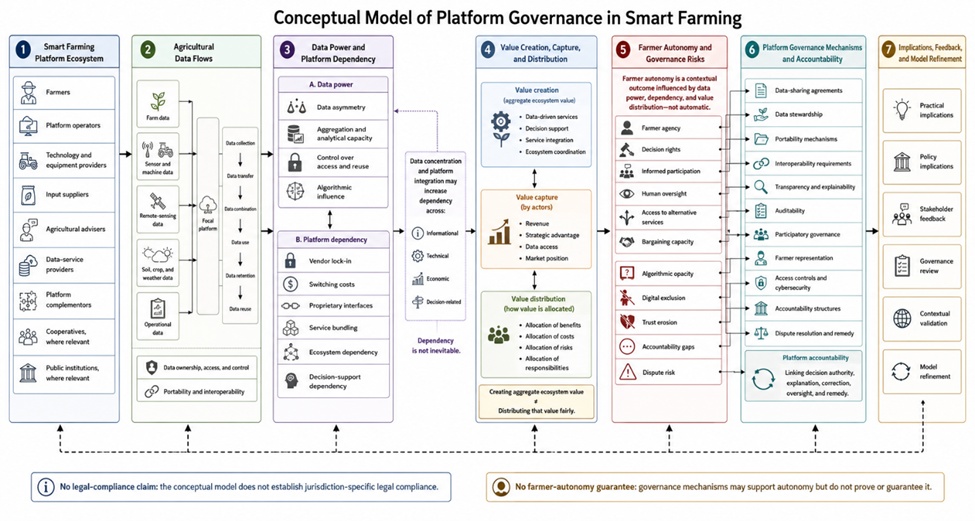
Figure 1. Conceptual Model of Platform Governance in Smart Farming
Alt-text description:
A conceptual model showing smart farming platform ecosystems connected to data flows, data power, platform dependency, value creation, value capture, farmer autonomy, governance risks, governance mechanisms, accountability, practical implications, policy implications, and feedback loops.
For farmers and agricultural advisers, the model provides a structured set of questions for examining whether platform participation expands practical capability or creates new dependencies. Relevant considerations include whether data can be accessed and exported in usable formats, whether recommendations communicate uncertainty, whether advisers can retain professional independence, and whether alternative services remain available. Transparent data practices and credible benefit arrangements are important for trust [10]. Farmers and farmer organizations may also use ecosystem and data-flow mapping to identify which actors receive farm-generated information, which services depend on continued platform access, and where collective representation or cooperative arrangements could strengthen participation. These implications remain conceptual and should be adapted through farmer-centred research rather than treated as standardized procurement criteria.
For platform providers, equipment manufacturers, input suppliers, complementors, and data stewards, responsible ecosystem development requires attention to interoperability, portability, value distribution, transparency, human oversight, and accountability. Digital innovation ecosystems depend on coordinated roles and viable value propositions [8], but ecosystem viability should not be equated with fair participation. Providers should distinguish technical data transfer from practical portability, document material dependencies created by service bundles, clarify commercial relationships behind recommendations, and establish procedures for correction and dispute resolution. The distribution of gains may be influenced by provider market power and bargaining conditions [18]. Evaluation should therefore consider not only whether value is produced but also how benefits, risks, and responsibilities are distributed across contributing actors.
For researchers, public institutions, and policymakers, the model identifies a research and discussion agenda rather than a legal or operational prescription. Possible areas include open and interoperable infrastructure, farmer-centred data stewardship, digital-inclusion support, accountability requirements, independent audit capacity, participatory governance, and mechanisms that improve contestability without undermining useful coordination. Agricultural data governance should address access, portability, contracts, interoperability, and competition in addition to ownership [25]. Responsible innovation also requires anticipation, inclusion, reflexivity, and responsiveness throughout development and governance processes [26]. Policy implications should be tested against different farm structures, jurisdictions, technological configurations, and institutional capacities. Stakeholder feedback, especially from diverse farmers and advisers, is necessary to determine whether proposed mechanisms are understandable, usable, and capable of influencing actual platform practices.
This article proposes a conceptual model of platform governance in smart farming that connects platformization, agricultural data flows, data power, platform dependency, value creation, value capture, farmer autonomy, governance risks, governance mechanisms, accountability, practical implications, policy implications, and iterative feedback. Its central contribution is to shift assessment beyond platform functionality, adoption, and productivity expectations toward the socio-technical conditions under which platforms organize information, relationships, decision rights, and value. The model distinguishes data ownership from access and control, value creation from value distribution, platform use from dependency, and technical safeguards from achieved farmer autonomy. It also identifies governance mechanisms that may support transparency, interoperability, portability, participation, accountability, human oversight, and contestability while emphasizing that their effects require contextual implementation and empirical validation. Smart-farming platform governance should ultimately be assessed according to how it structures power, allocates benefits and risks, preserves meaningful farmer agency, and responds to stakeholder feedback rather than according to technological capability alone.
None
None
None
None
Open Access The author(s) retain copyright. This article is licensed under the Creative Commons Attribution-NonCommercial-ShareAlike 4.0 International License. It may be shared and adapted for non-commercial purposes with appropriate attribution, an indication of changes, and distribution of adaptations under the same license. Third-party material may be subject to separate terms identified in its credit line. View the license at https://creativecommons.org/licenses/by-nc-sa/4.0/.
 Agro Intelligence Research Press