Decision-support systems are increasingly positioned as mechanisms for translating agricultural data and analytical models into farm-management recommendations, yet their methodological quality cannot be judged through predictive performance alone. This article proposes an original methodological framework for designing and evaluating decision-support systems in precision agriculture. The framework integrates farm-management decision-context definition, stakeholder mapping, data-quality and provenance assessment, model and recommendation-logic documentation, explainability and interpretability requirements, usability and farmer-centered design, validation planning, decision-reliability assessment, adoption-barrier analysis, implementation-condition assessment, human oversight, and iterative feedback. Explainability is treated as a role-sensitive design requirement involving input visibility, output explanation, decision rationale, uncertainty communication, traceability, and appropriate explanation timing and format. Usability is addressed through farmer participation, co-design, workflow integration, accessibility, local relevance, manageable decision-support workload, training, and feedback mechanisms. Validation is extended beyond internal model testing to include external and local validation, calibration, error analysis, field-validation planning, drift monitoring, and review of the complete recommendation pathway. Adoption is interpreted as a contextual and voluntary process shaped by perceived usefulness, trust, affordability, infrastructure, digital capability, interoperability, support, and governance. Human oversight remains necessary because neither technical performance nor explanation quality independently establishes decision reliability. The framework contributes a structured method for coordinating design and evaluation activities while retaining explicit boundaries against claims of guaranteed decision quality, adoption, or deployment readiness.
Decision-support systems in precision agriculture can be understood as socio-technical arrangements that connect heterogeneous farm data, analytical processes, user-facing information, and human judgment. Their input foundations may include sensor observations, remote-sensing products, weather records, soil and crop information, machinery data, and farm-management records. These sources are transformed through data infrastructures and analytical procedures before being presented as predictions, alerts, comparisons, optimization outputs, or recommendations. Consequently, a decision-support system is not equivalent to a prediction model. It includes the surrounding processes through which data are collected, documented, interpreted, communicated, reviewed, and incorporated into farm-management decisions. Smart-farming research has shown that these processes involve not only technical components but also data ownership, organizational relationships, service providers, knowledge intermediaries, and users with different responsibilities and information needs [1].
Digital agriculture similarly extends beyond the adoption of isolated software, sensing devices, or artificial-intelligence models. It involves changes in agricultural knowledge, work organization, decision authority, skills, infrastructure, and relationships among farmers, advisors, technology developers, data stewards, researchers, and platform providers. These social and institutional dimensions influence which farm problems are selected for digital support, whose knowledge is represented in system requirements, how data are governed, and whether users can question or override recommendations. A technically advanced system may therefore remain poorly aligned with local practices, inaccessible to some users, or dependent on organizational arrangements that have not been adequately examined. Treating precision-agriculture decision support as a socio-technical design problem helps reveal these wider dependencies and prevents technical functionality from being mistaken for practical suitability [2].
Agricultural decision-support systems may combine descriptive analytics, prediction models, optimization models, recommendation logic, visualization components, and advisory functions. They can be configured for irrigation scheduling, nutrient-management support, pest or disease risk interpretation, yield assessment, resource allocation, or other farm-management contexts where adequate evidence and locally relevant data are available. However, the existence of a model output does not establish that the resulting advice is understandable, agronomically appropriate, transferable across locations, or reliable under changing field conditions. Agricultural decision-support research has consequently identified continuing challenges involving data integration, interoperability, knowledge representation, model evaluation, interface design, and the translation of analytical results into actionable but appropriately bounded recommendations [3].
This article argues that precision-agriculture decision-support systems should be evaluated through a coordinated methodological process rather than through technical performance alone. Explainability, interpretability, usability, farmer participation, validation logic, uncertainty communication, decision reliability, adoption conditions, governance safeguards, and human oversight must be considered as interconnected design requirements. Responsible smart-farming scholarship further indicates that anticipation, inclusion, reflexivity, and responsiveness are needed when digital systems may redistribute knowledge, influence decision authority, or create new dependencies [4]. The objective of this article is therefore to propose a methodological framework that structures how decision contexts, data inputs, model outputs, explanation requirements, user interfaces, validation procedures, implementation conditions, and feedback mechanisms can be designed and evaluated. The proposed framework supports methodological planning rather than operational prescription and does not independently establish farm-level benefit, user trust, adoption, or readiness for deployment.
A precision-agriculture decision-support system should begin with a defined farm-management decision rather than with an available dataset or modelling technique. The methodological starting point is to identify who makes the decision, when it is made, which alternatives are available, what evidence is required, what consequences may follow, and which parts of the process should remain subject to human review. Within this structure, a prediction model estimates an outcome or state, an optimization model evaluates alternatives against specified objectives and constraints, a recommendation system translates analytical outputs into possible actions, and an advisory tool communicates information within a broader human decision process. These functions may be combined, but they should remain methodologically distinguishable. Agricultural DSS architectures demonstrate the value of separating data ingestion, analytical processing, model execution, and user-facing outputs so that each layer can be documented and evaluated independently [5].
The user-facing layer is especially important because decision support is delivered through representations rather than through models in isolation. Maps, time series, alerts, ranked options, comparative scenarios, field summaries, and explanatory text can make complex agricultural information easier to inspect, but they can also conceal uncertainty, exaggerate precision, or overload the user. Interface design must therefore determine which information is visible, how units and thresholds are expressed, when warnings appear, how users move between summary and detail, and whether the system permits questions, corrections, or overrides. Reviews of visualization in agricultural decision-support systems indicate that visual form, information organization, interaction design, and human–computer interaction principles influence whether outputs can be interpreted within agricultural tasks [6]. Interface design should accordingly be treated as a methodological component that requires evaluation rather than as a decorative layer added after modelling.
The analytical capacity of agricultural decision support depends on its data foundation. Connected sensing systems can provide observations on soil, crop, weather, water, equipment, and environmental conditions, while remote sensing and farm records may extend spatial, temporal, and management coverage. Yet additional data sources also introduce questions about sampling, calibration, missingness, synchronization, spatial resolution, data ownership, connectivity, security, and interoperability. Data may be technically available but unsuitable for the intended decision because they are stale, poorly localized, inconsistently formatted, or collected under conditions that differ from the intended use context. Agricultural Internet-of-Things research has therefore emphasized that dependable sensing, communication, and integration infrastructures are prerequisites for data-enabled farm applications, while also identifying reliability, interoperability, energy, communication, and security constraints [7].
A methodological distinction is consequently needed between data availability, model capability, recommendation validity, and operational decision support. Irrigation, nutrient, disease, yield, or resource-allocation applications may use similar sensing and analytical infrastructures, but each has different timing requirements, error consequences, validation needs, and expectations for human review. Layered smart-agriculture architectures can support the movement of data from field devices through communication and processing services to user applications, yet the existence of this pipeline does not demonstrate that its recommendations are locally valid or responsibly usable [8]. Across complementary DSS, visualization, and IoT studies, agricultural decision support is described as a layered socio-technical arrangement linking analytical functions, user-facing outputs, and connected data infrastructure [5–7]. The methodological framework proposed here therefore requires explicit documentation of the decision context, input data, data provenance, model purpose, recommendation logic, interface function, uncertainty, intended user, and limits of use before any claim about decision support is made.
Explainability in precision-agriculture decision support concerns how a system communicates the basis, meaning, scope, and limitations of an output to people responsible for interpreting or acting upon it. Interpretability concerns the degree to which relevant aspects of model behavior can be understood, either because the model is inherently inspectable or because an additional explanatory method is applied. Agricultural explainable-AI scholarship suggests that feature attribution, response analysis, interpretable modelling, and other explanation methods can help reveal how models use agricultural data [9]. Nevertheless, an explanation of model behavior is not equivalent to evidence that the model is accurate, calibrated, transferable, agronomically appropriate, or suitable for a particular decision. Explainability should therefore be designed as one component of responsible review rather than as proof of decision quality.
A usable explanation framework must distinguish among model documentation, interpretability, explainability, transparency, and traceability. Model documentation records the model’s purpose, development context, inputs, assumptions, version, limitations, and intended users. Input visibility shows which data sources, timestamps, spatial units, preprocessing steps, missing values, and quality indicators contributed to an output. Output explanation clarifies the meaning, unit, time horizon, and scope of a result. Decision rationale connects the output to relevant evidence, constraints, rules, or recommendation logic. Transparency concerns whether these processes and responsibilities can be inspected, while traceability concerns whether the system can reconstruct how a particular output was produced. General XAI research supports treating these concepts as related but non-equivalent requirements that must be matched to system purpose and stakeholder needs [10].
Explanation quality also depends on the recipient and the decision context. Farmers may need field-specific language, familiar units, visual comparisons, practical cautions, and explanations that connect system outputs to observable conditions. Agricultural advisors may require more detailed access to assumptions, data provenance, model limitations, uncertainty estimates, alternative interpretations, and records of earlier recommendations. Developers and data stewards may need diagnostic explanations for error analysis, drift investigation, and system maintenance. Explanations may be required before a decision, at the point of recommendation, when an abnormal condition is detected, or after an outcome has been observed. Research on human explanation indicates that explanations are commonly selective, contrastive, audience-sensitive, and socially interpreted rather than accepted solely because they expose additional technical detail [11].
The methodological framework therefore requires designers to specify the explanation goal, intended audience, decision stage, information content, presentation format, and evaluation method before selecting an explainability technique. Feature importance may be appropriate for some predictive tasks, while rule summaries, scenario comparisons, input histories, uncertainty intervals, or counterfactual explanations may be more suitable elsewhere. Each method requires evaluation for fidelity, stability, comprehensibility, timing, accessibility, and risk of misinterpretation. Multidisciplinary XAI frameworks support aligning explanation design with user groups, tasks, goals, and iterative evaluation rather than relying on a universal explanation format [12]. Explanation quality is audience- and purpose-dependent, requiring attention to agricultural model behavior, XAI properties, and human explanation needs rather than reliance on a universal explanation technique [9–11]. Human review must remain available where recommendations are uncertain, consequential, or outside documented conditions. Table 1 summarises explainability and interpretability requirements for decision-support systems in precision agriculture.
Table 1. Explainability and Interpretability Requirements for Precision Agriculture Decision-Support Systems: Model Documentation, Input Visibility, Output Explanation, Decision Rationale, Uncertainty Communication, Confidence Communication, Farmer Interpretability, Advisor Interpretability, Traceability, Human Review, and Explanation Boundaries
Explainability requirement | Core decision-support question | Required evidence or practice | Design function | Potential output | Failure risk | Evaluation need | Framework role |
Model documentation | What model produced the output, for what purpose, and under which assumptions? | Document model purpose, version, development context, input variables, assumptions, intended users, limitations, and excluded uses | Establishes inspectability and responsibility | Model documentation record or agricultural model summary | Hidden assumptions encourage inappropriate reuse | Technical, agronomic, and user review for completeness | Foundational explanation requirement |
Input visibility | Which data contributed to the output? | Show data source, timestamp, spatial scope, preprocessing, missingness, and quality indicators | Links recommendations to observable evidence | Input summary or provenance panel | Users cannot identify stale, missing, or irrelevant inputs | Comprehension and task-relevance testing | Connects data assessment to explanation |
Output explanation | What does the result mean in the intended decision context? | Explain unit, range, time horizon, spatial scope, threshold, and intended interpretation | Converts analytical output into decision-relevant information | Plain-language statement, map, chart, or comparison | Technically correct outputs are misunderstood | User comprehension and task testing | User-facing explanation layer |
Decision rationale | Why was a recommendation, alert, or priority produced? | Link relevant inputs, model result, rules, constraints, alternatives, and uncertainty | Supports reasoned human review | Rationale statement or evidence summary | Recommendation appears arbitrary or authoritative | Test whether users can identify the basis and limitations | Bridge between analysis and human judgment |
Rule or logic transparency | Can the recommendation logic be inspected? | Document rules, thresholds, optimization objectives, constraints, and exception logic where applicable | Makes recommendation generation traceable | Rule table, decision tree, or objective-and-constraint summary | Hidden logic creates inconsistent or contested advice | Agronomic and technical review | Required for rule-based or optimization functions |
Feature importance | Which variables contributed most strongly to a model output? | Use an appropriate importance method, stability checks, and limitation statement | Supports model-behavior inspection | Ranked factors or localized contribution display | Importance is misinterpreted as causality | Fidelity, stability, and user-interpretation evaluation | Optional analytical explanation |
Uncertainty communication | How uncertain is the prediction or recommendation basis? | Present predictive intervals, ranges, scenario variation, data-quality warnings, or uncertainty categories | Reduces false precision | Interval, distribution, warning, or uncertainty label | Point estimates encourage overconfidence | Calibration and comprehension evaluation | Core reliability communication |
Confidence communication | How strongly should the output be relied upon? | Distinguish statistical confidence from operational recommendation confidence | Supports review, escalation, or cautious use | Confidence statement with review trigger | Confidence values are treated as guarantees | Calibration, wording, and behavioral testing | Connects uncertainty to oversight |
Interpretability | Can relevant stakeholders understand model behavior sufficiently for their roles? | Select interpretable models or justified post-hoc methods according to task and risk | Aligns model complexity with scrutiny needs | Interpretable rule set, response profile, or explanation package | Simplification misrepresents model behavior | Fidelity and stakeholder-comprehension testing | Cross-cutting design criterion |
Farmer interpretability | Can a farmer relate the output to field conditions and the current management decision? | Use local terminology, familiar units, contextual comparisons, actionable framing, and limitation statements | Supports contextual sense-making | Field-specific explanation | Explanation is technically valid but practically irrelevant | Farmer-centered evaluation in realistic tasks | Primary user requirement |
Advisor interpretability | Can an agricultural advisor scrutinize the agronomic and analytical basis? | Provide detailed inputs, assumptions, alternatives, uncertainty, provenance, and traceability where advisor involvement is appropriate | Supports professional review and mediation | Advisor-level explanation view | Insufficient detail prevents informed review | Advisor task simulation and expert assessment | Role-specific oversight layer |
Explanation timing | When should explanation and caution information appear? | Identify pre-decision, at-decision, exception, and post-decision information needs | Matches explanation to workflow stage | Progressive, triggered, or on-demand explanation | Essential caveats arrive too late | Workflow and interruption testing | Temporal explanation requirement |
Explanation format | Which representation fits the user, device, and decision? | Compare text, chart, map, icon, rule, scenario, and layered formats | Improves accessibility and comprehension | Multimodal explanation interface | Poor format creates overload or misunderstanding | Comparative usability and accessibility testing | Interface-level explanation requirement |
Traceability | Can the system reconstruct how a specific output was generated? | Record data version, model version, rules, parameters, timestamp, explanation, and user override | Supports audit and error investigation | Decision and provenance log | Errors cannot be reconstructed or attributed | Auditability and record-integrity assessment | Governance and validation bridge |
Human review | Which outputs require confirmation, challenge, override, or escalation? | Define review roles, risk triggers, accessible evidence, override controls, and rationale recording | Preserves human authority and accountability | Review queue, warning, override, or escalation pathway | Automation bias or unreviewed consequential advice | Scenario testing for uncertain and abnormal cases | Human-in-the-loop safeguard |
No explainability-sufficiency boundary | What cannot be inferred from an explanation? | State that explanation does not establish accuracy, calibration, fairness, agronomic validity, trust, or decision quality | Prevents overclaiming | Persistent methodological boundary statement | Explanation is treated as proof of reliability | Verify that users distinguish explanation from validation | Non-negotiable framework boundary |
Usability concerns whether intended users can access, understand, operate, and review a decision-support system with acceptable effort and error risk. Farmer-centered design extends this concern by requiring that farmers’ decision contexts, practices, knowledge, constraints, and priorities influence system requirements from the beginning. A farmer-centered process should therefore start with needs assessment and contextual inquiry rather than asking users to react only after a technical system has been developed. Interviews, observation, task analysis, seasonal workflow mapping, prototype review, and co-design activities can help identify which decisions require support, what information is already available, how responsibility is distributed, and where additional technology might create burden. Farmer-centric design-thinking research supports iterative processes that connect farmer needs, problem definition, prototyping, evaluation, and revision [13].
Farmer participation must be substantive rather than symbolic. Participatory design should document who was included, whose knowledge shaped requirements, how disagreements were handled, and which design changes followed from user contributions. Representation may need to account for differences in farm scale, production system, experience, language, digital capability, connectivity, equipment, labor organization, and access to advisory services. Local context should influence terminology, units, timing, visualization, alert thresholds, and the interpretation of recommendations. Trust-building also depends on whether users understand how their data are collected, used, shared, and converted into value. Evidence on smart-farming trust indicates that transparency about data practices and benefit distribution can support more accountable relationships, although transparency alone cannot ensure trust [14].
Farm-workflow integration is another central usability requirement. A decision-support system may be difficult to use when it duplicates existing records, requires repeated manual data entry, produces alerts outside relevant decision windows, assumes continuous connectivity, or presents recommendations without sufficient context. Interface design should therefore address navigation, readability, device constraints, accessibility, language, error prevention, alert burden, progressive disclosure, and the balance between summary and detail. Decision-support workload should be evaluated alongside conventional usability dimensions because a system can be technically operable while adding excessive cognitive or administrative burden. Direct farmer inquiry can reveal unmet decision-support needs as well as structural, market, institutional, and operational barriers that cannot be solved through interface modification alone [15].
Training, continuing support, digital inclusion, and feedback mechanisms should be treated as design and implementation conditions rather than as activities deferred until rollout. Users may require role-specific guidance on data quality, explanation interpretation, uncertainty, override procedures, and the limits of recommendations. Agricultural advisors may support interpretation where their involvement is appropriate and consented to, but their role should be defined so that farmer autonomy and responsibility remain clear. Feedback channels should allow users to report incorrect data, implausible recommendations, contextual changes, usability problems, and observed outcomes, with records showing whether and how the system was revised. Farmer perceptions of usefulness, complexity, compatibility, and support can differ between expectation and experience and may vary across technologies and farm contexts [16]. Usability, participation, and training can strengthen user relevance and adoption readiness, but they do not guarantee voluntary uptake, trust, affordability, infrastructure sufficiency, or sustained implementation.
Validation should begin with the data rather than with the model-performance result. Data-quality validation examines whether inputs are complete, timely, accurately measured, appropriately labeled, spatially and temporally representative, and suitable for the intended decision context. Data-provenance review complements these checks by documenting where data originated, how they were collected, who controls them, which transformations were applied, and whether the resulting records can be traced to a specific version of the system. These procedures are particularly important when prediction models combine heterogeneous sensor, weather, remote-sensing, soil, crop, machinery, or management data. Reviews of crop-yield prediction research demonstrate substantial variation in datasets, feature construction, algorithms, evaluation metrics, and validation practices, illustrating why reported predictive performance cannot independently establish operational decision reliability [17].
Internal validation should estimate how a model performs within its development context while preventing information leakage and respecting temporal, spatial, farm-level, or seasonal dependence. Random data splitting may be inappropriate when neighboring observations, repeated measurements, or records from the same field occur in both development and evaluation sets. Calibration should also be assessed because a model may discriminate among outcomes while producing probabilities or confidence estimates that do not correspond to observed frequencies. External validation then examines whether performance transfers to independent farms, seasons, regions, devices, management systems, or data-collection conditions. Methodological evidence shows that cross-validation strategy can materially alter both apparent performance and the interpretation of model behavior, making validation design an essential component of the claimed evidence rather than a neutral technical detail [18].
Local validation asks whether a model and its recommendation logic remain relevant in the specific context for which decision support is intended. It should consider local soils, crops, climate, management practices, equipment, data quality, decision timing, and agronomic constraints. Where spatial transfer is important, geographically structured holdouts can provide more informative evidence than randomly partitioned observations. Field-validation planning should subsequently specify how a system might be examined prospectively under realistic decision conditions, including the intended comparator, outcome definitions, human-review process, monitoring procedures, and stopping criteria. Research comparing random, spatial, and field-based validation in agricultural prediction demonstrates that evaluation strategy can produce materially different assessments of transferability [19]. Sensitivity analysis may further examine whether recommendations remain stable when relevant inputs, thresholds, assumptions, or optimization constraints are varied.
Decision reliability concerns the complete pathway from data acquisition to human-reviewed recommendation rather than the performance of a prediction model alone. Error analysis should identify where, when, and for whom failures occur, including false alarms, missed events, subgroup errors, implausible recommendations, and errors with different practical consequences. Model-drift monitoring should detect changes in input distributions, relationships between variables, calibration, or observed performance over time. Uncertainty assessment should make predictive ranges, data limitations, and scenario dependence visible, while recommendation review should test agronomic plausibility, scope, contraindications, and the need for escalation. Conformal-prediction research in crop-production decision support illustrates how calibrated uncertainty information may strengthen review, but it does not establish that a recommendation will be correct or beneficial in a particular farm context [20]. Human oversight and controlled feedback updating therefore remain necessary, and neither completed validation planning nor acceptable model metrics should be interpreted as evidence of deployment readiness.
Adoption should be treated as a contextual, voluntary, and evolving process rather than as the automatic consequence of technical performance. Perceived usefulness, usability, trust, compatibility with farm practices, digital skills, organizational support, and access to relevant information can interact in different ways across technologies and farm contexts. A system may be considered technically capable but still offer limited perceived value because it addresses an infrequent decision, requires excessive data entry, or does not fit the timing and responsibilities of existing work. Empirical research on smart-farming transitions indicates that adoption is shaped by interacting technological, individual, organizational, and contextual conditions rather than by one design attribute alone [21].
Affordability and infrastructure readiness should be examined through the complete conditions required for use. These may include sensing equipment, compatible devices, connectivity, data services, maintenance, technical support, training, subscriptions, integration work, and time spent entering or reviewing information. Farm scale, production system, existing machinery, regional infrastructure, access to advisory services, and previous technology experience may also influence feasibility. Cross-regional evidence on precision-agriculture adoption shows that costs, farm characteristics, information conditions, and perceived benefits contribute to differing adoption patterns [22]. An affordability assessment should therefore identify cost categories and access constraints without assuming profitability or prescribing a particular procurement strategy.
Adoption evidence also requires careful interpretation. Precision-agriculture technologies differ substantially in function, complexity, required investment, and degree of integration, while studies may define adoption as awareness, trial, ownership, partial use, regular use, or use of a specific feature. Aggregated adoption claims can consequently obscure differences among sensing tools, guidance systems, farm-management platforms, prediction services, and decision-support applications. Critical assessments of precision-agriculture adoption evidence emphasize that reported uptake varies with technology definitions, measurement methods, geography, farm structure, and the population being studied [23]. A methodological framework should therefore assess readiness for a clearly defined system and decision context rather than rely on generalized assumptions about digital-agriculture adoption.
Trust and perceived economic value should be assessed as distinct but related conditions. Users may recognize a possible financial or operational benefit while remaining concerned about data control, service-provider accountability, opaque recommendations, system reliability, or loss of autonomy. Conversely, a trusted advisor or provider relationship does not establish that a system is affordable, locally valid, or useful. Research on digital-agriculture adoption indicates that profitability expectations and trust can both shape adoption decisions but should not be treated as interchangeable or sufficient conditions [24]. Adoption readiness is multi-dimensional, reflecting perceived value, economic and structural constraints, farm context, and the way adoption is defined and measured [21–23]. Implementation review should therefore consider training, digital skills, connectivity, interoperability, workflow fit, local relevance, advisor support, farmer autonomy, governance safeguards, and continuing technical assistance. Table 2 maps usability, validation, decision reliability, adoption barriers, and implementation conditions for precision agriculture decision-support systems.
Table 2. Usability, Validation, Decision Reliability, Adoption Barriers, and Implementation Conditions for Precision Agriculture Decision-Support Systems: User Needs, Co-Design, Farm Workflow Fit, Local Validation, Error Analysis, Model Drift, Trust, Training, Digital Skills, Infrastructure Readiness, Interoperability, Human Oversight, and Adoption Boundaries
Design or implementation component | Core methodological question | Required input, evidence, or condition | Methodological function | Potential output | Failure or barrier risk | Evaluation or support need | Claim boundary |
User-needs assessment | Which farm-management decision requires support? | Interviews, observation, task analysis, seasonal context, and user-defined priorities | Aligns the system with an actual decision need | User-needs and decision-context specification | Technology addresses a low-priority or incorrectly framed problem | Validation with intended users and relevant experts | Identified need does not establish system effectiveness |
Farmer participation and co-design | How will farmers influence requirements and revisions? | Representative participation, prototypes, scenarios, documented feedback, and design-decision records | Incorporates situated knowledge and user priorities | Co-designed requirements and prototype revisions | Token participation or exclusion of relevant groups | Review whether participation changed design decisions | Participation does not constitute farmer approval |
Farm-workflow fit | Where and when will the system be used? | Workflow mapping, decision timing, responsibilities, devices, interruptions, and recordkeeping practices | Integrates support with existing farm work | Workflow-integration plan | Duplicate work, late recommendations, or excessive interruption | Realistic task and workload evaluation | Workflow compatibility does not guarantee adoption |
Accessibility and interface design | Can intended users perceive, understand, and operate the system? | Language, literacy, device, visual, motor, connectivity, navigation, and error-prevention requirements | Supports inclusive interaction | Accessible interface specification | Exclusion, confusion, or accidental action | Accessibility and task-completion testing | Interface quality does not prove decision reliability |
Data-quality validation | Are input data suitable for the intended decision? | Completeness, accuracy, timeliness, spatial coverage, calibration, and missingness checks | Detects unreliable inputs | Data-quality report and use restrictions | Plausible recommendations are generated from unsuitable data | Continuous data-quality monitoring | Passing quality checks does not establish model validity |
Data-provenance review | Can input origin and transformation be reconstructed? | Source records, collection methods, permissions, preprocessing, ownership, and version history | Supports traceability and accountability | Provenance record | Untraceable or improperly reused data | Audit and record-integrity review | Provenance does not prove data correctness |
Calibration and internal validation | Does performance hold within the development context without leakage? | Appropriate resampling, temporal or spatial grouping, calibration assessment, and baseline comparison | Estimates development-stage generalization | Internal-validation and calibration report | Optimistic performance estimates or misleading confidence | Leakage review and repeated evaluation | Internal validation is not local or field validation |
External and local validation | Does the system transfer to independent and intended contexts? | Independent farms, seasons, regions, devices, local data, and agronomic review | Tests transportability and contextual relevance | External and local validity profile | Model performance deteriorates outside development conditions | Independent and locally relevant evaluation | One successful validation does not establish universal reliability |
Field-validation planning | How will the system be assessed in realistic decision conditions? | Prospective protocol, comparator, outcomes, monitoring, consent, and stop criteria | Structures empirical evaluation of operational usefulness | Field-validation plan | Retrospective metrics are substituted for real-world evidence | Staged, supervised research evaluation | A validation plan is not completed field validation |
Error analysis and model-drift monitoring | Where does the system fail, and has its operating context changed? | Residual analysis, false alarms, missed events, subgroup checks, input drift, performance drift, and calibration monitoring | Detects systematic and emerging failure | Error taxonomy and drift-review trigger | Average metrics conceal harmful or deteriorating behavior | Continuing monitoring and investigation | Detected drift requires review and does not authorize automatic updating |
Uncertainty and decision-reliability assessment | Is the complete recommendation pathway dependable enough for its intended role? | Predictive uncertainty, calibration, agronomic plausibility, consequence severity, workflow fit, and local evidence | Integrates model evidence with decision context | Context-specific reliability profile | Accurate predictions produce unreliable or impractical recommendations | Multidisciplinary review and prospective evidence | No single metric guarantees decision quality |
Trust and explainability | Is reliance proportionate to evidence, transparency, and accountability? | Role-appropriate explanation, data controls, reliability evidence, provider responsibility, and limitations | Supports calibrated rather than unquestioning trust | Trust-condition assessment | Blind reliance, blanket rejection, or persuasive explanations | Assess comprehension, reliance, and skepticism separately | Explainability does not guarantee trust or correctness |
Training and digital skills | Can intended users interpret and operate the system appropriately? | Skills assessment, role-based training, examples, limitations, refresher support, and accessible help | Reduces misuse and abandonment | Training and support plan | Misinterpretation, dependency, or exclusion | Evaluate learning, retention, and access to support | Training cannot correct an unsuitable or invalid system |
Affordability and infrastructure readiness | Are the technical and economic foundations for use available? | Devices, sensing, power, connectivity, maintenance, support, data services, and total-cost assessment | Tests implementation feasibility | Infrastructure and affordability profile | Hidden costs, unreliable operation, or unequal access | Technical support and transparent cost review | Affordability does not establish profitability |
Connectivity and interoperability | Can data and services exchange information reliably and meaningfully? | Network assessment, offline capability, data formats, semantics, identifiers, permissions, and interfaces | Reduces fragmentation and duplicate entry | Connectivity and interoperability specification | Interrupted service, incomplete data, or vendor dependency | Technical integration and governance agreements | Data exchange does not settle ownership or consent |
Advisor support and farmer autonomy | Can support be provided without displacing farmer authority? | Defined advisor roles, consent, access controls, explanation depth, override, portability, and appeal procedures | Supports interpretation while preserving agency | Advisor and autonomy protocol | Dependency, coercion, conflicting advice, or unclear responsibility | Role clarification and farmer-controlled permissions | Advisor involvement does not validate the system |
Human oversight | Who reviews, overrides, escalates, or stops system-supported action? | Risk triggers, responsible roles, accessible evidence, override controls, and rationale records | Maintains accountable judgment | Human-review and escalation process | Automation bias or responsibility gaps | Scenario testing and audit of overrides | Human review does not compensate for invalid data or models |
Implementation-readiness review | Are technical, human, organizational, and governance conditions jointly adequate for a limited next step? | Evidence register covering validation, usability, support, infrastructure, affordability, security, and governance | Prevents single-metric readiness judgments | Conditional readiness profile and unresolved-gap register | Premature or unsupported implementation | Staged testing with explicit stop and review criteria | Readiness is conditional, scoped, and revisable |
No adoption-guarantee boundary | What cannot be inferred from favorable design and readiness indicators? | Explicit distinction among usability, value, trust, affordability, infrastructure, and voluntary uptake | Prevents deterministic adoption claims | Adoption-boundary statement | Design quality is presented as proof of uptake | Periodic review with intended users | No design feature guarantees adoption |
No commercial-readiness boundary | What additional evidence is required for sustained commercial operation? | Maintenance, scalability, liability, security, support, cost, field evidence, and organizational capacity | Separates methodological planning from commercial claims | Commercial-evidence gap register | Conceptual work is presented as market-ready | Independent technical, organizational, financial, and legal assessment | The framework does not establish commercial readiness |
The proposed framework begins with decision-context definition and stakeholder mapping. Decision-context definition specifies the farm-management question, intended user, timing, available alternatives, consequence of error, required evidence, and boundary between system output and human judgment. The framework can accommodate irrigation, nutrient, pest or disease, yield, and resource-allocation support where these functions are justified by appropriate evidence and locally relevant data, but it does not assume that every application requires the same data, model, explanation, or validation process. Stakeholder mapping identifies farmers, workers, agricultural advisors, developers, researchers, data stewards, service providers, extension organizations, cooperatives, and other affected actors. Reviews of digital agricultural knowledge and advice networks indicate that decision-support technologies operate within wider relationships through which knowledge is produced, interpreted, communicated, and contested [25]. Stakeholder mapping is therefore proposed as a method for defining participation, information access, accountability, and feedback responsibilities.
The second stage evaluates data inputs and documents the analytical and recommendation foundations. Data-input assessment identifies which sensor, remote-sensing, weather, soil, crop, machinery, and farm-management records are necessary and proportionate to the intended decision. Data-quality and provenance review then examines completeness, timeliness, calibration, representativeness, origin, transformation, permissions, ownership, and interoperability. Model documentation specifies the purpose, development domain, variables, assumptions, version, limitations, and excluded uses of prediction or optimization models. Recommendation-logic documentation separately records how model outputs, agronomic rules, thresholds, constraints, or objectives are converted into alerts, priorities, or suggested actions. Ethical analyses of smart farming demonstrate that data control, responsibility, power relations, autonomy, privacy, and benefit distribution are integral to responsible digital-system design [26]. Governance safeguards are consequently embedded within the data and model stages rather than treated as an external compliance layer.
The third and fourth stages define explainability and usability requirements through farmer-centered and participatory design. Explanation requirements are specified according to user role, decision risk, task, timing, and required level of detail. They may include model documentation, input visibility, output explanation, decision rationale, uncertainty and confidence communication, rule transparency, feature importance, traceability, and human-review triggers. Usability requirements address accessibility, interface structure, terminology, device constraints, workload, workflow integration, local context, training, support, and feedback. Co-design links these requirements to iterative prototypes and documented decisions showing how farmer and advisor contributions changed the emerging system. Responsible smart-farming development research supports integrating anticipation, inclusion, reflexivity, and responsiveness throughout the innovation process rather than addressing socio-ethical questions only after technical development [27]. In the proposed framework, these practices are methodological requirements, not evidence that users have approved or will adopt the resulting system.
The fifth and sixth stages address validation, decision reliability, adoption barriers, and implementation conditions. Validation planning proceeds from data checks and internal validation to external and local evaluation, calibration, uncertainty assessment, error analysis, sensitivity analysis where appropriate, field-validation planning, and continuing drift monitoring. Decision-reliability assessment examines whether the entire pathway from data to recommendation is sufficiently supported for a defined role, considering agronomic plausibility, uncertainty, consequence severity, workflow compatibility, and human-review capacity. Adoption-barrier assessment evaluates perceived usefulness, usability, trust, skills, affordability, infrastructure, connectivity, interoperability, support, local relevance, and autonomy. Implementation-condition assessment considers whether the organizations, data arrangements, technical services, governance processes, and maintenance structures required for a limited next step are available. Scholarship on Agriculture 4.0 transition pathways emphasizes that technologies enter diverse social and institutional settings and should not be governed through assumptions of one universal transition pathway [28]. The framework therefore requires context-specific assessment and does not function as a universal design or readiness standard.
The final stage integrates human oversight, feedback updating, practical-implication mapping, and future-research revision. Human-oversight design defines who may review, challenge, override, escalate, or stop a recommendation and what evidence must be available to support those actions. Feedback processes capture user corrections, observed errors, changes in farm context, model drift, explanation failures, usability problems, and outcomes relevant to later evaluation. Material changes to data pipelines, models, rules, interfaces, or intended uses should trigger renewed documentation and validation. Trust-oriented agricultural-AI scholarship further indicates that accountable provider relationships, transparency, farmer autonomy, risk allocation, and benefit distribution must be considered alongside technical properties [29]. The framework consequently retains three explicit boundaries: it does not guarantee decision quality, it does not guarantee adoption, and it does not establish deployment readiness. Table 3 presents the proposed methodological framework for designing decision-support systems in precision agriculture.
Table 3. Proposed Methodological Framework for Precision Agriculture Decision-Support Systems: Decision Context, Stakeholder Mapping, Data Input Assessment, Data Quality, Model Documentation, Explainability, Usability, Farmer-Centered Design, Validation Planning, Decision Reliability, Adoption Barriers, Implementation Conditions, Human Oversight, Feedback, and Claim Boundaries
Framework stage | Core purpose | Required input | Methodological function | Potential output | Validation need | Failure risk | Feedback mechanism | Decision boundary |
Decision-context definition | Specify the farm-management problem and intended role of support | Decision question, user, timing, alternatives, consequences, agronomic scope, and intended level of automation | Prevents technology-led or ambiguous objectives | Decision-context and intended-use statement | Review with farmers and relevant domain experts | System addresses the wrong problem or exceeds its intended role | Revisit when goals, conditions, or users change | Defines decision support rather than autonomous authority |
Stakeholder and user mapping | Identify users, affected actors, responsibilities, and power relations | Farmers, workers, advisors, developers, researchers, data stewards, providers, extension services, and cooperatives | Determines participation, access, accountability, and role-specific requirements | Stakeholder and responsibility map | Check representation, omissions, and conflicts | Relevant users or affected groups are excluded | Periodic stakeholder review | Participation does not imply endorsement |
Data-input assessment | Determine which data are necessary and proportionate | Sensor, remote-sensing, weather, soil, crop, machinery, management, and contextual-data inventory | Aligns data acquisition with the decision problem | Data-input specification | Assess relevance, availability, resolution, and timeliness | Excessive, irrelevant, unavailable, or poorly localized data | User, agronomic, and technical review | More data do not guarantee better decisions |
Data-quality and provenance review | Establish whether inputs are reliable, traceable, authorized, and current | Quality metrics, source records, collection methods, permissions, transformations, and version history | Controls data-related uncertainty and accountability | Data-quality and provenance dossier | Local checks and continuing monitoring | Hidden bias, stale data, missing values, or untraceable processing | Error reports and provenance updates | Valid data do not establish model validity |
Data-interoperability assessment | Determine whether required systems can exchange meaningful data | Formats, semantics, identifiers, permissions, interfaces, synchronization, and ownership conditions | Reduces fragmentation and duplicate processing | Interoperability and integration specification | Test exchange accuracy and semantic consistency | Incomplete, inconsistent, or locked data flows | Integration-error logs and periodic review | Technical interoperability does not settle governance questions |
Model documentation | Record what the analytical model does and where it may be used | Model purpose, variables, assumptions, development domain, version, training conditions, and limitations | Supports inspectability and controlled reuse | Model documentation record | Technical, agronomic, and independent review | Hidden assumptions and inappropriate transfer | Version-controlled revision | Documentation does not establish performance or reliability |
Recommendation-logic documentation | Explain how model outputs become alerts or suggested actions | Rules, thresholds, objectives, constraints, alternatives, exception handling, and escalation logic | Separates prediction from recommendation generation | Recommendation-logic specification | Agronomic and scenario review | Model output is treated as a complete decision | Review after errors, overrides, or context changes | Recommendation logic remains advisory and context-specific |
Explainability-requirement definition | Determine what each stakeholder must understand | User roles, decision risk, model type, task, timing, and information needs | Selects explanation content, method, timing, and format | Explanation-requirements specification | Fidelity, stability, comprehension, and accessibility testing | Generic, misleading, or persuasive explanations | User feedback and explanation revision | Explainability does not guarantee accuracy or trust |
Usability-requirement definition | Translate user tasks and constraints into interaction requirements | Needs assessment, workflows, devices, language, accessibility, workload, and support conditions | Specifies usable interaction and information structure | Usability-requirements specification | Task-based and accessibility evaluation | Burdensome, inaccessible, or confusing interaction | Prototype testing and issue tracking | Usability does not guarantee adoption |
Farmer-centered design and co-design | Incorporate local knowledge, priorities, and agency | Representative participants, contextual inquiry, prototypes, scenarios, and design-decision records | Aligns system development with farm practices | Co-designed prototype and participation record | Assess whether participation influenced decisions | Tokenism or narrow representation | Repeated co-design cycles | Participation does not constitute farmer approval |
Validation planning | Match evaluation design to data structure, intended context, and risk | Validation targets, independent data, baselines, metrics, calibration, and subgroup plans | Prevents optimistic or irrelevant performance claims | Validation protocol | Leakage, temporal, spatial, external, and local review | Invalid resampling, selective metrics, or unrepresentative evaluation | Revise after error and transferability analysis | Planned validation is not completed validation |
Decision-reliability assessment | Evaluate the complete pathway from data to recommendation | Performance, calibration, uncertainty, plausibility, local evidence, workflow fit, and consequence severity | Extends evaluation beyond predictive accuracy | Context-specific decision-reliability profile | Independent and prospective evidence | Accurate models generate unsafe or impractical advice | Outcome, override, and error feedback | Reliability remains scoped, conditional, and revisable |
Adoption-barrier assessment | Identify factors that may prevent voluntary and sustained use | Perceived usefulness, usability, trust, skills, affordability, access, workload, autonomy, and support | Broadens readiness review beyond technical quality | Adoption-barrier register | Adoption is presumed from technical merit | Stakeholder inquiry across relevant user groups | Update as experience and conditions change | Assessment does not guarantee uptake |
Implementation-condition assessment | Determine whether supporting technical and organizational conditions exist | Connectivity, devices, maintenance, advisors, extension, infrastructure, security, governance, and cost conditions | Tests feasibility of a limited, staged next step | Conditional implementation profile | Hidden dependencies cause failure or exclusion | Realistic operational and organizational review | Incident, support, and infrastructure records | Conditions may support research or limited testing, not unrestricted deployment |
Human-oversight design | Define review, challenge, override, escalation, and responsibility | Risk classes, named roles, evidence access, stop criteria, override controls, and appeal pathways | Preserves accountable human judgment | Oversight and escalation protocol | Automation bias or responsibility gaps | Scenario, exception, and override testing | Audit of overrides and unresolved disputes | Human review does not correct invalid data or models |
Feedback and model updating | Control learning from errors, outcomes, and contextual change | Outcome observations, user corrections, drift evidence, version history, and change requests | Enables accountable iteration | Feedback log and validated update plan | Uncontrolled updating introduces new failure modes | Revalidation after material changes | Closed-loop monitoring and issue resolution | Updated systems require renewed evidence |
Practical-implication mapping | Translate framework findings into bounded methodological actions | Stage outputs, evidence gaps, stakeholder priorities, and feasibility constraints | Identifies appropriate next research and design steps | Practical-implication map | Recommendations exceed available evidence | Multidisciplinary and stakeholder review | Revise as evidence develops | Implications are not operational, agronomic, legal, financial, or procurement advice |
Future-research updating | Identify unresolved questions and new evidence priorities | Validation gaps, usability findings, adoption evidence, emerging technologies, and monitoring results | Keeps the framework responsive to new evidence | Prioritized research agenda | Framework becomes static or obsolete | Periodic evidence review | Scheduled methodological revision | Research priorities are proposals rather than validated solutions |
No decision-quality guarantee boundary | Prevent inference that framework completion guarantees good decisions | Explicit limitations across data, models, explanations, validation, and oversight | Maintains epistemic caution | Decision-quality boundary statement | Technical evidence is overstated as outcome assurance | Manuscript and system-claim audit | Correct overconfident claims and user messaging | No framework stage independently guarantees decision quality |
No adoption-guarantee boundary | Prevent inference that design quality ensures uptake | Explicit distinction among usability, value, trust, capacity, cost, and voluntary use | Preserves contextual interpretation of adoption | Adoption-boundary statement | Participation or usability is presented as proof of adoption | Continuing stakeholder review | Revise readiness assumptions | The framework does not guarantee adoption |
No deployment-readiness boundary | Prevent claims of field validation, certification, or operational readiness | Evidence-gap register covering local, field, safety, maintenance, governance, and support needs | Separates conceptual planning from implementation authorization | Deployment-readiness boundary statement | Proposed framework is overstated as operationally ready | Independent empirical and organizational assessment | Reassess only after new evidence | The framework does not authorize or certify deployment |
Figure 1 presents the proposed methodological framework for designing decision-support systems in precision agriculture, linking decision context, data inputs, explainability, usability, validation, adoption conditions, human oversight, and feedback updating.
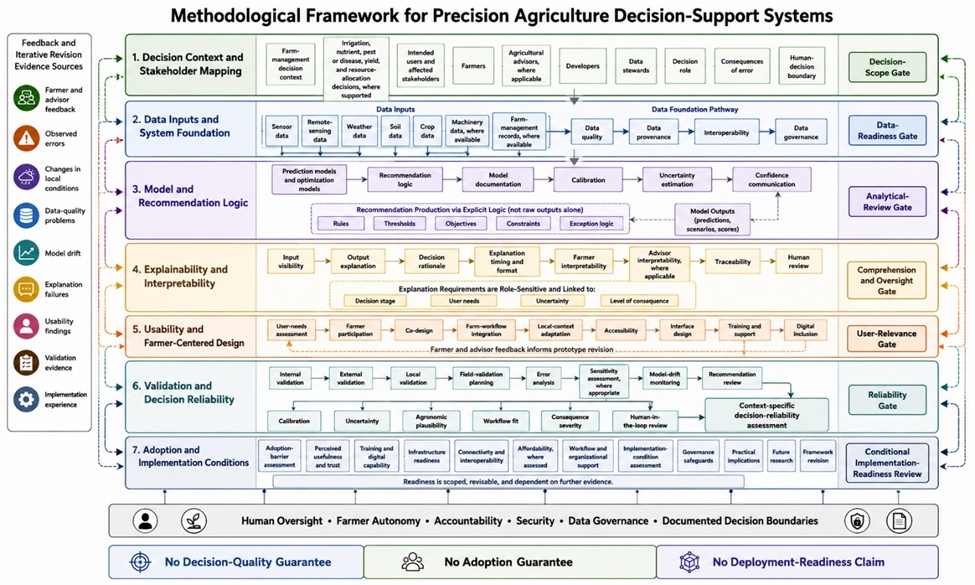
Figure 1. Methodological Framework for Precision Agriculture Decision-Support Systems
Alt-text description:
A conceptual methodological framework showing decision context, stakeholder mapping, data inputs, model documentation, explainability, usability, farmer-centered design, validation, decision reliability, adoption barriers, implementation conditions, human oversight, and feedback loops.
For farmers, agricultural advisors, extension services, and cooperatives, the framework offers a structured way to articulate decision needs, information requirements, workflow constraints, explanation preferences, and acceptable forms of human review. Its practical value lies in supporting questions about whether a system addresses a meaningful decision, whether its outputs can be interpreted in local context, and whether users can identify data limitations, uncertainty, and conditions requiring professional review. Farmer-centered design should remain iterative because early requirements may change after users interact with prototypes or encounter recommendations in realistic seasonal workflows [13]. Local validation should similarly be planned around relevant farms, seasons, spatial conditions, and management contexts rather than inferred from randomly partitioned development data [19]. These implications are methodological and do not constitute advice about particular crops, treatments, investments, or farm-management actions.
For technology developers, platform providers, researchers, and data stewards, the framework emphasizes separation among data pipelines, analytical models, recommendation logic, explanation components, interfaces, validation evidence, and implementation claims. Explanation methods should be chosen and evaluated according to intended users and decision tasks rather than added as generic interpretability features [12]. Uncertainty information should be calibrated, comprehensible, and linked to review or escalation processes rather than displayed as an unsupported confidence label [20]. Agricultural knowledge and advisory networks should be mapped because data and recommendations are often mediated through multiple organizations and professional roles [25]. Governance review should address responsibility, data control, autonomy, security, and benefit distribution throughout the development lifecycle [26]. These considerations support documentation and research planning but do not prescribe a particular platform architecture, vendor relationship, engineering method, or procurement decision.
Future research should empirically examine how explanation content, interface structure, workflow integration, farmer participation, validation strategy, and oversight arrangements influence comprehension, error detection, appropriate reliance, and sustained use across diverse agricultural settings. Comparative studies are needed to determine when temporal, spatial, farm-level, or seasonal validation designs produce more credible estimates of transferability and decision reliability [18]. Longitudinal research should investigate how system performance, calibration, user needs, trust relationships, infrastructure, and organizational responsibilities change over time. Responsible-innovation approaches can support continuing anticipation, inclusion, reflexivity, and responsiveness as technologies and contexts evolve [27]. Research should also investigate provider accountability, farmer autonomy, data governance, benefit distribution, and the conditions under which trust is warranted rather than merely encouraged [29]. The proposed framework itself requires empirical testing, revision, and comparative evaluation before any claim can be made about its effectiveness or operational suitability.
This article proposes a methodological framework for designing precision-agriculture decision-support systems through coordinated attention to decision context, stakeholder mapping, data quality and provenance, model and recommendation-logic documentation, explainability, interpretability, usability, farmer-centered design, validation logic, decision reliability, adoption barriers, implementation conditions, human oversight, practical implications, future research, and feedback updating. Its central contribution is to reposition decision-support quality as a property of the complete socio-technical pathway through which data are converted into understandable, reviewable, context-sensitive, and responsibly governed support. Predictive accuracy and technical capability remain relevant, but they are insufficient without transparent uncertainty, accessible interfaces, local validation, workflow alignment, user participation, error analysis, continuing monitoring, and accountable human review. The framework is conceptual and supports structured methodological planning rather than operational prescription. It does not establish that a system will improve decisions, earn trust, be adopted, produce farm benefits, satisfy governance requirements, or be ready for deployment.
None
None
None
None
Open Access The author(s) retain copyright. This article is licensed under the Creative Commons Attribution-NonCommercial-ShareAlike 4.0 International License. It may be shared and adapted for non-commercial purposes with appropriate attribution, an indication of changes, and distribution of adaptations under the same license. Third-party material may be subject to separate terms identified in its credit line. View the license at https://creativecommons.org/licenses/by-nc-sa/4.0/.
 Agro Intelligence Research Press