Generative artificial intelligence is emerging as a potentially important component of precision agriculture through its capacity to create synthetic data, generate agricultural imagery, retrieve and reformulate knowledge, support conversational advisory interfaces, and assist decision-support workflows. However, evidence of technical feasibility is developing faster than evidence of agronomic validity, reliability, farmer-centred usefulness, and responsible deployment. This critical review evaluates generative AI as a distinct agricultural technology class, with particular attention to generative adversarial networks, diffusion models, variational autoencoders, large language models, vision-language models, foundation models, fine-tuning, prompting, domain adaptation, and retrieval-augmented generation. It critically examines the proposed use of synthetic crop, disease, weed, pest, and remote-sensing data for augmentation, class-imbalance mitigation, and label-scarcity support, while emphasizing image realism, biological plausibility, source-data quality, and synthetic-real domain gaps. The review also assesses generative decision support and advisory systems, distinguishing accessible language generation and knowledge retrieval from agronomically validated recommendations. Reliability concerns include hallucination, factual inaccuracy, uncertainty underreporting, poor local adaptation, robustness limitations, benchmark insufficiency, and failures of human oversight. Responsible deployment further requires data governance, privacy protection, accountability, transparency, explainability, farmer trust, digital inclusion, risk monitoring, and assessment of computational and sustainability costs. The review contributes an integrated opportunity-risk interpretation and identifies priorities for domain-specific benchmarks, synthetic-data validation, hallucination measurement, uncertainty-aware assistance, human-in-the-loop evaluation, farmer-centred design, governance documentation, and cautious field-readiness assessment.
Generative artificial intelligence has expanded the functional scope of agricultural AI beyond the classification, prediction, and optimization tasks commonly associated with conventional machine learning. In precision agriculture, generative systems may create candidate images or structured samples, produce natural-language explanations, retrieve and reformulate technical knowledge, support multimodal interactions, and generate conditional scenarios for research or decision-support purposes. Agriculture-focused reviews consequently describe a broad landscape encompassing synthetic data, agricultural image generation, language-based advisory interfaces, knowledge services, and analytical assistance. These opportunities are nevertheless accompanied by uneven evidence maturity, substantial variation among methods, and unresolved questions concerning whether generated outputs remain valid outside the datasets and experimental conditions in which they were evaluated [1-3].
The need for critical evaluation is particularly apparent in agricultural applications of large language models. Agricultural language generation can make complex information more accessible, facilitate interaction with technical resources, and support communication between data-intensive systems and non-specialist users. Yet the same systems can produce inaccurate, incomplete, outdated, or context-insensitive content in fluent and persuasive language. In food-production settings, such failures may affect how users interpret crop conditions, production risks, management information, or institutional guidance. Additional concerns arise when agricultural data are incorporated into proprietary or poorly documented systems, because unclear data practices, labour implications, and premature policy dependence may create risks that cannot be assessed through output quality alone [4].
A critical review is therefore required to distinguish technological possibility from demonstrated agricultural validity. Synthetic imagery may appear visually convincing without reproducing biologically meaningful structures, and improved performance on a selected image dataset may not transfer to different farms, seasons, cultivars, sensors, or environmental conditions. Similarly, a conversational system may retrieve relevant information or generate a coherent explanation without accounting for local soils, climate, crop stage, management history, resource constraints, or uncertainty. Generative AI should consequently be examined as a collection of methods and workflow components whose value depends on the quality of their source data, the intended task, the validation design, the human decision context, and the governance arrangements surrounding use.
This article critically reviews generative AI in precision agriculture across four connected domains: synthetic data and agricultural image generation; generative decision support and advisory systems; model reliability, hallucination, and validation risks; and responsible deployment. Its contribution is not to present generative systems as autonomous agricultural intelligence or as substitutes for farmers, agronomists, extension professionals, or local knowledge. Instead, it evaluates where generative methods may support research and carefully governed workflows, where available evidence remains preliminary or task-bounded, and which validation, oversight, documentation, and governance requirements should precede claims of reliability or deployment readiness.
Generative AI refers to computational methods that learn patterns from data and produce new candidate content, representations, or responses rather than only assigning labels or estimating predefined outputs. In precision agriculture, this category can include models that generate images, text, multimodal descriptions, structured data, embeddings, simulations, or conditional scenarios. It should be distinguished from conventional discriminative learning, in which a model primarily maps an input to a class, score, forecast, or control variable. Foundation models represent a related but broader architectural category: they are pretrained on extensive datasets and may be adapted to multiple downstream tasks, but not every foundation model is generative, and not every generative agricultural system qualifies as a foundation model. Agricultural foundation-model research includes language, vision, and multimodal systems, while continuing to face unresolved problems involving domain representation, generalization, computational requirements, and evaluation [5].
Large language models are generative foundation models designed to predict and compose sequences of text, enabling question answering, summarization, explanation generation, translation, information extraction, and conversational interaction. Their relevance to precision agriculture lies partly in their ability to provide a natural-language interface to heterogeneous information that may otherwise remain distributed across sensor records, farm-management systems, scientific publications, extension materials, and local documentation. However, the usefulness of such interfaces depends on the availability of relevant knowledge, suitable infrastructure, linguistic and regional adaptation, and mechanisms for identifying unsupported outputs. In smart-farming environments, conversational accessibility may reduce some technical barriers, but it does not itself demonstrate agronomic accuracy, equitable access, or operational suitability [6].
Prompting, fine-tuning, retrieval-augmented generation, and domain adaptation represent different approaches to modifying model behaviour. Prompting conditions a model through instructions or examples without necessarily changing its parameters, whereas fine-tuning modifies model parameters using additional task- or domain-specific data. Domain adaptation is a broader process intended to improve performance under a target agricultural distribution, which may include regional terminology, crop-specific knowledge, local practices, multimodal inputs, or production constraints. Retrieval-augmented generation supplements model generation with information retrieved from an external corpus, while agricultural knowledge graphs may provide structured relationships among crops, symptoms, conditions, and management concepts. These approaches can improve relevance under defined conditions, but their effectiveness remains dependent on corpus quality, provenance, updating, retrieval accuracy, and external evaluation [7].
Generative adversarial networks, variational autoencoders, and diffusion models are prominent generative approaches for visual or structured agricultural data. Generative adversarial networks use competition between a generator and discriminator to learn candidate samples, although instability, mode collapse, and incomplete distribution coverage may limit diversity. Variational autoencoders learn probabilistic latent representations from which new samples can be drawn, but reconstructed or generated outputs may smooth or omit task-relevant details. Diffusion models generate content through iterative denoising and may provide improved sample control or diversity in some contexts, although they can be computationally demanding and remain dependent on representative training data. Vision-language models connect visual and linguistic representations, potentially supporting image description, visual question answering, or multimodal decision assistance. These method classes should not be treated as interchangeable because they create different outputs, encode different assumptions, and require distinct validation strategies [8].
Synthetic agricultural data are artificially generated samples intended to approximate selected characteristics of observed agricultural data. Potential applications include supplementing small datasets, increasing representation of minority classes, testing analytical workflows, and supporting model development where observation or annotation is difficult. In agricultural image analysis, generative adversarial networks and variational autoencoders have been widely discussed as mechanisms for producing or transforming crop, disease, weed, pest, and environmental imagery, while systematic evidence on adversarial augmentation shows substantial diversity in datasets, model configurations, evaluation methods, and downstream tasks. The resulting literature supports investigation of synthetic augmentation but does not justify treating synthetic data as interchangeable with field observations or assuming that augmentation will improve every model [9, 10].
Plant-disease image generation provides an instructive example of both potential and limitation. Adversarial image-translation methods have been used to transform available images and supplement underrepresented disease classes in selected recognition tasks. Such studies indicate that generated examples can contribute to classifier training under controlled conditions, particularly where class imbalance constrains learning. Nevertheless, a downstream improvement within one dataset does not demonstrate that synthetic lesions reproduce disease biology, severity progression, cultivar responses, illumination variability, or field backgrounds. Validation must therefore separate visual acceptability from pathological plausibility and must test the resulting model on independent real images rather than evaluating generated samples only through the model that helped produce or select them [11].
Conditional generative adversarial networks have similarly been applied to tomato-leaf disease imagery in combination with transfer learning. This approach may increase the number of training examples available for selected disease categories and can provide a controlled setting for comparing real-only and augmented training designs. Its interpretation must remain conditional on the source dataset, image-acquisition conditions, disease labels, augmentation ratio, classifier architecture, and evaluation procedure. A model that performs better on a held-out portion of a related public dataset may still rely on background patterns, acquisition artefacts, or generated features that do not transfer to commercial fields, other cultivars, different cameras, or naturally varying symptom severity. Synthetic image usefulness is consequently a property of a specified workflow and validation context rather than an intrinsic feature of the generated image [12].
Weed-image generation extends the same problem into a domain where taxonomic structure, growth stage, occlusion, canopy arrangement, and field background are central to identification. Channel-attention generative adversarial methods have been investigated as a means of creating additional weed images for precise identification, potentially addressing the cost of collecting and annotating diverse field examples. However, a generated plant may appear coherent while blending structures from different species, omitting diagnostic features, or presenting unrealistic relationships among leaves, stems, scale, soil, and neighbouring crops. Evaluation should therefore include botanical review, species-specific error analysis, diversity assessment, and independent field testing. Label scarcity may justify synthetic-data research, but it does not justify converting generated labels into unquestioned ground truth [13].
Diffusion-based augmentation has also been investigated for long-tailed pest classification, where a small number of common classes may dominate training while rare pests remain poorly represented. Conditional generation may expand minority classes and support more balanced model development, but aggregate benchmark improvement cannot establish taxonomic validity or generalization to real scouting conditions. Pest images require attention to anatomy, life stage, pose, scale, damage context, imaging device, and background complexity. Comparable concerns apply to proposed synthetic crop imagery, remote-sensing imagery, and livestock imagery, for which perceptual realism may diverge from spectral, spatial, temporal, physiological, or behavioural validity. Across these domains, source-data quality, biological plausibility, distributional comparison, real-only external testing, and transparent reporting are essential to prevent synthetic samples from being interpreted as observational equivalents [14].
Table 1 summarises synthetic data and agricultural image generation opportunities, risks, and validation requirements in precision agriculture.
Table 1. Synthetic Data and Agricultural Image Generation in Precision Agriculture: Generative Adversarial Networks, Diffusion Models, Variational Autoencoders, Data Augmentation, Class Imbalance, Label Scarcity, Image Realism, Biological Plausibility, Synthetic-Real Domain Gap, Validation Needs, and Claim Boundaries
Synthetic data component | Core critical question | Required evidence or input | Generative function | Potential use | Risk of overinterpretation | Validation need | Critical review role |
Synthetic crop images | Do generated images preserve crop morphology, growth stage, canopy structure, and environmental context? | Diverse field images, crop-stage labels, acquisition metadata, and independent real test data | Generate or translate crop imagery | Supplement limited training data and explore controlled variation | Visually plausible crops may contain anatomically or phenologically impossible features | Agronomic review, feature-level comparison, diversity analysis, and independent real-data testing | Defines conditional research utility without an equivalence claim |
Synthetic disease images | Are lesion shape, colour, distribution, severity, and host response biologically credible? | Expert-labelled disease images, severity information, cultivar metadata, and multi-environment observations | Generate or translate symptomatic images | Support minority disease classes and controlled augmentation studies | Generated lesions may encode visual shortcuts rather than disease processes | Plant-pathology review, lesion-specific assessment, cross-dataset testing, and external field validation | Distinguishes appearance from pathological validity |
Synthetic weed images | Are taxonomic features retained across growth stages, occlusion patterns, and field backgrounds? | Botanically verified images, species labels, scale information, and field-context diversity | Generate weed specimens or scenes | Address species-level annotation scarcity | Images may blend species traits or omit diagnostic structures | Botanical review, species-level error analysis, and independent field evaluation | Supports cautious interpretation of weed augmentation |
Synthetic pest images | Are anatomy, life stage, scale, pose, and damage context accurately represented? | Taxonomically verified pest images and long-tailed class distributions | Generate minority-class pest examples | Rebalance pest-classification datasets | Improved class balance may conceal unrealistic organisms or backgrounds | Entomological review, per-class metrics, and out-of-distribution testing | Supports diffusion-specific evaluation while limiting field claims |
Synthetic remote-sensing imagery | Are spectral, spatial, radiometric, and temporal relationships physically credible? | Calibrated sensor observations, geospatial metadata, atmospheric information, and phenological records | Generate, reconstruct, or translate remote-sensing scenes | Explore missing-data reconstruction or rare-condition augmentation | Texture realism may be confused with radiometric or agronomic validity | Spectral-fidelity testing, spatial consistency checks, temporal validation, and real-scene downstream evaluation | Identifies a promising but insufficiently validated application area |
Synthetic livestock imagery | Are anatomy, behaviour, welfare indicators, and housing contexts represented without artefacts? | Multi-farm imagery, veterinary annotations, behavioural labels, and acquisition metadata | Generate animal images or behavioural scenes | Potentially supplement rare-event observations | A visually coherent animal may contain invalid posture, behaviour, or welfare signals | Veterinary and ethological review with independent multi-farm testing | Marks an evidence gap and prohibits equivalence inference |
Data augmentation | Does synthetic augmentation add useful variation rather than reproduce source-data bias? | Real-only baselines, controlled augmentation ratios, provenance records, and ablation designs | Add generated samples to a training distribution | Expand sample diversity under defined conditions | Any observed gain may be dataset-specific or caused by regularization rather than realistic generation | Controlled comparisons, confidence analysis, and independent real-only test sets | Frames augmentation as an empirical question |
Class imbalance mitigation | Do minority-class improvements occur without degrading calibration or other classes? | Transparent class distributions and class-specific evaluation | Generate targeted minority-class samples | Improve representation of rare diseases, weeds, or pests | Aggregate accuracy may conceal unequal class performance | Per-class recall, precision, calibration, confusion analysis, and repeated testing | Requires distribution-sensitive interpretation |
Label scarcity support | Can generated or transferred labels reduce annotation burden without amplifying error? | Expert labels, label uncertainty, adjudication procedures, and representative samples | Conditional generation or image-to-image translation | Supplement sparsely labelled classes | Synthetic labels may be treated as verified ground truth | Expert label auditing and disagreement analysis | Establishes a strict label-validity boundary |
Generative adversarial networks | Do adversarial training and sampling provide adequate stability and distribution coverage? | Representative source data, reproducible training details, and diversity measures | Adversarial image or data generation | Crop, disease, weed, and other image augmentation | Mode collapse and training instability may produce narrow or misleading diversity | Fidelity, diversity, stability, and real-domain downstream testing | Central method class with task-dependent evidence |
Diffusion models | Does iterative denoising improve controllability and minority-class coverage in agricultural data? | Condition labels, sufficient computation, representative real comparators, and reproducible settings | Denoising-based conditional generation | Long-tailed pest or disease augmentation | High visual quality may be mistaken for biological accuracy | Class-conditional fidelity, diversity, computational reporting, and external testing | Emerging method requiring agricultural-specific benchmarks |
Variational autoencoders | Does latent-space sampling preserve rare but diagnostically important variation? | Representative real data, latent-space analysis, and reconstruction diagnostics | Probabilistic encoding, reconstruction, and sampling | Structured synthetic data or image generation | Over-smoothed outputs may remove diagnostic details | Reconstruction analysis, distribution comparison, and task-specific validation | Broadens method coverage while retaining evidence boundaries |
Image realism assessment | Which aspects of realism are relevant to the intended agricultural task? | Expert assessments, perceptual measures, feature statistics, and task evidence | Evaluate candidate synthetic outputs | Screen obviously unusable samples | A single realism score may be treated as proof of validity | Multi-dimensional assessment combining technical and domain expertise | Prevents aesthetic realism from substituting for agronomic validity |
Biological plausibility | Could the generated crop, symptom, weed, pest, or animal state occur biologically? | Domain knowledge, phenological rules, taxonomic criteria, and causal constraints | Constrain, filter, or audit generation | Remove impossible or misleading samples | Coherent visual composition may conceal impossible biology | Specialist review and explicit rejection criteria | Core validity requirement |
Synthetic-real domain gap | Does synthetic-supported performance transfer to unseen real farms and devices? | Independent farms, seasons, cultivars, sensors, and environmental conditions | Compare synthetic and real distributions and model behaviour | Estimate transferability | Related-dataset evaluation may substantially underestimate domain shift | External, geographic, temporal, and device-level validation | Principal boundary between experimental utility and deployment claims |
Data quality | Are source data representative, correctly labelled, traceable, and free from leakage? | Provenance, metadata, quality audits, and sampling documentation | Learn and reproduce patterns in source data | Potentially expose or supplement data gaps | Generators may reproduce noise, bias, artefacts, and restricted variation | Upstream data audit before generation and downstream error analysis | Establishes source quality as a precondition |
No synthetic-equivalence claim boundary | Can generated data be treated as interchangeable with field observations? | Direct evidence across technical, biological, distributional, and task-relevant properties | Interpretive boundary rather than a generation function | Prevent unsupported claims | “Realistic” may be interpreted as “real” or “observationally equivalent” | Explicit non-equivalence language and context-specific validation | Mandatory critical-review boundary |
No performance-guarantee boundary | Does adding synthetic data necessarily improve model performance or reliability? | Controlled real-only comparisons, repeated studies, external tests, and negative results | Interpretive boundary rather than a generation function | Prevent universal augmentation recommendations | Positive selected studies may be generalized across tasks and farms | Replication, ablation, uncertainty reporting, and independent evaluation | Prohibits guaranteed-benefit claims |
Large language models may support agricultural extension and advisory workflows by translating technical material, responding to questions, summarizing evidence, and enabling interaction through natural language. Such functions could help users navigate complex information systems and may provide preliminary explanations or candidate responses where extension capacity is limited. Their role must nevertheless be interpreted as assistance rather than replacement. Agricultural decisions are shaped by local knowledge, tacit experience, crop and livestock conditions, institutional rules, economic constraints, and rapidly changing environmental circumstances that may not be represented in a language model. Extension professionals, agronomists, and farmers therefore remain necessary for contextual interpretation, verification, and decision authority, particularly where generated content could influence consequential production choices [15].
Agricultural question-answering systems illustrate the importance of the knowledge architecture beneath the conversational interface. These systems may draw from textual corpora, databases, knowledge graphs, retrieval engines, language models, or combinations of these components. Their usefulness depends on whether relevant agricultural knowledge has been represented at the appropriate temporal, regional, seasonal, and production-system level. A question about disease symptoms, irrigation, nutrient status, or weather risk cannot be answered reliably from generic terminology alone; the system may need crop stage, location, recent observations, measurement units, and source provenance. Agricultural question answering can therefore improve access to organized information, but the generation layer cannot compensate automatically for incomplete corpora, inconsistent terminology, missing metadata, or outdated knowledge [16].
Hybrid systems that connect large language models with agricultural knowledge graphs or retrieval resources may provide a more structured basis for answering plant-health questions. Structured relationships can help identify candidate crops, symptoms, pathogens, and explanatory concepts, and retrieved records can reduce exclusive reliance on parametric model memory. However, a retrieved statement may still be irrelevant, incomplete, outdated, or unsuitable for the farm context, while the generator may combine correct evidence into an unsupported conclusion. Vision-language models introduce additional possibilities by linking images with textual interaction, but uncertain image quality, ambiguous symptoms, and visually similar disorders can propagate errors into the generated explanation. Knowledge retrieval and multimodal input should consequently be treated as evidence channels requiring validation rather than as automatic guarantees of diagnostic or advisory correctness [17].
Fine-tuning and parameter-efficient adaptation can improve the vocabulary and task alignment of agricultural language models. A plant-protection question-answering model adapted through low-rank techniques may respond more consistently within the subject matter represented in its corpus, but its apparent specialization remains conditional on corpus quality, coverage, labelling, and evaluation design [18]. Agriculture-oriented conversational assistants similarly demonstrate how natural-language interfaces may connect users with descriptions of practices or technical concepts, yet an interface demonstration does not establish field reliability, farmer approval, or safe decision performance [19]. Prompting, fine-tuning, retrieval-augmented generation, scenario generation, and explanation generation may therefore support carefully bounded advisory workflows, provided that outputs are presented as reviewable candidates, uncertainty is communicated, sources can be inspected, and qualified humans retain authority. No agronomic-advice claim or autonomous-decision claim should be inferred from fluent text, domain adaptation, retrieved evidence, or conversational usability alone.
Direct evaluation of agricultural language-model outputs demonstrates why fluency must not be used as a proxy for reliability. When ChatGPT responses to farmers’ questions about irrigated lowland rice cultivation were assessed against domain knowledge, answer quality varied in correctness, completeness, specificity, and contextual suitability. Some responses could support preliminary information access, but others required correction or qualification before they could be considered useful within an extension setting. The central reliability issue is therefore not whether a model can produce grammatically coherent agricultural text, but whether each substantive claim is factually accurate, locally relevant, appropriately bounded, and supported by sufficient evidence. Crop-specific evaluation by qualified experts remains necessary because a generally plausible answer may omit decisive details concerning production ecology, management history, input availability, or regional practice [20].
Similar caution applies when generative models are evaluated for plant-disease risk communication. Comparative assessments of ChatGPT outputs indicate that model versions may differ in concision, contextual detail, linguistic consistency, and the organization of explanatory content, yet these differences do not independently establish agronomic validity. A response may be well structured while failing to capture disease epidemiology, host susceptibility, environmental thresholds, or the uncertainty inherent in forecasting. Domain adaptation may improve terminology and task alignment, but deployment claims require more than stylistic or lexical evaluation. Expert review, source verification, explicit uncertainty communication, and testing against realistic disease-risk scenarios are needed before generated material can be incorporated into consequential plant-protection workflows [21].
Benchmarking is necessary for reproducible evaluation, but agricultural benchmarks must reflect the intended decision context rather than merely replicate generic language-model tests. The AgXQA benchmark illustrates an effort to construct question-answering tasks around agricultural extension knowledge, thereby enabling more relevant comparison of model capabilities. Even domain-specific benchmarks, however, capture only a bounded selection of questions, crops, regions, languages, difficulty levels, and answer forms. Strong performance on a static benchmark may coexist with weak robustness under paraphrasing, missing context, contradictory evidence, unfamiliar cultivars, or changing environmental conditions. Benchmark scores should therefore be interpreted as evidence about performance on a specified test distribution, not as proof of broad reliability, agronomic competence, or readiness for field use [22].
Hallucination is a broader family of generation failures in which model outputs contain unsupported, internally inconsistent, fabricated, or factually inaccurate content. It can arise from limitations in training data, model representations, decoding behaviour, prompting, or weak alignment between the user’s question and the available evidence. Retrieval-augmented generation may reduce exclusive dependence on model memory by introducing external documents, but it also creates additional failure points involving corpus quality, retrieval relevance, document freshness, ranking, evidence selection, citation fidelity, and synthesis. A model may retrieve an authoritative source and still misrepresent it, omit a decisive qualification, or combine unrelated passages into an unsupported conclusion. Consequently, neither fluent generation nor retrieval grounding guarantees agricultural factuality; hallucination and retrieval-generation failures require component-level evaluation, source traceability, and continuing monitoring [23, 24].
Reliability risks also propagate across synthetic-data and advisory workflows. Poor-quality or unrepresentative agricultural inputs can shape synthetic images, model adaptation, retrieved evidence, and generated explanations. Synthetic-real domain gaps may then weaken downstream recognition, while locally inappropriate knowledge can contribute to factual or agronomic errors in advisory text. Bias, inadequate subgroup representation, prompt sensitivity, uncertainty underreporting, weak explainability, and human automation bias can compound these failures. Validation must therefore include source-data audits, realism and biological-plausibility assessment, domain-specific benchmarks, robustness testing, external validation, local review, uncertainty communication, and explicit human authority. A research prototype or favourable benchmark result does not establish reliability, and a human reviewer cannot function as an effective safeguard without sufficient expertise, time, evidence access, and power to reject the output. Figure 1 illustrates the risk pathway linking generative AI inputs, synthetic data, advisory outputs, hallucination, validation gaps, human oversight, and deployment boundaries in precision agriculture. Table 2 maps generative decision-support functions, model reliability concerns, hallucination risks, and validation requirements for precision agriculture.
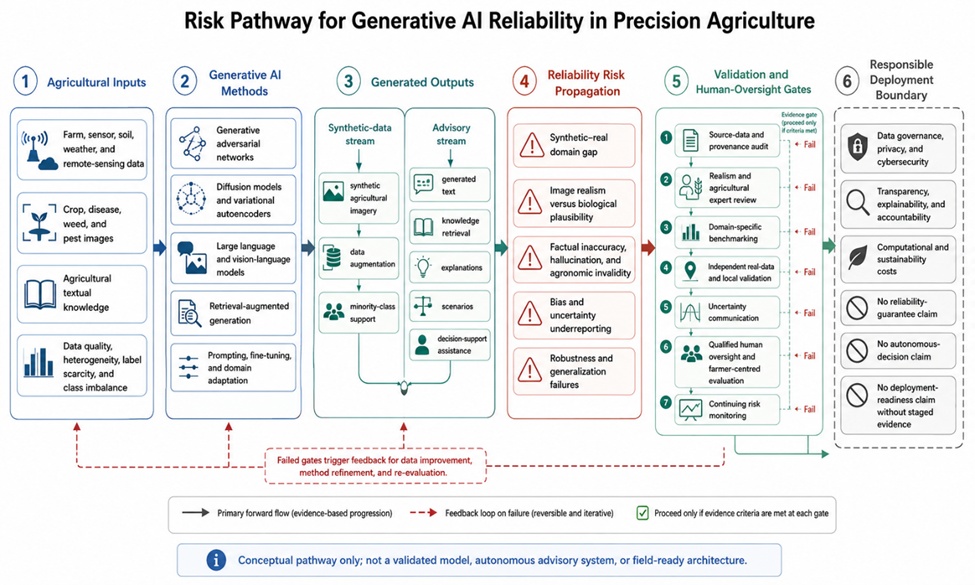
Figure 1. Risk Pathway for Generative AI Reliability in Precision Agriculture
Alt-text description: A conceptual risk pathway showing agricultural data and generative AI models producing synthetic data and advisory outputs, with risks including hallucination, factual inaccuracy, domain gaps, bias, uncertainty, validation gaps, human oversight failures, and deployment-readiness boundaries.
Table 2. Generative Decision Support, Model Reliability, Hallucination, and Validation Risks in Precision Agriculture: Large Language Models, Vision-Language Models, Retrieval-Augmented Generation, Advisory Interfaces, Factual Accuracy, Agronomic Validity, Robustness, Generalization, Uncertainty, Human Oversight, and Deployment Boundaries
Decision-support or reliability component | Core risk question | Required evidence or context | Generative AI function or risk mechanism | Potential output or risk manifestation | Validation or safeguard need | Human oversight need | Claim boundary |
Large language models | Does the model understand the agricultural question and its local context? | Crop, location, season, production system, recent observations, and validated knowledge | Generates text from learned language patterns and prompts | Coherent but generic, incomplete, outdated, or inaccurate response | Crop-specific factual review, contextual testing, and source verification | Qualified expert review for consequential use | Language fluency does not establish agronomic correctness |
Vision-language models | Does the system interpret visual evidence without creating false associations? | Calibrated images, image-quality metadata, field context, and expert labels | Connects visual features with generated text | Incorrect symptom description or unsupported visual explanation | Image-quality checks, expert visual confirmation, and independent multimodal testing | Agronomist, pathologist, botanist, entomologist, or veterinarian as appropriate | Multimodal output does not guarantee diagnosis |
Retrieval-augmented generation | Are retrieved sources authoritative, current, and relevant to the question? | Curated corpus, versioning, provenance, retrieval logs, and source-access records | Retrieves documents before generating a response | Answer grounded in irrelevant, stale, incomplete, or conflicting evidence | Retriever evaluation, citation-fidelity testing, corpus governance, and claim-level verification | Reviewer must be able to inspect the retrieved evidence | Retrieval does not eliminate hallucination |
Prompting | Is model behaviour stable across equivalent instructions and user phrasing? | Prompt variants, user-language diversity, adversarial cases, and task definitions | Conditions generation without changing core parameters | Prompt-sensitive or inconsistent recommendations | Prompt-robustness testing, structured input requirements, and red-team evaluation | Users need clear escalation when information is missing | A well-designed prompt is not a validation result |
Fine-tuning | Does adapted performance extend beyond the fine-tuning corpus? | Representative domain corpus, held-out tasks, and baseline comparisons | Updates model parameters for agricultural terminology or tasks | Improved in-domain answers with overfitting or inherited corpus errors | External evaluation, regression testing, and corpus-quality audit | Domain experts must review training content and failures | Fine-tuning does not certify advisory safety |
Domain adaptation | Does the model remain valid across regions, crops, languages, and practices? | Regional data, local terminology, management systems, and environmental variation | Adjusts representations or model behaviour to a target domain | Poor performance outside the adapted distribution | Geographic, temporal, linguistic, and production-system validation | Local institutions and users should participate in evaluation | Adaptation to one domain does not imply universal transfer |
Knowledge retrieval | Can each generated claim be traced to suitable agricultural evidence? | Structured databases, knowledge graphs, extension materials, and provenance | Searches and ranks candidate knowledge | Unsupported synthesis or omission of decisive qualifications | Source-level relevance testing and evidence-to-claim mapping | Human review for high-impact interpretations | Retrieved evidence is not equivalent to a valid conclusion |
Text generation | Does wording preserve factual content, limitations, and uncertainty? | Verified facts, communication objectives, and user-comprehension requirements | Composes summaries, explanations, and answers | Fabricated detail, excessive certainty, or omitted caveats | Claim verification, uncertainty-language testing, and editorial review | Human approval before consequential communication | Generated text is a candidate communication product |
Scenario generation | Are generated scenarios explicit conditional possibilities rather than forecasts? | Defined assumptions, ranges, causal constraints, and uncertainty information | Produces hypothetical or conditional narratives | Plausible scenario interpreted as a prediction | Assumption disclosure, plausibility review, and sensitivity analysis | Advisor interpretation and user clarification | Scenario generation does not guarantee future outcomes |
Advisory interface | Does the interface collect sufficient context and permit correction or challenge? | User needs, literacy, language, connectivity, and interaction records | Conducts conversational elicitation and presentation | Premature response, omitted context, or automation bias | Usability testing, clarification requirements, and contestability controls | Users must be able to reject and escalate output | Interface convenience is not advisory validity |
Farm decision support | Does generated information improve a defined decision process without displacing authority? | Decision objective, alternatives, constraints, observations, and accountable roles | Summarizes evidence or compares candidate options | Incomplete decision framing or unsupported prioritization | Workflow evaluation, error-impact assessment, and decision logging | Farmer and qualified advisor retain final authority | No autonomous farm decision claim |
Factual accuracy | Is each statement correct, current, and appropriately sourced? | Authoritative evidence and date-sensitive knowledge | Failure may arise from stale parameters or incorrect synthesis | Wrong facts, units, dates, causal claims, or source attributions | Claim-level checking and version-controlled evidence | Expert review where errors could affect management | Accuracy cannot be inferred from confidence |
Agronomic validity | Is the information suitable for the specific biological and production context? | Soil, crop stage, cultivar, weather, management history, and constraints | Generic language may omit decisive local variables | Generally plausible but locally unsuitable advice | Local expert assessment and context-specific evaluation | Agronomist or extension professional review | No direct agronomic recommendation without validation |
Synthetic-real domain gap | Does synthetic-supported performance transfer to real observations? | Independent farms, seasons, devices, cultivars, and environmental conditions | Generated samples differ from the target real distribution | Performance decline under real field conditions | Real-only external, temporal, and geographic testing | Human review cannot compensate for unmeasured model shift | No synthetic-equivalence or field-transfer claim |
Hallucination | Does the system create unsupported agricultural information? | Expert-verified questions, evidence sets, and error taxonomy | Parametric generation, weak grounding, or decoding failure | Fabricated facts, sources, symptoms, causal links, or practices | Agricultural hallucination measurement and claim verification | Reviewers need evidence access and stopping authority | No reliance on unverified generated claims |
Data-quality failure | Are source inputs accurate, representative, labelled, and traceable? | Provenance, metadata, quality controls, and leakage checks | Model learns and reproduces defects in input data | Confident outputs derived from biased, noisy, or incomplete information | Upstream data audit and downstream error analysis | Data stewards and domain experts share responsibility | No inference from unaudited data |
Bias | Are errors systematically concentrated in particular crops, regions, languages, or farm types? | Representative subgroup data and stratified evaluation | Unequal representation in training or retrieval sources | Lower-quality outputs for underrepresented contexts | Subgroup testing, dataset review, and continuing monitoring | Affected users should participate in defining relevant groups | Aggregate performance does not establish equitable performance |
Fairness concern | Are benefits, burdens, errors, and access distributed acceptably? | User, farm, regional, linguistic, and infrastructure context | Technical and structural disparities interact | Exclusion, unequal error exposure, or concentrated benefits | Distributional assessment and participatory evaluation | Governance bodies must address structural as well as model-level issues | No fairness guarantee from one metric |
Robustness failure | Does output change under benign variation in prompts, images, formats, or measurements? | Perturbation sets and realistic input variation | Sensitivity to wording, noise, compression, or missing fields | Inconsistent explanations or classifications | Prompt, corruption, sensor, and formatting stress tests | Humans require warnings when inputs are outside validated conditions | No reliability claim without stability evidence |
Generalization failure | Does performance extend beyond development data and benchmark tasks? | Unseen regions, seasons, farms, cultivars, sensors, and question forms | Overfitting or narrow representation | Strong benchmark performance with weak real-context performance | External and temporal validation by independent evaluators | Local reviewers should confirm applicability | Benchmark success does not establish broad generalization |
Uncertainty underreporting | Does linguistic confidence exceed evidence strength? | Calibration data, ambiguous cases, and confidence labels | Generation objectives favour complete-sounding answers | Definitive wording despite incomplete or conflicting evidence | Calibration, abstention, uncertainty-language, and user-interpretation testing | Humans need clear escalation routes for uncertain cases | Confident expression does not equal reliable knowledge |
Explainability gap | Does the explanation accurately expose evidence, assumptions, and limitations? | Traceable sources, model records, and user requirements | Generates plausible rationales that may not reflect actual evidence use | False reassurance or misleading causal narrative | Evidence-linked explanations and explanation-fidelity testing | Reviewers must be able to inspect underlying sources | Explanation does not prove correctness |
Benchmark limitation | Does the test represent intended agricultural use and consequences? | Documented task coverage, contamination checks, and diverse cases | Static test design may omit operational variability | High average score with unmeasured subgroup or workflow failure | Multi-domain benchmarks and transparent limitation statements | Independent interpretation of benchmark relevance | Benchmark performance alone is insufficient |
External validation gap | Has performance been reproduced outside the development team or dataset? | Independent evaluators and distinct data sources | Developer-centred evaluation may preserve hidden assumptions | Uncertain reproducibility and transfer | Independent replication and transparent reporting | Deployment institutions should require external evidence | Internal validation does not establish general reliability |
Field evaluation gap | Has the system been evaluated within realistic agricultural workflows? | Prospective tasks, accountable users, monitoring, and predefined stopping rules | Offline testing excludes workflow and consequence effects | Unknown usability, workload, trust, and error impact | Staged, supervised, context-specific field evaluation planning | Qualified users retain decision authority throughout testing | No field-readiness claim from laboratory evidence |
Human oversight failure | Can human reviewers detect, challenge, correct, and reject model errors? | Role clarity, expertise, time, evidence access, and override mechanisms | Automation bias or inadequate interface design | Rubber-stamping, delayed correction, or responsibility diffusion | Human-factors testing, escalation design, logging, and audit | A named competent person must hold final authority | Human presence alone is not a safety guarantee |
No reliability-guarantee boundary | Do selected evaluations justify describing the system as reliable? | Evidence across factuality, robustness, generalization, uncertainty, and context | Overgeneralization from averages or demonstrations | Unconditional reliability language | Formal claim audit and context-specific limitation reporting | Authors, reviewers, and deployers share responsibility | Reliability remains conditional and task-specific |
No deployment-readiness boundary | Do technical demonstrations establish operational suitability? | Integrated technical, human, organizational, and governance evidence | Conflation of feasibility with readiness | Premature field, commercial, or autonomous-use claim | Staged readiness assessment, independent review, and stop criteria | Institutions require explicit authorization and accountability | No deployment-readiness claim |
Responsible deployment requires explicit allocation of responsibility across the generative-AI lifecycle. Agricultural systems may involve data providers, model developers, platform operators, knowledge curators, extension organizations, farm-management vendors, advisors, farmers, researchers, and public institutions. When an inaccurate output contributes to a poor decision, responsibility can become diffuse if each actor treats another component or organization as the source of authority. Agricultural AI governance must therefore specify who is responsible for data quality, model evaluation, retrieval-corpus maintenance, user communication, monitoring, incident response, model updating, and the authorization of consequential use. Trustworthy deployment cannot be achieved by assigning responsibility to the model itself or by assuming that the final user can identify every hidden technical failure [25].
Ethical and responsible agricultural AI also requires attention to privacy, transparency, fairness, accountability, and the conditions under which data are reused. Generative systems may process farm records, sensor streams, images, geospatial information, production histories, user questions, and other context that can reveal commercially or personally sensitive information. Retrieval systems and conversational interfaces introduce further risks through data retention, unintended disclosure, prompt injection, insecure integrations, or secondary use beyond the original purpose. Bias can arise from unequal representation of crops, regions, languages, technologies, and farm structures, while opaque model updating can alter behaviour without adequate revalidation. Responsible practice consequently requires provenance, access controls, data minimization, security testing, subgroup evaluation, documentation, change control, and mechanisms for audit and redress [26].
Farmer trust must be treated as an empirical and relational outcome rather than an automatic consequence of technical performance. Research on smart-farming data practices indicates that trust is weakened when farmers do not understand what data are collected, how they are processed, who benefits, or whether information may be reused beyond the stated purpose. Generative AI may intensify these concerns because derived embeddings, synthetic records, generated summaries, and conversational logs can be difficult for users to inspect. Transparency should therefore include understandable explanations of system purpose, source-data categories, knowledge provenance, limitations, update practices, and responsible actors. Benefit sharing, contestability, meaningful consent, and the ability to refuse or discontinue participation are also relevant. Farmer-centred evaluation must assess whether the technology supports users’ goals and agency rather than merely measuring whether they are willing to use it [27].
A responsible-deployment framework must be anticipatory, inclusive, responsive, and reflexive throughout development and use. Anticipation requires examining plausible technical, social, economic, and environmental consequences before large-scale adoption. Inclusion requires participation from farmers, advisors, workers, local institutions, and underrepresented users whose needs may not be visible in development datasets. Responsiveness requires the capacity to revise, suspend, or withdraw a system when evidence changes or harms emerge, while reflexivity requires institutions and developers to examine their own assumptions, incentives, and definitions of success. These principles extend to computational and sustainability costs, digital inclusion, local validation, documentation, risk monitoring, and cybersecurity. Because safeguards remain context-dependent and incomplete, their presence cannot support an unconditional responsible-deployment guarantee or a field-readiness claim [28].
The reviewed evidence reveals a persistent imbalance between the breadth of proposed generative-AI opportunities and the maturity of validation supporting them. Generative adversarial networks, diffusion models, variational autoencoders, large language models, vision-language models, and retrieval-supported systems may contribute to synthetic-data experiments, agricultural image augmentation, knowledge access, explanation generation, and conversational decision assistance. Yet responsible agricultural innovation requires more than technical novelty or performance on bounded datasets. It requires attention to who defines the problem, which farmers and production systems are represented, how benefits and burdens are distributed, and whether affected stakeholders can influence development and use. Agriculture 4.0 scholarship therefore supports a broader interpretation in which social purpose, inclusion, and accountability are integral to assessing technological value [29].
The synthesis also distinguishes user acceptance from evidence of model validity. Perceived usefulness, ease of use, compatibility, social expectations, and behavioural intention can influence whether agricultural users adopt AI-enabled tools. These factors are important because systems that are inaccessible, confusing, or poorly aligned with farm workflows are unlikely to support meaningful decisions. Nevertheless, a system may be accepted because it is convenient, novel, persuasive, or institutionally promoted while still producing inaccurate or weakly contextualized outputs. Conversely, a technically valid research tool may remain unacceptable because it imposes excessive workload, lacks transparency, or conflicts with user priorities. Farmer-centred evaluation must therefore examine calibrated trust and appropriate reliance rather than aiming simply to maximize adoption [30].
Computational cost represents another area where opportunity claims exceed available agricultural evidence. Generative models can require substantial resources for training, adaptation, retrieval, and repeated inference, and these costs may affect affordability, latency, infrastructure dependence, and access for smaller organizations or low-resource farming communities. Accuracy-centred evaluation can obscure energy use, hardware demand, financial cost, and the opportunity cost of pursuing increasingly large models when smaller or task-specific alternatives may be sufficient. Green AI principles support reporting efficiency and resource consumption alongside performance, but agriculture-specific evidence remains limited. Claims that generative AI contributes to environmental sustainability should therefore distinguish potential agricultural benefits from the unmeasured environmental burdens of the digital system itself [31]
Across synthetic data and advisory systems, the strongest evidence supports bounded research and assistance functions rather than autonomous agricultural intelligence. Synthetic crop, disease, weed, and pest images may help investigate class imbalance and label scarcity, but their utility depends on source-data quality, biological plausibility, diversity, and transfer to independent real observations. Language and multimodal models may improve access to agricultural knowledge or generate candidate explanations, but reliability depends on factual verification, local context, evidence provenance, uncertainty communication, and human review. Retrieval, fine-tuning, prompting, and domain adaptation can modify performance but do not remove hallucination, bias, robustness, or generalization risks. The central evidence gap is therefore not a lack of possible applications; it is the absence of sufficiently integrated validation connecting technical output quality to agronomic validity, human decision processes, governance, and monitored use.
A cautious research trajectory should link opportunity assessment to explicit validation and governance gates. Promising technical functions should first be evaluated under controlled conditions, followed by independent real-data tests, subgroup analysis, local contextual review, human-factors assessment, and monitored field-evaluation planning where justified. Data governance, privacy, cybersecurity, accountability, documentation, computational efficiency, digital inclusion, and farmer participation must be considered as interacting conditions rather than separate ethical additions. Research priorities should focus on measurable weaknesses: synthetic-real domain gaps, agricultural hallucination, uncertainty communication, retrieval fidelity, underrepresented crops and regions, effective human oversight, calibrated trust, and lifecycle monitoring. Figure 2 synthesises the critical review findings by connecting generative AI methods, precision agriculture applications, opportunity pathways, risk domains, validation requirements, responsible deployment safeguards, and future research priorities.
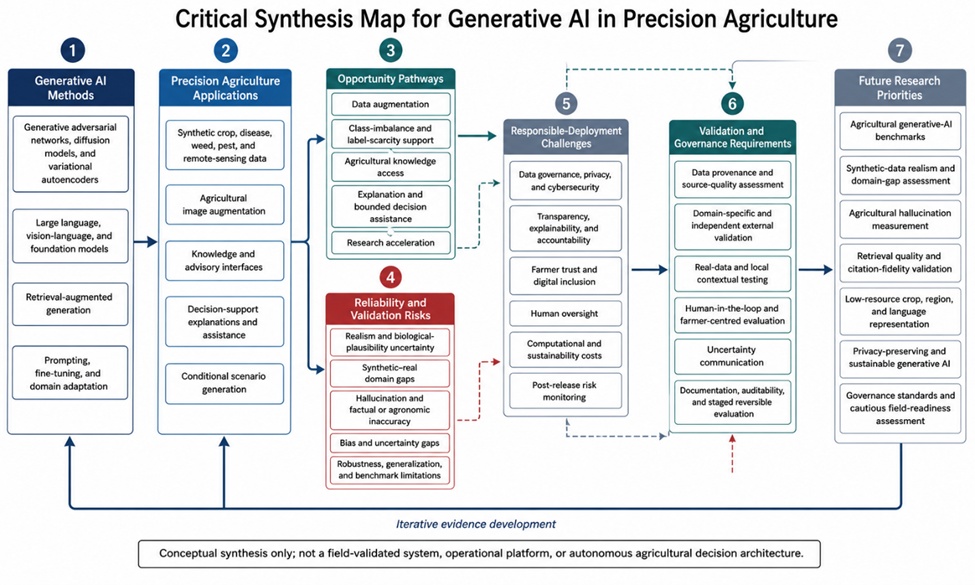
Figure 2. Critical Synthesis Map for Generative AI in Precision Agriculture
Alt-text description: A conceptual synthesis map showing generative AI methods linked to synthetic data, agricultural image generation, advisory systems, decision support, reliability risks, hallucination, validation gaps, responsible deployment safeguards, and future research priorities.
Future research should first establish agricultural generative-AI evaluation infrastructures that reflect the diversity and contextual sensitivity of farming. Domain benchmarks should include crop, livestock, soil, weather, image, language, and multimodal tasks where appropriate, while documenting geographic, temporal, linguistic, and production-system coverage. Low-resource crops, regions, languages, and farm structures require deliberate representation rather than incidental inclusion. Conversational interfaces should be evaluated not only for answer quality but also for whether they reduce access barriers without concealing uncertainty, oversimplifying technical evidence, or displacing local expertise. Research on generative AI as an interface between farmers and agricultural algorithms highlights both the potential for accessible interaction and the need to address connectivity, language, reliability, and inclusion constraints [32].
Synthetic-data research requires stronger methods for assessing realism, biological plausibility, and synthetic-real transfer. Future studies should combine perceptual and statistical measures with crop-, disease-, weed-, pest-, livestock-, and remote-sensing-specific expert criteria. Generated samples should be tested through controlled augmentation studies using real-only independent test sets, multiple environments, repeated training, subgroup metrics, calibration, and negative-result reporting. Domain-gap analysis should examine changes across farms, seasons, cultivars, sensors, image-acquisition protocols, and environmental conditions. Research should also compare generative adversarial networks, diffusion models, variational autoencoders, and non-generative augmentation methods under transparent resource budgets. These studies would clarify when synthetic samples add useful diversity, when they reproduce source bias, and when they create visually plausible but agronomically misleading artefacts.
Generative decision-support research should develop agricultural hallucination taxonomies, factuality tests, retrieval-quality metrics, and uncertainty-aware interaction designs. Evaluation should distinguish errors caused by model memory, prompting, retrieved evidence, corpus age, source ranking, multimodal interpretation, and unsupported synthesis. Retrieval-augmented agricultural systems require versioned corpora, evidence provenance, claim-to-source traceability, and tests of whether citations actually support generated statements. Human-in-the-loop studies should measure whether farmers and advisors can detect errors, interpret uncertainty, challenge outputs, and avoid automation bias under realistic workloads. Farmer-centred usability and trust research should examine comprehension, contestability, language, accessibility, benefit distribution, and calibrated reliance rather than treating satisfaction or adoption intention as proof of decision quality.
Responsible-deployment research should integrate privacy-preserving methods, cybersecurity testing, bias and fairness assessment, sustainable-computing measurement, governance documentation, model-update controls, incident reporting, and post-release risk monitoring. Proposed documentation standards should record data provenance, generation methods, retrieval sources, prompt structures, fine-tuning procedures, evaluation contexts, known limitations, subgroup performance, computational requirements, and responsible actors. Field-readiness assessment should use staged, reversible, and independently reviewed evidence gates rather than treating a benchmark, prototype, or pilot as sufficient. Local validation, farmer participation, qualified human authority, suspension procedures, and continuing monitoring should remain mandatory conditions for any progression toward consequential use. Table 3 presents a future research agenda for responsible generative AI in precision agriculture.
Table 3. Future Research Agenda for Responsible Generative AI in Precision Agriculture: Agricultural Benchmarks, Synthetic Data Realism, Domain Gap Evaluation, Domain Adaptation, Hallucination Measurement, Knowledge Retrieval Validation, Uncertainty-Aware Decision Support, Human-in-the-Loop Evaluation, Farmer Trust, Bias, Privacy, Sustainable Computing, Governance, and Field-Readiness Boundaries
Future research priority | Problem addressed | Required methodological advance | Required data or infrastructure | Validation need | Governance or user need | Expected contribution | Boundary statement |
Agricultural generative-AI benchmarks | Generic benchmarks omit agricultural context, multimodality, and consequence sensitivity | Multi-task, multilingual, multimodal, contamination-aware benchmark design | Versioned agricultural questions, images, metadata, evidence sources, and expert answers | Independent testing across crops, regions, languages, and difficulty levels | Transparent benchmark governance and access procedures | More relevant and comparable model evaluation | No benchmark can represent every farm or production condition |
Synthetic-data realism assessment | Visual plausibility is often treated as evidence of validity | Multi-dimensional technical, perceptual, biological, and task-based realism framework | Paired real and synthetic data with expert annotations and provenance | Cross-site assessment, expert review, and real-only downstream testing | Disclosure of generation, filtering, and rejection criteria | Clearer identification of usable and misleading synthetic samples | A realism score does not establish observational equivalence |
Synthetic-real domain-gap evaluation | Synthetic-supported performance may not transfer to real agricultural environments | Geographic, temporal, sensor, cultivar, and environmental domain-shift protocols | Multi-farm, multi-season, multi-device real datasets | External and out-of-distribution validation | Data-sharing safeguards and documentation | Better evidence on transferability | Passing one external test does not prove universal generalization |
Domain-specific generative-model adaptation | Generic models may lack regional terminology, practices, and biological knowledge | Comparative evaluation of prompting, fine-tuning, retrieval, and modular adaptation | Curated crop-, region-, language-, and production-specific corpora | Held-out regions, tasks, and temporal periods | Local expert stewardship and version control | Improved contextual relevance | Adaptation does not certify agronomic correctness |
Low-resource crop and region representation | Dominant crops and well-resourced regions shape model behaviour | Purposeful sampling, participatory data design, and representation audits | Multilingual and underrepresented-crop data with contextual metadata | Stratified evaluation and distributional error analysis | Fair data partnerships and benefit-sharing arrangements | Reduced visibility and performance gaps | Improved representation does not constitute complete fairness |
Hallucination measurement in agricultural advisory systems | Agricultural factuality failures lack standardized definitions and tests | Claim-level taxonomy covering fabrication, contradiction, omission, and invalid synthesis | Expert-verified questions, evidence sets, and adversarial cases | Repeated testing across models, prompts, crops, and regions | Incident-reporting and escalation procedures | Measurable agricultural hallucination risk | A low measured rate does not imply absence of harmful failures |
Retrieval-augmented agricultural knowledge validation | Retrieval can introduce irrelevant, stale, or conflicting evidence | Component-level evaluation of corpus, retriever, ranking, citation, and generator | Versioned authoritative corpora with provenance and update records | Retrieval relevance, answer correctness, citation fidelity, and freshness testing | Corpus ownership, maintenance, and correction policy | Stronger evidence-grounding practices | Retrieval augmentation does not eliminate hallucination |
Uncertainty-aware generative decision support | Generated answers may sound more certain than available evidence | Calibration, abstention, ambiguity detection, and uncertainty-language design | Labelled uncertain, conflicting, and insufficient-context cases | Calibration and user-interpretation evaluation | Safe escalation and non-response options | More appropriate user reliance | Expressed uncertainty may remain imperfect |
Human-in-the-loop advisory evaluation | Human oversight is often asserted without evidence of effectiveness | Controlled human-factors and workflow experiments | Realistic advisory tasks, evidence displays, logs, and error scenarios | Error detection, correction, workload, and automation-bias measurement | Clear authority, training, and stopping rights | Evidence on when oversight reduces or amplifies risk | Human presence alone is not a safety guarantee |
Farmer-centred usability and trust evaluation | Technical evaluation omits farmer goals, comprehension, and decision practices | Participatory, longitudinal, multilingual, and mixed-method studies | Diverse farmer panels and locally relevant interaction scenarios | Comprehension, burden, contestability, trust calibration, and sustained-use assessment | Feedback rights, accessibility, and benefit sharing | More legitimate and usable system design | Satisfaction or adoption does not prove validity |
Bias and fairness assessment | Model quality and access may vary across farms, crops, languages, and regions | Intersectional subgroup testing and distributional evaluation | Representative user, farm, crop, regional, and infrastructure data | Per-group factuality, robustness, access, and error-impact assessment | Community-defined fairness objectives and remediation processes | Visibility of unequal performance and benefits | Fairness cannot be reduced to a single metric |
Privacy-preserving generative AI | Context-rich agricultural systems may expose sensitive farm or user data | Data minimization, federated methods, confidential processing, and leakage testing | Secure infrastructure, threat models, and controlled data-access environments | Utility-privacy trade-off and re-identification evaluation | Meaningful consent, access control, deletion, and secondary-use restrictions | Reduced unnecessary data exposure | Privacy techniques do not guarantee anonymity |
Sustainable-computing evaluation | Energy, hardware, financial, and access costs are underreported | Workload-normalized and lifecycle-oriented resource measurement | Energy, latency, hardware, utilization, and model-size records | Replication across training, adaptation, retrieval, and inference settings | Transparent resource and cost disclosure | Evidence-based comparison of technical alternatives | Computational efficiency is not equivalent to overall sustainability |
Responsible-deployment monitoring | Model behaviour, knowledge, and user context change after release | Drift detection, incident taxonomy, feedback analysis, rollback, and suspension protocols | Version control, secure logs, monitoring dashboards, and reporting channels | Sensitivity of monitoring and effectiveness of corrective action | Independent oversight and stop authority | Earlier detection of deterioration and misuse | Monitoring cannot eliminate residual risk |
Governance and documentation standards | Assurance information is inconsistent across agricultural generative systems | Agriculture-specific minimum reporting and audit framework | Records covering data, models, prompts, retrieval, evaluation, users, and updates | Auditability, completeness, and inter-reviewer consistency testing | Multi-stakeholder development and periodic revision | Comparable evidence packages and clearer accountability | Documentation is necessary but not sufficient for responsible use |
Field-readiness assessment without overclaiming | Prototypes and benchmark results may be misrepresented as deployment evidence | Staged readiness levels integrating technical and socio-technical criteria | Controlled sandboxes, supervised pilots, local expertise, and independent evaluation | Prospective local effectiveness, reliability, usability, and safety assessment | Farmer participation, human authorization, exit routes, and incident response | More defensible decisions about progression or suspension | Field readiness remains conditional, local, and reversible |
This critical review has synthesized generative artificial intelligence in precision agriculture across synthetic data, agricultural image generation, decision support, advisory systems, model reliability, hallucination, validation risks, responsible deployment challenges, and future research priorities. Generative methods may support carefully bounded research, augmentation, knowledge-access, explanation, and decision-assistance workflows, but their outputs do not independently establish biological plausibility, agronomic correctness, farmer trust, environmental benefit, operational safety, or deployment readiness. Synthetic data require source-quality assessment, realism testing, biological review, and independent real-domain validation. Advisory outputs require factual verification, uncertainty communication, local contextualization, and qualified human authority. Responsible use further depends on farmer-centred evaluation, data governance, privacy and cybersecurity protections, accountability, transparency, bias monitoring, computational assessment, documentation, model-update control, and continuing risk monitoring. Future progress should therefore be judged not only by the ability to generate convincing content, but by whether evidence supports reliable, equitable, traceable, context-sensitive, and reversible use within clearly defined boundaries. The appropriate near-term contribution of generative AI is to support critical agricultural research and supervised decision processes rather than to replace farmers, advisors, agronomists, or established validation practices.
None
None
None
None
Open Access The author(s) retain copyright. This article is licensed under the Creative Commons Attribution-NonCommercial-ShareAlike 4.0 International License. It may be shared and adapted for non-commercial purposes with appropriate attribution, an indication of changes, and distribution of adaptations under the same license. Third-party material may be subject to separate terms identified in its credit line. View the license at https://creativecommons.org/licenses/by-nc-sa/4.0/.
 Agro Intelligence Research Press