Innovation forms the core of a company’s competitive edge. A business cannot survive in the market without continuous innovation. Economic theory highlights innovation as the primary driver of both enterprise growth and regional progress. In the agricultural sector, innovation remains a vital instrument. Along these lines, smart agriculture stands out as a key advancement that helps firms sustain their market position. This paper outlines the findings from an experimental trial on Chardonnay grape varieties, using sensors to monitor soil moisture levels. The outcomes indicate that these sensors lower variable costs while enhancing gross income.
The swift pace of industrialization has reshaped agriculture, particularly since 1950, with the widespread adoption of farm mechanization. Over the years, declining average unit costs have enabled manufacturers of mechanical equipment to offer machines at more affordable prices. Initially, when an innovation emerges, substantial upfront investments lead to elevated average unit costs, prompting the innovating firm to set high prices to recoup its expenditures [1]. Over time, competitors begin imitating the innovation, sparking a competitive dynamic that drives down prices and makes the new good accessible to a broader range of companies [2]. In the present era, industrial advancement has been complemented by information technology, which has reduced geographical barriers and accelerated the spread of knowledge. Societal transformations largely stem from technical advancements, namely the continuous generation and accumulation of new knowledge within the economic framework. Innovation originates from an invention and proceeds through the refinement and market launch of a new product. The European Commission’s Green Paper on Innovation in Europe describes innovation as the updating and broadening of products and services along with their associated markets; the development of novel production, supply, and distribution approaches; and the implementation of modifications in management practices, organizational structures, working environments, and workforce competencies [3]. Economic theory requires a clear separation between radical and incremental innovation. Radical innovation disrupts current products or processes and creates entirely new industries or market categories. Incremental innovation, by contrast, consists of ongoing enhancements to existing products or processes that boost competitiveness. Incremental changes vastly exceed radical ones in frequency. Within agricultural firms, incremental innovation typically entails a partial adjustment process. Specifically, it covers production activities in which certain machines are upgraded while leaving other equipment and land assets unchanged [4]. Each farm operates as a unique blend of production factors influenced by climate, soil characteristics, and available machinery. Based on this mix, every rational producer must select the most suitable combination. Innovation is unquestionably fundamental to economic expansion and advancement. The central challenge lies in how best to allocate resources and operations to foster a sustainable innovation cycle and channel funding into research and development, as well as into human capital, to generate prosperity and improved living standards. In agriculture, technical progress involves phasing out outdated machinery and introducing new equipment previously unavailable, enabling higher yields from the same level of inputs. Notably, such technical progress—which always incorporates new capital goods—has been particularly pronounced in the primary sector, leading to novel agri-food products reaching the market and the adoption of advanced cultivation methods [5]. In the agri-food domain, innovation has also emerged through the refined management of resources, grounded in the practical knowledge producers have gained over time (Learning by doing). This dimension is particularly important in agri-food operations, as experienced entrepreneurs optimize factor utilization to achieve superior effectiveness and operational efficiency. Graphically, innovation shifts the production function upward and moves the isoquant closer to the origin, allowing the same output volume with reduced input consumption. A small enterprise operating in a competitive environment has a strong incentive to pursue technical improvements, as it can temporarily enjoy exclusive benefits and generate supernormal profits. In this scenario, the firm transitions from a position where minimum average cost equals or exceeds marginal revenue to one where marginal revenue surpasses minimum average cost.
Nevertheless, the ongoing implementation of technical progress by various firms eventually undermines the free-entry principle that defines competitive markets. Innovation creates a sustainable competitive advantage only when imitation by rivals proves difficult. While the innovation remains unique, the pioneering company secures a distinct edge that yields elevated profits and strengthens overall business viability.
Technical progress serves as a foundation for company expansion and market strength. Growth reflects the enterprise’s overall dynamism. To achieve expansion, firms must commit resources to research and development. Yet in Italy’s agricultural landscape, where most farms are relatively small, dedicating funds to development proves challenging. How should such situations be addressed? Economic theory indicates that every investment needs adequate scale (measured in hectares, revenue volume, or units produced) to be viable [5]. Within economic theory, technical progress may boost output quantities at the firm level. Additional types focus on optimizing resource allocation, such as expanding plant capacity in response to rising demand or modernizing facilities through automation to cut labor expenses (as seen in precision agriculture). Regardless of the form, investments must align with the minimum efficient scale to be justified. This consideration is critical to avoid endangering the firm’s financial and asset position. Gains in productivity from technical improvements increase purchasing power and stimulate broader consumption. However, Engel’s law on demand reveals that rising consumption seldom leads to proportionally higher quantities consumed; instead, the composition of consumption evolves. In the agri-food industry, this pattern is evident in high-income societies, where further income growth does not raise the volume of food demanded but increases demand for associated services. This trend emerged in developed economies from the 1970s onward and extends to all regions experiencing rising per capita income. Discussions of innovation must differentiate between large and small enterprises. Large, well-capitalized firms with established market presence enjoy straightforward access to financing for research and development initiatives. This dynamic often leaves smaller firms excluded from innovation opportunities, compelling them to operate with comparatively higher average unit costs. When examining market structures, firms in oligopolistic settings demonstrate a greater propensity to innovate, although the process demands extended timeframes and carries inherent uncertainties. Overall, larger companies have a clear edge in innovation potential compared to smaller companies operating under competitive conditions. As economic theory underscores, innovation in agriculture must always be justified by economic gains (higher revenues and/or lower costs) [6]. Why, then, do agri-food businesses pursue innovation? They do so primarily to cut production expenses, as illustrated by the adoption of electronic pruning shears and accompanying tying tools in vineyards over the past decade. Such process improvements have delivered notable economic advantages, especially for small family-run operations in competitive markets [7]. Beyond reducing average costs, innovation can expand profit margins.
Additionally, firms innovate to enhance the productivity of production factors—for instance, converting traditional sprinkler systems to drip irrigation. Thus, innovation emerges as the solution an entrepreneur devises to address challenges arising in daily operations. In sectors with low capital requirements, innovation spreads mainly through imitation. The initial trigger for innovation stems from the entrepreneur observing tangible income improvements, whether through higher revenues at stable prices, cost savings, better product quality, or refined marketing strategies [8]. Implementing an innovation typically requires an investment of various resources and therefore entails risk; the entrepreneur must work to reduce the likelihood of failure to speed up its dissemination.
It is widely acknowledged that technology now serves as a core driver of agricultural progress. This development has enabled sector players to refine their operations, boost efficiency, and secure long-term competitiveness. What was once an optional strategy offering a strong edge through differentiation has evolved into an essential requirement for meeting regulatory standards and market demands. Agrotechnology examines the integration of technological solutions into farming, delivering both physical and digital frameworks that help farmers streamline their operations. In what way? Through the attainment of a return on investment (ROI) within the short to medium term via a well-planned innovation strategy that positions them ahead of rivals. Innovations such as drones for crop oversight, remote sensors enabling precision farming, GPS tools for better localization, enhanced connectivity, and breakthroughs in renewable energy sources all contribute to forward momentum. When paired with technology firms’ focus on creating farm-specific software that incorporates approaches like “Big Data” and “Machine Learning”, this results in the firm establishment of Agriculture 4.0. Factors including heightened food security needs, population growth projections, diminishing water supplies, and shifting climate patterns underscore the importance of this technological pathway. GAMBÍN remains attentive to these developments, pursuing in-house advancements and integrating suitable existing solutions tailored to its unique features and operational demands [9].
Agriculture 4.0 consists of precision-based technologies within connected agricultural systems. By performing combined evaluations of environmental, weather-related, and crop-specific variables, it determines precise irrigation and nutrient requirements, anticipates disease outbreaks, detects weeds in advance, reduces time and resource consumption, streamlines production cycles, and enhances both output quality and labor conditions. Nevertheless, adoption remains limited in Italy. Key barriers include the modest scale of most farms, which limits profitability potential despite capitalization levels, and minimal collaboration among producers. This small operational size, together with ongoing land fragmentation common in Italy, complicates the rollout of new technologies.
Broadly speaking, wider uptake requires specific prerequisites, beginning with expanded broadband and high-speed internet access across rural regions to connect the entire agri-food network. In addition, entrepreneurs must demonstrate greater awareness, technical skills, and readiness to commit capital. The adoption of advancements in the agri-food domain involves adjusting business structures via either partial or complete modifications. An entrepreneur finds it worthwhile to implement a new solution when it is clear beforehand that it will yield financial gains.
In decision-making scenarios, the function that outlines the entrepreneur’s goals is typically called the objective function [10]. A primary concern for business owners is cost reduction, which, while maintaining revenue levels, can elevate profits; alternatively, revenue growth can be pursued without raising expenses. Among strategies to enhance profitability, deploying soil moisture sensors is a viable option. These sensors help conserve water supplies and reduce the labor hours otherwise spent manually checking soil conditions. Sensor implementation undergoes scrutiny comparable to other routine farm choices. Since such assessments frequently focus on the most efficient execution method, they raise questions about replacing one production input with another (commonly capital substituting for labor). To determine the benefits of adding soil moisture sensors, compare growing Chardonnay wine grapes with sensors (A) versus without them (B). Provided both approaches can proceed without modifying the existing company framework, fixed costs stay identical for (A), (B), or any mix of the two. Hence, the entrepreneur may judge suitability according to Gross Income under the condition that:
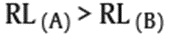 (1)
It would lead to the adoption of technique A. On the other hand, it is known that:
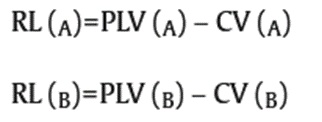 (2)
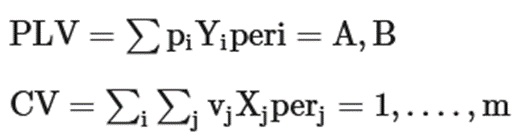
Is that:
 (3)
Experimental assessments of the financial benefits of soil moisture sensors were conducted on a farm in the Partinico municipality, Palermo province. This 10-hectare operation focuses on viticulture for wine grape production. Cultivars grown on the property include Cataratto, Nero d’Avola, Chardonnay, Syrah, Merlot, and Inzolia. Chardonnay was the subject of the trial. The vineyard terrain is level and features medium soil texture. Two separate 1-hectare plots were selected for the experiment: sensors were installed in one, while the other had none. In this scenario, GSP is based on the yield from both plots, which proved identical given matching land characteristics, pruning methods, and growing practices. Specifically, yield per hectare reaches 80 q, and the 2022 market price stood at 50,00 €/q, resulting in the following:
PLV (A) = 4.000,00 €
PLV (B) = 4.000,00 €
Regarding variable costs, the figures recorded for case (A) were:
CV (A) = 1.800,00 €
CV (B) = 2.200,00 €
Consequently:
RL (A) = 2.200,00 €
RL (B) = 1.800,00 €
Thus, installing soil moisture sensors reduces variable costs, thereby increasing Gross Income [11-13]. Consequently, smart farming methods enable cost cuts and better financial performance [14, 15]. As noted earlier, innovation underpins business competitiveness and stems from investments made at both company and regional levels. Innovation arises from combining varied expertise, demands extended timelines to develop, and involves inherent uncertainty. Schumpeter stood out as the economist highlighting innovation’s central role in capitalist systems. Indeed, shifts in technology and organization drive sustained economic expansion and generate value for businesses and territories alike. Schumpeter introduced the concept of “creative destruction” to explain how new products (replacing older ones) and process improvements trigger ongoing renewal alongside the obsolescence of outdated practices, ultimately forcing numerous firms out of the market. Within agri-food enterprises, value generation through digital innovation initiatives depends on several essential prerequisites. Primarily, the owner must act as an “innovator” aligned with the core purpose of producing market-oriented agri-food goods. The business needs sufficient financial means and liquidity to fund initiatives. Where internal funding is unavailable, access to financing becomes critical. Here, the firm’s innovation level hinges on prevailing market dynamics and bank lending rates. Overall, digitizing the agri-food chain relies on a blend of internal capabilities and external circumstances. Generally, digital innovation efforts generate value only when organizations are open to change and when economic and financial environments prove supportive. Such investments, provided they succeed despite elevated risks, typically require extended periods: early stages yield modest gains, followed by growth if successful, before eventually stabilizing.
In economic terms, innovation succeeds when it stimulates demand and thereby generates value. Once demand emerges, economic returns can be realized from the innovation. This demonstrates that an innovation’s worth ultimately rests on how it is applied. In Italy’s agricultural landscape, dominated by small-scale operations, digital innovation initiatives can positively influence value creation across the entire agri-food chain when integrated into networks formed by contractual links between chain stages. The digital solution examined here delivers clear economic benefits. This research holds significant value because it showcases an advancement that raises farm efficiency. Still, considerable work lies ahead, particularly given smallholders’ reluctance toward new technologies. Agricultural innovation should be viewed as a continuous learning endeavor involving multiple sources of expertise and delivering outcomes over extended periods. Put simply, producers tend to embrace change once awareness grows and tangible financial improvements become evident. The research is highly relevant to the wine industry and agriculture more broadly, as it demonstrates opportunities for water conservation — a crucial factor during hot, dry seasons and in arid settings. Moreover, using accurate devices to gauge soil humidity enables irrigation decisions based on actual plant and vine requirements rather than fixed schedules.
None
None
None
I declare that the drafting of the paper “Innovation and value creation in agriculture: results of an experimental analysis of the use of sensors on Sicilian vineyards of Chardonnay cultivars” respects international ethical standards.
Open Access The author(s) retain copyright. This article is licensed under the Creative Commons Attribution-NonCommercial-ShareAlike 4.0 International License. It may be shared and adapted for non-commercial purposes with appropriate attribution, an indication of changes, and distribution of adaptations under the same license. Third-party material may be subject to separate terms identified in its credit line. View the license at https://creativecommons.org/licenses/by-nc-sa/4.0/.
 Agro Intelligence Research Press