Regenerative agriculture is increasingly associated with soil improvement, ecological restoration, climate adaptation, and more resilient farming systems, yet these outcomes cannot be inferred from a management label or from digital measurement alone. This article develops a conceptual framework for data-driven regenerative agriculture that links precision farming, soil health monitoring, biodiversity monitoring, ecological feedback, climate-risk interpretation, farmer participation, and responsible decision support. The framework approach treats regeneration as a context-dependent monitoring and interpretation problem involving heterogeneous data, multiple spatial and temporal scales, uncertain ecological relationships, and explicit claim boundaries. Precision farming contributes spatially and temporally resolved observations from sensors, remote sensing, soil sampling, crop monitoring, water data, and farm-management records, while soil-health interpretation requires function-linked indicators, longitudinal baselines, local validation, and separation of monitoring from verified restoration or carbon-accounting claims. Biodiversity monitoring is organized around agrobiodiversity, functional biodiversity, habitat conditions, landscape context, ecological indicators, and field-validated observation methods. Climate resilience is framed through hazards, exposure, vulnerability, adaptive capacity, farm-system adaptation, and uncertainty rather than as a guaranteed outcome. Regenerative decision support integrates these domains through data-quality review, provenance, interoperability, ecological interpretation, farmer knowledge, human oversight, sustainability feedback, and iterative framework updating. The principal contribution is a structured conceptual architecture for connecting digital agricultural capabilities with cautious ecological reasoning. The framework supports research design and monitoring-system development but does not independently verify regenerative outcomes, environmental performance, biodiversity recovery, soil restoration, carbon sequestration, climate resilience, operational safety, or deployment readiness.
Regenerative agriculture has become a prominent but conceptually heterogeneous approach to agricultural change. Definitions commonly combine management processes, such as reducing disturbance or increasing biological diversity, with desired outcomes, such as improved soil functioning, biodiversity, climate performance, and farm resilience. These process- and outcome-based interpretations are not equivalent, and neither provides an automatic basis for verification. A farm may adopt practices described as regenerative without demonstrating changes in the ecological functions that matter for its soils, crops, water system, landscape, or stakeholders. Conversely, measured improvement in one indicator does not necessarily establish whole-system regeneration. Data-driven regenerative agriculture therefore begins with a definitional task: the intended regenerative use case, valued functions, monitoring boundaries, spatial scale, temporal horizon, and acceptable forms of evidence must be stated before technologies, indicators, or decision tools are selected. The diversity of scholarly and practitioner definitions demonstrates why regenerative agriculture should be treated as an explicitly bounded analytical concept rather than a self-validating management category [1].
This definitional problem is also agronomic. Soil properties, crop responses, ecological processes, and management effects differ among soil types, climates, farming systems, landscape structures, seasons, and historical conditions. Consequently, claims about soil restoration, biodiversity recovery, water regulation, carbon change, or resilience require context-sensitive evidence, suitable reference conditions, and attention to alternative explanations. Sustainable agriculture, climate-smart agriculture, precision farming, and regenerative agriculture may share concerns with resource efficiency, adaptation, mitigation-relevant analysis, or environmental performance, but they should not be treated as interchangeable. Precision farming may improve the spatial resolution of observations, while climate-smart agriculture may organize adaptation and mitigation objectives; neither establishes regenerative outcomes without appropriate ecological interpretation. An agronomic perspective therefore requires the framework to distinguish proposed mechanisms from observed indicator changes, observed changes from causal effects, and causal effects from transferable recommendations. Broad regenerative claims should remain provisional unless supported by locally relevant, longitudinal, and function-linked evidence [2].
The digital component introduces further complexity. Precision agriculture, smart farming, and digital agriculture involve sensors, satellite observations, geospatial analytics, connected machinery, farm-management systems, machine learning, and decision interfaces, but their effects are shaped by institutions, ownership arrangements, technical skills, advisory networks, infrastructure, and unequal access to data and services. A data pipeline is not environmentally neutral merely because it measures ecological variables. Decisions about which indicators are collected, how missing observations are handled, who controls the information, what models are considered authoritative, and which outcomes are displayed can influence how regeneration is understood. Farmer knowledge may be excluded when formal datasets dominate interpretation, while poorly documented transformations may obscure data provenance and responsibility. Digital agriculture is consequently a sociotechnical domain in which technological capability interacts with knowledge, power, participation, labour, trust, and governance [3]. A regenerative framework must therefore connect biophysical monitoring with human oversight, transparent data use, and mechanisms for farmer feedback.
This article proposes an original conceptual framework for organizing those relationships. Its purpose is not to review every regenerative practice or to prescribe particular technologies, soil tests, biodiversity metrics, climate tools, or farm-management actions. Instead, it explains how data-driven regenerative agriculture can be structured as a monitored and revisable cycle linking use-case definition, farm-context mapping, soil and biodiversity inventories, climate-risk information, data-quality controls, integration, ecological interpretation, decision support, uncertainty communication, farmer participation, sustainability feedback, governance safeguards, and framework updating. Digital information can help structure the design and evaluation of more sustainable agricultural systems when it connects field observations with system-level objectives and explicitly defined decisions [4]. However, this enabling role must remain separate from claims that digital measurement verifies regenerative performance. The proposed contribution is therefore a conceptual architecture for evidence organization and responsible decision-support development, not an implemented, empirically validated, environmentally verified, commercially deployed, or deployment-ready system.
Treating regenerative agriculture as a data-driven challenge requires clarification of what is being monitored and why. Soil is frequently positioned as the foundation of regenerative agriculture because soil structure, nutrient cycling, biological activity, organic matter, water relations, and plant–soil interactions influence wider farm-system functions. Nevertheless, a soil-centred perspective should not isolate below-ground indicators from crops, biodiversity, landscape processes, management history, environmental pressures, or socio-economic context. A soil observation becomes meaningful only when connected to an intended function, an appropriate spatial and temporal scale, and a defensible reference condition. The same principle applies to biodiversity, climate, and sustainability indicators. The framework must therefore represent regeneration as a relationship among soil functions, ecological processes, farming decisions, stakeholder objectives, and monitored outcomes rather than as a checklist of technologies or practices. Literature that places soil at the base of regenerative agriculture also links soil conservation with ecosystem services and sustainable agricultural production, supporting a system-wide rather than narrowly technological interpretation [5].
Data do not eliminate the problem of causal attribution. Differences observed between farms or management systems may reflect soil type, climate, landscape configuration, crop selection, market conditions, farmer experience, previous management, sampling design, or other contextual factors. Comparative observations can reveal potentially important associations, but they should not be converted directly into universal regenerative recommendations. This is especially important when environmental and economic indicators are measured over different periods or when participating farms were not assigned randomly to management systems. A responsible framework should retain management histories, contextual metadata, comparison logic, and uncertainty alongside indicator values. It should also distinguish field observations from controlled evidence and recognize that the absence of measured change may result from inappropriate indicators, insufficient monitoring duration, or natural variability. Comparative evidence reporting ecological and economic differences between regenerative and conventional farm groups illustrates the value of multidomain assessment while also requiring caution because observational designs do not establish universally transferable causal effects [6].
The data challenge is intensified by the multidimensional character of soil and ecological processes. Practices associated with regenerative agriculture may influence physical properties, chemical conditions, biological communities, water movement, crop development, and disturbance regimes through different mechanisms and over different timescales. Soil moisture may respond quickly to weather and management, whereas soil organic matter or structural properties may require longer monitoring periods before directional change can be distinguished from variability. Biological indicators may be sensitive to season, sampling conditions, laboratory methods, and short-term resource availability. The framework must therefore avoid collapsing heterogeneous indicators into a single regenerative score unless the aggregation logic, weighting, uncertainty, and functional interpretation are transparent and locally defensible. Reviews of soil-health mechanisms associated with regenerative practices show that physical, chemical, and biological dimensions interact but are neither measured consistently nor expected to respond uniformly [7]. Data-driven regeneration consequently requires indicator portfolios, longitudinal observation, method documentation, and explicit acknowledgement of missing evidence.
A further challenge concerns scale and participation. Soil measurements may be collected at sampling points, biodiversity may be monitored at field or landscape scales, climate risks may be characterized over longer periods, and farm-management decisions may occur daily or seasonally. Integrating these observations requires temporal alignment, geospatial referencing, interoperable data structures, and careful treatment of scale mismatches. It also requires farmer knowledge because local observations can identify historical conditions, unusual events, management changes, and ecological patterns that formal datasets may overlook. Farmer participation should extend beyond data provision to use-case definition, interpretation, feedback, and evaluation of whether outputs are comprehensible and relevant. Recent work on measuring regenerative outcomes emphasizes co-designed, multi-outcome, multiscale, and longitudinal approaches, including recognition of delayed ecological responses and locally specific transition pathways [8]. Sustainability feedback should therefore communicate monitored trajectories and evidence gaps rather than classify farms as successfully regenerated, environmentally verified, or suitable for certification.
Precision farming can strengthen soil monitoring by organizing spatially and temporally referenced observations from field sampling, in-situ sensors, remote sensing, crop measurements, water data, machinery records, and farm-management histories. Its main conceptual value lies in identifying variability, supporting repeated observation, and linking measured conditions with management context. This role differs from soil-health verification. Soil health refers to the capacity of soil to perform relevant functions within ecological and land-use boundaries, whereas soil quality has often been assessed through physical, chemical, and biological indicators selected for particular functions or threats. Neither concept can be represented adequately by a universal sensor reading or a context-free composite score. Indicator relevance depends on the question being asked, including whether the concern involves nutrient cycling, water regulation, structural condition, biological activity, crop-support functions, or susceptibility to degradation. Critical evaluations of soil-quality assessment demonstrate that indicator selection must be connected to soil functions, threats, spatial scale, land use, and stakeholder purposes [9].
A soil-monitoring layer should therefore begin with an inventory of available measurements and their interpretive conditions. Soil organic matter, soil carbon, moisture, nutrients, biological indicators, structural attributes, infiltration-related observations, crop condition, and water information may all be relevant, but they describe different properties and processes. Sampling depth, timing, analytical method, soil texture, bulk-density information, vegetation cover, weather conditions, and previous management may substantially affect interpretation. Reference conditions are equally important: comparisons may involve historical baselines, locally appropriate reference ranges, repeated measurements, or function-specific thresholds, but the choice must be explained. Soil-health assessment methods have been criticized when indicators are combined without a transparent relationship to soil functions or when reference conditions are inadequately specified [10]. The proposed framework therefore treats soil indicators as evidence inputs that require function-oriented interpretation, local validation, and documented uncertainty, not as self-explanatory proof of soil recovery.
Machine learning and geospatial analytics may assist prediction, mapping, anomaly detection, and integration of complex soil datasets. Models can combine laboratory measurements, sensor records, terrain variables, crop observations, and remotely sensed information to estimate properties between sampled locations or to identify patterns requiring further investigation. Yet model sophistication does not compensate for biased sampling, data leakage, inconsistent laboratory methods, spatial autocorrelation, insufficient independent testing, or transfer to soils outside the training domain. Model outputs should retain information about training data, preprocessing, assumptions, uncertainty, spatial resolution, and performance under locally relevant validation. Reviews of machine learning in soil science identify substantial potential alongside recurring weaknesses in data representativeness, model assessment, reproducibility, and integration of soil-science knowledge [11]. Accordingly, the conceptual framework positions machine learning as an analytical support function subject to data-quality gates and human interpretation, rather than as an autonomous judge of soil condition or regenerative performance.
Remote sensing extends this analytical capacity by providing repeated spatial observations from satellite, airborne, or drone-based platforms where suitable data and validation are available. Such observations may support mapping of vegetation conditions, surface characteristics, moisture-related patterns, management zones, and soil-related proxies. However, soil properties are often obscured by vegetation, residues, moisture variation, surface roughness, atmospheric effects, and scale differences between pixels and field samples. Soil organic carbon estimation is particularly sensitive because spectral relationships may vary among soil types, environmental conditions, sensors, and calibration datasets. Reviews of remote-sensing techniques for estimating soil organic carbon show that these methods can support spatial assessment but require field measurements, appropriate calibration, data fusion, and careful uncertainty analysis [12]. For this reason, the framework establishes both a no soil-health verification claim boundary and a no carbon-accounting claim boundary. Remote estimates or short-term indicator changes may inform monitoring, but they do not independently establish soil restoration, sequestration, permanence, additionality, leakage control, or verified carbon accounting.
Biodiversity monitoring introduces dimensions that cannot be reduced to field-level species counts. Agricultural biodiversity includes crop and varietal diversity, associated organisms, functional groups, habitats, ecological interactions, and landscape structures that influence movement, resource availability, disturbance, and ecosystem processes. The relevant unit of observation depends on the regenerative question. Monitoring pollinators, natural enemies, soil organisms, vegetation structure, or habitat connectivity requires different methods, spatial extents, seasons, and interpretive models. Landscape context is especially important because organisms observed within a field may depend on resources, refuges, and habitat configurations extending beyond farm boundaries. Agricultural-landscape research has shown that biodiversity-based ecosystem services depend on spatial design and on the ecological processes connecting organisms, habitats, and service delivery [13]. The framework therefore includes a landscape-context layer that prevents farm-level biodiversity signals from being attributed solely to on-farm management.
Ecological feedback should integrate multiple indicators while preserving their differences. Agrobiodiversity, functional biodiversity, habitat condition, pollinator activity, beneficial insects, soil biological indicators, and remotely observed vegetation patterns may provide complementary information, but no single indicator represents the whole ecological system. Moreover, increased diversity does not automatically guarantee pollination, pest regulation, nutrient cycling, water regulation, or other ecosystem services. Functional claims require evidence connecting organisms or habitats with the ecological process being inferred. Quantitative synthesis of agricultural diversification has reported effects across several ecosystem services and production outcomes while also demonstrating variation among diversification strategies, study contexts, and measured functions [14]. A regenerative monitoring framework should therefore display indicator-specific trajectories, possible trade-offs, uncertainty, and evidence gaps instead of constructing an unqualified biodiversity or ecosystem-service score. Ecological feedback is best understood as information that prompts interpretation, additional observation, or revision of monitoring priorities.
Digital methods may increase the frequency and coverage of biodiversity observations. Camera systems, automated traps, acoustic devices, remote sensing, and computer-vision models can potentially record organisms or habitat conditions at scales that would be difficult to achieve through manual surveys alone. These methods may be useful for observing insect abundance, biomass, diversity, traits, behaviour, or interactions, including pollinators and beneficial insects where the method and taxonomic scope are appropriate. However, automated detection depends on image quality, sampling design, representative training data, curated reference collections, taxonomic expertise, and independent performance evaluation. Research on deep learning and computer vision in entomology identifies transformative monitoring possibilities while emphasizing the need for validated identification, improved training resources, standardized databases, and integration of technological tools with ecological research [15]. Sensor-derived classifications should consequently remain linked to confidence information, field verification, and documented limits on the taxa and conditions represented.
Farmer knowledge and field observation provide an additional interpretive layer. Farmers may recognize flowering patterns, pest–beneficial insect interactions, habitat changes, unusual seasonal events, or local ecological histories that are absent from remotely sensed or automated datasets. Such knowledge should not be treated as a substitute for systematic ecological measurement, but neither should it be excluded from the evidence architecture. Structured farmer observations can help identify discrepancies, guide field validation, annotate unusual conditions, and improve the relevance of monitoring plans. Interpretation must also consider landscape heterogeneity because biodiversity-friendly outcomes depend on interactions among field management, semi-natural habitats, neighbouring land uses, and broader landscape composition [16]. The framework therefore establishes a no biodiversity recovery claim boundary and a no ecosystem-service guarantee boundary. Changes in selected indicators may support cautious ecological interpretation when validated, but they do not alone prove ecological restoration, biodiversity recovery, or ...
Climate resilience should be interpreted as a property of a farm system’s relationships, capacities, and performance under disturbance rather than as a label assigned from the presence of particular technologies or practices. A data-driven assessment must first distinguish climate hazards from exposure, vulnerability, and adaptive capacity. Hazards may include drought, excessive rainfall, heat, water scarcity, or interacting stresses, while exposure concerns the crops, soils, infrastructure, labour, water resources, and ecological functions located within the affected system. Vulnerability reflects why exposed components may be sensitive to harm, and adaptive capacity concerns the knowledge, flexibility, resources, networks, and institutional conditions available for response. These dimensions cannot be collapsed safely into a single context-free resilience score. Evidence concerning farm resilience to climatic risk shows substantial variation in definitions, assessed attributes, hazards, performance measures, and analytical methods, demonstrating that resilience is multidimensional and dependent on the farm and risk context [17].
Farm-system adaptation is similarly dynamic. Adaptation may involve incremental adjustment, learning, reorganization, or more substantial transformation, but an action described as adaptive does not necessarily produce a beneficial adaptation outcome. Its effects may depend on timing, resources, interactions with other management decisions, and future conditions that differ from those anticipated when the action was selected. A regenerative framework should therefore separate adaptation intention, implementation, monitored response, and demonstrated outcome. It should also recognize that resilience includes the ability to revise assumptions and reorganize when unexpected changes occur. Conceptual work on agricultural resilience emphasizes processes of response, learning, adaptation, and transformation rather than a static condition that can be guaranteed in advance [18]. The proposed framework consequently treats resilience analytics as a continuing cycle of evidence collection, interpretation, feedback, and revision.
Digital agriculture may support this cycle through weather observations, climate records, soil-moisture monitoring, crop-condition data, remote sensing, farm-management histories, risk models, and scenario analysis where the evidence is appropriate. These resources can help identify patterns of exposure or possible stress, but they also create social and operational risks. Farms differ in connectivity, equipment, technical support, data access, financial capacity, labour structure, and opportunities to act on information. A technically accurate output may therefore remain unusable or inequitable if it ignores farm constraints, farmer knowledge, advisory relationships, or responsibility for consequential decisions. Human-centred analyses of Agriculture 4.0 argue that digital transformation must be designed around people, production, and environmental objectives while addressing access, skills, rural conditions, unintended effects, and stakeholder participation [19]. Climate-resilience decision support must accordingly retain human oversight and communicate what the available data can and cannot establish.
Longitudinal monitoring is necessary because resilience concerns performance and change through time, including conditions before, during, and after disturbances. A monitoring design should document baselines, climate and weather conditions, relevant shocks and stresses, exposure, farm vulnerability, adaptive capacity, management responses, and subsequent system trajectories. Drought-risk indicators may incorporate rainfall, evapotranspiration, soil moisture, crop stage, and water access, while heat- or water-stress signals may combine weather, crop, and field observations. Such outputs remain conditional and may be affected by sparse observations, uncertain forecasts, model assumptions, compound events, or unrepresented causes of crop stress. Reviews of climate-resilience monitoring tools identify persistent challenges involving inconsistent concepts, demanding data requirements, weak baselines, limited treatment of temporal change, and difficulty connecting indicators with decision contexts [20]. The framework therefore establishes a no resilience-guarantee boundary and a no adaptation-outcome guarantee boundary: analytics may support risk interpretation and monitoring, but they cannot promise resilience or adaptation success.
Regenerative decision support should begin with a defined use case rather than with an available model or dataset. The system must identify the intended user, decision context, monitored functions, temporal horizon, spatial unit, acceptable evidence, and claims that are explicitly excluded. Soil-health interpretation, biodiversity interpretation, climate-risk analysis, and sustainability feedback require different data and validation conditions, even when they are presented through a common interface. Decision-support architecture must therefore coordinate data acquisition, communication, storage, integration, modelling, explanation, and evaluation while preserving the provenance and uncertainty of each input. Surveys of agricultural decision-support systems show that useful support depends on the coordinated operation of sensing, data processing, analytical models, communication infrastructure, and user interfaces rather than isolated predictive algorithms [21]. Within the proposed framework, technical integration is necessary but remains subordinate to ecological interpretation and accountable human decision-making.
Data provenance and governance are central requirements because regenerative claims may be influenced by how information is collected, transformed, shared, and reused. Every consequential output should be traceable to its source, collection method, timestamp, spatial reference, processing history, validation status, ownership conditions, and permitted uses. Farmers should be able to understand who can access their records, whether data are combined with external datasets, how models transform the information, and who may benefit from derived products. Privacy, benefit sharing, and responsibility should be considered where relevant, particularly when monitoring data are linked with commercial, environmental, or farm-performance narratives. Empirical research on trust in smart farming demonstrates that transparency about data use, access, benefit distribution, and institutional responsibility strongly influences whether farmers regard digital systems as legitimate [22]. Environmental accountability consequently requires more than a dashboard; it requires an auditable evidence chain and governance arrangements that can be questioned and revised.
Decision support should also be situated within agricultural knowledge and advisory networks. Farmer-facing outputs may need concise explanations, visible uncertainty, historical comparisons, and prompts for further investigation, while advisor-facing outputs may require methodological detail, model assumptions, diagnostic alternatives, and access to source data. These interfaces should not create a false hierarchy in which algorithmic outputs automatically override farmer observations, agronomic expertise, soil science, ecological interpretation, or local experience. Digitalization can alter relationships among farmers, advisors, researchers, technology providers, and institutions by redistributing access to information and authority over interpretation. Reviews of agricultural knowledge and advice networks show that digital technologies can reshape connectivity, advisory roles, transparency, and governance rather than merely improving information delivery [23]. The framework therefore treats farmer- and advisor-facing decision support as complementary interfaces embedded within wider human networks.
Farmer participation is required at use-case definition, data interpretation, output review, and framework updating. Farmer knowledge may supply field histories, local terminology, observations of unusual events, practical constraints, and explanations for patterns that formal data do not capture. Such knowledge should be documented and evaluated alongside sensor, laboratory, remote-sensing, and ecological evidence rather than accepted uncritically or excluded automatically. Uncertainty communication should identify missing data, alternative explanations, transfer limitations, and the consequences of relying on a particular output. Digitalization changes how agricultural knowledge is produced, validated, and recognized, making hybrid expertise and inclusive participation important for responsible interpretation [24]. The framework therefore imposes a no operational-recommendation boundary and a no regenerative-outcome guarantee boundary: outputs may structure monitoring, deliberation, and questions for review, but they do not autonomously prescribe farm actions or verify regenerative success. Table 1 summarises data, monitoring, ecological feedback, climate resilience, and decision-support requirements for data-driven regenerative agriculture.
Table 1. Data, Monitoring, Ecological Feedback, Climate Resilience, and Decision-Support Requirements for Data-Driven Regenerative Agriculture: Precision Farming, Soil Health Indicators, Biodiversity Monitoring, Climate Exposure, Farm Vulnerability, Ecological Feedback, Farmer Knowledge, Sustainability Feedback, Uncertainty Communication, Validation, and Claim Boundaries
Framework component | Core regenerative question | Required data or context | Monitoring or decision-support function | Potential output | Risk of overclaiming or misuse | Validation or feedback need | Framework role |
Regenerative use-case definition | What exact environmental or decision question is being addressed? | Farm objectives, users, scale, time horizon, valued functions, and excluded claims | Bound the analytical problem and select relevant evidence | Use-case statement | Treating regeneration as an undefined universal objective | Farmer, advisor, and interdisciplinary scope review | Entry requirement |
Precision farming | Which spatial and temporal variations are relevant to the defined question? | Georeferenced fields, management zones, sensor observations, crop and machinery records | Organize repeated and spatially resolved monitoring | Variability maps and monitoring priorities | Equating spatial precision with regenerative performance | Field verification and agronomic interpretation | Spatial monitoring function |
Soil-health indicators | Which measurements represent the soil functions under investigation? | Physical, chemical, and biological soil data, reference conditions, methods, and management history | Interpret indicators in relation to specified soil functions | Soil-condition profile | Converting selected indicators into proof of soil restoration | Local references, repeated sampling, and soil-science review | Soil interpretation module |
Soil carbon and organic matter | Are measured or estimated values changing within stated uncertainty? | Consistent sampling depth, bulk density, laboratory methods, calibration, and temporal coverage | Monitor measured or modelled patterns | Carbon or organic-matter trend with uncertainty | Presenting estimates as verified sequestration or carbon accounting | Longitudinal field measurement and separate formal accounting where required | Mitigation-relevant monitoring only |
Sensor and remote-sensing data | Which conditions or anomalies can be observed repeatedly or spatially? | Calibrated sensors, imagery metadata, atmospheric correction, field observations, and ground truth | Support time-series monitoring and spatial screening | Trends, anomaly flags, and relative pattern maps | Treating proxies as direct measurements or verified outcomes | Calibration, drift review, and local ground validation | Data-acquisition layer |
Biodiversity monitoring | Which organisms, habitats, or functional groups are relevant? | Defined taxa, ecological functions, survey design, season, habitat and landscape context | Establish baselines and monitor selected ecological indicators | Taxon-, habitat-, or function-specific profile | Treating partial observations as total biodiversity or recovery | Taxonomic, ecological, and temporal validation | Ecological monitoring module |
Pollinator and beneficial-insect monitoring | What abundance, diversity, activity, or interaction patterns are observable? | Validated field surveys, imaging or acoustic data, reference collections, flowering and crop context | Detect and classify selected organisms | Activity, diversity, or abundance signals | Assuming detections guarantee pollination or pest regulation | Identification accuracy and functional field evidence | Functional-biodiversity input |
Landscape context | How do surrounding habitats and land uses affect farm-level observations? | Multiscale land-cover data, habitat condition, connectivity, field size, and neighbouring management | Contextualize ecological observations | Landscape-adjusted interpretation | Attributing landscape-driven patterns solely to farm management | Multiscale ecological analysis and field verification | Cross-boundary context layer |
Ecological feedback | Do soil, biodiversity, crop, water, and habitat signals converge or conflict? | Validated domain-specific indicators, timing, management context, and ecological hypotheses | Identify evidence convergence, discrepancies, and monitoring gaps | Feedback flags and investigation priorities | Converting associations into unsupported causal claims | Interdisciplinary ecological review | Integration and learning function |
Climate hazard and exposure | Which climate-related conditions may affect valued farm-system functions? | Climate and weather data, crop calendars, field and infrastructure maps, and water dependencies | Characterize hazards and exposed assets or functions | Hazard and exposure profile | Treating exposure as proof of damage or vulnerability | Climate, farm, and spatial review | Climate-risk input |
Farm vulnerability and adaptive capacity | Why may harm occur, and what capacities support response? | Sensitivity, dependencies, resources, knowledge, flexibility, networks, and historical impacts | Structure vulnerability and capacity assessment | Contextual vulnerability and capacity profile | Reducing complex capacities to an unqualified score | Participatory and repeated assessment | Resilience interpretation module |
Risk modelling and scenario analysis | What conditional risks or plausible futures can available evidence support? | Representative data, model assumptions, scenarios, time horizons, and validation criteria | Estimate conditional risks or compare assumptions | Risk estimates and scenario comparisons | Presenting conditional models as forecasts or certainty | Local testing, sensitivity analysis, and assumption review | Exploratory analytical function |
Farmer knowledge integration | What locally observed conditions are missing from formal data? | Structured farmer observations, field history, terminology, and confidence | Annotate and contextualize technical evidence | Hybrid evidence record | Treating local knowledge as infallible or irrelevant | Triangulation and documented review | Contextual knowledge layer |
Farmer- and advisor-facing decision support | How can evidence assist deliberation without replacing professional or farmer judgment? | Validated monitoring outputs, explanations, uncertainty, farm constraints, and user needs | Translate evidence into questions, options, and monitoring priorities | Contextual support interface | False authority, automation bias, or prescriptive misuse | Farmer feedback, advisor review, and usability testing | Human interface |
Sustainability feedback | Which selected indicators have changed, and how strong is the evidence? | Longitudinal observations, baselines, data-quality flags, and domain interpretations | Communicate trajectories and unresolved evidence gaps | Monitoring dashboard or periodic summary | Treating feedback as verified environmental performance | Multidisciplinary periodic review | Iterative feedback function |
Data provenance and integration | Can heterogeneous data be traced and aligned without losing meaning? | Source metadata, identifiers, ownership, temporal and spatial standards, and processing history | Preserve lineage and integrate compatible evidence | Source-preserving integrated dataset | Hidden transformations, incompatible scales, or disputed data use | Technical, domain, and governance review | Common data layer |
Uncertainty communication | What is known, uncertain, missing, or model-dependent? | Measurement error, model limitations, data gaps, assumptions, and transfer conditions | Generate accessible qualifications | Confidence statement and limitation record | False precision or unusable complexity | User testing and expert review | Mandatory output control |
Local validation and human oversight | Does the interpretation remain valid and appropriate for the target farm context? | Local reference data, field observations, review roles, escalation rules, and consequence classification | Test applicability and approve, revise, or withhold outputs | Validation record and reviewed output | Model transfer error or unreviewed consequential output | Independent field checks and accountable human review | Pre-use safety gate |
Claim boundaries | What can the available evidence legitimately support? | Indicator breadth, duration, reference conditions, causal evidence, and validation status | Restrict unsupported language and uses | Qualified monitoring statement | Claims of verified restoration, recovery, accounting, resilience, or deployment readiness | Claim audit and independent evaluation for stronger assertions | Hard governance boundary |
The proposed conceptual framework begins with regenerative use-case definition and farm-context mapping. A regenerative use case identifies the soil, ecological, climate, or decision problem to be examined, while context mapping records relevant crops, soils, landscape conditions, water dependencies, management histories, infrastructure, stakeholders, knowledge networks, and constraints. These stages prevent a technology-first design in which available data determine the problem after collection has begun. They also clarify which observations belong in the framework and which claims remain outside its scope. The subsequent data foundation includes soil, water, crop, sensor, remote-sensing, satellite, weather, climate, biodiversity, habitat, and farm-management information, together with farmer observations and provenance metadata. Reviews of big data in smart farming show that agricultural value chains depend on linked processes of acquisition, storage, transfer, integration, analytics, ownership, governance, and decision use [25]. The proposed framework adopts this chain but subjects it to ecological interpretation and explicit claim controls.
The second conceptual element is a socio-cyber-physical architecture. The physical dimension includes soils, crops, organisms, habitats, water, weather, landscape conditions, machinery, and management actions. The cyber dimension includes databases, communication systems, analytical models, geospatial processing, time-series monitoring, interfaces, and decision-support functions. The social and institutional dimension includes farmers, advisors, agronomists, soil scientists, ecologists, data stewards, researchers, technology developers, cooperatives, public institutions, governance arrangements, and responsibilities. These dimensions interact continuously: measurements influence interpretation, interpretation shapes monitoring priorities, human feedback changes data labels or assumptions, and governance rules determine permissible data and output uses. A socio-cyber-physical framework for agricultural digital transformation demonstrates why technologies, actors, institutions, responsibilities, and physical farm processes must be represented as an interconnected system rather than as separate implementation concerns [26]. This article extends that logic conceptually to regenerative monitoring and ecological feedback.
The third element is a quality-controlled integration and monitoring architecture. Data-quality and provenance review occurs before analytical integration and examines calibration, completeness, temporal and spatial resolution, ownership, collection methods, transformations, uncertainty, and fitness for the intended use. Compatible inputs may then enter an interoperability and data-fusion layer that aligns identifiers, scales, timestamps, field boundaries, and semantic definitions while preserving source-specific limitations. Soil-health monitoring, biodiversity monitoring, and climate-resilience analytics remain separate domain layers because each uses different references, evidence standards, validation methods, and claim boundaries. Their outputs converge only in an ecological-feedback layer designed to identify agreement, conflict, trade-offs, and missing evidence. Reviews of crop-data management emphasize that connected agriculture requires coordinated collection, communication, storage, interoperability, analysis, and action across multiple technical layers [27]. In the proposed framework, this coordination supports monitoring and interpretation rather than automatic operational control.
The fourth element is a human-governed decision and feedback cycle. Regenerative decision-support outputs must communicate the source and quality of evidence, interpretation method, uncertainty, competing explanations, and conditions under which the output should not be used. Farmer and advisor interfaces may differ in technical depth, but both should allow correction, annotation, and requests for additional evidence. Sustainability feedback presents selected trajectories without converting them into verification, certification, or environmental-performance claims. Governance safeguards address access, privacy where relevant, benefit sharing, model accountability, data reuse, change control, and responsibility for consequential decisions. Agriculture 4.0 transition research emphasizes that technological pathways are diverse and that responsibility must be distributed consciously across system actors rather than assumed to emerge from innovation itself [28]. Accordingly, framework implementation would require staged local validation, participatory assessment, and governance review before any operational use could be considered.
The final element is framework updating under explicit decision boundaries. New soil observations, biodiversity surveys, climate information, model evaluations, farmer feedback, field validation, and governance findings may revise indicators, analytical assumptions, data permissions, or monitoring priorities. Components that perform poorly or become inappropriate should be retired rather than preserved for continuity. This updating cycle is a proposed conceptual requirement and has not been field-tested as an integrated architecture. Five persistent boundaries govern every stage: monitoring does not verify soil restoration; selected ecological indicators do not verify biodiversity recovery; soil-carbon estimates do not constitute carbon accounting; risk and capacity analyses do not guarantee climate resilience; and a conceptual architecture does not establish operational safety or deployment readiness. Table 2 presents the proposed conceptual framework linking precision farming, soil health, biodiversity monitoring, climate resilience, and regenerative decision support. Figure 1 presents the proposed conceptual framework for data-driven regenerative agriculture, linking precision farming, soil health monitoring, biodiversity monitoring, ecological feedback, climate resilience, regenerative decision support, sustainability feedback, farmer participation, and framework updating.
Table 2. Proposed Conceptual Framework for Data-Driven Regenerative Agriculture: Regenerative Use-Case Definition, Farm Context Mapping, Soil Health Data, Biodiversity Data, Climate and Weather Data, Farm-Management Data, Data Quality, Data Integration, Soil Monitoring, Biodiversity Monitoring, Climate Resilience Analytics, Ecological Feedback, Decision Support, Farmer Feedback, Sustainability Monitoring, Governance, and Claim Boundaries
Framework stage | Core purpose | Required input | Framework function | Potential output | Validation or assessment need | Failure risk | Feedback mechanism | Decision boundary |
Regenerative use-case definition | Define the precise monitoring or decision problem. | Objectives, users, valued functions, scale, time horizon, and excluded claims | Convert a broad regenerative ambition into bounded analytical questions | Use-case charter | Stakeholder agreement and scientific scope review | Vague objectives and selective indicator use | Periodic scope revision | No output beyond the defined use case |
Farm context and stakeholder mapping | Represent the farm system and responsible actors. | Farm type, crops, soils, water, landscape, infrastructure, knowledge networks, and decision roles | Establish biophysical and sociotechnical context | Farm-context and stakeholder map | Farmer and stakeholder verification | Decontextualized analysis or unclear responsibility | Stakeholder updates | No universal transfer assumption |
Soil-health data inventory | Identify soil evidence, methods, coverage, and gaps. | Physical, chemical, biological, spatial, temporal, and methodological soil metadata | Catalogue available soil measurements | Soil-data inventory | Soil-science quality assessment | Incompatible methods or incomplete indicator coverage | Revised sampling plan | Inventory does not verify soil health |
Biodiversity data inventory | Define ecological scope, taxa, habitats, methods, and gaps. | Surveys, sensor classifications, habitat maps, landscape variables, and seasonal coverage | Catalogue biodiversity and ecological evidence | Biodiversity-data inventory | Ecological and taxonomic review | Partial data presented as total biodiversity | Additional observation plan | Inventory does not verify recovery |
Climate and weather data inventory | Distinguish historical climate, recent weather, forecasts, and scenarios. | Climate records, local weather, forecast sources, projections, and metadata | Establish climate evidence and uncertainty | Climate and weather inventory | Source, scale, and scenario review | Mixing incompatible temporal products | Dataset updates | Climate data do not establish resilience |
Farm-management data inventory | Preserve management history for interpretation. | Operations, rotations, disturbance, inputs, irrigation, grazing, observations, and timestamps | Create a traceable management timeline | Management-history record | Farmer verification and completeness assessment | Missing or reconstructed records presented as complete | Record correction | Temporal association does not establish causation |
Data-quality and provenance review | Determine fitness for the proposed analytical use. | Calibration, completeness, accuracy, resolution, ownership, lineage, and uncertainty | Flag, qualify, exclude, or request replacement data | Quality and provenance report | Technical, domain, and governance assessment | Poor-quality data gaining authority through integration | Corrective data collection | Failed data cannot support consequential outputs |
Data integration and interoperability layer | Align compatible evidence while preserving meaning and source. | Common field, farm, spatial, temporal, and semantic identifiers | Integrate heterogeneous data and maintain lineage | Source-preserving integrated dataset | Schema, semantic, and scale validation | False equivalence, hidden transformation, or scale mismatch | Revised mappings and version control | Incompatible inputs remain separated |
Soil-health monitoring layer | Relate soil indicators to specified functions and references. | Validated soil data, management context, baselines, and uncertainty | Produce condition profiles and trajectories | Soil-monitoring profile | Local references and repeated measurement | Restoration claims from limited indicators | New sampling and farmer observations | No soil-health verification claim |
Biodiversity monitoring layer | Interpret organisms and habitats across farm and landscape scales. | Validated surveys, sensor data, habitats, landscape context, and season | Produce ecological indicator profiles and trends | Biodiversity-monitoring profile | Taxonomic and ecological validation | Biodiversity-recovery claims from partial data | Repeated survey and method revision | No biodiversity-recovery claim |
Climate-resilience analytics layer | Characterize hazards, exposure, vulnerability, capacity, and uncertainty. | Climate, weather, farm assets, sensitivities, resources, and historical impacts | Produce conditional risk and capacity interpretations | Climate-risk and adaptive-capacity profile | Local, scenario, and model review | Static or deterministic resilience classification | Post-event and periodic reassessment | No resilience guarantee |
Ecological-feedback layer | Integrate domain interpretations without assuming causality. | Soil, biodiversity, crop, water, landscape, climate, and management profiles | Identify convergent, conflicting, and missing evidence | Ecological-feedback map | Interdisciplinary review | Unsupported causal narratives or proxy substitution | Targeted monitoring and model revision | Feedback is interpretive rather than proof |
Regenerative decision-support layer | Translate validated evidence into contextual deliberative support. | Domain profiles, objectives, constraints, uncertainty, and oversight rules | Present questions, options, trade-offs, and monitoring priorities | Farmer- and advisor-facing support | Consequence, usability, and domain review | Prescriptive misuse or automation bias | Farmer and advisor feedback | No autonomous operational recommendation |
Uncertainty-communication layer | Make evidence limitations visible and understandable. | Measurement uncertainty, model error, missing data, assumptions, and validation scope | Generate accessible qualifications | Confidence and limitation statement | Expert review and comprehension testing | False precision or excessive complexity | Interface refinement | Uncertainty cannot be hidden |
Human oversight and farmer feedback | Retain contextual judgment and accountable review. | Named roles, escalation rules, farmer observations, and advisor input | Approve, annotate, reject, or request more evidence | Reviewed output and feedback record | Accountability and participation assessment | Symbolic participation or unclear authority | Closed-loop correction | Consequential outputs require human review |
Sustainability feedback and monitoring | Track selected evidence over appropriate periods. | Longitudinal indicators, baselines, quality status, and interpretations | Compare trajectories and unresolved gaps | Sustainability-monitoring summary | Periodic multidisciplinary review | Feedback treated as verified environmental performance | Monitoring-plan revision | No environmental-verification claim |
Governance safeguard review | Define permitted data and system uses and responsibility. | Data agreements, privacy conditions, access roles, logs, and benefit-sharing arrangements | Authorize, restrict, audit, or revoke uses | Governance decision record | Independent governance review | Unauthorized reuse or responsibility gaps | Complaint, correction, and audit process | Unapproved uses are blocked |
Framework updating | Revise scope, data, indicators, models, and interfaces. | New observations, validation findings, feedback, model evaluations, and farm changes | Version, improve, or retire framework elements | Updated framework version | Change-control and renewed validation | Undocumented drift or persistence of invalid components | Versioned learning cycle | Updates require reassessment |
No soil-health verification claim boundary | Prevent monitoring from being represented as proof of restoration. | Indicator coverage, duration, reference condition, and causal evidence | Restrict claim language | Qualified soil-monitoring statement | Independent evaluation for stronger claims | Unsupported restoration claim | Claim audit | Hard boundary |
No biodiversity-recovery claim boundary | Prevent selected observations from being represented as ecological recovery. | Taxonomic breadth, habitat and landscape context, baseline, and duration | Restrict claim language | Qualified biodiversity statement | Ecological review | Unsupported recovery claim | Claim audit | Hard boundary |
No carbon-accounting claim boundary | Separate carbon-related monitoring from formal accounting. | Stocks, depth, bulk density, permanence, leakage, additionality, and accounting rules | Exclude verified sequestration or credit claims | Monitoring-only carbon statement | Separate formal measurement, reporting, and verification | Carbon-market or accounting misuse | Governance escalation | Hard boundary |
No resilience-guarantee boundary | Prevent risk and capacity analysis from becoming a resilience promise. | Multiple hazards, valued functions, trajectories, and uncertainty | Restrict resilience language | Qualified risk and capacity statement | Longitudinal assessment | Deterministic resilience claim | Post-disturbance review | Hard boundary |
No deployment-readiness boundary | Maintain distinction between conceptual design and operational readiness. | Field testing, technical reliability, usability, safety, governance, maintenance, and accountability evidence | Declare implementation status | Conceptual-framework status | Future staged validation | Premature deployment or certification claim | Research and validation roadmap | Hard boundary |
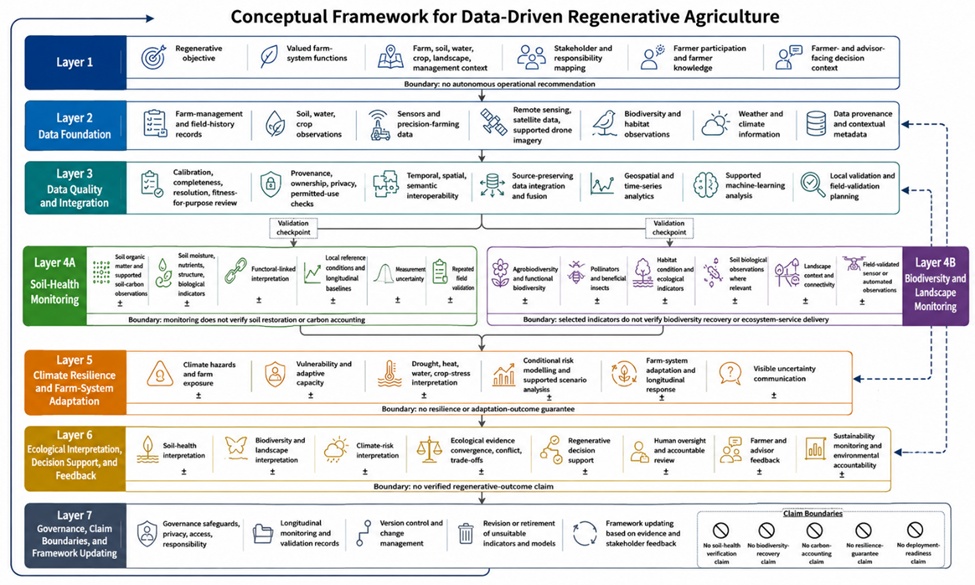
Figure 1. Conceptual Framework for Data-Driven Regenerative Agriculture
Alt-text description: A conceptual framework showing data-driven regenerative agriculture layers connecting farm context, soil health data, biodiversity data, climate data, farm-management data, data integration, monitoring, ecological feedback, climate resilience analytics, decision support, farmer feedback, sustainability feedback, governance, and framework updating.
For farmers, advisors, agronomists, soil scientists, and ecologists, the framework provides a conceptual structure for deciding which evidence is needed before regenerative interpretations are made. Its practical implication is not that every farm must collect every possible variable, but that selected measurements should correspond to explicit soil functions, ecological questions, climate risks, and decision contexts. Monitoring plans should specify baselines, sampling methods, temporal coverage, spatial resolution, responsibilities, and limits of interpretation. Farmer observations can help explain field histories and unusual conditions, while domain specialists can assess whether indicators are meaningful and whether analytical outputs remain within their validation scope. Work on regenerative-outcome measurement highlights the importance of farmer co-design, multiple outcome domains, spatial and temporal scale, and recognition that ecological changes may emerge slowly [8]. These considerations support staged and context-sensitive monitoring rather than universal assessment templates.
Research priorities arise from weaknesses in data coverage, ecological interpretation, and model transfer. Longitudinal research is needed to examine how soil physical, chemical, and biological indicators change together or diverge under differing contexts, and how remote or sensor-derived proxies relate to repeated field measurements. Soil machine-learning studies require stronger independent validation, transparent preprocessing, reproducibility, and evaluation outside the data conditions used for model development [11]. Biodiversity research should improve automated observation while maintaining taxonomic expertise, curated reference data, detection-error reporting, and field validation [15]. Climate-resilience research should compare multidimensional assessment approaches, clarify how hazards and adaptive capacities interact, and evaluate system trajectories before and after disturbances [17]. Monitoring research should also examine whether resilience tools remain feasible, understandable, and useful across different decision settings and data constraints [20].
For technology developers, data stewards, cooperatives, researchers, public institutions, sustainability actors, and policymakers, the framework highlights interoperability, provenance, access, privacy where relevant, accountability, uncertainty communication, and transparent claim boundaries. Future work should test participatory methods for integrating farmer knowledge without reducing it to uncontextualized labels, and should examine how sustainability feedback can remain informative without becoming a substitute for independent environmental verification. Governance research should clarify permissible data reuse, responsibilities when models are wrong, mechanisms for contesting outputs, and equitable distribution of benefits; farmer trust is closely connected to transparency about these issues [22]. Research on responsible agricultural digital transitions further indicates that multiple technological pathways and stakeholder interests must be considered rather than assuming one preferred model of implementation [28]. These are conceptual implications and research directions, not agronomic advice, legal advice, policy prescriptions, certification guidance, carbon-accounting guidance, conservation prescriptions, procurement advice, platform-selection advice, or deployment instructions.
This article proposes a conceptual framework for data-driven regenerative agriculture that links regenerative use-case definition, precision farming, soil-health monitoring, biodiversity monitoring, ecological feedback, climate-risk interpretation, farm-system adaptation, regenerative decision support, farmer participation, sustainability feedback, governance safeguards, and iterative framework updating. Its central premise is that regenerative agriculture cannot be assessed responsibly from technological capability, management labels, or isolated indicators alone. Evidence must be connected to explicit functions, farm and landscape context, data quality, provenance, appropriate spatial and temporal scales, uncertainty, local validation, ecological interpretation, and accountable human review. The framework organizes these requirements without claiming that it has been implemented or empirically validated. It also maintains firm boundaries between monitoring and verified soil restoration, biodiversity observation and demonstrated ecological recovery, carbon-related estimates and formal carbon accounting, resilience analysis and guaranteed adaptation, sustainability feedback and verified environmental performance, or conceptual design and deployment readiness. Its contribution lies in structuring how diverse data and knowledge could support cautious investigation, interdisciplinary research, and context-sensitive decision-support development while preserving farmer agency and the limits of available evidence.
None
None
None
None
Open Access The author(s) retain copyright. This article is licensed under the Creative Commons Attribution-NonCommercial-ShareAlike 4.0 International License. It may be shared and adapted for non-commercial purposes with appropriate attribution, an indication of changes, and distribution of adaptations under the same license. Third-party material may be subject to separate terms identified in its credit line. View the license at https://creativecommons.org/licenses/by-nc-sa/4.0/.
 Agro Intelligence Research Press