Remote sensing and machine learning have become prominent components of smart farming research, generating an expanding body of review literature across agricultural monitoring and prediction applications. This umbrella review synthesises review-level evidence concerning crop monitoring, disease detection, yield forecasting, and decision support while examining the methodological conditions that shape evidence strength and transferability. Peer-reviewed systematic reviews, scoping reviews, structured reviews, surveys, meta-reviews, and other eligible review-level articles were identified through searches of major academic databases and publisher platforms. Evidence was organised by application domain, sensing modality, analytical method, validation design, generalisation, uncertainty, reproducibility, and decision-support relevance. Crop-monitoring reviews describe extensive use of satellite, unmanned aerial vehicle, multispectral, hyperspectral, thermal, and multimodal data for crop mapping, growth assessment, phenotyping, stress monitoring, and related applications. Disease-detection reviews report rapid expansion of image-based machine learning and deep learning, but repeatedly identify data scarcity, class imbalance, curated-image dependence, and limited cross-context validation. Yield-forecasting reviews identify recurring integration of remote sensing, weather, soil, crop-model, and management information, although forecast horizons, spatial and temporal validation, uncertainty communication, and decision relevance remain inconsistent. Across domains, reported technical promise is moderated by heterogeneous datasets, benchmark inconsistency, review overlap, incomplete reproducibility, and limited evidence of transfer across crops, regions, seasons, and acquisition conditions. Review-level evidence supports a substantial research opportunity for remote sensing and machine learning in smart farming, but it does not independently establish field readiness, diagnostic reliability, operational forecasting performance, or deployment readiness. Stronger review reporting, external validation, transparent benchmarking, uncertainty assessment, reproducible workflows, and responsible decision-support evaluation are required.
Review literature portrays smart farming as a data-intensive agricultural transformation in which machine learning and deep learning increasingly mediate heterogeneous sensor, image, and management data, while the evidentiary maturity of applications remains uneven [1–3]. Within this transformation, smart farming refers not merely to the use of isolated digital tools but to interconnected processes through which agricultural observations are acquired, transferred, analysed, interpreted, and potentially incorporated into management decisions. Machine-learning applications reviewed across agriculture include crop, soil, disease, weed, livestock, and yield-related tasks, whereas deep-learning surveys document the growing use of representation-learning methods for imagery and other high-dimensional data. These broad reviews establish the technical diversity of the field while also revealing substantial differences in datasets, analytical objectives, evaluation practices, and application contexts.
Remote sensing constitutes one of the most extensive evidence domains within this wider literature. A meta-review of agricultural remote sensing identified a broad range of sensing platforms, retrieved crop and environmental variables, processing approaches, and intended applications, demonstrating that the literature encompasses far more than a single technology or monitoring task [4]. Satellite, airborne, unmanned aerial vehicle, proximal, multispectral, hyperspectral, thermal, and structural sensing approaches have been reviewed in relation to crop identification, growth assessment, stress detection, phenotyping, resource monitoring, and yield-related applications. Nevertheless, the breadth of reviewed applications should not be interpreted as proof that the underlying systems produce reliable decisions across farms, crops, seasons, or regions. A meta-review maps recurring evidence patterns across earlier reviews; it does not independently verify the validity of every included primary study or establish operational reliability.
An umbrella-review perspective is therefore needed because the evidence base is increasingly mediated by multiple reviews with overlapping but non-identical scopes. Some reviews organise technologies according to sensor platform, whereas others focus on machine-learning families, crop traits, disease recognition, yield prediction, data infrastructures, or decision-support systems. Reviews also differ in whether they examine controlled-image classification, field-scale remote sensing, temporal forecasting, crop-model assimilation, socioeconomic conditions, or responsible deployment. Consequently, similar terms may refer to materially different research tasks, and apparently consistent conclusions may be based on overlapping primary studies, distinct validation designs, or unequal levels of methodological scrutiny. Treating all review conclusions as interchangeable would obscure these differences and could exaggerate the density or maturity of the evidence.
The objective of this umbrella review is to synthesise review-level evidence on remote sensing, machine learning, and smart farming across crop monitoring, disease detection, yield forecasting, and decision-support applications. Its contribution is threefold: first, it maps convergent and divergent findings across review domains; second, it evaluates recurring methodological limitations involving data quality, benchmarking, validation, generalisation, uncertainty, reproducibility, and review overlap; and third, it develops a bounded future research agenda connecting technical evaluation with decision-support translation and responsible deployment. The synthesis is deliberately interpretive rather than prescriptive. It assesses what the review literature supports, where evidence remains fragmented, and which claims require direct primary-study validation before field-readiness or deployment-readiness conclusions can be considered.
Review-level evidence presents smart farming and digital agriculture as sociotechnical developments rather than exclusively computational ones. Social-science reviews show that the meaning and consequences of digital agriculture depend on the roles of farmers, advisers, technology firms, data intermediaries, public institutions, and other actors, as well as on changes in labour, skills, knowledge, power, and governance [5]. This perspective qualifies purely technical accounts of remote sensing or predictive modelling. Even where sensing and analytical capabilities appear promising, their decision value may be influenced by data access, institutional arrangements, infrastructure, accountability, and the capacity of users to evaluate or act upon model outputs. Review-level synthesis must therefore distinguish evidence of technical capability from evidence concerning organisational integration, acceptance, equitable access, or practical use.
Crop-data-management reviews offer a complementary systems perspective by connecting sensing, data transmission, storage, analytics, interoperability, and management interfaces. Within this literature, data generated by field sensors, machinery, imagery, farm records, and external information services can be treated as components of an agricultural information architecture rather than independent inputs [6]. Such architectures may support monitoring and decision processes, but the review literature also identifies recurring challenges concerning heterogeneous formats, data ownership, connectivity, platform compatibility, temporal synchronisation, and the conversion of analytical outputs into interpretable actions. Consequently, the existence of multiple agricultural data streams does not itself establish effective data integration or useful decision support.
Updated machine-learning reviews indicate continued expansion in the number and variety of agricultural applications, including crop management, soil assessment, disease and pest recognition, weed detection, water management, livestock monitoring, and yield prediction [7]. The reviewed literature includes conventional statistical learning, random forests, support vector machines, neural networks, convolutional architectures, and other data-driven approaches. However, the apparent expansion of application categories is accompanied by substantial heterogeneity in sample construction, sensor conditions, preprocessing, feature selection, model tuning, comparison procedures, and validation. Review-level evidence can therefore identify recurring analytical approaches and application concentrations, but it rarely supports a context-independent ranking of algorithms or a general conclusion that one method is universally superior.
Precision-agriculture reviews similarly map machine-learning applications across soil, crop, disease, weed, irrigation, and yield domains while exposing uneven benchmarking and evaluation practices [8]. Differences in target variables, input resolutions, class definitions, spatial units, prediction horizons, and performance metrics limit direct comparison across reviewed studies. Review articles may also combine laboratory imagery, experimental plots, research farms, satellite products, and operational datasets within the same application category, despite their distinct validity conditions. The central review-level pattern is thus simultaneous growth and fragmentation: smart farming research is expanding across sensing and analytical domains, but methodological diversity, limited external validation, and inconsistent reporting constrain evidence integration. An umbrella synthesis is needed to preserve domain-specific distinctions while identifying limitations that recur across otherwise separate review literatures.
The umbrella review was organised around six review-level questions addressing the overall evidence landscape, crop monitoring, disease and related detection tasks, yield forecasting and decision support, recurring methodological limitations, and future research priorities. An overview of reviews requires an explicit review-level question, a clearly bounded objective, and a defined unit of synthesis so that conclusions concern the findings of eligible reviews rather than an unstructured mixture of reviews and primary studies [9]. Accordingly, the unit of evidence was the peer-reviewed review article. Eligible sources included systematic reviews, scoping reviews, meta-reviews, structured critical reviews, surveys, integrative reviews, and bibliometric reviews only where they contributed substantive evidence mapping rather than publication counts alone.
Candidate sources were identified through targeted searches of ScienceDirect, SpringerLink and BMC journals, IEEE Xplore, Wiley Online Library, Taylor & Francis Online, the MDPI journal platform, and PubMed. Search concepts combined terms for umbrella reviews and review-level synthesis with smart farming, precision agriculture, digital agriculture, remote sensing, machine learning, deep learning, crop monitoring, plant disease detection, pest and weed detection, yield prediction, yield estimation, forecasting, crop models, data fusion, validation, generalisation, uncertainty, reproducibility, and decision support. Overview methods should be chosen transparently in relation to the purpose and structure of the evidence base [10]. The present synthesis therefore used structured qualitative comparison rather than a meta-analysis of primary-study effect sizes because the included reviews differed substantially in questions, application domains, study designs, outcomes, and reporting formats.
Eligibility assessment considered publication type, peer-review status, publication period, DOI availability, review design, agricultural relevance, and capacity to support at least one predefined umbrella-review domain. Primary model-development studies, field experiments, conference-only papers, preprints, books, theses, product materials, software documentation, vendor pages, standalone datasets, reports, standards, and other non-journal sources were excluded. Bibliometric articles without substantive evidence synthesis were not used as application evidence. Evidence extraction covered review aims, agricultural contexts, sensor modalities, analytical methods, application domains, reported evidence patterns, validation limitations, generalisation concerns, uncertainty, reproducibility, decision-support relevance, and stated research gaps. Because risk of bias and methodological limitations can affect conclusions at both review and primary-study levels, findings were not aggregated as though every included review provided evidence of equivalent strength [11].
Screening proceeded through bibliographic checking, title and abstract assessment, full-text eligibility review, confirmation of review type, evidence-domain mapping, and readiness for structured extraction. Particular attention was given to primary-study overlap because repeated inclusion of the same underlying studies across reviews can make an evidence domain appear denser without adding independent evidence [12]. Overlap awareness was incorporated qualitatively by comparing review scope, application focus, publication period, and frequently recurring evidence themes; no numerical overlap estimate or formal quality score is claimed. The resulting synthesis maps review-level patterns and limitations but does not independently validate primary datasets, sensor performance, model accuracy, diagnostic reliability, forecast reliability, farmer acceptance, or deployment outcomes. Table 1 summarises the umbrella review scope, review questions, eligibility criteria, evidence sources, and review-level synthesis domains.
Table 1. Umbrella Review Scope and Evidence Sources for Remote Sensing, Machine Learning, and Smart Farming: Review Questions, Databases, Search Concepts, Eligibility Criteria, Review-Level Evidence Domains, Screening Logic, Overlap Awareness, and Synthesis Boundaries
Review component | Operational definition | Included review-level evidence | Excluded evidence | Purpose in the umbrella review | Boundary or limitation |
Umbrella-review objective | Structured synthesis of findings, limitations, and gaps reported across eligible reviews | Reviews addressing remote sensing, machine learning, smart farming, precision agriculture, crop monitoring, disease detection, yield forecasting, or decision support | Unstructured commentary and unsupported technology claims | Establish a bounded review-level unit of analysis [9] | Does not independently reassess every primary-study observation |
RQ1: Overall evidence landscape | Identification of the principal remote-sensing, machine-learning, and smart-farming review domains | Broad, integrative, structured, and systematic agricultural technology reviews | Generic computing reviews without agricultural relevance | Map the breadth and organisation of review-level evidence | Publication volume is not treated as evidence of maturity |
RQ2: Crop-monitoring evidence | Synthesis of reviews concerning crop mapping, classification, growth, canopy, stress, soil, water, nutrient, and phenotyping applications | Reviews of satellite, UAV, airborne, proximal, multispectral, hyperspectral, thermal, and multimodal sensing | Primary sensor-validation studies considered in isolation | Compare application concentrations, modalities, and repeated limitations | Reported monitoring capability does not establish field readiness |
RQ3: Disease and related detection | Synthesis of reviews concerning plant disease, pest, and weed recognition | Image-processing, machine-learning, deep-learning, and remote-sensing reviews | Single-dataset classifier papers and non-reviewed diagnostic claims | Identify recurring data types, analytical methods, and validity concerns | Recognition research is not equated with validated diagnosis |
RQ4: Yield and decision support | Synthesis of reviews concerning yield prediction, estimation, forecasting, crop models, and advisory translation | Reviews using weather, soil, management, imagery, crop models, and multimodal inputs | Isolated forecasting experiments or commercial product claims | Distinguish estimation, forecasting, and decision-support evidence | Technical prediction does not establish operational forecasting |
RQ5: Methodological limitations | Cross-review assessment of data quality, benchmarking, validation, uncertainty, generalisation, bias, and reproducibility | Reviews explicitly reporting methodological constraints | Unsupported assumptions about methodological quality | Identify limitations recurring across application domains [11] | No formal quality score is assigned |
RQ6: Future research agenda | Development of priorities grounded in repeated review-level gaps | Review recommendations concerning datasets, validation, reporting, explainability, uncertainty, and translation | Priorities unrelated to the extracted evidence | Connect identified gaps to bounded methodological advances | Priorities are research proposals, not implementation standards |
Evidence sources | Academic databases and publisher platforms used to identify eligible journal reviews | ScienceDirect, SpringerLink and BMC journals, IEEE Xplore, Wiley Online Library, Taylor & Francis Online, MDPI journals, and PubMed | Google Scholar as a sole evidence source, vendor sites, and non-peer-reviewed webpages | Provide multidisciplinary coverage across agriculture, sensing, computing, and evidence synthesis | The search is not presented as a census of all possible reviews |
Search concepts | Combined concepts for review design, agricultural domain, sensing, analytics, applications, and methodological limitations | Umbrella review, systematic review, remote sensing, machine learning, deep learning, crop monitoring, disease, yield, validation, and related terms | Searches limited to one algorithm, crop, sensor, or commercial system | Balance broad retrieval with domain-specific evidence identification [10] | Terminology varies among disciplines and journals |
Eligible review types | Peer-reviewed review-level articles capable of supporting a planned synthesis claim | Systematic reviews, scoping reviews, meta-reviews, surveys, structured reviews, integrative reviews, and relevant meta-analyses | Primary studies except methodological or conceptual anchors | Maintain review-level synthesis as the central article design | Review labels used by authors may not imply uniform methods |
Review-period criterion | Publication within the predefined eligibility period | Eligible peer-reviewed journal reviews published within the approved period | Sources outside the eligibility period | Focus the evidence base on contemporary smart-farming technologies | Earlier foundational work may be represented indirectly within reviews |
DOI and bibliographic verification | Verification of title, authorship, journal, year, and DOI | DOI-bearing peer-reviewed journal articles | Records without verifiable journal publication or DOI | Support traceable reference management | DOI presence does not guarantee methodological quality |
Screening logic | Sequential bibliographic, relevance, review-type, eligibility, and extraction-readiness assessment | Reviews meeting all inclusion requirements | Duplicates, non-reviews, irrelevant reviews, and sources lacking usable evidence | Ensure each included source supports a predefined claim | No invented screening precision or selection statistic is reported |
Evidence extraction | Structured extraction of aims, methods, domains, findings, limitations, and research needs | Information clearly reported by the eligible reviews | Inferred model scores, datasets, or outcomes not reported by sources | Enable domain comparison and umbrella synthesis | “Not clearly reported” is preferred to unsupported inference |
Review-overlap awareness | Qualitative attention to recurring primary studies and duplicated evidence themes | Reviews with partially overlapping technologies, applications, or periods | Assumption that every review represents an independent evidence set | Prevent inflation of apparent evidence density [12] | No numerical corrected-covered-area estimate is claimed |
Synthesis approach | Structured qualitative comparison across evidence domains | Convergent findings, divergent findings, evidence limitations, and gaps | Meta-analysis of incomparable primary-study outcomes | Preserve methodological and contextual heterogeneity | Evidence strength is interpreted cautiously rather than scored |
Decision-support boundary | Separation of technical research evidence from practical decision validity | Reviews addressing analytical outputs and potential management relevance | Operational prescriptions, vendor selection, and universal management recommendations | Clarify the translational meaning of review findings | No farmer approval, commercial implementation, or deployment readiness is inferred |
Review-level evidence maps satellite, airborne, and UAV remote sensing to crop-status assessment, stress surveillance, input-management support, and high-resolution field observation, but repeatedly conditions these opportunities on sensor calibration, preprocessing, scale, and validation design [13–15]. Across these reviews, remote sensing is used as an umbrella term for observations differing substantially in platform, spatial resolution, spectral resolution, temporal frequency, viewing geometry, atmospheric exposure, and processing requirements. Satellite systems provide repeated regional or landscape observations, whereas UAV platforms can provide finer spatial detail and flexible acquisition timing over smaller areas. Multispectral, hyperspectral, RGB, and thermal sensors are reviewed in relation to crop mapping, growth assessment, canopy condition, soil variability, water stress, disease or weed surveillance, and yield-related traits. These uses indicate a broad research base, but differences in acquisition and processing prevent a simple conclusion that one platform is uniformly preferable.
Field-based phenotyping illustrates both the analytical potential and the interpretive limits of high-resolution remote sensing. UAV reviews describe extraction of canopy cover, plant height, vegetation indices, temperature-related traits, biomass proxies, lodging characteristics, flowering information, and other phenotypic features [16]. Such measurements may increase temporal and spatial detail relative to manual observation, particularly where repeated acquisition is feasible. However, the reviewed evidence also identifies limitations involving sensor calibration, illumination, wind, geometric correction, plot delineation, occlusion, trait-reference measurements, varietal diversity, and scaling from research plots to heterogeneous fields. Reported associations between image-derived features and crop traits are therefore context-dependent. Phenotyping evidence supports continued evaluation of sensing and feature-extraction methods but does not establish that a model or trait-retrieval procedure will transfer across crop varieties, growth stages, environments, sensors, or seasons.
Reviews of remote-sensing contributions to crop models show a complementary relationship between spatial observation and process-based representation. Remote sensing can provide information on crop extent, vegetation condition, canopy development, leaf area, biomass-related variables, soil moisture, or other states that may initialise, calibrate, constrain, or update crop models [17]. Data assimilation and related integration methods can potentially reconcile observations with simulated crop processes, thereby supporting monitoring or yield estimation at spatial scales that field measurements alone may not cover. Nevertheless, the literature repeatedly identifies mismatches among observation timing, model state variables, spatial support, parameterisation, crop calendars, cloud contamination, and measurement uncertainty. Integration is therefore not inherently superior to either component used separately; its value depends on whether observation and model uncertainties are characterised and whether assimilation is evaluated under conditions distinct from those used for calibration.
Multimodal crop-monitoring reviews extend this logic by examining combinations of satellite, UAV, ground, spectral, thermal, structural, weather, and other data streams. Combining modalities may compensate for limitations of a single sensor, improve temporal coverage, or represent complementary crop properties, but the evidence remains methodologically heterogeneous [18]. Fusion may occur at raw-data, feature, decision, or model levels, with materially different requirements for registration, temporal alignment, missing-data treatment, scale harmonisation, and computational design. Review-level evidence suggests that multimodal monitoring is an important research direction, yet comparison is constrained by limited benchmark transparency and by inconsistent descriptions of preprocessing and fusion architectures. More inputs may also introduce additional sources of error, bias, or redundancy. Accordingly, multimodal complexity should not be treated as evidence of improved generalisation unless evaluated against transparent single-modality baselines and independent contexts.
Hyperspectral evidence illustrates the distinction between sensitive signal detection and validated field interpretation. Reviews report that narrow, contiguous spectral bands can support research on early plant stress and disease discrimination, including feature selection and classification of spectral responses that may precede clearly visible symptoms [19]. Yet spectral signatures can vary with crop species, cultivar, disease stage, water status, nutrient condition, canopy structure, illumination, background, atmosphere, sensor configuration, and acquisition geometry. Similar stressors may also produce overlapping spectral responses, making causal or diagnostic interpretation difficult without appropriate reference measurements. Across remote-sensing domains, repeated limitations include small or context-specific datasets, inconsistent ground truth, spatial and temporal dependence between training and testing data, incomplete uncertainty reporting, and limited external validation. The umbrella synthesis therefore treats remote sensing as a substantial crop-monitoring evidence base while maintaining a strict boundary between research capability and field readiness. Table 2 summarises review-level evidence for remote sensing and crop monitoring in smart farming.
Table 2. Review-Level Evidence for Remote Sensing and Crop Monitoring in Smart Farming: Crop Mapping, Crop Classification, Growth Monitoring, Vegetation Indices, Canopy Monitoring, Phenotyping, Soil Monitoring, Water Stress, Drought, Nutrient Status, Satellite Imagery, UAV Imagery, Multispectral Imaging, Hyperspectral Imaging, Thermal Imaging, Data Fusion, and Field-Readiness Boundaries
Evidence domain | Core umbrella question | Review-level evidence pattern | Common data or sensor modality | Common analytical approach | Reported strength | Repeated limitation | Synthesis boundary |
Crop monitoring | What crop conditions are represented across remote-sensing reviews? | Reviews cover crop status, development, stress, resource condition, and management-related observations [13]. | Satellite, UAV, airborne, proximal, multispectral, hyperspectral, RGB, thermal, and structural data | Vegetation indices, regression, classification, feature extraction, machine learning, and time-series analysis | Broad application coverage | Heterogeneous targets, scales, ground truth, and validation designs | Breadth of research does not establish reliable monitoring in every context |
Crop classification | How consistently are crop types distinguished? | Classification is widely reviewed using spectral, temporal, spatial, and structural differences among crop classes [13]. | Multitemporal satellite imagery, UAV imagery, and spectral features | Supervised classification, random forests, support vector machines, neural networks, and deep learning | Established research domain | Mixed pixels, class imbalance, crop-calendar variation, and label inconsistency | Accuracy is conditional on geography, season, taxonomy, and sampling design |
Crop mapping | What evidence supports spatial delineation of crops? | Reviews describe field- to regional-scale crop mapping from repeated imagery and classification workflows [13]. | Satellite time series, aerial imagery, and field boundaries | Pixel-based, object-based, temporal, and machine-learning classification | Strong evidence-mapping activity | Boundary errors, small fields, clouds, landscape fragmentation, and regional transfer | A map validated in one region is not assumed transferable elsewhere |
Crop growth monitoring | How is crop development monitored through time? | Repeated observations are used to track canopy development, phenology, biomass-related traits, and stress responses [13]. | Satellite and UAV time series, vegetation indices, canopy structure, and temperature | Trend analysis, growth curves, regression, machine learning, and temporal modelling | Promising temporal evidence | Irregular acquisition, cloud gaps, growth-stage dependence, and limited multi-season testing | Temporal association does not prove causal crop response |
Vegetation indices | What role do spectral indices play across reviews? | Vegetation indices remain common proxies for greenness, canopy condition, chlorophyll-related status, and biomass [13]. | Red, red-edge, near-infrared, and related multispectral bands | Index calculation, thresholding, regression, machine learning, and crop-model integration | Accessible and widely used | Saturation, soil background, atmospheric effects, cultivar differences, and non-specificity | An index is a proxy and should not be treated as a direct universal measurement |
Canopy monitoring | Which canopy properties are reviewed? | Reviews report canopy cover, height, temperature, architecture, density, and related structural or spectral traits [16]. | RGB photogrammetry, multispectral imagery, thermal imagery, LiDAR, and structure-from-motion products | Segmentation, surface modelling, index analysis, regression, and machine learning | High spatial detail in research settings | Occlusion, geometric error, illumination, wind, and reference-measurement limitations | Canopy retrieval requires crop-, stage-, and sensor-specific validation |
Phenotyping | Can remote sensing support field phenotyping? | UAV reviews identify diverse trait-extraction opportunities for breeding and crop research [16]. | High-resolution RGB, multispectral, thermal, and structural UAV data | Plot segmentation, feature extraction, three-dimensional reconstruction, and predictive modelling | Strong methodological interest | Limited varietal diversity, plot-to-field scaling, and inconsistent trait ground truth | Research phenotyping performance does not establish routine breeding or farm deployment |
Soil monitoring | What soil-related evidence is represented? | Reviews cover soil moisture, salinity, texture, organic matter, and surface variability, but support differs among properties [13]. | Optical, thermal, microwave, radar, proximal, and derived terrain data | Spectral analysis, regression, spatial modelling, and machine learning | Moderate and property-dependent | Vegetation cover, depth mismatch, sparse samples, moisture effects, and calibration dependence | Surface or remotely inferred properties are not assumed to represent the full soil profile |
Water-stress monitoring | How is crop water stress assessed? | Thermal and spectral reviews describe canopy-temperature and reflectance-based indicators of water status [14]. | Thermal infrared, multispectral, hyperspectral, weather, and canopy measurements | Stress indices, energy-balance approaches, regression, and machine learning | Promising under defined conditions | Weather sensitivity, reference-temperature selection, canopy cover, and timing | Stress indicators require local calibration and cannot alone prescribe irrigation |
Drought monitoring | What is the evidence for drought-related assessment? | Remote-sensing reviews map vegetation and thermal responses associated with drought and water limitation [13]. | Satellite vegetation, temperature, moisture, and meteorological products | Anomaly analysis, index combinations, temporal modelling, and spatial assessment | Broad regional observation potential | Confounding stressors, scale differences, baseline choice, and response lag | Drought indicators do not independently establish crop-level damage or management response |
Nutrient-status monitoring | How well is nutrient condition represented? | Reviews identify spectral and canopy features associated with nitrogen and related nutrient status [14]. | Multispectral, hyperspectral, chlorophyll-related, canopy, and field-reference data | Vegetation indices, spectral features, regression, and machine learning | Promising for research and targeted assessment | Variety, growth stage, water stress, disease, soil background, and reference-data variation | Spectral associations do not establish universally valid nutrient diagnosis |
Satellite imagery | What contribution is associated with satellite platforms? | Satellite reviews emphasise repeated, wide-area observation for mapping, monitoring, and regional analysis [13]. | Optical, radar, thermal, and multitemporal earth-observation data | Time-series analysis, classification, retrieval, spatial modelling, and data assimilation | Regional coverage and historical continuity | Cloud contamination, revisit constraints, mixed pixels, and resolution mismatch | Regional availability does not guarantee field-level suitability |
UAV imagery | What contribution is associated with UAV platforms? | UAV reviews emphasise flexible, high-resolution observation of fields, canopies, stress, weeds, and phenotypic traits [14]. | RGB, multispectral, hyperspectral, thermal, and structural UAV imagery | Photogrammetry, segmentation, indices, classification, detection, and regression | Fine spatial detail and flexible timing | Calibration, flight consistency, weather, regulation, processing burden, and limited area coverage | UAV research performance does not establish scalable operational use |
Multispectral imaging | What evidence supports selected spectral-band sensing? | Multispectral data are widely reviewed for vegetation indices, classification, stress assessment, and crop-status estimation [13]. | Visible, red-edge, near-infrared, and selected shortwave bands | Indices, band combinations, classification, regression, and machine learning | Mature and comparatively accessible modality | Spectral saturation, limited biochemical specificity, and cross-sensor differences | Results depend on band definitions, calibration, and acquisition conditions |
Hyperspectral imaging | What evidence supports dense spectral sensing? | Reviews describe sensitivity to subtle crop, stress, and disease-related spectral variation [19]. | Contiguous narrow-band proximal, airborne, UAV, or laboratory spectra | Spectral preprocessing, feature selection, dimensionality reduction, classification, and regression | High information richness | High dimensionality, noise, cost, calibration, small datasets, and signature instability | Spectral separability is not equivalent to universal field diagnosis |
Thermal imaging | What evidence supports canopy-temperature observation? | Thermal reviews describe water-stress, disease, physiological, and crop-condition applications [14]. | Canopy and surface temperature from UAV, airborne, satellite, or proximal sensors | Thermal indices, temperature normalisation, energy-balance methods, and machine learning | Useful physiological sensitivity | Atmospheric conditions, time of day, emissivity, reference selection, and mixed background | Thermal differences are non-specific and require contextual interpretation |
Data fusion | Does combining modalities strengthen monitoring evidence? | Multimodal reviews suggest complementary information can reduce some single-sensor limitations [18]. | Satellite, UAV, ground, spectral, thermal, structural, weather, and management data | Early fusion, feature fusion, decision fusion, multimodal learning, and assimilation | Promising cross-domain research direction | Registration, temporal alignment, scale mismatch, missingness, complexity, and benchmark scarcity | Fusion should be compared with transparent baselines and independently validated |
Validation and generalisation | Which methodological weaknesses recur? | Reviews repeatedly identify context-specific datasets, inconsistent reference measurements, dependent train-test samples, and limited external testing [18]. | All remote-sensing modalities | Hold-out validation, cross-validation, spatial validation, temporal validation, and transfer testing | Mixed methodological maturity | Leakage, site dependence, sensor shift, seasonal variation, and incomplete uncertainty reporting | Reported performance cannot be generalised beyond the evaluated design |
No field-readiness claim boundary | What may not be inferred from the review evidence? | Reviews map capabilities and limitations but do not jointly establish reliability, usability, maintenance, safety, or decision consequences. | All platforms and modalities | All analytical approaches | Evidence supports research synthesis | Sparse operational and prospective evaluation | No autonomous monitoring, universal transferability, or deployment-readiness claim is made |
Across reviews of image-based plant disease recognition, convolutional deep-learning pipelines dominate the reported literature, yet performance is strongly shaped by dataset construction, background conditions, class balance, and validation choices [20–22]. The evidence base is concentrated in RGB photographs of leaves or plant organs, frequently collected under controlled or semi-controlled conditions and organised as classification tasks. Convolutional neural networks and transfer-learning approaches are prominent because they can learn image features directly, reducing dependence on manually designed descriptors. However, reviews also describe substantial variation in disease classes, image acquisition, preprocessing, augmentation, train–test partitioning, and reported metrics. Consequently, apparently high within-dataset performance cannot be interpreted as equivalent evidence of reliable disease recognition under field conditions, where symptoms may be subtle, overlapping, partially occluded, or confounded by nutrient, water, weather, and pest stresses.
The disease-and-pest detection literature extends beyond image-level classification to object detection, lesion localisation, segmentation, severity estimation, and canopy-level surveillance. Deep-learning reviews identify growing methodological diversity, including region-based detectors, one-stage detectors, semantic segmentation, transfer learning, and combinations of learned and handcrafted features [23]. This expansion is important because practical monitoring may require locating affected tissue or plants rather than assigning one label to a pre-cropped image. Nevertheless, task expansion does not remove underlying validity concerns. Small or duplicated datasets, inconsistent symptom definitions, non-independent images from the same plant or acquisition event, and limited reporting of negative or mixed-stress examples can inflate apparent model performance. Cross-crop, cross-disease, cross-region, and cross-season transfer are discussed more often than they are demonstrated through independent testing.
Automated insect-pest detection and monitoring reviews describe heterogeneous systems based on trap images, close-range photographs, field imagery, and other sensing arrangements [24]. The reviewed approaches include conventional image processing, feature-based classification, convolutional networks, and object-detection methods intended to distinguish species, count individuals, or support monitoring. Their reported strengths lie in the possibility of repeated observation and reduction of manual image inspection. Yet field comparison is difficult because pest appearance varies by life stage, posture, damage, image scale, and environmental background, while rare species and low-prevalence classes complicate evaluation. Annotation quality, overlapping insects, debris, illumination, trap design, and inconsistent performance metrics further restrict comparability. Review-level evidence therefore supports continued automated-monitoring research but does not establish autonomous pest diagnosis or pest-management decisions.
Weed-detection reviews show similarly strong computer-vision activity across ground-based and aerial RGB or multispectral imagery [25]. Classification, object detection, and semantic segmentation are used to separate weeds from crops or background, with convolutional models increasingly replacing or supplementing handcrafted spectral, colour, texture, and shape features. Reported research strengths include fine-scale localisation and the potential to characterise spatial weed occurrence. Repeated limitations include crop–weed visual similarity, changing growth stages, canopy overlap, severe class imbalance, inconsistent weed taxonomies, and narrow field or regional coverage. Dataset and task definitions also differ according to whether the objective is species recognition, crop–weed separation, patch mapping, or plant-level localisation. Detection evidence alone cannot establish safe actuation, herbicide selection, or autonomous field intervention because downstream decision consequences, error tolerances, and failure handling are rarely evaluated by the reviewed literature.
Across disease, pest, and weed reviews, dataset properties remain a central determinant of reported performance. Disease-recognition outcomes are sensitive to sample size, class distribution, symptom similarity, image background, acquisition quality, and the relation between training and testing samples [26]. Augmentation and transfer learning may reduce some computational and sample constraints, but synthetic variation does not necessarily reproduce new cultivars, field backgrounds, weather conditions, sensor settings, disease stages, or mixed stresses. Stronger evidence would require provenance-rich datasets, per-class reporting, geographically and temporally separated validation, and explicit testing under realistic field variability. The umbrella synthesis therefore characterises these systems as recognition and monitoring research. It does not infer diagnostic readiness, cross-context generalisation, farmer approval, operational reliability, or deployment readiness from review-level model results.
Review-level evidence on yield prediction and nitrogen-status estimation shows sustained use of machine learning to relate crop outcomes to weather, soil, management, spectral, and crop-state variables [27]. Random forests, support vector machines, artificial neural networks, regression methods, and related models recur across the reviewed literature, but the analytical target is not always defined consistently. Some studies estimate yield near harvest from observed crop traits, whereas others attempt forecasts at earlier decision-relevant stages. This distinction matters because information available close to harvest may support accurate estimation without demonstrating useful forecasting at longer lead times. Differences in crop type, spatial unit, season, input availability, forecast horizon, and evaluation metric also constrain cross-study comparison. Review-level evidence consequently supports a broad methodological opportunity but not a universal claim of reliable yield forecasting.
Systematic review evidence identifies weather, soil, management, and remote-sensing variables as recurring inputs to crop-yield prediction, with tree ensembles and neural approaches frequently represented [28]. Weather inputs can include rainfall, temperature, radiation, humidity, or derived agroclimatic indicators; soil inputs may include texture, moisture, fertility, or mapped attributes; and management inputs may include planting date, cultivar, irrigation, or fertilisation. Their presence in a model does not guarantee that they were measured at the relevant spatial depth, resolution, or time, nor that they would be available when a real forecast is issued. Inconsistent datasets, missing management records, static soil layers, differing yield definitions, and non-comparable metrics limit conclusions about algorithm superiority. Spatially or temporally dependent train–test partitions may also exaggerate performance by allowing closely related observations to appear on both sides of the evaluation.
Reviews focused on integrating agrarian factors reinforce the importance of contextual completeness. Yield is shaped by interacting weather, soil, genotype, crop condition, and management processes, making data fusion conceptually attractive but methodologically demanding [29]. Tabular machine learning, ensemble methods, deep architectures, and hybrid approaches can combine these sources, yet missingness, measurement error, proprietary farm records, inconsistent coding, and scale mismatch may reduce transportability. Temporal modelling is particularly vulnerable to leakage when predictors include information that would not have been known at the stated forecast date. Spatial modelling is similarly vulnerable when neighbouring fields, pixels, or administrative units are split randomly. Forecast evaluation should therefore preserve true temporal cut-offs and geographic independence while reporting data provenance and availability at prediction time.
Remote-sensing assimilation into crop models offers a distinct pathway for combining spatial observation with process knowledge. Reviews describe the use of remotely observed crop states to initialise, calibrate, constrain, or update process-based simulations, potentially linking canopy or vegetation information with weather, soil, cultivar, and management representations [30]. Such integration may improve consistency between observed and simulated crop development, but it also introduces uncertainty from sensor retrievals, crop-model structure, parameterisation, spatial support, observation timing, and assimilation design. A more complex hybrid model is not automatically a better forecast. Comparative evidence should distinguish observation uncertainty from process-model uncertainty, evaluate whether added data improve out-of-sample performance, and report sensitivity to assumptions and missing observations.
Deep-learning and remote-sensing yield reviews document expanding use of convolutional, recurrent, and hybrid architectures with satellite, UAV, weather, and temporal crop data [31]. Their research value lies in learning spatial or sequential representations that may be difficult to specify manually. However, reviewed comparisons remain limited by crop- and region-specific datasets, short time series, heterogeneous baselines, incomplete reporting, and sparse external validation across seasons and locations. Point-error metrics also provide little information about forecast calibration or decision risk unless accompanied by intervals, probabilistic scores, or scenario analysis. Decision-support claims therefore require evidence that forecasts are available at a meaningful lead time, interpretable within a farm workflow, and evaluated for uncertainty and downstream consequences. Table 3 maps review-level evidence for machine learning in disease detection, yield forecasting, and decision-support applications.
Table 3. Review-Level Evidence for Machine Learning in Disease Detection, Yield Forecasting, and Decision Support: Plant Disease Detection, Crop Disease Imaging, Pest Detection, Weed Detection, Yield Prediction, Yield Estimation, Remote Sensing Forecasting, Weather and Soil Integration, Temporal Modeling, Spatial Modeling, Uncertainty, Validation, and Deployment Boundaries
Evidence domain | Core evidence question | Review-level evidence pattern | Common input data | Common ML or DL approach | Reported strength | Repeated limitation | Claim boundary |
Plant disease detection | What does the review literature show about automated disease recognition? | Image-based classification and detection have expanded rapidly, with deep learning prominent [20]. | RGB leaf and plant images; some field and spectral imagery | CNN classification, transfer learning, object detection | Large research concentration | Curated datasets, background bias, imbalance, and limited external testing | Supports recognition research, not diagnostic readiness |
Crop disease imaging | Which image settings dominate the evidence? | Controlled or detached-leaf imagery remains more common than heterogeneous canopy and field imagery [21]. | RGB photographs, close-range field images, multispectral and hyperspectral data | Preprocessing, segmentation, handcrafted features, CNNs | Strong controlled-image evidence | Illumination, occlusion, symptom-stage variation, and acquisition heterogeneity | Controlled-image findings require field-domain validation |
Leaf image classification | How mature is the dominant disease task? | CNN evidence is concentrated in image classification using public or custom leaf datasets [22]. | Pre-cropped leaf images and labelled disease classes | CNNs, transfer learning, augmentation | High reported within-dataset performance | Dataset redundancy, simple backgrounds, and non-independent splits | Classification performance is not equivalent to farm diagnosis |
Field disease detection | How much evidence addresses realistic environments? | Detection and segmentation are expanding, but field evidence is thinner and more variable [23]. | In-situ RGB, canopy, UAV, and mixed-background imagery | Object detection, segmentation, domain adaptation | Emerging evidence | Complex backgrounds, mixed stresses, subtle symptoms, and weak prospective evaluation | Requires multi-site, multi-season field validation |
Remote-sensing disease detection | What does remote sensing add? | UAV and spectral sensing can identify anomalous canopy patterns associated with disease or stress [19]. | Hyperspectral, multispectral, thermal, and high-resolution canopy imagery | Spectral features, indices, SVMs, CNNs, anomaly detection | Promising experimental sensitivity | Ground-truth uncertainty, spatial resolution, timing, and etiological ambiguity | Anomalous signals do not alone confirm disease cause |
Hyperspectral disease detection | Can dense spectra support early discrimination? | Reviews report early disease-and-stress discrimination using selected wavelengths and spectral patterns [19]. | Hyperspectral cubes or reflectance spectra | Dimensionality reduction, wavelength selection, SVMs, other classifiers | High information richness | High dimensionality, instrument differences, confounding stressors, small datasets | No universal spectral signature or diagnostic threshold is established |
Multispectral disease detection | What is supported with fewer bands? | Multispectral features and indices appear in UAV and crop-stress applications [13]. | Selected visible, red-edge, near-infrared, and thermal bands | Indices, random forests, SVMs, CNN variants | Moderate research support | Limited specificity and cross-sensor variation | Disease-specific ground truth and comparator stresses are required |
RGB disease imaging | Why is RGB dominant? | Accessibility and public image collections make RGB the principal modality in deep-learning reviews [26]. | Smartphone, camera, and public leaf images | CNNs, object detection, segmentation | Very strong research concentration | Background leakage, image-quality variation, symptom similarity, domain shift | Accessibility does not guarantee robustness in new fields |
Pest detection | What evidence exists for automated pest monitoring? | Reviews cover image-based recognition, counting, and trap monitoring across diverse species [24]. | Trap images, close-range photographs, field imagery | Image processing, CNN classification, object detection | Moderate and growing | Species imbalance, clutter, life-stage variability, and annotation burden | Does not establish autonomous pest-management decisions |
Weed detection | What evidence supports crop–weed discrimination? | Classification, object detection, and segmentation are active research areas in ground and aerial imagery [25]. | RGB and multispectral ground or UAV images | CNNs, detectors, semantic segmentation | Strong computer-vision activity | Occlusion, crop–weed similarity, growth-stage change, class imbalance | Detection does not establish safe actuation or treatment decisions |
Class imbalance and data scarcity | How do dataset composition and prevalence affect evidence? | Rare classes, small datasets, duplicated images, and narrow environmental coverage recur [26]. | Public and custom disease, pest, and weed image collections | Augmentation, transfer learning, weighted loss, resampling | Well-recognised limitation | Aggregate accuracy can mask minority-class failure | Per-class metrics and provenance-rich external datasets are required |
Cross-crop and cross-region generalisation | Do models transfer among crops and locations? | Reviews provide limited consistent evidence of transfer to unseen crops, cultivars, regions, or acquisition systems [22]. | Mixed crop and region-specific image collections | Transfer learning, domain adaptation, multi-task models | Weak review-level support | Morphology, symptom, climate, cultivar, prevalence, and sensor shifts | Transfer claims require held-out crop and independent regional tests |
Yield forecasting | What evidence exists for pre-harvest forecasting? | Machine-learning reviews identify weather, crop-state, soil, management, and spectral predictors, but lead times vary [27]. | Weather, crop observations, soil, management, satellite and UAV data | Random forests, SVMs, neural networks, boosting, regression | Promising and heterogeneous | Forecast horizons, target definitions, and external tests are inconsistent | Does not establish operational forecasting reliability |
Yield prediction | Which variables and methods recur? | Weather, soil, management, and vegetation variables are frequently combined in crop-specific prediction studies [28]. | Agronomic tables, remote-sensing features, environmental covariates | Tree ensembles, neural networks, regression, ensembles | Broad research base | Dataset inconsistency, crop specificity, missing variables, metric heterogeneity | Findings are conditional on crop, region, season, and data availability |
Yield estimation and remote-sensing estimation | How does estimation differ from forecasting? | In-season or near-harvest crop traits and imagery are often used to estimate yield without long forecast lead times [31]. | Vegetation indices, canopy traits, satellite or UAV sequences | Regression, CNNs, recurrent models, remote-sensing retrieval | Moderate to strong in selected contexts | Forecast timing may be conflated with estimation; site dependence persists | Target date and information cut-off must be stated explicitly |
Weather, soil, and management integration | Does added context improve prediction? | Agrarian-factor reviews support multimodal integration, but availability and provenance are uneven [29]. | Weather records, soil attributes, planting, cultivar, irrigation, fertilisation | Tabular ML, ensembles, multimodal and hybrid models | Conceptually strong | Missingness, proprietary records, spatial-depth mismatch, inconsistent coding | More inputs do not automatically improve validity or transferability |
Temporal and spatial modelling | How are time and geography handled? | Sequential and spatial representations are expanding, especially with earth-observation time series [31]. | Weather sequences, satellite stacks, field or regional grids | Recurrent networks, temporal CNNs, spatial CNNs, engineered time-series features | Emerging to moderate | Temporal leakage, neighbouring train–test samples, short histories | Validation must preserve chronology and geographic separation |
Machine learning, deep learning, crop models, and hybrids | Is any analytical family consistently superior? | Tree models, SVMs, neural networks, deep learning, crop models, and assimilative hybrids address different evidence structures [30]. | Tabular, image, sequence, process-model, and multimodal inputs | RF, SVM, boosting, ANN, CNN, RNN, process simulation, assimilation | Diverse complementary methods | Incomparable tuning, baselines, uncertainty structures, and data contexts | No universal algorithm ranking is supported |
Decision support and uncertainty communication | Do predictions become useful decisions? | Reviews frequently state decision-support potential, while calibrated uncertainty and workflow evaluation remain limited [29]. | Forecast outputs, farm records, environmental data, advisory interfaces | Ensembles, probabilistic models, intervals, rules, dashboards | Translation potential | Point estimates, unclear lead time, limited usability and consequence analysis | Supports translation research, not operational prescription |
Validation and deployment boundaries | What may not be inferred from reviewed model results? | Random splits, context-specific datasets, and limited prospective or external testing recur across domains [31]. | All disease, pest, weed, and yield data | Hold-out tests, cross-validation, spatial, temporal, and external validation | Mixed methodological maturity | Leakage, domain shift, weak comparators, incomplete uncertainty and failure analysis | No diagnostic, operational, universal-generalisation, autonomous, or deployment-readiness claim is made |
The integrated evidence base shows that technical research is embedded in a supply and service ecosystem that influences which technologies are developed, whose data are available, and how analytical outputs reach farms. Reviews of the digital agricultural supply side identify technology firms, equipment manufacturers, input providers, platforms, start-ups, advisers, research organisations, and public actors as important drivers of digital development [32]. Their roles shape interoperability, business models, access, maintenance, data control, and the capacity to translate remote-sensing or machine-learning outputs into decisions. Consequently, decision-support value cannot be inferred from model performance alone. It also depends on whether data flows are sustainable, responsibilities are allocated, interfaces fit existing workflows, and users can understand, contest, or override analytical outputs.
Across application domains, a common pattern is that evidence strength declines as claims move from technical discrimination or prediction toward reliable action in open environments. Crop-monitoring reviews show extensive sensing and feature-extraction activity; disease reviews show concentrated image-recognition research; and yield reviews show diverse predictive and assimilative methods. Yet systemic agricultural-AI risk extends beyond average accuracy to include distributional effects, feedback loops, resource use, cybersecurity, market concentration, and harms arising from interactions among models, institutions, environments, and users [33]. The umbrella synthesis therefore interprets field readiness as a system property requiring evidence about data, models, infrastructure, human oversight, maintenance, and consequences rather than as a direct extension of benchmark performance.
Convergence is strongest around the expansion of remote sensing and machine learning, the centrality of data quality, and the need for validation beyond the development dataset. Fragmentation is greatest in benchmark definitions, sensor and crop contexts, disease ground truth, forecast horizons, uncertainty reporting, and links to practical decisions. Responsible digital-agriculture guidance further indicates that transparency, accountability, privacy, fairness, stakeholder participation, and governance should be considered throughout the analytical lifecycle [34]. These requirements connect methodological limitations to future research priorities: better cross-context testing is needed to assess transferability; transparent datasets and workflows are needed for comparison; uncertainty must be communicated at decision-relevant horizons; and user-centred evaluation is needed before advisory value is inferred. Figure 1 synthesises review-level evidence across remote sensing, machine learning, crop monitoring, disease detection, yield forecasting, decision support, evidence limitations, and future research priorities.
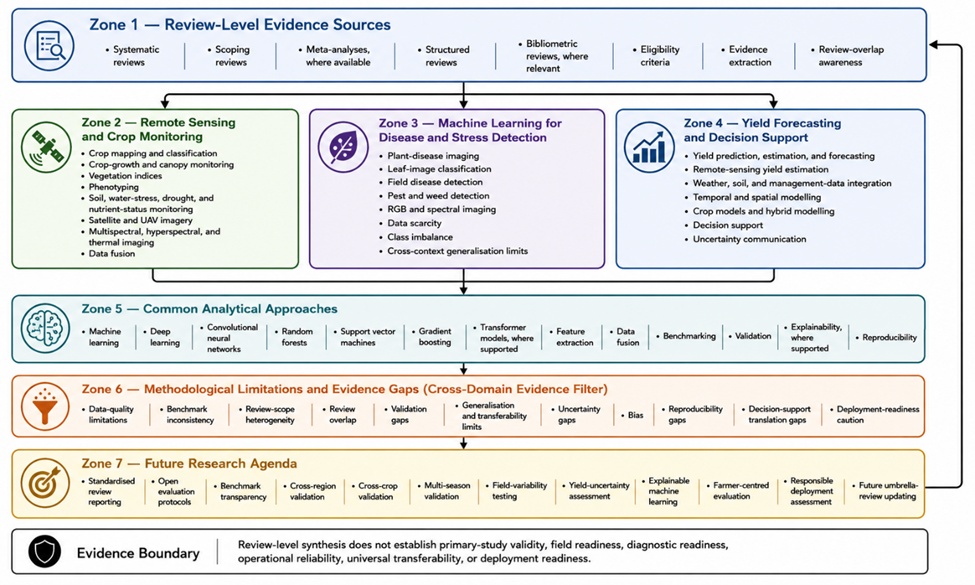
Figure 1. Umbrella Evidence Synthesis Map for Remote Sensing, Machine Learning, and Smart Farming
Alt-text description: A conceptual umbrella evidence synthesis map showing review-level evidence from remote sensing and machine learning reviews connected to crop monitoring, disease detection, yield forecasting, decision support, evidence strength, methodological limitations, gaps, and future research priorities.
Reproducibility is a cross-cutting condition for interpreting apparent evidence strength. Remote-sensing research can be difficult to reproduce when data versions, preprocessing decisions, code, computational environments, spatial partitions, parameter settings, or analytical workflows are incompletely reported [35]. Similar concerns apply to image-based disease detection and yield modelling, where undocumented augmentation, data cleaning, hyperparameter selection, or feature engineering can alter outcomes. Reproducibility does not prove validity, because a transparent workflow may still contain biased samples or inappropriate validation. It does, however, enable scrutiny, sensitivity analysis, independent reruns, and more credible comparison. Benchmarking should therefore include data provenance, contextual metadata, declared splits, and complete evaluation protocols rather than relying on leaderboard values alone.
Overall, the umbrella synthesis identifies a layered evidence structure. Breadth is greatest for remote-sensing applications and image-based machine learning; methodological concentration is strongest for crop monitoring and controlled-image disease classification; and evidence is more variable for transferable disease recognition, calibrated yield forecasting, and workflow-embedded decision support. Review overlap and scope heterogeneity mean that repeated positive conclusions cannot be counted as independent confirmations without examining their underlying studies [12]. The appropriate interpretation is that remote sensing and machine learning offer a substantial, rapidly developing research base whose decision-support value remains conditional on data provenance, independent validation, uncertainty, reproducibility, explainability, institutional context, and responsible deployment assessment. This synthesis supports comparative evidence mapping and research-priority development, not universal model selection or operational prescription.
The first priority is to improve the reliability of review-level inference itself. Future umbrella reviews should map overlap among included reviews whenever primary-study lists permit, because repeated inclusion can create apparent convergence without independent replication [12]. Review reporting should specify search coverage, review type, eligibility rules, primary-study designs, application definitions, appraisal methods, and limits to synthesis, consistent with the methodological need for explicitly planned overview questions and methods [9]. Benchmark transparency should extend beyond dataset names to versions, provenance, licensing, duplicate detection, class distributions, preprocessing, split logic, and known domain constraints. These advances would make evidence updates and comparisons more defensible, although they would not remove bias or validate the underlying primary studies by themselves.
A second priority is external validation designed around agricultural variation. Cross-region testing should separate training and evaluation geographically; cross-crop testing should hold out entire crop types or provide per-crop transport analyses; and multi-season testing should preserve chronology and include genuinely unseen seasons. Yield reviews particularly support the need for geographically and temporally independent evaluation because current comparisons are often crop-, region-, and dataset-specific [31]. Disease-recognition reviews likewise justify prospective field datasets containing complex backgrounds, cultivar diversity, mixed stressors, symptom stages, and expert-confirmed reference labels [22]. Yield forecasting should state the true information cut-off, forecast horizon, and data availability, and should complement point errors with calibrated intervals, probabilistic scores, or scenario sensitivity. These practices would clarify transportability and risk without implying global or universal generalisation.
A third priority is integration that remains testable, explainable, and reproducible. Weather, soil, management, crop-model, and remote-sensing data should be combined through modular designs that preserve source provenance, describe missing-data handling, and permit ablation of each modality [29]. Process-based and data-driven components should report their separate and propagated uncertainties rather than allowing hybrid complexity to obscure error sources [30]. Explainable machine learning should be evaluated for stability, faithfulness, agronomic coherence, and usefulness to intended users; explanation alone must not substitute for predictive validity, fairness, or accountability [34]. Executable workflows, versioned data and code, declared environments, and independent reruns would strengthen reproducibility and comparison [35]. Open evaluation protocols should include spatial, temporal, imbalance-aware, and external tests, while avoiding the interpretation of leaderboard success as deployment certification.
A final priority is to study translation from analytical output to responsible decision support. Farmer-centred and workflow-embedded evaluations should examine timing, comprehensibility, burden, access, trust calibration, override behaviour, error consequences, and diversity among farm contexts, reflecting the social and institutional dimensions emphasised in digital-agriculture reviews [5]. Supply-side structures, service relationships, ownership arrangements, and platform dependencies should also be examined because they affect who can use a system and under what conditions [32]. Responsible deployment assessment should address privacy, fairness, accountability, security, environmental and market externalities, incident handling, and post-deployment monitoring where ethically appropriate [33]. Future umbrella-review updates should maintain versioned extraction records and reassess overlap, methodological quality, and emerging evidence rather than appending new reviews mechanically. Table 4 presents evidence gaps and future research priorities emerging from the umbrella review.
Table 4. Evidence Gaps and Future Research Agenda for Remote Sensing, Machine Learning, and Smart Farming: Review Overlap, Standardized Reporting, Benchmark Transparency, Cross-Region Validation, Cross-Crop Validation, Multi-Season Validation, Field Variability, Yield Uncertainty, Explainability, Reproducibility, Open Protocols, Farmer-Centered Evaluation, Responsible Deployment, and Future Review Updating
Evidence gap or research priority | Problem addressed | Required methodological advance | Required data or infrastructure | Validation need | Review-level evidence basis | Expected contribution | Boundary statement |
Review-overlap assessment | Repeated primary studies may create false convergence across reviews | Construct primary-study citation matrices and quantify overlap where records permit | Machine-readable bibliographies and persistent study identifiers | Compare synthesis results with and without highly overlapping reviews | Overlap-management guidance identifies this as a core overview problem [12] | More defensible interpretation of evidence density | Refines review-level inference; it does not validate primary studies |
Standardized review reporting | Review scope, methods, evidence types, and limitations are inconsistently reported | Use domain-adapted review and overview reporting structures | Registered protocols, structured extraction forms, transparent amendments | Audit reporting completeness in future updates | Overview planning requires explicit questions and bounded objectives [9] | Improved comparability and updateability | Reporting checklists do not remove bias by themselves |
Benchmark dataset transparency | Dataset versions, duplicates, classes, and splits may be unclear or repeatedly reused | Require provenance, versioning, licensing, class distributions, and split documentation | Dataset registries, data cards, persistent versions | Independent reruns using declared data versions and partitions | Reproducibility reviews emphasise transparent data and workflow records [35] | Lower leakage risk and more interpretable comparison | Transparent benchmarks remain context-bound |
Cross-region validation | Models may exploit local climate, cultivar, management, or acquisition conditions | Use geographically separated development and evaluation with transport analysis | Harmonised multi-region datasets and metadata partnerships | Independent regional external validation | Yield-review evidence identifies limited cross-region comparison [31] | Clearer evidence of geographic transferability | Success in selected regions does not prove global generalisation |
Cross-crop validation | Crop morphology, symptoms, physiology, and yield relationships differ | Hold out crop species or use explicit multi-crop transfer protocols | Multi-crop image, spectral, weather, soil, and management datasets | Per-crop reporting on unseen crop tests | Disease-recognition evidence shows sensitivity to crop and dataset composition [26] | Better definition of reusable versus crop-specific models | Aggregate performance must not hide crop-specific failure |
Multi-season validation | Seasonal weather and management shifts alter data distributions | Use temporally blocked, prospective, multi-year designs | Longitudinal field datasets and stable calibration records | Train on earlier seasons and test on unseen later seasons | Phenotyping reviews identify context and season dependencies [16] | Evidence about temporal robustness | Several seasons may still omit rare future extremes |
Disease detection under field variability | Controlled leaf images underrepresent clutter, mixed stresses, and symptom diversity | Collect prospective field and canopy datasets with realistic negatives | Expert-confirmed labels, multi-stressor sampling, acquisition metadata | Multi-site field comparison against appropriate reference diagnosis | CNN reviews identify controlled-dataset concentration and weak external validation [22] | More credible field-domain recognition evidence | Research validation is not diagnostic or deployment approval |
Yield forecasting uncertainty assessment | Point metrics do not communicate calibration or decision risk | Produce probabilistic forecasts, intervals, calibration curves, and sensitivity analyses | Ensembles, weather scenarios, and decision-relevant thresholds | Out-of-time calibration using proper scoring rules | Deep-learning and remote-sensing yield reviews identify uncertainty and comparison gaps [31] | Forecasts whose uncertainty is interpretable at a stated lead time | Uncertainty estimates do not guarantee useful decisions |
Integration of weather, soil, and management data | Contextual variables are omitted or inconsistently encoded | Build modular multimodal models with provenance and missingness handling | Linked weather, soil, management, and earth-observation infrastructure | Ablation and external validation for each data source | Agrarian-factor reviews support contextual integration while noting data constraints [29] | Evidence about when added context improves prediction | More data do not automatically improve validity |
Explainable machine learning | Complex predictions may lack stable or meaningful reasons | Compare interpretable models with faithful, stability-tested explanation methods | Feature dictionaries, domain constraints, and explanation interfaces | Technical faithfulness plus expert and user evaluation | Responsible-AI guidance calls for transparency and stakeholder attention [34] | More inspectable decision-support research | Explanation does not replace validation, fairness, or accountability |
Reproducible workflows | Incomplete code, preprocessing, environments, and splits obstruct replication | Publish executable pipelines, data lineage, parameter records, and environments | Versioned repositories, containers, workflow engines | Independent rerun and sensitivity analysis | Reproducibility guidance identifies transparent workflows as essential [35] | Greater confidence in reported comparisons | A reproducible flawed design remains flawed |
Open evaluation protocols | Metrics and split designs differ across studies and reviews | Create task-specific protocols for spatial, temporal, imbalance, and external testing | Public evaluation infrastructure or sealed test sets with metadata | Multi-team blind evaluation and detailed error analysis | Yield-prediction reviews show heterogeneous datasets and metrics [28] | More comparable evidence across methods | Leaderboards must not become deployment certification |
Decision-support translation studies | Predictions are seldom evaluated for timeliness, actionability, and consequences | Conduct human-centred, workflow-embedded, mixed-method studies | Co-designed interfaces, use logs, and explicit outcome definitions | Prospective evaluation of use, override, errors, and downstream effects | Supply-side reviews identify organisational conditions shaping digital use [32] | Evidence connecting analytics with real decision processes | No operational recommendation follows without use-case validation |
Farmer-centered evaluation | Technical reviews underrepresent farmer priorities, access, and burden | Use participatory design and stratified evaluation across farm types | Trusted local partnerships, accessibility support, and compensated participation | Usability, trust calibration, equity, and opt-out assessment | Social-science reviews identify actor and institutional dimensions [5] | Better alignment with diverse users and contexts | Participation is not universal farmer approval |
Responsible deployment assessment | Accuracy-centred evaluation misses privacy, fairness, externalities, and accountability | Apply lifecycle risk assessment with explicit responsibility allocation | Governance records, incident processes, and stakeholder oversight | Pre-deployment scenarios and post-deployment monitoring where appropriate | Systemic-risk analysis shows that model accuracy captures only part of agricultural-AI risk [33] | Evidence about conditions and consequences of deployment | Assessment is not regulatory or safety approval |
Future umbrella-review updating | Technologies, reviews, datasets, and methods will continue to change | Maintain a living candidate register and versioned overlap and extraction maps | Search alerts, persistent DOI records, and change logs | Independent screening checks and documented update decisions | Overview-method research supports method selection tailored to evidence structure [10] | Transparent updates without obscuring earlier evidence versions | Updates must reassess quality and overlap rather than append mechanically |
This umbrella review provides an integrated review-level synthesis of remote sensing, machine learning, and smart-farming evidence for crop monitoring, disease detection, yield forecasting, and decision support. The reviewed literature indicates substantial methodological development across satellite and UAV observation, multispectral and hyperspectral imaging, computer vision, conventional machine learning, deep learning, crop models, and multimodal forecasting. Its strongest contribution is evidence mapping: it identifies where research is concentrated, where findings converge, and where methodological limitations recur. Review-level evidence does not independently establish primary-study validity, reliable diagnosis, operational forecasting, universal model transfer, farmer approval, or deployment readiness. Claims of practical readiness should therefore remain conditional on review quality, primary-study overlap, transparent data provenance, independent spatial and temporal validation, cross-crop and cross-region testing, uncertainty assessment, reproducibility, explainability, workflow fit, and responsible governance. Progress toward decision-support value requires not only better models but also stronger evidence designs and explicit attention to the institutional and human settings in which analytical outputs may be used.
None
None
None
None
Open Access The author(s) retain copyright. This article is licensed under the Creative Commons Attribution-NonCommercial-ShareAlike 4.0 International License. It may be shared and adapted for non-commercial purposes with appropriate attribution, an indication of changes, and distribution of adaptations under the same license. Third-party material may be subject to separate terms identified in its credit line. View the license at https://creativecommons.org/licenses/by-nc-sa/4.0/.
 Agro Intelligence Research Press