Agricultural data markets are becoming integral to precision farming as data generated by sensors, machinery, remote-sensing systems, farm-management platforms, advisory services, supply chains, and public information infrastructures acquire operational and economic value. However, the expansion of data exchange creates policy challenges that cannot be assessed through innovation, productivity, or monetization potential alone. This article develops an original policy framework that connects agricultural data-market boundaries, actors, data flows, ownership claims, access arrangements, effective control, farmer participation, privacy, competition, platform power, interoperability, fair exchange, accountability, and implementation safeguards. The framework distinguishes data ownership from access, control, portability, consent, and practical farmer agency. It also treats privacy protection as one component of a wider governance architecture that must address platform dependency, market concentration, switching costs, asymmetric information, bargaining-power imbalances, data-intermediary influence, and unclear accountability. Interoperability is conceptualized as a combination of technical, semantic, organizational, and governance conditions rather than as a sufficient guarantee of fair exchange. The framework further identifies policy gaps involving ambiguous rights, fragmented portability, weak consent, opaque value capture, deficient dispute pathways, and limited monitoring capacity. Its principal contribution is a structured policy-analysis model that links risk identification to context-sensitive safeguards, stakeholder feedback, monitoring, and framework updating. The framework supports policy-oriented analysis but does not independently establish legal compliance, guarantee farmer protection, certify market fairness, or demonstrate implementation readiness.
Precision farming increasingly depends on the continuous production, combination, and interpretation of sensor data, machine data, soil information, crop records, weather observations, remote-sensing outputs, livestock information, and operational farm data. These data move through connected relationships involving farmers, agricultural advisors, equipment manufacturers, input suppliers, technology providers, digital platforms, data intermediaries, cooperatives, supply-chain organizations, research bodies, and public institutions. Such relationships form agricultural data ecosystems in which technical infrastructures, commercial services, institutional arrangements, and governance choices jointly determine how data are collected, accessed, reused, transferred, and converted into decision-support or economic value. Consequently, agricultural data markets should be understood as socio-technical arrangements rather than as neutral mechanisms for transferring digital resources [1, 2].
The policy significance of these markets arises from the capacity of digital technologies to redistribute informational control, decision-making influence, labour relations, and value capture across agricultural systems. Data-intensive services can enhance monitoring, forecasting, automation, and coordination, yet the same infrastructures may deepen dependence on proprietary platforms, consolidate commercial influence, reduce farmers’ practical control over their operational histories, and produce unequal access to digital capabilities. These effects are not inevitable, but they demonstrate why data-market evaluation must consider who controls technical interfaces, who defines permissible uses, who possesses analytic capacity, who can exit an ecosystem, and who benefits from aggregated agricultural information [3].
A policy approach must therefore move beyond fragmented treatment of ownership, privacy, interoperability, competition, and farmer protection as separate concerns. Responsible governance requires anticipation of possible consequences, meaningful inclusion of affected actors, reflexive examination of institutional assumptions, and responsiveness to evidence emerging during implementation. These requirements are particularly important because agricultural data arrangements may evolve rapidly as platforms expand, business relationships change, data sources are combined, and new analytic uses emerge. A governance model that remains fixed at the point of initial consent or contractual acceptance may fail to respond to later changes in data value, market power, downstream use, or farmer vulnerability [4].
This article proposes an original policy framework for agricultural data markets in precision farming. Its objective is to integrate agricultural data-market boundary definition, stakeholder mapping, data-flow analysis, ownership and access assessment, farmer-protection assessment, privacy evaluation, competition and platform-power analysis, interoperability review, fair data-exchange assessment, policy-gap identification, safeguard selection, implementation-risk review, monitoring, accountability, stakeholder feedback, and framework updating. The contribution is analytical rather than legally prescriptive: the framework can structure policy discussion, clarify governance risks, and identify evidence needs, but it does not determine jurisdiction-specific rights, establish regulatory compliance, guarantee farmer protection, certify fair competition, or prescribe a mandatory market design.
Agricultural data markets encompass more than formal marketplaces in which datasets are directly bought or sold. They also include contractual and infrastructural arrangements through which farm data are exchanged for advisory services, equipment functionality, predictive analytics, benchmarking, risk assessment, supply-chain coordination, research access, or platform participation. Value may be captured through subscription services, complementary product sales, improved algorithmic performance, aggregated intelligence, data-enabled market positioning, or operational efficiencies rather than through an explicit data price. The resulting market is therefore shaped by the design of data infrastructures and by the conditions governing participation, interpretation, aggregation, and value capture [5].
The distribution of these benefits is unlikely to be uniform. Farmers differ in scale, capital, connectivity, technical capability, advisory access, data literacy, and negotiating position. A system that appears accessible at the level of technology availability may remain difficult to use or economically disadvantageous for farms lacking compatible machinery, reliable connectivity, staff capacity, or independent advice. Agricultural data-market policy should consequently examine both formal participation opportunities and substantive access to benefits. Innovation potential does not demonstrate equitable distribution, and data generation by farmers does not ensure that they will receive corresponding economic, informational, or operational value [6].
Supply-side structures further complicate the policy landscape. Equipment manufacturers, agricultural input firms, software developers, platform providers, telecommunications actors, analytics companies, investors, and public organizations can influence which technologies become available, which data formats dominate, which services are bundled, and which actors control critical interfaces. Their roles may overlap: an equipment provider may operate a platform, an input supplier may offer analytics, and a data intermediary may also control access to a marketplace or advisory network. Actor mapping is therefore necessary to reveal vertically integrated relationships, commercial dependencies, conflicts of interest, and public–private interactions that may otherwise remain hidden within descriptions of a generic agricultural data ecosystem [7].
Data access can also become a competitive resource when historical farm records, machine-generated information, or platform-specific datasets are difficult to transfer or replicate. Restricted interfaces, proprietary formats, incomplete exports, long migration processes, and contractual limitations may raise switching costs for farmers and entry barriers for complementary service providers. These conditions can reinforce first-mover advantages and platform dependency even where nominal alternatives exist. Policy analysis should assess whether access restrictions are technically necessary, proportionate to legitimate security or quality concerns, transparently explained, and subject to meaningful review. Such assessment can clarify competition risks without assuming that every access restriction is unlawful or that portability alone will produce a fair market [8].
Farmers commonly describe data generated through their land, machinery, animals, labour, and production activities as “their data,” yet ownership terminology may conceal important differences between generation, possession, access, control, use, reuse, portability, and economic benefit. Farmer reluctance to share data is often linked to uncertainty about who can retrieve information, how it will be combined, whether it will be transferred onward, and what benefits or risks may follow. Trust is weakened when data practices are opaque or when farmers cannot understand how value is distributed. Ownership language is therefore insufficient unless it is accompanied by transparent use conditions, meaningful control, and credible benefit-sharing arrangements [9, 10].
Farmer protection should also be understood as a participatory governance process rather than as a bundle of provider-defined assurances. Farmers and farm organizations need opportunities to influence data-sharing purposes, access arrangements, platform rules, consent procedures, dispute mechanisms, and framework revisions. Participation must be capable of affecting decisions; invitations to consultations or the presentation of standardized terms do not necessarily establish farmer agency. Context also matters because farmers may hold different views about collective sharing, commercial reuse, public-interest research, cooperative stewardship, or the involvement of agricultural advisors. Policy frameworks should therefore permit plural forms of participation while ensuring that less-resourced farmers are not excluded from deliberation [11].
A comprehensive policy assessment must distinguish nominal ownership from effective control. Ownership claims may be difficult to apply where data are co-generated by farmers, machinery, software, satellite systems, service providers, and public information sources. Even where a farmer is described as an owner, practical control may remain limited if the data cannot be exported in a usable format, if access depends on continued subscription, if downstream uses are broadly authorized, or if withdrawal is technically ineffective. Policy analysis should therefore evaluate access rights, usage authority, portability, transparency, competition, contractual dependence, and institutional trust together rather than assuming that a single ownership rule can resolve agricultural data-governance problems [12].
The proposed approach treats farmer protection as a multidimensional assessment covering autonomy, agency, bargaining power, consent, transparency, data stewardship, value distribution, portability, and contestability. Farmer autonomy concerns the existence of meaningful alternatives and the practical ability to leave or change services. Farmer agency concerns the ability to influence governance decisions. Bargaining power concerns whether farmers can negotiate individually or collectively rather than merely accept standardized terms. Data stewardship concerns responsibility for quality, documentation, security, and appropriate use. Fair value distribution requires examination of economic and non-economic benefits, including improved services, returned knowledge, reduced risk, and recognition of farmer contribution. Accessible dispute-resolution pathways are also necessary where data are inaccurate, inaccessible, misused, or valued in contested ways. These components can strengthen policy analysis, but their inclusion does not by itself establish legal compliance or guarantee that farmers will be protected in practice.
Privacy risks in agricultural data markets extend beyond information conventionally understood as directly identifying an individual. Farm data may reveal household routines, labour patterns, financial conditions, production strategies, machinery movements, land-use decisions, or commercially sensitive practices when combined with location, ownership, remote-sensing, or supply-chain information. Governance should therefore examine the complete data lifecycle, including collection, linkage, inference, storage, access, onward transfer, retention, security, and deletion. Clear agreements, understandable explanations, purpose limitation, access controls, data minimization, cybersecurity measures, and incident-response arrangements may reduce risk, but they cannot eliminate every possibility of misuse, breach, or harmful inference [13].
Platform power arises when a provider can determine the terms of participation, permissible data uses, technical interfaces, visibility of information, service integration, and conditions of exit. Contractual statements that farmers retain ownership may coexist with broad provider permissions, extensive analytic reuse, limited transparency, and weak practical control. The policy question is therefore not only who is described as the owner, but who can operationally decide how data are processed, combined, commercialized, transferred, or retained. This distinction is particularly important where standardized platform terms create an appearance of control while the underlying infrastructure remains inaccessible to farmers and difficult to scrutinize [14].
Competition concerns may also arise at the ecosystem level rather than through the conduct of a single isolated company. Large agricultural platforms can cooperate through technical partnerships, bundled services, complementary datasets, shared infrastructure, or cross-platform alliances while continuing to compete in particular service markets. Such arrangements may facilitate innovation and interoperability, but they may also reinforce concentration, establish shared barriers to entry, and increase farmer dependence on a limited group of interconnected providers. Policy analysis should therefore examine market concentration, ecosystem closure, data advantages, network effects, vendor lock-in, switching costs, and the availability of credible alternatives without presuming that collaboration is inherently harmful or that concentration automatically establishes unfair conduct [15].
Intellectual-property arrangements, trade secrecy, database control, software licensing, technical protection, and contractual restrictions can further shape access to agricultural data and analytics. These mechanisms may support investment and innovation, yet they may also limit portability, constrain complementary services, obscure data valuation, or reinforce bargaining asymmetries. Privacy safeguards alone cannot correct these structural effects, and competition-oriented measures alone cannot resolve privacy, consent, or farmer-agency concerns. Effective policy analysis therefore requires integrated evaluation of data-intermediary power, information asymmetry, auditability, traceability, accountability, platform dependency, and market access. The proposed framework can identify where these concerns interact, but it does not determine intellectual-property entitlement, establish unlawful conduct, or certify that a market arrangement is fair [16].
Fair agricultural data exchange requires both trusted governance conditions and interoperable, documented data structures that preserve meaning across systems [17, 18]. Data-sharing arrangements should specify the actors involved, the purposes of exchange, the categories of data covered, the conditions of access, the permitted downstream uses, and the responsibilities attached to data quality, security, provenance, and correction. Technical transfer without understandable rights or trustworthy relationships may expose farmers to unanticipated uses, whereas governance commitments without usable formats may leave data practically inaccessible. Fair exchange therefore depends on the interaction of institutional trust, transparent access rules, privacy safeguards, data stewardship, standardization, and visible reciprocal benefit.
Interoperability should be evaluated across technical, semantic, organizational, and governance dimensions. Technical interoperability concerns whether systems can connect and transfer data. Semantic interoperability concerns whether transferred data retain consistent meanings, units, classifications, and contextual information. Organizational interoperability concerns whether participating actors possess compatible processes and responsibilities. Governance interoperability concerns whether access permissions, usage controls, accountability arrangements, and sovereignty expectations remain intelligible across institutional boundaries. Agricultural data-space architectures may help connect these dimensions by coupling exchange mechanisms with decentralized control, but architectural compatibility does not independently establish fair participation or protect farmers from unequal contractual and market relationships [19].
Cross-platform exchange is especially important where farm histories, machine records, advisory outputs, remote-sensing information, and production data are distributed among several services. Effective exchange may require compatible application interfaces, common data models, metadata vocabularies, identity management, trust services, security protocols, provenance records, and mechanisms for transferring permissions and usage conditions. Alignment among agricultural interoperability architectures may reduce avoidable fragmentation and support complementary services, but implementation must also consider performance, documentation, nondiscriminatory access, and the capacity of farmers and advisors to use transferred data [20]. Figure 1 illustrates the policy logic connecting agricultural data market actors, farm data flows, ownership and access issues, privacy and competition risks, interoperability requirements, and fair data exchange safeguards.
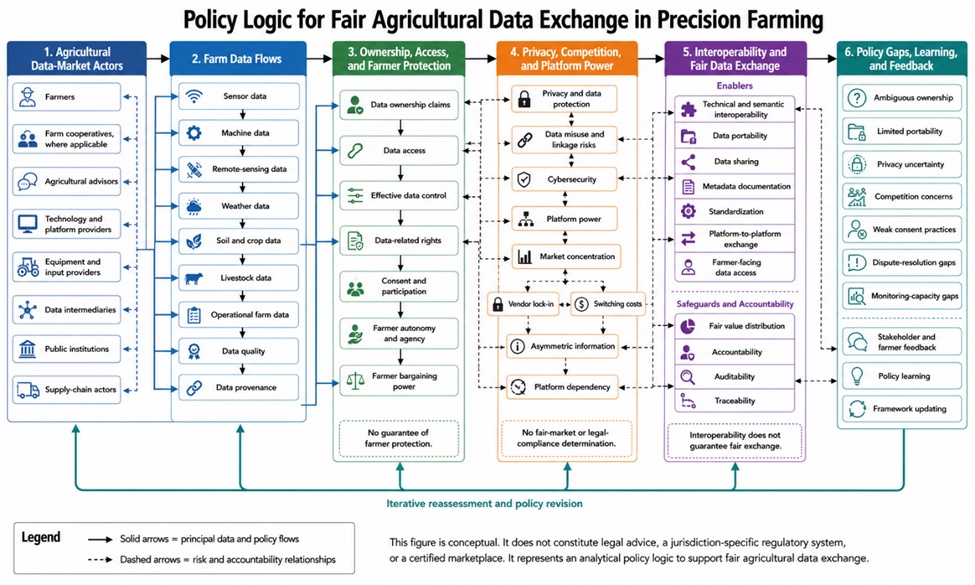
Figure 1. Policy Logic for Fair Agricultural Data Exchange in Precision Farming
Alt-text description:
A conceptual policy logic diagram showing agricultural data market actors connected by farm data flows, ownership and access issues, privacy risks, competition and platform power concerns, interoperability requirements, fair data exchange safeguards, farmer protection, and feedback loops.
Even where interoperable exchange is technically possible, fairness depends on data quality, provenance, metadata completeness, usable farmer-facing access, and mechanisms for accountability and dispute resolution. Machine data should remain interpretable beyond the original equipment environment, while remote-sensing data should be accompanied by information on spatial resolution, timing, processing, uncertainty, and linkage risks. Farmers should be able to retrieve usable records without losing contextual information, and data recipients should be able to identify origins, transformations, limitations, and applicable use conditions. Portability, interoperability, transparency, and standardization can reduce friction and dependency, but none guarantees equitable value distribution or responsible downstream use. Table 1 summarises ownership, access, privacy, competition, interoperability, and fair data exchange requirements for agricultural data markets in precision farming.
Table 1. Policy Requirements for Agricultural Data Markets in Precision Farming: Data Ownership, Access, Control, Portability, Farmer Protection, Privacy, Competition, Platform Power, Interoperability, Data Quality, Data Provenance, Fair Data Exchange, Accountability, and Claim Boundaries
Policy component | Core policy question | Required evidence or condition | Policy function | Potential output | Risk of overinterpretation | Governance need | Framework role |
Farm data definition | Which farm-related data are included, and how were they generated? | Inventory of sensor, machine, soil, crop, livestock, weather, remote-sensing and operational data | Define the governed data domain | Context-specific farm-data map | Treating all agricultural data as legally or economically identical | Data classification and documentation | Establishes the analytical boundary |
Data ownership | What authority is being claimed through ownership terminology? | Generation context, contractual language, co-generation relationships and relevant institutional context | Clarify ambiguous ownership assertions | Ownership-claim register | Assuming ownership provides complete protection | Separation of ownership from access, control and use | Diagnostic component |
Data access | Who can obtain which data, for which purpose and under what conditions? | Access rules, interfaces, authorization processes and third-party permissions | Identify access asymmetries | Role-based access matrix | Equating nominal access with usable access | Transparent and reviewable access conditions | Core capability assessment |
Data control | Who can authorize reuse, transfer, retention, linkage or deletion? | Technical controls, operational practices and contractual authority | Assess effective decision-making power | Control-rights profile | Assuming formal ownership equals practical control | Usage controls and conflict-management procedures | Central farmer-protection dimension |
Data rights | Which access, use, objection, correction, portability and participation interests are relevant? | Context-specific legal and institutional assessment | Distinguish different data-related interests | Data-rights taxonomy | Presenting conceptual categories as legally determinative | Jurisdiction-specific assessment where applicable | Clarifies policy discussion |
Data portability | Can farmers retrieve and move complete, usable and contextualized data? | Machine-readable exports, metadata, timing, cost and continuity arrangements | Reduce avoidable switching barriers | Portability-readiness result | Treating a downloadable file as meaningful portability | Migration support and portability testing | Links autonomy and competition |
Consent and participation | Are data uses understandable, revisable and open to meaningful influence? | Plain-language information, participation processes and withdrawal routes | Assess legitimacy and farmer involvement | Consent and participation protocol | Treating a one-time acceptance as continuing informed participation | Layered communication and stakeholder engagement | Procedural protection safeguard |
Farmer autonomy and agency | Can farmers make meaningful choices and influence governance decisions? | Service alternatives, dependencies, representation and decision pathways | Identify practical constraints on choice and influence | Farmer-autonomy and agency profile | Assuming formal choice or consultation creates genuine influence | Representative and deliberative governance | Farmer-centred outcome criterion |
Bargaining power | Can farmers negotiate individually or collectively over data terms and benefits? | Market alternatives, contract practices, cooperative capacity and independent advice | Identify negotiating asymmetries | Bargaining-power assessment | Assuming all farmers possess comparable leverage | Collective representation and accessible advice | Connects farmer protection with competition |
Data stewardship | Who maintains data quality, security, documentation and appropriate use? | Stewardship mandates, resources, competencies and oversight | Allocate operational responsibilities | Stewardship charter | Treating a stewardship label as proof of trustworthy conduct | Competent, resourced and accountable stewardship | Operational governance layer |
Privacy and data protection | Could data reveal personal, household or commercially sensitive information? | Data-field analysis, linkage potential, processing purpose, retention and security context | Identify lifecycle privacy risks | Privacy-risk register | Assuming farm data are automatically non-personal or harmless | Data minimization, purpose controls and security safeguards | Core risk-assessment component |
Platform power | Can a platform unilaterally determine access, interfaces, terms, visibility and exit conditions? | Platform rules, interfaces, pricing, ecosystem position and dependency evidence | Identify gatekeeping and rule-setting power | Platform-power profile | Inferring unlawful conduct from influence alone | Transparency, contestability and external assessment | Competition and dependency component |
Market concentration | Are data, users, services or complementary assets concentrated among few actors? | Ecosystem relationships, data advantages, market evidence and entry conditions | Identify structural competition concerns | Concentration-risk assessment | Treating concentration as automatic proof of abuse | Ongoing ecosystem-level monitoring | Structural market assessment |
Vendor lock-in and switching costs | Can participants leave without losing data, continuity, functionality or accumulated learning? | Export capability, compatibility, migration cost, retraining and downtime | Assess practical dependency | Exit and switching profile | Assuming nominal alternatives are practically accessible | Portability, interoperability and continuity planning | Farmer-autonomy and competition bridge |
Data interoperability | Can systems exchange and meaningfully use data across platforms and devices? | Technical interfaces, common formats, semantic models and organizational alignment | Reduce fragmentation and support reuse | Interoperability profile | Treating technical transfer as complete governance | Multi-layer interoperability assessment | Core exchange condition |
Data quality | Are data accurate, complete, timely, representative and fit for their intended use? | Quality criteria, validation records and responsibility allocation | Reduce decision error and disputes | Data-quality statement | Assuming source reputation establishes quality | Shared quality responsibilities | Reliability safeguard |
Data provenance and metadata | Can origin, transformations, context, units, limitations and use conditions be reconstructed? | Persistent identifiers, lineage records and metadata documentation | Support traceability, interpretation and accountability | Provenance and metadata record | Assuming documented lineage proves accuracy or legitimacy | Common metadata and provenance practices | Trust and accountability condition |
Fair data exchange | Are purposes, benefits, risks and burdens transparent and proportionate? | Contribution mapping, use purposes, benefit allocation and stakeholder input | Connect exchange mechanics with substantive fairness | Fair-exchange assessment | Equating exchange, payment or interoperability with fairness | Reviewable exchange and benefit-sharing arrangements | Integrative fairness test |
Accountability, auditability and traceability | Can access, use, transformation and decisions be independently examined and challenged? | Logs, responsibility maps, evidence retention and complaint routes | Enable verification and correction | Accountability pathway and audit record | Assuming records alone ensure responsible conduct | Independent review and corrective procedures | Cross-cutting safeguard |
No legal-compliance claim boundary | Has the arrangement undergone competent jurisdiction-specific assessment? | Applicable facts, law, contracts and institutional conditions | Prevent inappropriate reliance on the framework as legal advice | Explicit legal-boundary statement | Treating the framework as a compliance checklist | Independent legal and institutional assessment | Mandatory interpretive boundary |
No farmer-protection guarantee boundary | Have safeguards been implemented and evaluated through farmer-centred evidence? | Monitoring results, complaints, participation and outcome evidence | Distinguish proposed safeguards from demonstrated protection | Protection-limitation statement | Presenting framework inclusion as proof of protection | Continuing monitoring and corrective action | Mandatory outcome boundary |
No fair-market or fair-exchange guarantee boundary | Have market and distributional outcomes been empirically assessed? | Competition evidence, value-distribution evidence and stakeholder outcomes | Prevent premature fairness claims | Fairness-limitation statement | Treating compatibility or transparency as proof of fairness | Market monitoring and independent evaluation | Mandatory market boundary |
Agricultural data-market policy remains incomplete where responsibilities, acceptable uses, privacy expectations, value distribution, and accountability are insufficiently specified. Ambiguous ownership terminology can coexist with unclear access and control, while generalized references to innovation may obscure conflicts among farmers, providers, intermediaries, and public institutions. Ethical questions also arise when decision-support systems, automated recommendations, or data-derived inferences affect production without transparent responsibility for errors, exclusions, or unintended consequences. These gaps demonstrate that data-market governance must address values, responsibilities, and institutional relationships rather than merely technical functionality [21].
Risk perceptions are unlikely to be uniform across stakeholder groups. Farmers may emphasize loss of control, privacy, dependency, or unfair value capture, while technology providers may emphasize innovation, system security, or the need to aggregate data. Public institutions may focus on public value, infrastructure, rural development, or monitoring capacity, whereas advisors and cooperatives may be concerned with access, trust, and their changing intermediary roles. Divergent interpretations can make apparently neutral concepts—such as data sharing, consent, ownership, or public interest—politically contested. Deliberative policy assessment is therefore needed to identify whose risk definitions are reflected in governance arrangements and whose concerns remain marginalized [22].
Additional gaps arise from unequal digital capability, infrastructure, literacy, and institutional support. Portability may exist formally but remain unusable to farmers without technical assistance. Consent procedures may be available but incomprehensible. Interoperability standards may be developed but inaccessible to smaller providers. Monitoring responsibilities may be assigned to organizations lacking staff, data access, expertise, or authority. A people-centred approach to agricultural digitalization must therefore address skills, advisory capacity, rural connectivity, inclusion, workload, and distributional consequences alongside production and innovation objectives [23].
Existing agricultural data-sharing arrangements may also leave sector-specific gaps in terminology, portability, interoperability, co-generated data, implementation, accountability, and enforcement capacity. Voluntary governance mechanisms can promote trust and common expectations, but their effectiveness may be limited where participation is uneven, terminology is ambiguous, incentives are weak, or no credible monitoring process exists. Horizontal data-governance measures may similarly require agricultural interpretation because farm data are generated through complex relationships among land, machinery, software, services, biological processes, and supply-chain activities. These observations support policy experimentation and institutional assessment but do not establish that a particular governance model is legally sufficient, universally transferable, or implementation-ready [24].
The proposed policy framework is organized as an iterative sequence rather than a fixed compliance checklist. It begins by defining the agricultural data market under examination and then moves through actor mapping, data-flow analysis, rights and risk assessment, safeguard selection, implementation review, monitoring, and updating. This sequence reflects responsible-innovation principles because governance decisions should anticipate potential consequences, include affected actors, question embedded assumptions, and respond to evidence generated during implementation. Each stage produces an analytical output that informs later stages, while monitoring and stakeholder feedback can reopen earlier decisions when market structures, data uses, or technologies change [25].
The first stage defines the agricultural data-market boundary by identifying the precision-farming context, relevant services, data categories, geographic and institutional scope, and relationships among marketplaces, platforms, devices, intermediaries, cooperatives, advisors, supply-chain actors, and public institutions. The second stage maps stakeholders and distinguishes data generators, rights holders, service users, infrastructure providers, decision makers, downstream recipients, and affected communities. Farmers should be treated as rights holders and governance participants rather than only as technology users, customers, or sources of data. Their involvement should extend to defining legitimate purposes, acceptable risks, benefit expectations, dispute pathways, and framework revisions [26].
The third stage maps data collection, storage, transformation, inference, access, transfer, retention, and deletion. It should identify where sensor, machine, crop, soil, weather, remote-sensing, livestock, and operational data are combined and where provenance or quality information may be lost. The fourth and fifth stages assess ownership, access, control, portability, consent, farmer autonomy, farmer agency, bargaining power, value distribution, and dispute resolution. Implementation must also account for agricultural advisors, knowledge brokers, cooperatives, and other intermediaries because they can translate technical information, facilitate participation, mediate trust, and influence whether farmers can exercise formal data rights in practice [27].
The sixth through ninth stages examine privacy, data protection, cybersecurity, competition, platform power, interoperability, and fair exchange. Privacy assessment considers linkage, inference, retention, onward use, and misuse risks. Competition assessment considers concentration, gatekeeping, data advantages, switching costs, lock-in, information asymmetry, and intermediary power. Interoperability assessment covers technical, semantic, organizational, and governance compatibility. Fair-exchange assessment considers purpose clarity, data quality, provenance, reciprocity, value distribution, farmer-facing access, accountability, auditability, and traceability. Stakeholder-specific values may differ, but control, privacy, trust, autonomy, justice, interoperability, and avoidance of dependency provide important criteria for evaluating agricultural data-space design [28].
The final stages identify unresolved policy gaps, select context-sensitive governance safeguards, review implementation capacity and unintended consequences, establish monitoring and accountability arrangements, collect stakeholder feedback, and update the framework. Possible safeguards include improved transparency, access documentation, consent revision, portability testing, interoperability assessment, stewardship arrangements, dispute pathways, independent review, market monitoring, and farmer participation. Their suitability requires empirical, institutional, technical, economic, and legal assessment where relevant. The framework does not establish legal compliance, guarantee farmer protection, certify fair competition, or demonstrate implementation readiness. Table 2 presents the proposed policy framework for agricultural data markets in precision farming. Figure 2 presents the proposed policy framework for agricultural data markets in precision farming, integrating ownership, access, farmer protection, privacy, competition, interoperability, fair exchange, policy-gap identification, governance safeguards, implementation review, and feedback updating.
Table 2. Proposed Policy Framework for Agricultural Data Markets in Precision Farming: Market Boundary Definition, Stakeholder Mapping, Data Flows, Ownership and Access, Farmer Protection, Privacy, Competition, Platform Power, Interoperability, Fair Exchange, Policy Gaps, Governance Safeguards, Monitoring, Feedback, and Claim Boundaries
Framework stage | Core purpose | Required input | Policy function | Potential output | Validation or assessment need | Failure risk | Feedback mechanism | Decision boundary |
Agricultural data market boundary definition | Specify the market relationships, services, technologies and data uses under examination | Precision-farming use cases, geographic scope, platforms, services, devices and institutional context | Prevent an overbroad or technically vague assessment | Agricultural data-market boundary statement | Stakeholder and sector-expert review | Omitting complementary services, dependencies or affected actors | Revise boundary as services and relationships change | Not a formal legal or competition-market definition |
Stakeholder and actor mapping | Identify parties that generate, control, use, mediate or are affected by data | Farmer, cooperative, advisor, technology, equipment, input, platform, intermediary, public and supply-chain actors | Make roles, interests and power visible | Actor-and-role map | Representation assessment, especially for less powerful groups | Treating stakeholder categories as homogeneous | Periodic actor review and representation feedback | Mapping does not prove actual influence |
Data-flow mapping | Trace collection, storage, transformation, inference, sharing, retention and deletion | System architecture, operational records, interfaces and contractual descriptions | Reveal hidden transfers and technical dependencies | Data-flow and lineage map | Technical verification and participant confirmation | Documented flows differ from actual practice | Update following system or contractual changes | Mapping does not establish legitimate use |
Data-quality and provenance review | Examine accuracy, completeness, context, lineage and metadata | Quality criteria, source records, transformation history and metadata | Determine whether data remain interpretable and fit for use | Quality and provenance profile | Domain-specific validation | Poor-quality or decontextualized data are treated as reliable | Error reporting and correction workflow | Provenance does not prove accuracy or fairness |
Ownership and access assessment | Separate ownership assertions from access, use and control capabilities | Contracts, co-generation context, technical controls and institutional assessment | Clarify competing claims and operational authority | Ownership-access-control matrix | Context-specific legal and stakeholder review | Governance is reduced to an ownership label | Review through disputes and changing data uses | No ownership or legal-rights determination |
Data-control and rights assessment | Identify authority over reuse, transfer, retention, correction and deletion | Permissions, platform rules, usage controls and rights claims | Examine effective decision-making power | Control-and-rights profile | Technical and institutional verification | Stated control differs from operational control | Access-log and complaint review | No claim of comprehensive legal entitlement |
Farmer-protection assessment | Evaluate autonomy, agency, consent, bargaining, transparency and contestability | Farmer-facing information, alternatives, contracts and complaint routes | Determine whether safeguards are meaningful in practice | Farmer-protection risk profile | Diverse farmer participation and usability testing | Designing around a hypothetical average farmer | Farmer feedback, complaints and representation | No guarantee of farmer protection |
Data-stewardship and valuation assessment | Clarify responsibility for quality, security, documentation and benefit allocation | Stewardship mandates, data uses, contribution evidence and valuation assumptions | Allocate responsibilities and expose value-capture logic | Stewardship charter and value-distribution map | Competence, conflict-of-interest and distributional review | Stewardship is symbolic or valuation is opaque | Periodic benefit and role review | No universal data value or mandatory distribution formula |
Privacy risk assessment | Identify personal, household, linkable and commercially sensitive data risks | Data inventory, purposes, linkage potential, retention and security arrangements | Structure lifecycle privacy safeguards | Privacy-risk register | Specialist and context-specific assessment | Farm data are assumed to be automatically non-personal | Incident, complaint and consent feedback | No legal data-protection conclusion |
Cybersecurity assessment where relevant | Examine unauthorized access, manipulation and operational disruption risks | Threat model, device and platform architecture, controls and recovery capacity | Connect data governance with system resilience | Cybersecurity-risk profile | Technical testing and incident preparedness review | Security is treated as a one-time certification exercise | Incident reporting and control updating | No security guarantee |
Competition and platform-power assessment | Examine concentration, gatekeeping, access restrictions and ecosystem power | Market relationships, interfaces, pricing, data advantages and alliances | Identify structural risks to choice, entry and bargaining | Platform-power and dependency profile | Economic, technical and institutional assessment | Concentration is treated as automatic evidence of abuse | Market, entry and user-experience monitoring | No competition-law or fair-market conclusion |
Lock-in and switching assessment | Determine whether participants can realistically change providers | Portability, interoperability, migration cost, downtime and contractual conditions | Assess practical dependency | Exit and switching-risk profile | Migration testing and farmer-centred evaluation | Formal portability masks unusable transition | Post-migration and attempted-exit feedback | Reduced switching cost does not guarantee autonomy |
Interoperability assessment | Evaluate technical, semantic, organizational and governance compatibility | Standards, APIs, metadata, identity, permissions and trust mechanisms | Determine whether data can move and remain usable | Interoperability-readiness profile | Conformance and practical exchange testing | Paper compliance without functional exchange | Failure reporting and standards revision | Interoperability does not establish fairness |
Fair data exchange assessment | Examine purpose, reciprocity, quality, transparency, value and burden distribution | Exchange terms, data contribution, use purposes, risks and benefits | Connect data transfer with substantive fairness | Fair-exchange assessment | Distributional and farmer-centred evaluation | Exchange volume or payment is treated as proof of fairness | Participant feedback and benefit review | No fair-exchange guarantee |
Policy-gap identification | Compare existing arrangements with required capabilities and protections | Results of all preceding assessments | Prioritize unresolved governance problems | Policy-gap register | Multidisciplinary and stakeholder review | Gaps are listed without causes, priorities or affected groups | Periodic reassessment | A gap does not dictate one mandatory response |
Governance-safeguard selection | Match proposed safeguards to identified mechanisms and responsible actors | Gap register, feasibility evidence, institutional context and resources | Avoid generic or one-size-fits-all interventions | Context-sensitive safeguard portfolio | Proportionality, compatibility and stakeholder assessment | Symbolic safeguards or conflicting requirements | Pilot evidence and corrective revision | Proposed safeguards are not binding policy rules |
Implementation-risk review | Assess capacity, cost, exclusion, incentives and unintended effects | Skills, funding, infrastructure, organizational readiness and stakeholder capacity | Test practical feasibility | Implementation-risk register | Context-specific institutional assessment | Adoption without resources, expertise or participation | Staged implementation feedback | No implementation-readiness claim |
Monitoring and accountability planning | Define indicators, evidence access, responsibilities and escalation | Objectives, logs, audit evidence, complaints and responsible bodies | Make governance observable and correctable | Monitoring and accountability plan | Independent review and indicator validation | Monitoring exists without authority or corrective action | Scheduled reporting and incident-triggered review | A plan does not prove enforcement effectiveness |
Stakeholder feedback | Incorporate experience from farmers and other affected actors | Participatory forums, surveys, complaints, advisory networks and cooperative input | Detect emerging harms, dependencies and misunderstandings | Documented feedback-and-response record | Inclusiveness and representativeness assessment | Consultation occurs without influence | Published response and revision decisions | Participation does not establish approval |
Framework updating | Revise definitions, assessments, safeguards and priorities | Monitoring findings, incidents, market change and stakeholder feedback | Keep the framework adaptive | Versioned policy-framework update | Transparent rationale and renewed assessment | Static arrangements become obsolete or captured | Formal review cycle | Updating requires new evidence |
No legal-compliance claim boundary | Prevent use as a substitute for jurisdiction-specific legal assessment | Scope statement and relevant institutional context | Preserve the framework’s analytical status | Legal-boundary declaration | Independent assessment where application requires it | Framework is represented as legal advice | Review and correct misleading uses | Does not establish legal compliance |
No farmer-protection guarantee boundary | Distinguish proposed safeguards from demonstrated outcomes | Farmer outcomes, complaints, participation and monitoring evidence | Prevent premature protection claims | Protection-boundary declaration | Empirical farmer-centred evaluation | Safeguards are presented as proof of protection | Continuing outcome review | Does not guarantee farmer protection |
No fair-market guarantee boundary | Distinguish policy analysis from proof of competitive or distributive fairness | Market evidence, value distribution and implementation outcomes | Limit conclusions to structured policy assessment | Fair-market boundary declaration | Economic and institutional evaluation | Conceptual coherence is mistaken for market fairness | Continuing market monitoring | Does not certify a fair or competitive market |
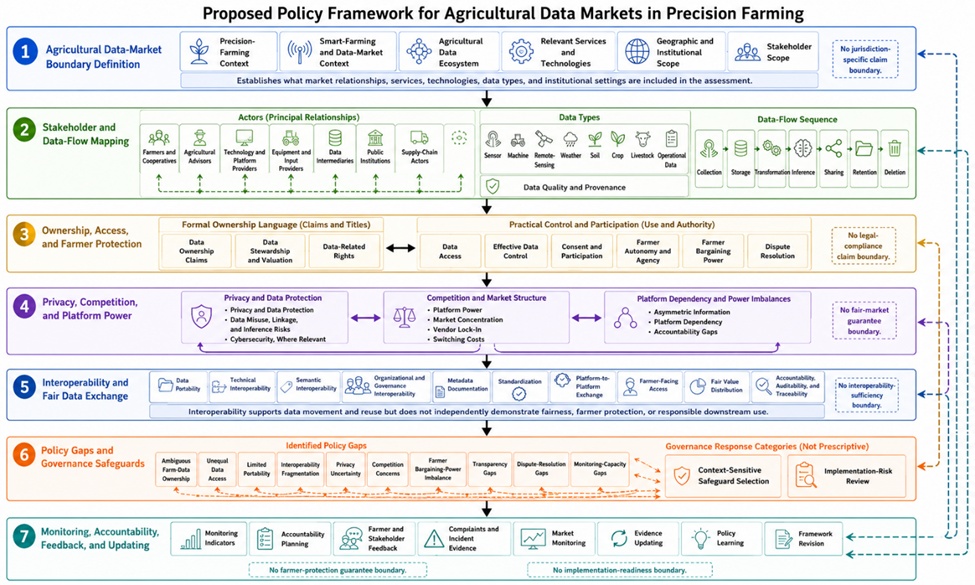
Figure 2. Proposed Policy Framework for Agricultural Data Markets in Precision Farming
Alt-text description:
A conceptual policy framework showing agricultural data market boundaries, stakeholder mapping, data flows, ownership and access, farmer protection, privacy, competition, platform power, interoperability, fair data exchange, policy gaps, safeguards, implementation risks, monitoring, accountability, and feedback loops.
Implementation should begin with institutional and stakeholder-capacity assessment rather than immediate assumption that all actors can perform the responsibilities allocated to them. Farmers and cooperatives may require technical, contractual, and data-literacy support to evaluate access conditions, exercise portability, understand data uses, and participate in governance. Agricultural advisors may need new competencies in platform comparison, data interpretation, privacy communication, and dispute support. Technology providers, equipment suppliers, platforms, and intermediaries should be able to document data flows, interfaces, metadata, security responsibilities, and downstream-use conditions in forms that are understandable to non-specialists. Public institutions and research organizations should assess whether they possess sufficient expertise, authority, resources, and evidence access to monitor implementation without displacing farmer participation or creating excessive administrative burdens [27].
Implementation should also be staged, monitored, and open to correction. Portability should be tested through realistic migration exercises rather than inferred from the existence of an export function. Interoperability should be evaluated through practical exchange across different platforms and devices. Privacy safeguards should be assessed against actual linkage and inference risks, while competition monitoring should examine ecosystem relationships, concentration, exclusionary interfaces, switching barriers, and the distribution of data-enabled value. Accessible dispute pathways, transparent responsibility allocation, audit records, provenance information, incident response, and independent review can support accountability, but their effectiveness depends on institutional capacity and corrective authority. Agricultural data-sharing policy should therefore be revised in response to implementation evidence rather than treated as complete when principles or voluntary commitments are first adopted [24].
The recommendations advanced here are research-informed policy considerations rather than legal advice, regulatory prescriptions, procurement guidance, operational market rules, or mandatory contractual terms. Policymakers and public institutions can use the framework to identify evidence gaps and coordinate stakeholder discussion. Farmer organizations and cooperatives can use it to structure questions about control, portability, benefit, dependency, and dispute resolution. Providers and intermediaries can use it to examine whether their architectures, disclosures, interfaces, and governance procedures support meaningful participation and accountability. Researchers can test individual stages, indicators, safeguards, and distributional outcomes across farm types and institutional settings. Continued farmer feedback should remain central because values such as privacy, control, trust, autonomy, interoperability, and justice may be understood differently across stakeholder groups and may change as data markets evolve [28].
This article proposes an integrated policy framework for agricultural data markets in precision farming that connects market-boundary definition, stakeholder and data-flow mapping, ownership and access, farmer protection, privacy, competition, platform power, interoperability, fair data exchange, policy-gap identification, governance safeguards, implementation risks, monitoring, accountability, and feedback updating. Its central argument is that agricultural data markets should not be evaluated through innovation, efficiency, or monetization potential alone. Responsible policy-oriented analysis must examine effective data control, meaningful participation, privacy and security risks, bargaining and platform power, portability, interoperability, data quality, provenance, contestability, and fair distribution of benefits and burdens. The framework offers a structured basis for identifying governance questions and research priorities while maintaining clear boundaries: it does not establish legal compliance, guarantee farmer protection, certify fair competition or fair exchange, or demonstrate implementation readiness. Its usefulness therefore depends on context-specific evidence, stakeholder participation, institutional capacity, monitoring, and continuing revision.
None
None
None
None
Open Access The author(s) retain copyright. This article is licensed under the Creative Commons Attribution-NonCommercial-ShareAlike 4.0 International License. It may be shared and adapted for non-commercial purposes with appropriate attribution, an indication of changes, and distribution of adaptations under the same license. Third-party material may be subject to separate terms identified in its credit line. View the license at https://creativecommons.org/licenses/by-nc-sa/4.0/.
 Agro Intelligence Research Press