Intelligent agriculture increasingly relies on sensors, remote sensing, machine learning, automation, digital platforms, and decision-support systems to produce rapid agricultural insight. These systems promise earlier detection, faster response, and more precise management across crop, soil, water, livestock, and farm-business decisions. Their appeal is closely tied to the speed, volume, and apparent objectivity of agricultural data streams. Yet agricultural intelligence cannot be reduced to fast data alone. Farms are living, seasonal, historically shaped, and locally interpreted systems in which the meaning of data depends on field context, management history, ecological feedback, and farmer judgement. Rapid signals can be useful, but they can also encourage premature conclusions when detached from temporal and local conditions. This perspective argues that intelligent agriculture needs slow data to remain contextually valid, seasonally sensitive, locally meaningful, and responsibly updated. Slow data is defined here as context-rich, temporally grounded, locally interpreted, ecologically informed, and responsibly revised data that strengthens agricultural AI by preventing overfitting, decontextualised automation, and unexamined model drift. It complements rather than rejects fast sensing and predictive analytics. The article develops a slow data perspective for intelligent agriculture by connecting context, seasonality, local knowledge, farmer feedback, model revision, and governance safeguards. It argues that agricultural AI becomes more responsible when it slows down interpretation enough to recognise uncertainty, ecological variability, and the limits of model transfer. The contribution is a perspective on agricultural intelligence that is faster when needed, but patient enough to remain agronomically meaningful.
Intelligent agriculture has become a defining direction in contemporary agri-food innovation, linking sensors, platforms, analytics, automation, remote sensing, and decision-support systems to farm management. However, this transformation is not only a matter of installing technical tools or accelerating data flows. Digital agriculture is also a socio-technical reorganisation of knowledge, authority, labour, risk, and decision-making across farming systems [1]. The central argument of this article is that intelligent agriculture needs slow data because agricultural meaning depends on context, seasonality, local knowledge, and responsible model updating.
The fast-data imaginary in smart farming is powerful because it promises immediate alerts, continuous monitoring, predictive dashboards, and automated recommendations. Big data architectures can connect machines, platforms, sensors, databases, and value-chain actors in ways that expand the scale and speed of agricultural decision support [2]. Yet the same architecture can make agricultural intelligence appear more stable, transferable, and objective than it really is. Data become intelligent only when they are interpreted through production goals, farm histories, ecological limits, and the practical conditions under which decisions are made.
A slow data perspective does not reject digital agriculture, machine learning, or real-time sensing. Rather, it asks whether digital agriculture is being used to design sustainable agricultural systems or merely to optimise isolated decisions at speed [3]. This distinction matters because farms are not static optimisation environments; they are dynamic socio-ecological systems shaped by weather, soils, markets, management sequences, biological thresholds, and institutional constraints. Intelligent agriculture therefore requires not only fast detection but also patient interpretation.
The aim of this perspective is to argue for slow data as a necessary complement to fast data in intelligent agriculture. Digitalisation is changing agricultural knowledge by reshaping how farmers, advisors, platforms, models, and institutions produce and validate decisions [4]. If these knowledge relations are ignored, intelligent agriculture risks becoming a system that accelerates recommendations while weakening situated agronomic judgement. The article develops the argument across the problem of fast data, the role of context, the importance of seasonality, the value of local knowledge, the need for responsible model updating, and practical implications for future agricultural AI.
The rise of agricultural AI has been accompanied by expanding use of deep learning for image recognition, disease detection, weed identification, yield estimation, livestock monitoring, and other prediction-intensive tasks. These applications demonstrate the technical power of data-rich agricultural analytics, but they also encourage a view of intelligence as scalable pattern detection [5]. In that view, the best system is often assumed to be the one that detects faster, predicts earlier, and automates more completely. The slow data perspective challenges this assumption by asking whether speed improves judgement or merely accelerates uncertain inference.
Machine learning applications in agriculture now span soil management, crop production, irrigation, livestock systems, machinery, disease diagnosis, and yield prediction. This breadth shows that agricultural AI is not one technology but a family of modelling practices applied to highly heterogeneous environments [6]. A model that performs well in one crop, region, sensor configuration, or management system may not remain valid under different field histories or seasonal conditions. Fast data become risky when their local limits are hidden behind general predictive confidence.
The problem is not that fast data are useless; timely information can be crucial for irrigation, pest response, frost alerts, disease surveillance, and operational planning. The problem is that fast data systems may produce recommendations without making data use, benefit-sharing, and revision practices transparent to farmers [7]. When farmers cannot see how their data are interpreted or how digital recommendations are changed over time, trust becomes fragile. Intelligent agriculture therefore requires data relations that are explainable, revisable, and accountable, not only rapid.
Fast data also tend to privilege what can be sensed frequently over what must be learned slowly. A dashboard may detect a short-term anomaly, but it may not know whether that anomaly reflects sensor error, a field’s long-term drainage problem, a deliberate management experiment, or a seasonal transition already familiar to the farmer. Smart farming systems that rely on big data must therefore be balanced by interpretive practices that connect signals with context, governance, and decision meaning [2]. Slow data names this necessary discipline of waiting, comparing, validating, and revising before treating a signal as agricultural knowledge.
Agricultural data are never context-free. Soil type, topography, field history, crop variety, machinery access, labour availability, irrigation infrastructure, farm size, market exposure, and farmer goals all shape what a measurement means. Precision agriculture can support more situated decision-making when it becomes co-experimental, allowing farmers and fields to participate in the interpretation of data rather than serving only as data sources [8]. This is why slow data begins with the claim that context is not background information but a condition of agricultural intelligence.
Context also determines who benefits from digital agriculture. Big-data systems may be designed in ways that suit large farms, capital-intensive operations, or highly connected production environments more easily than smaller, resource-constrained, or institutionally marginal farms [9]. A recommendation that is technically accurate may still be impractical if it assumes unavailable machinery, unaffordable inputs, unsuitable labour timing, or market access that a farmer does not have. Slow data therefore includes information about feasibility, constraints, and value distribution, not only biophysical variables.
The context of intelligent agriculture is also ethical and institutional. Smart farming raises questions about data ownership, privacy, responsibility, autonomy, dependency, and the distribution of risks and benefits [10]. These questions are not external to model performance because they influence whether farmers trust, contest, ignore, or adapt digital recommendations. A model can be statistically strong and still socially weak if it cannot be situated within responsible data relations.
For this reason, contextual validity should become a core standard for agricultural AI. A model should not be considered intelligent merely because it detects patterns in large datasets; it should be considered intelligent when its outputs remain meaningful under the specific conditions in which farmers must act. Co-experimental approaches to precision agriculture show that digital tools can support richer interpretation when farmers, advisors, and field histories remain part of the knowledge process [8]. Slow data strengthens intelligent agriculture by making context visible before automation turns data into action.
Seasonality is not a complication added to agricultural intelligence after modelling; it is one of the basic structures through which agricultural intelligence becomes possible. Crop growth, yield formation, pest pressure, nutrient uptake, soil moisture, labour demand, and market timing all unfold through temporal sequences that cannot be understood from isolated observations. Satellite-based yield estimation becomes more useful when remote-sensing signals are connected with field evidence and validation across growing conditions [11]. Slow data therefore treats the growing season as a knowledge process rather than a calendar backdrop.
The timing of observation can change the meaning of the same agricultural measurement. A vegetation index, canopy signal, soil moisture value, or yield-map pattern may indicate different agronomic realities depending on crop stage, recent rainfall, management sequence, and expected phenological development. High-resolution wheat yield mapping using Sentinel-2 illustrates that temporal observation windows are not neutral because the usefulness of imagery depends on when crop conditions are captured [12]. In this sense, seasonality is not noise to be removed but information to be interpreted.
Machine-learning crop forecasting makes the problem of temporal learning especially visible. Forecasts are useful only when predictors are available at decision-relevant times and when models avoid drawing premature conclusions from information that would not be known in practice. Large-scale crop yield forecasting shows the importance of season-aware predictors, model evaluation, and decision timing in agricultural prediction [13]. Slow data strengthens forecasting by asking whether a signal is early enough to guide action, mature enough to be reliable, and transparent enough to support judgement.
Temporal learning also means remembering what happened after a recommendation was followed, modified, ignored, or contradicted by field outcomes. A fast system may provide an alert today, but a slow data system asks whether similar alerts were useful in previous seasons, under similar soil conditions, and after comparable management actions. Yield-estimation research demonstrates that agricultural intelligence improves when models are tested against observed outcomes rather than treated as self-validating outputs [11]. The practical lesson is that intelligent agriculture should learn across seasons, not merely react within them.
Local knowledge is often treated as informal, anecdotal, or secondary to sensor and model outputs, but this hierarchy misunderstands how agricultural decisions are made. Farmers and local advisors hold knowledge about field history, soil behaviour, water movement, pest recurrence, informal labour constraints, machinery limits, and risk tolerance. Citizen science in agriculture shows that farmer participation can generate evidence that formal monitoring systems may overlook, especially where conventional data infrastructures are weak or uneven [14]. Slow data values this participation because local interpretation can reveal why a signal matters, not only that it exists.
Situated interpretation is particularly important when digital tools are developed for diverse agricultural settings. Participatory design in agricultural research-for-development shows that digital innovation becomes stronger when local constraints and user practices shape tools before they are scaled [15]. A recommendation system designed without such participation may mistake non-adoption for farmer resistance when the real problem is poor fit with local routines, infrastructure, or decision authority. Slow data therefore places farmer interpretation inside the design process rather than treating it as post-deployment feedback.
Responsible digital agriculture must also recognise that good intentions can fail in complex realities. Digital systems introduced into low-income or resource-constrained settings may encounter infrastructure gaps, uneven capacity, social hierarchies, institutional weaknesses, and power relations that alter their effects. Research on responsible design in digital agriculture highlights the need to account for these lived conditions rather than assuming that intended benefits will transfer smoothly across contexts [16]. Slow data makes such realities visible before technological optimism hardens into inappropriate automation.
The central point is not that local knowledge should replace AI, but that agricultural AI becomes more responsible when it can be interpreted locally. Farmers may recognise whether an apparent anomaly is a known wet patch, a legacy soil problem, a deliberate trial, a pest pattern, or a temporary artefact of weather. Participatory digital innovation shows that such interpretation can be designed into agricultural tools through co-design, annotation, feedback, and iterative validation [15]. Slow data is therefore not anti-technology; it is the condition under which technology becomes agronomically situated.
Models used in intelligent agriculture cannot remain fixed while climates shift, management practices change, sensors age, pests move, crop varieties evolve, and markets alter production decisions. Yet updating a model is not automatically responsible simply because new data have arrived. Data assimilation for wheat growth monitoring and yield estimation shows how new remote-sensing observations can be incorporated into crop models in a structured way [17]. This kind of updating differs from unchecked drift because revision is tied to agronomic process, model structure, and observed crop development.
Responsible model updating must also ask who is affected when a system changes its recommendations. Precision-agriculture technologies can redistribute knowledge, labour, risk, dependence, and benefits across farmers, advisors, developers, and platform owners [18]. If model revision improves aggregate performance but reduces farmer autonomy or hides decision logic, the update may be technically attractive yet socially irresponsible. Slow data therefore requires that model updating be evaluated not only by accuracy but also by its effects on agricultural relationships.
Accountability is central because agricultural AI decisions are rarely produced by a model alone. Data providers, sensor manufacturers, platform firms, agronomists, farmers, advisors, regulators, and researchers may all shape the system that generates a recommendation. Responsible AI in agriculture and food systems requires trust-building and accountability across this wider network of actors [19]. Model updating should therefore include documentation, responsibility allocation, uncertainty communication, and procedures for contesting or correcting recommendations.
Adoption barriers also matter because an unused or mistrusted decision-support system cannot be intelligent in practice. Machine-learning decision support may fail when users do not understand outputs, cannot align recommendations with field realities, or do not trust the system enough to act on it. Research on barriers to adopting machine-learning decision-support systems shows that communication, usability, trust, and practical fit are part of system performance [20]. Slow data turns model updating into a governed learning process that includes farmer feedback, seasonal validation, and careful distinction between meaningful change and temporary noise.
A slow data perspective begins with the claim that agricultural intelligence requires temporal depth, contextual memory, local interpretation, ecological feedback, and responsible revision. Slow data does not mean low-quality data, delayed action, or resistance to digital innovation. It means that agricultural data should be collected, interpreted, and updated in ways that remain valid across fields, seasons, ecosystems, and decision situations. Digital Agricultural Knowledge and Information Systems show how multi-source data can be linked with ecosystem services, biodiversity, and decision support for diversified agricultural systems [21].
Slow data also requires experimental patience. On-farm experimentation can organise learning across fields, seasons, farmer experience, and research relationships rather than confining evidence to abstract model performance. This approach is important because agricultural knowledge often develops through repeated comparison, local adaptation, and outcome feedback over time [22]. In intelligent agriculture, the farm should not be reduced to a site of data extraction; it should become a site of shared learning.
Figure 1 illustrates how slow data complements fast agricultural sensing by embedding AI interpretation within context, seasonality, local knowledge, farmer feedback, ecological learning, responsible model updating, and governance safeguards.
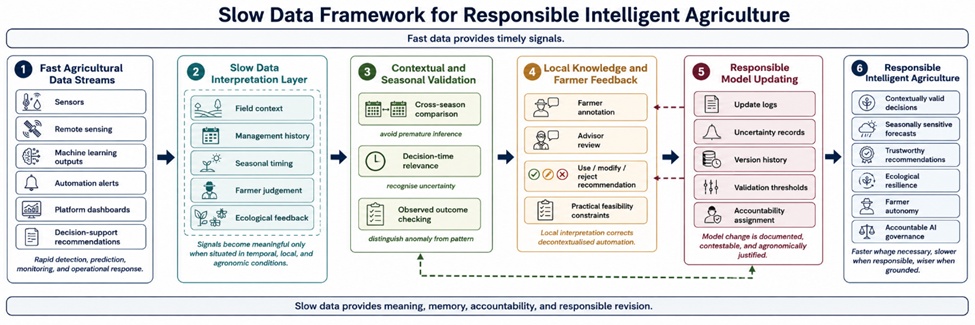
Figure 1. Slow Data Framework for Responsible Intelligent Agriculture
For AI developers, slow data changes the design question. Instead of asking only how to increase prediction speed, data volume, or automation, developers should ask what contextual documentation, seasonal validation, farmer feedback, uncertainty communication, and model-update governance are needed for responsible use. Digital innovation ecosystems in agri-food show that isolated tools are insufficient when agricultural digitalisation depends on multi-actor coordination, organisational design, and shared value creation [23]. Slow data therefore operates at the level of datasets, models, interfaces, institutions, and innovation ecosystems.
The slow data perspective can guide practical requirements for responsible intelligent agriculture by making explicit what fast data often hides. It identifies the temporal, local, ecological, and governance conditions under which digital tools become trustworthy decision supports rather than decontextualised recommendation engines. Digital agricultural knowledge systems and innovation ecosystems both suggest that agricultural AI should connect data infrastructures with decision settings, ecological functions, and organisational responsibilities [21]. Table 1 summarises the slow data requirements for responsible intelligent agriculture.
Table 1. Slow Data Requirements for Responsible Intelligent Agriculture: Context, Seasonality, Local Knowledge, Farmer Feedback, Responsible Model Updating, Governance Conditions, and Risks of Fast Data Dependence
Slow data requirement | What it means for intelligent agriculture | Practical design implication | Risk when fast data dominates |
Context-rich data | Data are interpreted through soil type, farm scale, crop variety, infrastructure, labour, markets, management history, and farmer goals. | Require metadata on field conditions, management history, input availability, farm constraints, and decision objectives. | Models may transfer poorly across farms or recommend actions that are technically plausible but locally impractical. |
Seasonal grounding | Data are understood through crop stages, rainfall timing, pest cycles, soil moisture dynamics, labour calendars, and multi-season outcomes. | Use seasonal validation protocols, temporal benchmarks, and outcome tracking across repeated production cycles. | Short-term signals may be overinterpreted, causing premature alerts, mistimed interventions, or unstable forecasts. |
Local knowledge integration | Farmer and advisor knowledge are treated as evidence for interpreting field signals and model outputs. | Build annotation tools, participatory design processes, local validation routines, and channels for farmer interpretation. | Digital systems may ignore field history, social constraints, informal expertise, and practical trade-offs. |
Farmer feedback loops | Recommendations are revised through user experience, observed outcomes, contestation, and practical usability. | Include feedback mechanisms that record whether recommendations were used, modified, rejected, or contradicted by outcomes. | Decision-support systems may lose trust, repeat poor recommendations, or fail to learn from practice. |
Ecological feedback | Model outputs are evaluated against soil health, biodiversity, water dynamics, resilience, and long-term system effects. | Link AI evaluation to ecological indicators, sustainability goals, and unintended consequences over time. | Optimisation may improve short-term productivity while weakening ecological resilience or system health. |
Responsible model updating | Models are revised through documented, validated, and accountable processes rather than automatic drift. | Maintain update logs, uncertainty records, version histories, validation thresholds, and responsibility assignments. | Models may overfit recent anomalies, embed bias, reduce interpretability, or change behaviour without user awareness. |
Governance conditions | Data ownership, benefit-sharing, accountability, transparency, and contestability shape whether AI is trusted and legitimate. | Establish governance standards for data access, update rights, explanation, appeal, and shared value creation. | Farmers may become dependent on opaque systems that extract data while limiting autonomy and accountability. |
For agricultural technology firms, farm advisors, extension organisations, farmer cooperatives, policymakers, data platforms, and AI developers, the practical implication is clear: speed should not be the only benchmark of intelligent agriculture. Digital innovations should be evaluated by their contribution to sustainability and resilience as well as efficiency, productivity, and operational convenience [24]. This requires context-aware data documentation, seasonal validation protocols, uncertainty communication, and long-term monitoring. It also requires design cultures that reward careful interpretation rather than only faster automation.
Precision farming can support both production and environmental goals when management is tailored spatially and temporally while consequences are tracked beyond immediate output. The production-environment nexus of precision farming shows why agricultural intelligence should connect yield, input use, environmental effects, and field-specific management [25]. Slow data governance can operationalise this connection through update logs, ecological indicators, farmer feedback loops, and documentation of boundary conditions. Such practices would help ensure that model recommendations remain agronomically useful and environmentally responsible over time.
Future research should study slow data practices empirically across crops, regions, farm scales, advisory systems, and platform arrangements. Research is needed on longitudinal model validation, farmer-centred model updating, cross-seasonal decision-support evaluation, local knowledge integration, and governance mechanisms for contesting or revising AI recommendations. Agriculture 4.0 transition pathways already raise questions about diversity and responsibility in technological change, making it important to compare how different digital futures include or exclude slow data practices [26]. The next agenda is not only to make agricultural AI more powerful, but to make its learning processes more situated, accountable, and wise.
This perspective has argued that intelligent agriculture needs slow data because agricultural intelligence depends on context, seasonality, local knowledge, and responsible model updating. Fast data can support timely action, but it cannot by itself preserve agronomic meaning, ecological learning, farmer interpretation, or long-term model validity. Slow data complements rapid sensing and predictive analytics by requiring patient interpretation, seasonal memory, local validation, uncertainty awareness, and accountable revision. The future of agricultural AI should be faster when necessary, slower when responsible, and wiser because it remains grounded in the temporal and local realities of farming.
None
None
None
None
Open Access The author(s) retain copyright. This article is licensed under the Creative Commons Attribution-NonCommercial-ShareAlike 4.0 International License. It may be shared and adapted for non-commercial purposes with appropriate attribution, an indication of changes, and distribution of adaptations under the same license. Third-party material may be subject to separate terms identified in its credit line. View the license at https://creativecommons.org/licenses/by-nc-sa/4.0/.
 Agro Intelligence Research Press