Circular food systems require a shift from linear models of production, consumption, disposal, and remediation toward systems that continuously recover value from biological materials. This conceptual article argues that such a transition cannot rely on policy, behavioural change, or technological substitution alone. It also requires an intelligence layer capable of sensing waste generation, interpreting material quality, identifying recovery options, and coordinating decisions across fragmented food-system actors. Artificial intelligence offers this intelligence layer by enabling predictive, diagnostic, and decision-support capacities across the food chain. Rather than treating AI as a narrow automation tool, this article positions AI as cognitive infrastructure for circular food economies. Its role is to connect data on food loss, by-product composition, logistics, environmental impacts, recovery technologies, and stakeholder constraints. The article develops a conceptual framework for AI-enabled circular food systems. The framework integrates five functions: waste detection, valorisation pathway selection, resource recovery, sustainability-oriented decision support, and cross-actor coordination. These functions are presented as mutually reinforcing layers that allow food materials to be tracked, evaluated, redirected, and valorised before they become unmanaged waste. The article contributes to sustainability and circular economy scholarship by linking food-waste valorisation with material flow intelligence and multi-criteria decision support. It highlights how AI can support real-time evaluation of waste streams, match heterogeneous residues with suitable recovery pathways, and improve the coordination of producers, processors, retailers, consumers, waste managers, and policymakers. It also clarifies the risks of fragmented digitalisation when data systems are not aligned with circular outcomes. The proposed framework is intended for researchers, practitioners, and policymakers seeking to design circular food systems that are adaptive, evidence-based, and sustainability-oriented. It does not present new empirical data. Instead, it provides a conceptual basis for future empirical testing, digital platform development, policy design, and interdisciplinary research on AI-enabled food circularity.
Food systems generate losses and wastes across production, processing, distribution, retail, food service, and household consumption, creating environmental burdens while also revealing underused material value. Artificial intelligence has increasingly been discussed as a means of tackling food waste through improved prediction, classification, optimisation, and resource-efficiency strategies [1]. In a circular food economy, the key challenge is therefore not only to reduce waste volumes but also to create systems that can detect avoidable losses early and redirect unavoidable residues toward higher-value uses. This article starts from the premise that AI can help transform food-waste management from a reactive disposal function into an anticipatory and adaptive circular capability.
Circular food systems extend the circular economy concept into agro-food contexts by emphasising waste reduction, by-product valorisation, resource recovery, sustainable business models, and stakeholder participation. Existing circular economy models in agro-food systems show that circularity cannot be reduced to recycling because it also includes prevention, reuse, recovery, regenerative production, market design, and consumer acceptance [2]. This broader understanding matters because food materials are biologically diverse, time-sensitive, quality-dependent, and embedded in complex social and logistical systems. Circular food systems therefore require integrated models that connect material flows with governance, economics, technology, and behaviour.
Food loss and waste mitigation is especially difficult because interventions often occur in isolated segments of the supply chain rather than through coordinated system-wide strategies. A system-wide conceptual view of food loss and waste mitigation shows the need to align actors, processes, information flows, and incentives across the supply chain [3]. This makes circular food systems a coordination problem as much as a technological problem. The central research gap addressed in this article is how AI can provide a connective intelligence layer that enables detection, evaluation, redirection, and feedback across the food chain.
Although the agri-food circular economy literature has expanded, it remains fragmented across studies of waste valorisation, business models, supply-chain management, environmental assessment, and digital technologies. Systematic work on circular economy in the agri-food sector confirms the need for more integrated approaches that can organise diverse circular strategies into actionable frameworks [4]. This article responds to that need by proposing an AI-enabled circular food systems framework focused on waste valorisation, resource recovery, material flow intelligence, sustainability-oriented decision support, and cross-actor coordination. It contributes a conceptual synthesis rather than new empirical measurement, positioning AI as the cognitive infrastructure through which circular food economies can become more adaptive and operational.
Circular food systems depend on the ability to know where materials are, what condition they are in, how they are moving, and which recovery options are technically and environmentally appropriate. Digital traceability can strengthen circular food systems by linking information about production practices, material flows, and environmental outcomes across agricultural and food-chain contexts [5]. This traceability function is a foundation for AI because predictive and optimisation models require reliable data about product identity, location, quality, timing, and transformation. Without traceable data infrastructures, circular ambitions remain difficult to operationalise beyond isolated projects.
AI also creates opportunities for circularity by supporting decision-making under uncertainty in food supply chains. Big-data-enabled hybrid decision frameworks have been applied to circularity in dairy supply chains, showing how data-driven methods can help evaluate circular options in sector-specific contexts [6]. Such approaches are important because circular decisions often involve competing criteria, including waste prevention, economic feasibility, food safety, logistics, emissions, and stakeholder readiness. AI can help integrate these criteria into decision-support processes that are more dynamic than static circular economy checklists.
The opportunity is not limited to AI alone but extends to the wider relationship between digitalisation and circular economy implementation. Digitalisation technologies can enable circular economy capabilities by improving monitoring, transparency, prediction, platform coordination, and closed-loop control across value chains [7]. In food systems, these capabilities are especially valuable because biological materials have short shelf lives, variable quality, and multiple possible recovery routes. The challenge is to ensure that digitalisation serves circular outcomes rather than merely increasing operational efficiency within linear systems.
The combination of circular economy principles and Industry 4.0 technologies provides a broader sustainability logic for AI-enabled circular food systems. Work connecting circular economy and Industry 4.0 shows that digital technologies can contribute to sustainable production and consumption by improving resource efficiency, information integration, and system responsiveness [8]. For food systems, this implies that AI should not be framed only as a productivity tool but as part of a sustainability transition architecture. AI becomes valuable when it helps actors prevent avoidable waste, recover unavoidable residues, and evaluate trade-offs in ways that support circular and sustainability-oriented outcomes.
Food waste becomes a circular resource only when it is identified, characterised, and directed toward an appropriate valorisation pathway. Food-waste biorefineries have been described as a sustainable strategy for circular bioeconomy because they can convert waste streams into fuels, chemicals, nutrients, and other value-added outputs [9]. This shifts the meaning of waste from an end-of-pipe burden to a feedstock for cascading recovery. AI can support this shift by detecting waste generation patterns, forecasting residue availability, and matching waste streams with feasible biorefinery routes.
Valorisation pathways differ according to the composition, contamination level, moisture content, perishability, and logistical concentration of food-waste streams. Reviews of food-waste biorefinery pathways show that heterogeneous organic residues can support circular bioeconomy outputs when conversion technologies are aligned with material characteristics [10]. In an AI-enabled system, this alignment can be improved through classification models, sensor data, process optimisation, and decision rules that recommend suitable uses for specific residues. The key conceptual point is that valorisation should be treated as a pathway-selection problem rather than a generic recovery label.
Agri-food waste valorisation also faces technical and organisational challenges that prevent simple one-size-fits-all solutions. Current reviews of sustainable agri-food waste valorisation emphasise that different residues require different handling, extraction, processing, stabilisation, and market strategies [11]. AI can contribute by supporting knowledge-based matching between waste categories and target products, such as bioenergy, animal feed ingredients, bioactive compounds, compost, bioplastics, or platform chemicals. However, the model must account for food safety, regulatory constraints, seasonality, local infrastructure, and environmental trade-offs rather than recommending pathways solely on economic yield.
Figure 1 presents the operational pathway through which AI transforms heterogeneous food-waste streams into circular valorisation decisions by linking detection, material characterisation, pathway recommendation, and sustainability screening.
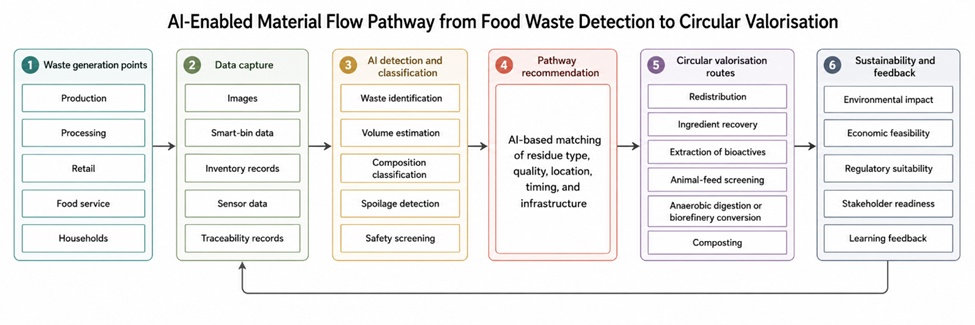
Figure 1. AI-Enabled Material Flow Pathway from Food Waste Detection to Circular Valorisation
Specific residue streams illustrate how valorisation can be made more precise through AI-supported recognition and routing. Fruit wastes, for example, can be valorised into bioactive compounds for food-industry applications, while image-based recognition systems can estimate food waste using convolutional neural networks [12, 13]. Together, these examples show that AI-enabled circular food systems must combine material detection with pathway intelligence: the system must know both what the waste is and what it can become. Table 1 classifies AI-enabled waste detection technologies and valorisation pathways in food systems.
Table 1. AI-Enabled Waste Detection and Valorisation Pathways: Technologies, Food Waste Categories, and Target Products
AI-enabled function | Main data inputs | Food waste category | Suitable AI methods | Valorisation pathway | Target products or outcomes | Circular food-system contribution |
Waste identification | Camera images, smart-bin records, food-service plate waste images | Prepared food leftovers and plate waste | Computer vision, convolutional neural networks, image classification | Redistribution, animal feed screening, composting, anaerobic digestion | Edible surplus recovery, quantified unavoidable waste, organic amendments, biogas | Detects waste early and separates avoidable from unavoidable fractions |
Waste forecasting | Sales records, inventory data, demand data, weather, event schedules | Retail surplus, bakery waste, fresh produce overstock | Predictive analytics, regression models, demand forecasting, time-series learning | Dynamic pricing, donation routing, processing into secondary products | Reduced surplus, increased redistribution, stabilised supply for processors | Prevents waste before disposal and improves timing of recovery actions |
Composition classification | Spectral data, moisture data, pH, temperature, contamination indicators | Fruit and vegetable residues, peels, pomace, pulps | Machine learning classification, clustering, sensor fusion | Extraction, fermentation, drying, biorefinery conversion | Bioactive compounds, fibres, pigments, organic acids, enzymes | Matches heterogeneous residues to higher-value recovery options |
Process optimisation | Reactor data, temperature, retention time, microbial indicators, yield data | Mixed organic food waste and processing residues | Optimisation algorithms, neural networks, reinforcement learning | Anaerobic digestion, fermentation, bioconversion | Biomethane, biohydrogen, volatile fatty acids, platform chemicals | Improves recovery efficiency and reduces process instability |
Quality and safety screening | Contamination data, spoilage markers, traceability records, laboratory data | By-products intended for food, feed, or ingredient recovery | Risk classification, anomaly detection, decision trees | Safe reuse, ingredient recovery, feed conversion, rejected-stream diversion | Food ingredients, feed ingredients, safe non-food recovery routes | Protects food safety while retaining circular value |
Pathway recommendation | Waste type, location, volume, shelf life, processing capacity, market demand | Multi-source agri-food residues | Multi-criteria decision models, recommender systems, knowledge graphs | Cascaded valorisation across reuse, extraction, energy recovery, composting | Prioritised recovery route, reduced disposal, higher circular value | Links detection, logistics, sustainability criteria, and stakeholder decisions |
Resource recovery in circular food systems depends on the ability to understand material flows before they disappear into mixed waste streams. Food-loss modelling within life cycle assessment shows that losses must be represented systematically if environmental consequences and recovery potentials are to be evaluated accurately [14]. AI can extend this logic by creating material flow intelligence that tracks where losses occur, estimates their quantity and quality, and links them with feasible recovery destinations. In this sense, resource recovery is not only a downstream treatment activity but also an information-dependent circular design problem.
The evaluation of co-products and food-waste valorisation systems is shaped by methodological choices, especially allocation rules in life cycle assessment. Reviews of allocation methods for agri-food co-products and food-waste valorisation show that different modelling choices can change how environmental burdens and benefits are distributed among products and recovery pathways [15]. This is important for AI-enabled decision support because algorithms trained only on operational yield may overlook how sustainability performance is calculated. A circular AI system should therefore connect material tracking with transparent assessment assumptions so that recommended recovery pathways remain environmentally defensible.
Food waste can also be redirected into energy and fuel systems when biological conversion pathways are technically and economically suitable. Economic and carbon analysis of biomethane production from food waste demonstrates that recovery routes can be assessed through both financial and greenhouse-gas performance indicators [16]. AI can support such recovery systems by forecasting feedstock availability, identifying contamination risks, optimising logistics, and stabilising conversion processes. The goal is not simply to maximise energy output but to determine when biomethane or similar pathways represent the most circular use of a given waste stream.
Food-waste biorefineries add another layer of complexity because they require coordinated evaluation of feedstock supply, conversion yield, capital requirements, market demand, and profitability. Techno-economic analysis of food-waste biorefineries shows that profitability assessment is necessary before recovery pathways can be scaled beyond conceptual promise [17]. AI-enabled material flow intelligence can therefore help connect technical feasibility with economic and sustainability thresholds. Table 2 summarises AI approaches for tracking material flows and enabling resource recovery.
Table 2. AI for Material Flow Intelligence and Resource Recovery: Data Sources, Methods, and Recovered Resource Types
Circular intelligence function | Data sources | AI or analytical method | Resource recovery target | Recovered resource type | Decision contribution |
Loss-flow mapping | LCA inventories, production records, processing yields, logistics data | Material flow modelling, anomaly detection, predictive analytics | Identification of loss points across the food chain | Recoverable food materials, organic residues, co-products | Reveals where recoverable resources are generated and lost |
Co-product assessment | Processing data, mass balance data, quality indicators, allocation assumptions | Decision trees, scenario modelling, multi-output optimisation | Allocation-sensitive recovery planning | Co-products, secondary ingredients, feedstocks | Links co-product recovery with transparent environmental accounting |
Feedstock forecasting | Retail surplus data, seasonal production data, waste-collection records | Time-series forecasting, machine learning prediction | Stable supply for recovery facilities | Organic feedstocks for biogas, compost, biorefineries | Reduces uncertainty in facility planning and logistics |
Conversion optimisation | Reactor data, temperature, retention time, pH, microbial activity, yield records | Neural networks, reinforcement learning, process optimisation | Biological and biochemical conversion | Biomethane, biohydrogen, organic acids, compost, digestate | Improves process stability, yield, and circular output quality |
Recovery-route selection | Waste type, volume, location, transport distance, market value, carbon factors | Multi-criteria optimisation, recommender systems, knowledge graphs | Prioritisation among reuse, extraction, digestion, composting, disposal avoidance | Highest-value feasible recovery option | Selects pathways according to environmental, economic, and operational criteria |
Circular performance monitoring | Emissions data, cost data, recovered-output data, stakeholder feedback | Dashboard analytics, sustainability scoring, adaptive learning | Continuous improvement of recovery systems | Verified circularity outcomes, reduced disposal, improved resource productivity | Turns recovery performance into feedback for future circular decisions |
Circular food systems require decision-support tools that can compare waste-management and recovery options across multiple sustainability dimensions. Quantitative sustainability assessment of household food-waste management shows that decisions must account for environmental performance, resource use, infrastructure context, and management alternatives rather than relying on a single indicator [18]. AI can strengthen this process by integrating diverse data streams and updating recommendations as material flows, costs, or impacts change. A sustainability-oriented AI system should therefore evaluate both the technical possibility of recovery and its broader consequences.
Decision support is also needed because circular economy implementation in food supply chains is constrained by barriers that differ across actors and contexts. Hybrid multi-criteria decision analysis has been used to explore barriers to circular economy implementation in food supply chains, demonstrating the value of structured prioritisation methods [19]. AI can complement such methods by learning from past decisions, ranking intervention options, and identifying which barriers are most likely to block implementation. This makes decision support a bridge between circular economy diagnosis and practical transition planning.
Smart technologies can make agri-food waste valorisation decisions more adaptive by linking data collection with prioritisation models. An integrated Fermatean fuzzy multi-criteria decision-making approach has been applied to assess agri-food waste valorisation challenges and solutions while considering smart technologies [20]. This supports the argument that AI-enabled decision support should handle uncertainty, incomplete information, and competing criteria in pathway selection. For circular food systems, such tools can help determine whether a residue should be prevented, redistributed, extracted, converted, composted, or used for energy recovery.
Stakeholders also need decision tools that are practical enough to guide choices in specific sectors such as hospitality, food service, retail, processing, or municipal waste management. A food-waste management selection tool developed for the hospitality and food-service sector illustrates how context-specific decision support can help users compare management approaches [21]. AI can extend these tools by incorporating real-time waste data, local infrastructure availability, and sustainability targets. The result would be a decision-support layer that translates circular economy principles into operational recommendations.
Circular food systems cannot be built by single organisations acting alone because waste prevention and valorisation depend on coordination across producers, processors, distributors, retailers, consumers, waste managers, and policymakers. A multi-actor approach to food-waste prevention shows that effective solutions must be identified across the food supply chain rather than confined to one stage [22]. AI can support this coordination by making waste patterns, recovery opportunities, and intervention effects more visible to multiple actors. The intelligence layer therefore needs to be designed as a shared coordination system rather than a private optimisation tool.
Circular food supply chains also face barriers related to information asymmetry, infrastructure gaps, behavioural resistance, economic uncertainty, and fragmented responsibilities. Research analysing barriers in circular food supply chains and proposing Industry 4.0 solutions shows that digital technologies can help address coordination problems through improved data sharing, monitoring, and system integration [23]. AI can contribute by diagnosing where coordination failures occur and recommending interventions that align incentives among actors. This function is essential because circularity often fails when one actor’s waste becomes another actor’s inaccessible or unusable resource.
Blockchain and related distributed ledger technologies can strengthen the trust and traceability conditions required for cross-actor circularity. Research on blockchain in the food chain shows how it can facilitate transition toward circular economy by improving traceability, transparency, and information reliability [24]. AI and blockchain can play complementary roles when AI interprets material-flow data while distributed ledgers preserve trusted records of origin, movement, quality, and recovery. This combination can support accountability in circular food systems where recovered materials must meet safety, quality, and regulatory expectations.
Feedback is the mechanism through which circular food systems learn over time. Multi-actor food-waste prevention, Industry 4.0 solutions, and blockchain-enabled traceability together indicate that circular coordination requires both shared information and repeated learning across the chain [22-24]. AI can transform feedback from a retrospective reporting function into a real-time adaptive process that identifies what worked, where losses persisted, and which actors need support. A circular AI framework should therefore include feedback loops that connect detection, valorisation, recovery, decision support, and stakeholder coordination.
The proposed Circular AI Framework conceptualises AI as an intelligence layer embedded across circular food systems. Performance assessment of circular-driven sustainable agri-food supply chains shows that circularity must be evaluated through measurable supply-chain outcomes linked to sustainable consumption and production [25]. Building on this logic, the framework begins with data capture from farms, processors, retailers, consumers, logistics providers, and waste-management systems. These data allow AI models to detect waste, classify residues, forecast material flows, and assess the sustainability performance of alternative recovery pathways.
The framework treats food waste not as a final category but as a decision point within the supply chain. Literature on circular economy and food waste in supply chains supports the need to connect waste prevention and recovery with logistics, operations, and inter-organisational management [26]. In the proposed framework, each material flow is evaluated according to avoidability, edibility, safety, composition, location, quantity, timing, and available recovery infrastructure. AI then supports routing decisions that prioritise prevention and redistribution before extraction, conversion, composting, or energy recovery.
Implementation requires an adoption layer because technically promising circular systems may fail when barriers are not addressed. Research on circular economy adoption challenges in the food supply chain shows that sustainable development depends on overcoming organisational, technological, economic, regulatory, and behavioural constraints [27]. The framework therefore includes a barrier-diagnosis function that identifies readiness gaps and suggests interventions for actors at different points in the chain. This prevents AI from being framed as a universal solution and instead positions it as a context-sensitive enabler of circular transition.
The complete framework contains five interacting components: waste detection, valorisation intelligence, resource recovery, sustainability-oriented decision support, and cross-actor feedback. These components correspond to the need for performance assessment, supply-chain integration, and adoption-aware implementation in circular agri-food systems [25-27]. The framework’s core proposition is that AI becomes circular only when its outputs redirect material flows toward higher-value, lower-impact, and more coordinated outcomes. Table 3 presents the proposed Circular AI Framework integrating waste valorisation, resource recovery, decision support, and stakeholder coordination.
Table 3. Proposed AI-Enabled Circular Food Systems Framework: Components, Data Flows, and Decision Logic
Framework component | Main purpose | Required data flows | AI-enabled decision logic | Circular outcome | Key stakeholders |
Waste detection layer | Identify where, when, and why food waste occurs | Images, inventory data, sales data, production records, smart-bin data | Classify waste types, estimate quantities, forecast surplus, detect anomalies | Earlier intervention and reduced avoidable waste | Producers, retailers, food-service operators, households, municipalities |
Valorisation intelligence layer | Match residues with suitable high-value pathways | Composition data, safety data, spoilage indicators, processing requirements, market demand | Recommend pathways according to material quality, technical feasibility, and value potential | Higher-value recovery of unavoidable residues | Processors, ingredient manufacturers, biorefineries, regulators |
Resource recovery layer | Convert residual materials into usable resources | Feedstock availability, logistics data, facility capacity, conversion yields, output quality | Optimise recovery routes, stabilise conversion processes, prioritise cascading uses | Biomethane, compost, bioactive compounds, feed ingredients, secondary raw materials | Waste managers, energy producers, farmers, recovery facilities |
Sustainability decision-support layer | Evaluate circular options across sustainability criteria | LCA data, carbon data, cost data, social indicators, regulatory constraints | Compare alternatives using multi-criteria and scenario-based assessment | Decisions aligned with environmental, economic, and social goals | Policymakers, firms, investors, public agencies |
Coordination and feedback layer | Align actors and improve system learning | Traceability records, platform data, performance dashboards, stakeholder feedback | Identify coordination failures, update routing rules, support shared accountability | Adaptive circular food-system governance | Supply-chain partners, platform operators, governments, civil society |
Adoption and governance layer | Address implementation barriers and ensure responsible AI use | Readiness assessments, skills data, infrastructure maps, policy requirements, trust indicators | Diagnose adoption gaps, recommend capacity-building and governance safeguards | Scalable, equitable, and accountable AI-enabled circularity | Managers, policymakers, technology providers, researchers |
Figure 2 illustrates the proposed Circular AI Framework by showing how waste detection, valorisation intelligence, resource recovery, sustainability-oriented decision support, and coordination feedback operate as linked layers within an AI-enabled circular food system.
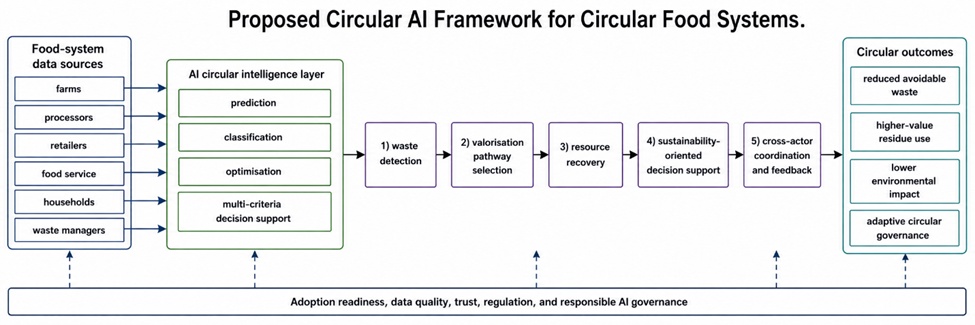
Figure 2. Proposed Circular AI Framework for Waste Valorisation, Resource Recovery, and Sustainability-Oriented Decision Support
For practitioners, the framework suggests that circular food-system innovation should begin with mapping waste streams and identifying the decision points where AI can improve prevention, recovery, or coordination. Reviews of drivers and barriers toward circular economy in agri-food supply chains show that implementation depends on enabling conditions as well as technical solutions [28]. Firms should therefore avoid adopting AI tools in isolation from circular strategy, infrastructure readiness, and stakeholder incentives. Practical implementation requires aligning data systems, recovery partnerships, business models, and governance arrangements.
For technology developers and policymakers, the framework highlights the need to address barriers to digital technology adoption in the food sector. Research on digital technologies for sustainable production and consumption from a circular economy perspective shows that implementation barriers can prevent digital tools from delivering sustainability gains [29]. This means AI-enabled circular food systems require not only algorithms but also data standards, interoperability, trust mechanisms, skills, financing, and regulatory clarity. Policy can support the transition by encouraging open data infrastructures, circular procurement, recovery markets, and responsible AI governance.
For researchers, the proposed framework creates an agenda for empirical testing, model development, and critical evaluation. Future studies should examine how drivers and barriers interact with digital-technology implementation across different agri-food contexts [28, 29]. Research is also needed on how AI recommendations affect actual waste prevention, resource recovery, environmental performance, stakeholder behaviour, and equity outcomes. The most important implication is that AI should be assessed not by technical accuracy alone but by its ability to produce measurable circular and sustainability benefits.
This article has argued that circular food systems require an intelligence layer capable of detecting waste, interpreting material quality, evaluating recovery pathways, and coordinating decisions across the food chain. AI can provide this layer when it is embedded within circular economy objectives rather than applied only as an efficiency or automation tool. The proposed framework positions AI as cognitive infrastructure for a circular food economy.
The framework integrates five core functions: waste detection, valorisation pathway selection, resource recovery, sustainability-oriented decision support, and cross-actor coordination. These functions transform circularity from a general aspiration into a sequence of data-informed decisions about how food materials should be prevented from becoming waste or redirected after waste becomes unavoidable. The framework also stresses that AI-enabled circularity depends on governance, stakeholder trust, data quality, and adoption readiness.
The article contributes a conceptual basis for future research and implementation rather than new empirical data. Its value lies in connecting food-waste valorisation, material flow intelligence, decision support, and stakeholder coordination within one systems-oriented model. Future work should test the framework in real food-system contexts and evaluate whether AI-enabled circular interventions deliver measurable environmental, economic, and social benefits.
None
None
None
None
Open Access The author(s) retain copyright. This article is licensed under the Creative Commons Attribution-NonCommercial-ShareAlike 4.0 International License. It may be shared and adapted for non-commercial purposes with appropriate attribution, an indication of changes, and distribution of adaptations under the same license. Third-party material may be subject to separate terms identified in its credit line. View the license at https://creativecommons.org/licenses/by-nc-sa/4.0/.
 Agro Intelligence Research Press