The push toward precision agriculture is increasingly driven by environmental considerations alongside economic pressures, fueling progress in variable-rate fertilization (VRF) technology. Although centrifugal fertilizer spreaders offer benefits such as mechanical simplicity, low cost, and high throughput, non-homogeneous spread patterns are becoming a primary obstacle to their broader use. An urgent investigation is therefore required into how particles behave and what variability patterns emerge when centrifugal VRF spreaders operate under multi-pass overlapped application, to boost both evenness of coverage and field accuracy. This paper examined and assessed the operational characteristics of a custom-built centrifugal VRF spreader that uses real-time crop status data for rice and wheat, applying the collection tray protocols detailed in ISO 5690 and ASAE S341.2 (1999). Distribution uniformity was evaluated by calculating the coefficient of variation (CV) from weighed fertilizer captured in standardized trays, thereby gauging the evenness of the applied spread profile. The obtained data indicated effective swath widths of 21.05, 22.58, and 23.67 m corresponding to target application dosages of 225, 300, and 375 kg/ha, respectively. In practice, multi-pass, overlapped spreading tended to deliver application amounts exceeding the intended rates, with within-swath CVs of 11.51, 9.25, and 11.28% for each respective dosage level. Field-based assessments of multi-pass, overlapped operations recorded a mean discrepancy of 4.54% between delivered and target rates, along with a mean lateral distribution CV of 11.94% across the implement’s working span, results that align with the performance criteria for transverse particle placement using centrifugal broadcasters. The insights generated by this work provide a conceptual reference point for the design refinement and technological evolution of centrifugal VRF equipment, carrying considerable applied and societal value in hastening their integration into everyday precision farming practice.
As crop production systems progressively adopt objectives of greater efficiency, site-specific management, and long-term ecological viability, precision fertilizer delivery—as a cornerstone element of digital farming—has come to be recognized as a pivotal method for raising productivity, curbing off-site environmental harm, and making better use of inputs, drawing substantial research interest [1, 2]. Site-specific nutrient management dynamically fine-tunes both the quantity and timing of fertilizer inputs in response to evolving plant demand and below-ground nutrient status; this adaptive approach increases nutrient recovery while greatly reducing superfluous consumption, advancing the cause of durable agricultural systems [3]. By contrast, conventional approaches, commonly characterized by blanket over-application or patchy deposition, routinely contribute to ecosystem decline, the exhaustion of soil nutrient capital, and depressed yield outcomes, accentuating the pressing need for more finely resolved application methodologies [4, 5]
Against this backdrop, variable rate fertilization (VRF) has risen to prominence as an essential enabling technology in precision crop management [6]. By drawing on spatially and temporally referenced information describing edaphic conditions and plant vigor, VRF platforms can exert fine-grained control over nutrient dose and placement, enabling agile adaptation to heterogeneous requirements across different soil types and cropping scenarios [7, 8] When measured against standard uniform applications, VRF achieves gains not only in nutrient assimilation rates but also in reducing ecological loading and raising the profitability profile of farming enterprises [9, 10]. In step with the global and national trend toward extensive, industrialized cultivation systems, the centrifugal-type VRF unit has established itself as a vital piece of hardware for delivering precision nutrient management and intelligent farming services, thanks to attributes including uncluttered mechanical architecture, expansive working reach, high operational tempo, reduced ground pressure, and favorable economics [11]. Compared to the externally fluted-roller metering style of VRF applicators, centrifugal broadcast designs are inherently better suited to broad-acre farming, providing enhanced throughput and broader coverage envelopes.
Notwithstanding these merits, real-world operational deployment of centrifugal broadcasting apparatus confronts meaningful hurdles, most pressingly around safeguarding the fidelity and spatial consistency with which fertilizer granules are spread. The evenness with which dry particles settle across a field surface directly affects application efficacy and the extent to which applied nutrients are taken up [1, 12-14]. The body of prior scholarship has predominantly concentrated on engineering refinements to machine architecture, algorithmic formulation of control logic, and smart supervisory systems.
Within the domain of hardware configuration enhancement, [15] three-dimensionally simulated both the material attributes and kinematic behavior of organic manures, and engineered an organics-oriented VRF broadcaster incorporating a hydraulically actuated proportional valve to modulate the outflow orifice. [16] constructed a self-propelled VRF applicator designed for flooded rice paddies, with performance trials documenting a rate deviation of 5 %, a metering consistency index of 6.2 %, and a field throughput of up to 6 hm²/h. [17] engineered a walk-behind centrifugal VRF device for narrow-row applications in tea plantations, utilizing a specially contoured, hoof-like exit opening to throttle material discharge, while a DC motor-powered rotary disc provided even distribution. [18] developed a centrifugal adjustable-speed broadcaster with a uniformity-oriented spreading mode by redesigning both the control hardware and the actuation components, enabling control over discharge direction and the amount of expelled mass. [19] applied the Discrete Element Method (DEM) in computational models to trace the flight paths of individual granules through centrifugal distributors, revealing how operational settings regulate the resulting deposition patterns. [20] proposed a split oscillating-pipe applicator actuated by a spatial hammer-and-rocker linkage, used co-simulation via EDEM-RecurDyn to model the interactive spreading action, and applied response surface methodology to identify optimal operating parameters. [21] devised an organic-directed centrifugal side-casting spreader for protected cultivation environments, deriving a quantitative relationship between aperture setting and throughput, thereby markedly elevating operational performance standards.
In pursuit of enhanced spreading homogeneity, a broad community of scholars has focused on fine-tuning the functional settings and regulatory logic of fertilizer applicators, undertaking detailed experimental and modeling studies. [22] scrutinized the discharge aperture assembly belonging to a single-disc VRF spreader, from which they derived an adaptive gate-control algorithm. By modulating the outflow gate based on adjustable parameters covering opening size, contour, and spatial placement, this computational routine enhanced the implement’s responsiveness and delivered greater precision in metering control. [23] as well as [24] turned to the Discrete Element Method (DEM) as a means of tracing granule flight trajectories and constructing dynamic representations of spreader behavior, establishing that particle-level attributes—namely granule caliber, frictional coefficient, and rebound restitution—exert a pronounced influence on deposition outcomes. [25] assembled a cone-shaped disc broadcaster and tailored its configuration through rig-based experimentation to align with the nutrient placement requirements of potato production systems. used DEM-based simulations to capture the spreading characteristics of blended granular products, identifying a strong linkage between implement operating conditions and the resulting variability in the particle distribution index. Adjustments to these operating conditions were demonstrated to yield gains in spread consistency. In a related vein, [26] explored methodologies to improve the deposition uniformity of high-capacity rotary spreaders deployed on unmanned aerial platforms. By constructing static diffusion numerical frameworks rooted in DEM, they systematically examined how various input variables shape diffusion profiles, thereby providing a more robust framework for pursuing greater application uniformity.
Over the most recent period, sustained advances across intelligent technology domains have steered precision application platforms toward progressively self-regulating, cognitively enabled operation. A considerable strand of inquiry has centered on architecting intelligent dose-control infrastructures that draw on live sensor feeds and vegetation status indicators [1, 27-30]. To illustrate, and Ehlert et al. (2009) fabricated a nitrogen-targeted VRF distributor for winter wheat, anchored by a mechanical oscillating-arm canopy density detector. With this arrangement, canopy density readings from the pendulum sensor serve as input to an onboard processor that continuously resets the applied dose. [31] staged side-by-side trials pitting alternative controller architectures for centrifugal VRF units against one another, simultaneously evaluating how differing dose magnitudes and hardware geometries condition swath span and granule dispersion characteristics. [32] developed a chain-and-slat VRF delivery system driven by prescription mapping, using pulse-width modulation to control the rotational velocity of the hydraulic motor executing the variable-rate task. introduced a real-time VRF advisory framework centered on near-ground spectral reflectance sensing, weaving together spectral preprocessing pipelines with a modeled target-dose computation routine. Trial evidence demonstrated that this framework’s control fidelity exceeded the 90 % threshold, enabling site-specific supplemental fertilization. [8] assembled a time-lag monitoring testbed to improve the functional precision of VRF applicators. They established a mathematical linkage connecting fertilizer transit duration to its causal drivers and advanced a positional correction technique for application based on lag displacement. The monitoring precision reached 84.1%, yielding a marked improvement in placement accuracy.
Additionally, [33] developed a granular fertilizer mass-flow sensing apparatus based on microwave principles, employing Kalman filtering for signal conditioning to achieve accurate, real-time flow measurement. [34] formulated an autonomous detection pipeline for the settlement footprint of granular nutrients reliant on deep learning architectures. This pipeline leverages machine vision algorithms to identify particle mass automatically.
Even though a substantial corpus of scholarship has been amassed on the particle-spread footprint of centrifugal broadcasting gear, the preponderance of these works focuses on single-trajectory spreading scenarios. By comparison, rather sparse attention has been paid to the behavioral characteristics and material placement patterns exhibited by centrifugal units during multi-pass, pattern-overlapping field routines. In authentic farming contexts, nutrient distribution is routinely achieved by superimposing swath patterns from consecutive adjacent passes. This process introduces additional layers of operational complexity and numerous contributory variables. Consequently, a compelling imperative exists to explore in depth the behavior of granule deposition and the ramifications of operational adjustments on dosing fidelity under this particular spreading configuration [6].
The present work, drawing on the centrifugal VRF spreader engineered by our investigative team that embeds real-time vegetation status sensing, pivots around empirical characterization of multi-pass overlap spreading functionality. The defined investigative scope encompasses: 1) conducting multi-pass overlap spreading efficacy trials with the centrifugal unit utilizing standard blended granular fertilizers typical of the rice-wheat rotational belts across Jiangsu Province; 2) probing the mechanisms underpinning granule pattern formation together with the spatial distribution signatures of the centrifugal broadcaster under variable operating inputs, ambient scenarios, and travel kinematics; 3) refining the working configuration of the centrifugal VRF spreader by way of systematic testing and analytical interpretation, to lift both granule spread evenness and placement fidelity. The overarching intent of this inquiry is to rigorously decode the particle-distribution logic of centrifugal broadcasting hardware in multi-pass, overlap application environments and to provide a conceptual underpinning for advancing equipment geometry and intelligent regulatory design. The knowledge yielded not only buttresses the scaling and adoption of precision nutrient management solutions across modern agriculture but also provides instructive benchmarks for the evolution of smart farming systems and cognitively enabled fertilization implements.
The fertilizer distribution test apparatus utilized within this investigation is a dual-disc centrifugal VRF spreader actuated by real-time crop condition sensing (canopy reflectance signatures), conceived and constructed independently by the authors’ research collective; its principal mechanical subassemblies are documented in prior published works [35, 36]. The layout of the VRF distribution mechanism is presented in Figure 1, which shows that it integrates a structural chassis, product hopper, metering-out unit, rate-setting module, rotary spreading disc, deflector shield, driveline assembly, and electronic control enclosure, along with additional auxiliary parts. The VRF assembly couples to the tractor’s rearward section through a three-point linkage arrangement and is towed along to reach the intended location. Mounted at the forward end of the tractor is an optical crop reflectance detector (GreenSeeker) that captures near-instantaneous vegetation status indicators from the field and furnishes the evidentiary foundation for VRF rate computation. Beyond this, the tractor can accommodate an autonomous guidance package that steers the machine precisely along a predetermined travel corridor, supporting path management for the VRF applicator across diverse operational modalities.
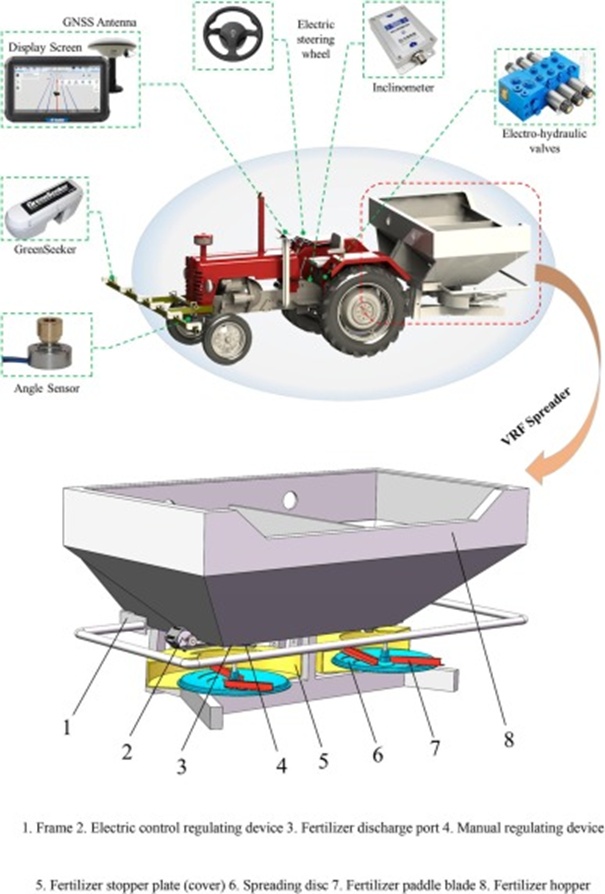
Figure 1. Structural diagram of VRF spreading device.
The chassis was attached to a tractor via a three-point hitch. A pair of self-contained hoppers, each incorporating a screen filter and an internal agitator, was fixedly attached to the chassis, and the product metering mechanism was positioned at the hopper base, outfitted with two separate exit channels for material extraction. The mass-flow modulation assembly controlled VRF material release at the outlet opening via a stepper motor, while the rotating spreader disc was directly beneath the discharge orifice. The throwing vanes mounted around the circular perimeter of the disc ejected the falling granules inside the equalizing shroud under the centrifugal impetus arising from the disc’s own rapid rotary motion (the tractor’s power take-off (PTO) spun a matched set of counter-rotating, high-revolution spreader discs), with single-sweep broadcast width potential exceeding 24 m (design working span). The VRF unit incorporated left-hand and right-hand mutually independent material delivery pathways operating in parallel. External perturbations tied to the work setting were disregarded. The expression describing the per-unit-time mass outflow rate at the feed inlet is given as:
 (1)
(1)
Where q denotes the per-unit-time mass discharge rate issuing from a single outlet, g/s; B represents the breadth of fertilizer distribution, m; Q is the prescribed fertilizer mass per unit ground area, kg/hm²; and v indicates the machine’s forward travel velocity, m/s.
The principal material employed throughout the experimental runs was a blended fertilizer formulation (N-P₂O₅-K₂O, 30-10-6) widely adopted across the rice-wheat rotation belt of Jiangsu Province, situated in the middle and lower Yangtze basin. For modeling purposes, the compound granules were treated as idealized spherical bodies. Their physical characteristics, established through randomized specimen collection, registered the following values: average particle diameter: 4.02 mm; roundness factor: > 0.94; mean water content: 16.42%; bulk density: 1.38 × 10³ kg/m³.
The experimental campaign was conducted in May 2022 at the trial grounds of Jiangsu Jinmansui Agricultural Development Co. Ltd. (Dongtai, Jiangsu, China), occupying a 500 m² test plot. Weather conditions were clear, with ambient temperatures ranging from 15 to 25 °C, air movement below 2.0 m/s (complying with the wind velocity ceiling permitted under the ASAE testing protocol), largely level terrain (gradient < 2%), and relative atmospheric humidity of 62%.
Under authentic large-acreage field fertilization scenarios, it is standard practice for spreaders to traverse the ground in multiple adjoining swaths so that the deposited material overlaps. In accordance with the specifications laid out in [37], two distinct travel path configurations are recognized: progression along neighboring passes oriented in identical and opposing directions, as depicted in Figure 2. Travel in the same orientation, alternatively termed racetrack-style application or turn-back (unidirectional) operation, entails successive adjacent passes executed along a matching heading. Travel in opposing orientations, also designated back-and-forth or reciprocating mode, involves consecutive neighbouring swaths advanced along contrary headings.
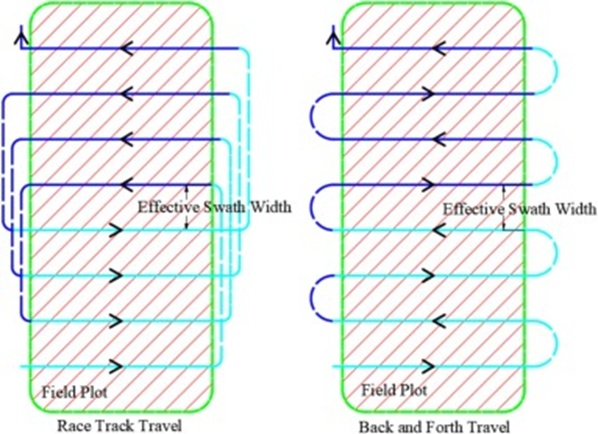
Figure 2. Travelling modes of fertilizer spreader.
The lateral interval separating adjacent passes is governed by the usable breadth of a single-pass spreading action, which can be established through two alternative approaches. The first derives from the granule application profile produced during solitary-pass distribution (illustrated in Figure 3; pink trace). It is demarcated by the two lateral positions at which the deposited fertilizer quantity on either side of the centerline (the path along which the spreader moves) equals one-half of the intended centerline application rate, or by the two locations bracketing the zone of maximal distribution evenness. The second approach rests on the particle distribution coefficient of variation (CV) resulting from overlapping passes of multiple adjacent swaths superimposed (illustrated in Figure 3; blue, pink, and orange traces). Under this rationale, the greatest spreading breadth consistent with the minimum CV or with a CV falling within an acceptable threshold (typically CV < 15%), as derived from the particle application profile, is taken as the effective working width. Once spreading extends beyond this effective width, the variability index of granule placement increases with increasing swath span.
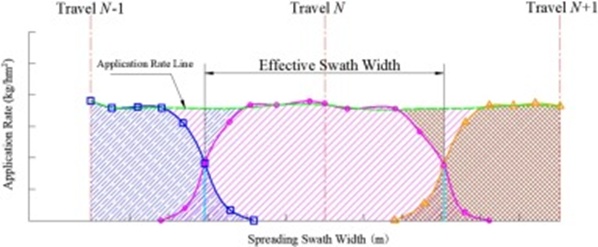
Figure 3. Schematic diagram of the effective swath width and the particle distribution for multi-pass overlap (For interpretation of the references to color in this figure, the reader is referred to the web version of this article).
To safeguard the reliability of outcomes along with methodological consistency when assessing the centrifugal VRF spreader during multi-pass overlapped fertilizer deployment, the evaluation procedures and metrics align with those prescribed for centrifugal broadcast spreaders under the specifications of GB/T 5262 (2008) ‘Measuring methods for agricultural machinery testing conditions—General rules,’ ISO 5690, and ASAE S314.2 (ISO5690-2, 1984; ASAE S341.2, 1999; GB/T 5262, 2008). A schematic representation of the spreader performance trial layout is supplied in Figure 4.
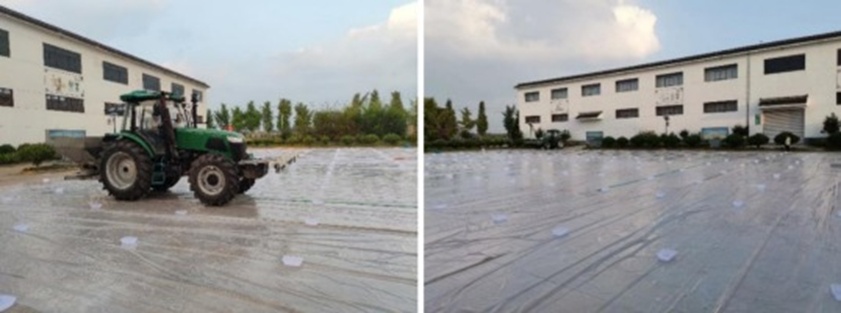
Figure 4. Performance test of fertilizer spreader.
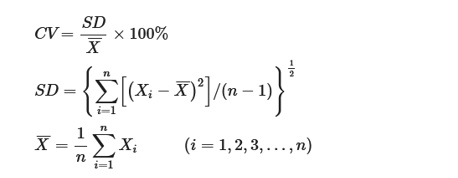
A ground zone measuring 45 × 20 m was blanketed with polyethylene sheeting to curb product loss. At the same time, every collection tray was lined with a soft woven cotton layer to suppress particle rebound and uphold weighing fidelity. In total, 253 catch pans (50.8 × 40.6 × 10.2 cm) were deployed in a 23 × 11 (columns × rows) grid arrangement, with a column spacing of 2 m and a row spacing of 1 m. Over the course of the spreading trial, the appropriate operating settings were dialed in once the tractor (Dongfeng 1204) had bisected the pan array traveling at a ground speed of 1.2 m/s under single-pass distribution conditions. Neighboring swath centerlines were spaced by varying distances (matched to the effective working width), and both reciprocating (opposite-direction) and unidirectional (same-direction) travel modes were used to execute multi-pass, overlapped fertilizer broadcasting. Upon completion of each spreading run, the granule mass retained in each catch pan was weighed, then sealed in bags and labeled for documentation. This mass served as the basis for characterizing the lateral spread pattern of the VRF unit. Before each trial, the fertilizer hopper was filled to 50% of its total volumetric capacity, and the equipment was adjusted to the designated operating condition. The VRF spreader was engaged within a stabilization corridor before entering the instrumented measurement sector (the catch pan zone), followed by a deceleration zone, to ensure the reliability of readings collected within the measurement area. The granule spread CV within the effective distribution swath was computed separately to judge machine performance. The travel path together with the catch pan configuration is presented in Figure 5. Each experimental treatment was replicated three times, and the granule spread coefficient of variation was determined using the following expression:
 (2)
(2)
Where CV stands for the coefficient of variation of the particle spread pattern; SD denotes the standard deviation of the collected granule masses; X̅ is the arithmetic mean granule mass, g; Xᵢ represents the fertilizer particle mass captured in the i-th catch pan, g; and n signifies the count of collection pans.
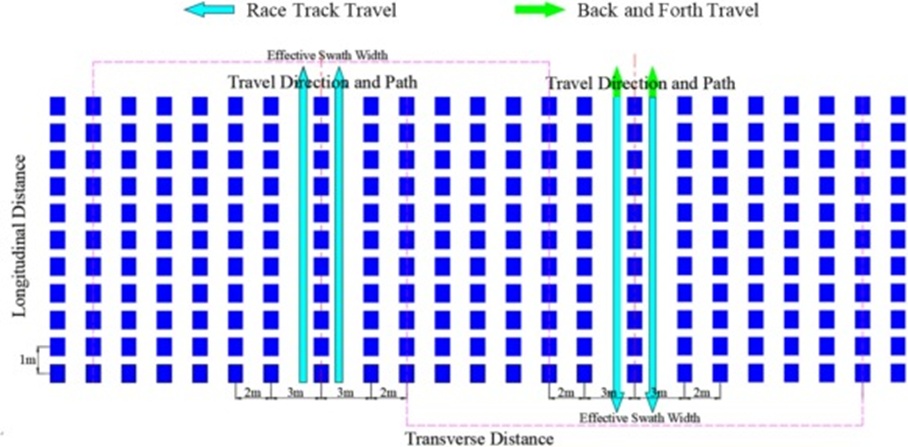
Figure 5. Schematic diagram of the collection pan matrix and fertilizer spreader track.
To assess the degree to which alternative target dosage levels shape the spread deposition signature during overlapped multi-pass runs, the mass discharge throughput was governed—per the relationship expressed in Eq. 1—through adjustment of the relative angular offset between the discs to realize the designated target rates of 150, 225, 300, 375, and 450 kg/hm². Of note, 300 kg/hm² represents the typical blended product dosage applied for supplemental rice nutrition throughout the Jiangsu rice-wheat rotational cropping area. Having established a disc revolution speed of 600 rpm, the machine was driven along the centerline at a constant forward speed (1.2 m/s) to complete a single-pass distribution sweep. Afterward, the functional width identified from the single-pass run was used as the lateral offset between neighboring swaths, and the unit then executed superimposed application passes in accordance with the standard alternating-direction multi-pass protocol.
To elucidate the impact of contrasting travel path modalities on the deposition homogeneity achieved through overlapping distributions, a paired evaluation encompassing both motion patterns was undertaken. The suggested dose level (i.e., 300 kg/ha) was adopted as the set-point spreading rate, while the spacing between one pass centerline and the next was set at the functional working reach of 22.58 m. The multi-run, overlapping spreading evaluations were conducted under both the opposing-direction (reciprocating) and the consistent-direction (circuit) patterns.
To characterize how the granular deposition signature of rotary broadcasting responds to differing inter-pass offset magnitudes, the target dose was maintained at 300 kg/ha, and multi-run overlapped spreading was executed at center-to-center separations of 18 m (narrower than the functional breadth) and 26 m (broader than the functional breadth), with each sequential pass advanced along a contrary heading.
In an effort to validate the on-farm operational capabilities of the centrifugal VRF spreader under authentic conditions, field-scale multi-pass overlapped spreading evaluations were carried out on June 26, 2022, at the paddy experimentation facility belonging to Jinmansui Agricultural Development Co. Ltd., located in Dongtai, Jiangsu Province, China. Ambient weather at the time of testing consisted of unclouded skies, thermal readings between 23 and 35 °C, and air currents below 2.0 m/s, thereby fulfilling the meteorological stipulations of the applicable standard. The experimental parcel encompassed 20 µ, and relative atmospheric moisture remained below 91%. Both the environmental parameters and the procedural steps adhered to those expounded in 2.2 Test conditions and 2.3 Test methods. Mirroring the evaluation framework for rotary broadcast applicators set down in the ISO5690-2 (1984) and [37] norms, the catch pan arrays were stationed across the plot in keeping with the prescriptions for spreader field assessment, as portrayed in Figure 6. The multi-pass overlapped distribution trial was performed at the advised target dose of 300 kg/ha, the machine was maneuvered in the back-and-forth travel style, and the interval between adjoining passes corresponded to the functional working extent of 22.58 m. Five replicate runs were executed, and the granule mass gathered at each sampling station throughout the test sector was subsequently averaged.
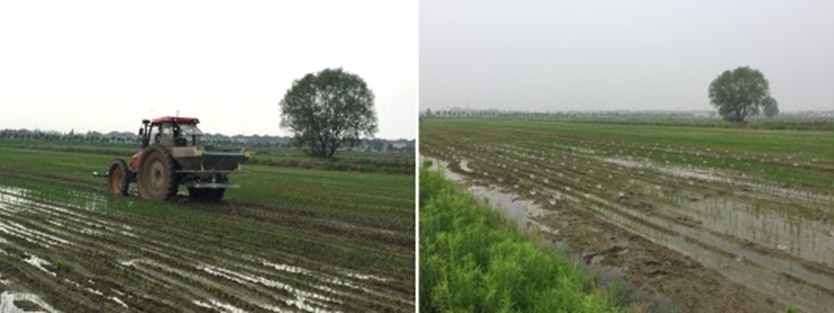
Figure 6. Field operation test of multi-pass overlapping fertilizer.
Following the experimental design, the mean particle mass harvested in the transversely positioned catch tray grid was standardized and back-calculated into the delivered field rate (kg/hm²). The granular spread test outputs for solitary-pass operation are rendered in Figure 7 and tabulated in Table 1.
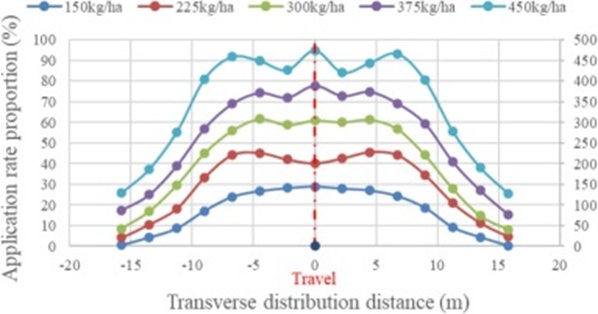
Figure 7. Effect of application rate on particle distribution in single-pass spreading.
Table 1. Test results of fertilizer particle application in single-pass spreading.
Target fertilizer application rate/(kg/ha) | Effective working width/m | Actual fertilizer application rate/(kg/ha) | ||
Mean | SD | CV/(%) | ||
150 | 20.48 | 123.63 | 21.34 | 17.26 |
225 | 21.05 | 206.47 | 22.62 | 10.95 |
300 | 22.58 | 280.71 | 34.09 | 12.14 |
375 | 23.67 | 348.15 | 35.20 | 10.11 |
450 | 26.31 | 409.37 | 69.22 | 16.91 |
Examination of Figure 7 reveals that the granule placement contour produced in a single sweep exhibits an approximately bilaterally symmetric form centered on the machine’s direction of travel (the pass centerline) and morphs in response to the quantity being applied. At a 450 kg/ha target rate, the deposition profile takes on a distinct W-type silhouette; at 225 kg/ha, the configuration roughly resembles an M-type shape; and at 300 kg/ha, the contour settles into a comparatively smooth, bell-shaped Gaussian curve. Treating the spreader’s travel path as the mirror axis and progressing outward toward either flank, the particle placement CV rises monotonically as the lateral offset extends further from center, as can be seen in Figure 8.
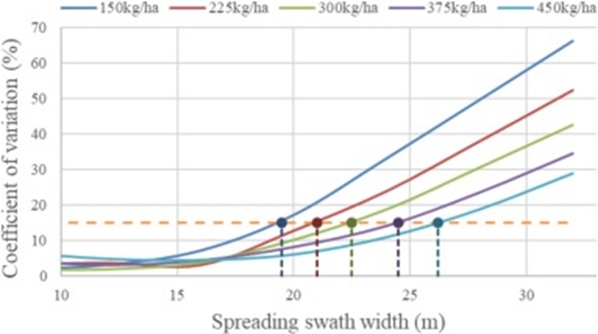
Figure 8. CV of particle distribution (uniformity) within the spreading width with different fertilizer application rates.
Viewing Figures 7 and 8 together makes it clear that once the particle spread CV constraint is enforced (CV < 15%), the corresponding functional working breadth of the spreading unit varies across dosage levels. The usable swath incrementally broadens as the target application magnitude increases. The single-pass granular distribution test data are assembled in Table 1. At a prescribed dose of 150 kg/ha, the usable broadcast span measures 20.48 m; the mean achieved rate within that usable span equals 123.63 kg/ha, resulting in a shortfall of 21.34 kg/ha and a particle spread CV of 17.26%. At a prescribed dose of 450 kg/ha, the usable broadcast span extends to 26.31 m, the mean delivered rate within the usable width reaches 409.37 kg/ha, the standard deviation is 69.22 kg/ha, and the resulting particle spread CV is 16.91%. For both the 150 and 450 kg/ha target levels, the CVs determined within their usable broadcast spans overshoot the required 15% ceiling. On the other hand, for the target doses of 225, 300, and 375 kg/ha, the particle spread CV values registered inside the respective usable broadcast widths come to 10.95, 12.14, and 10.11%, each comfortably beneath the 15% limit, with corresponding effective broadcast spans of 21.05, 22.58, and 23.67 m. Consequently, the 225, 300, and 375 kg/ha settings represent the commonly endorsed target dose levels for securing the most favorable degree of spread uniformity achievable with this VRF applicator.
The dose setting was successively dialed to 225, 300, and 375 kg/ha to characterize multi-pass spreading performance, with the corresponding functional broadcast widths serving as inter-pass travel offsets, and the spreader operated in the widely adopted back-and-forth (alternating) travel routine. The granular application results for multi-pass overlapped distribution are displayed in Figure 9.
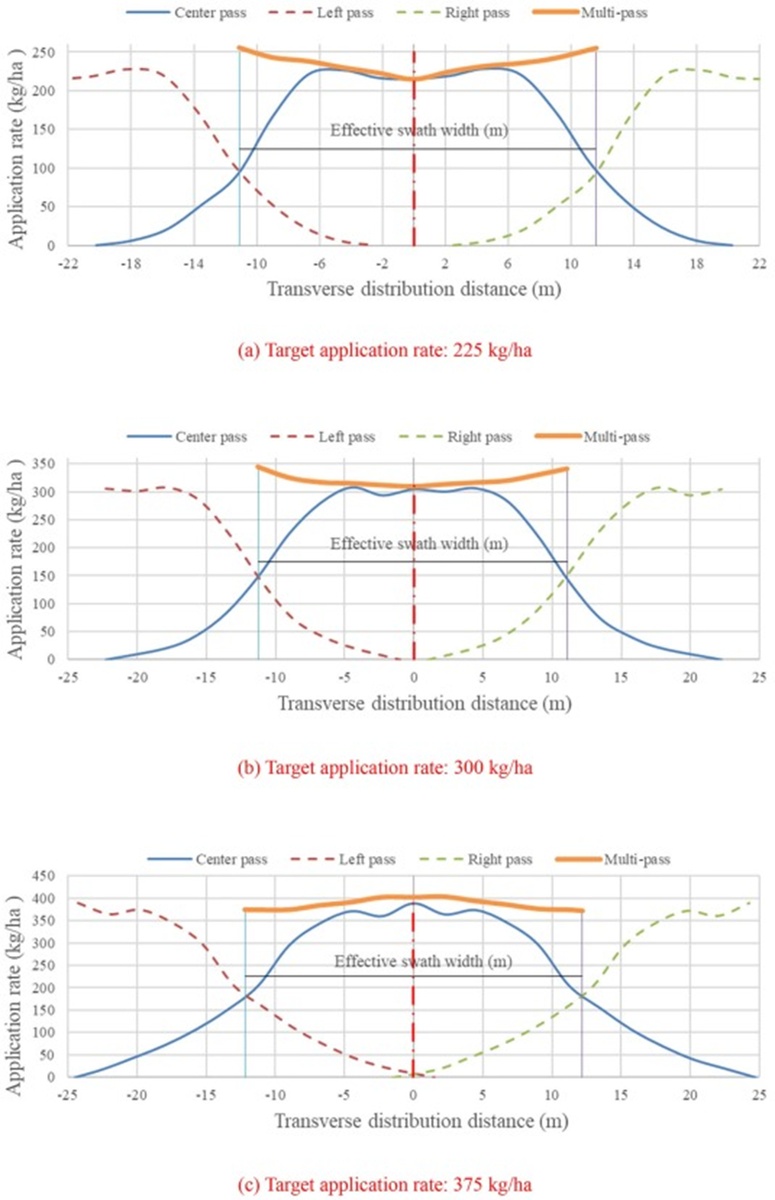
Figure 9. Application of multi-pass overlapping fertilizer with different application rates (For interpretation of the references to color in this figure, the reader is referred to the web version of this article).
As illustrated in Figure 9, the delivered dose from multi-pass overlapped fertilizer distribution (solid orange trace) tends to run marginally above the intended or ideal application rate. This finding aligns with earlier reported work. Within the functional broadcast span of the spreader, the material deposited on the right-hand side of the leftward travel run offsets the material deposited on the left-hand side of the central travel run. In contrast, the material on the left-hand side of the rightward travel run compensates for that on the right-hand side of the central travel pass. The outcome is the emergence of a multi-run granular spread contour that surpasses the quality of a single-run distribution. As depicted in Figure 9a, with the intended dose set at 225 kg/ha, within a functional spread width of 21.05 m, the deviation between the actual and the intended dose amounts to 2.61%, the arithmetic mean stands at 231.02 kg/ha, and the particle spread coefficient of variation comes to 11.51%. As portrayed in Figure 9b, at an intended dose of 300 kg/ha, bounded by a functional spread width of 22.58 m, the discrepancy in the actual rate reaches 5.80%, the mean settles at 318.47 kg/ha, and the particle placement CV registers 9.25%. As shown in Figure 9c, under an intended dose of 375 kg/ha, confined within a functional spread width of 23.67 m, the departure of the actual rate hits 6.53%, the average value is 401.19 kg/ha, and the particle spread CV is recorded at 11.28%. A summary of the statistical descriptors associated with the delivered dose for each experimental condition is provided in Table 2. Across the trio of target dose levels, the particle distribution variability metrics calculated within the respective functional spreading widths all fall beneath the 15% threshold. The lowest CV value, together with the most homogeneous spread profile, is observed when the target dose is fixed at 300 kg/ha (the typical compound product rate used for rice nutrition management across the Jiangsu rice-wheat rotational belt).
Table 2. Test results of fertilizer particle application in multi-pass overlapped spreading.
Target fertilizer application rate/(kg/ha) | Spacing between adjacent travels/m | Error/% | Actual fertilizer application rate/(kg/ha) | ||
Mean | SD | CV/% | |||
225 | 21.05 | 2.61 | 231.02 | 26.59 | 11.51 |
300 | 22.58 | 5.80 | 318.47 | 29.46 | 9.25 |
375 | 23.67 | 6.53 | 401.19 | 45.25 | 11.28 |
As shown in Figure 9 and Table 2, configuring the inter-pass lateral offset to match the functional spread width yields the most favorable overlap conditions. At 300 kg/ha, the granule patterns arising from neighboring passes intersect exactly along the centerline, producing the minimal CV (9.25%) and the most even deposition profile. When the target dose shifts to 225 kg/ha, the outer edges of the spread contours from the left- and right-side runs fail to meet, leaving the application amounts uncompensated around the center and resulting in the lowest delivered rate at that location, thus compromising spread uniformity within the functional width. When the target dose is set at 300 kg/ha, the outer perimeters of the left- and right-pass spread patterns intersect precisely on the centerline. This condition maintains even granule placement across the functional span and keeps the CV small. At a target dose of 375 kg/ha, the outer extents of the left and right pass spread contours cross at the centerline, giving rise to an overcompensation effect that lifts the applied rate around the center while driving up the spread variability metric within the functional span. From this, it is evident that the optimal target dose is 300 kg/ha, which may be adopted as the endorsed application rate, delivering noticeably improved distribution homogeneity and a superior spreading outcome.
Adhering to the experimental protocol, the granular distribution results gathered under contrasting travel-mode conditions are presented in Figure 10.
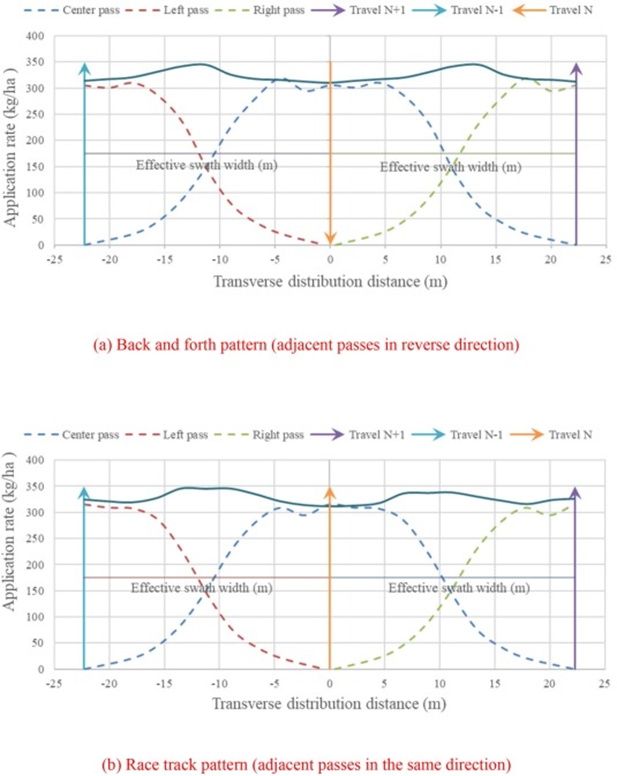
Figure 10. Application of multi-pass overlapping fertilizer under different travel models (For interpretation of the references to color in this figure, the reader is referred to the web version of this article).
No marked divergence in particle distribution evenness emerges between the alternative travel patterns during multi-pass, overlapped fertilizer spreading. In Figure 10a, depicting the back-and-forth configuration (i.e., successive passes executed in opposing directions, where the blue, orange, and purple solid arrows denote the orientation of Pass N-1, Pass N, and Pass N+1, respectively), the mean of the actual delivered rate (brown solid trace) comes to 314.11 kg/ha, associated with a standard deviation of 27.19 kg/ha and a particle distribution CV of 8.66%. In Figure 10b, illustrating the racetrack configuration (i.e., successive passes all run in an identical direction, with the blue, orange, and purple solid arrows likewise indicating Pass N-1, Pass N, and Pass N+1 orientations), the mean actual delivered rate is 315.90 kg/ha, the standard deviation equals 26.08 kg/ha, and the particle distribution CV is 8.25%. These figures indicate that the spread homogeneity attained under the racetrack routine is marginally superior to that achieved with the back-and-forth routine, and the CV value is slightly lower; hence, the racetrack operating approach may be considered preferable on uniformity grounds. Nevertheless, in real-world fertilizer application practice, adopting the racetrack approach requires upfront estimation of the parcel’s dimensions and scale, along with precise computation of the return path distance. At the same time, the spreader itself needs a certain interval of time to negotiate the return segment. By comparison, the back-and-forth operating style can proceed directly onto the immediately adjacent pass at the conclusion of each individual spreading run, does not call for advance computation of the plot’s dimensions, and entails only a brief time gap between adjoining passes. Consequently, after weighing operational effectiveness, field throughput, and fuel consumption, the back-and-forth travel mode is typically adopted as the recommended procedure for multi-pass, overlapped fertilizer distribution.
Following the experimental design, the outcomes of the multi-pass, overlapped spreading tests performed with different inter-pass separation distances are displayed in Figure 11.
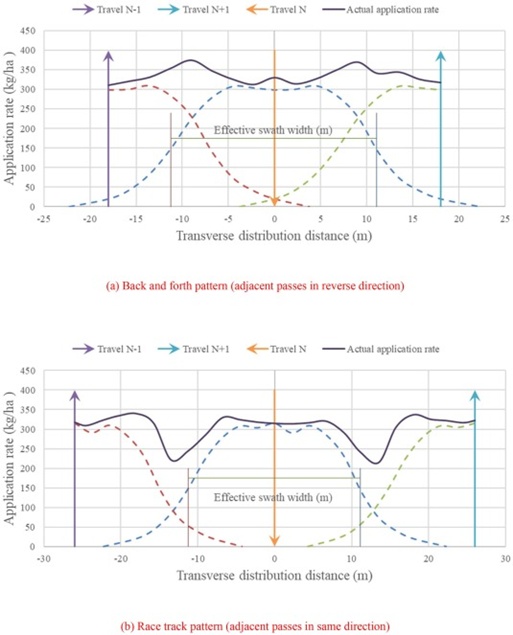
Figure 11. Deposition distribution of multi-pass overlapping fertilizer under different adjacent spacing.
As shown in Figure 11, the granular application profile resulting from multi-pass, overlapped spreading varies considerably with the inter-pass separation. Irrespective of whether the spacing is contracted below or expanded beyond the functional spread width, a marked degradation in particle placement uniformity ensues. According to Figure 11a, for a pass-to-pass separation of 18 m (narrower than the functional working width of 22.58 m), the mean actual delivered dose (black solid trace) equals 337.99 kg/ha, the standard deviation amounts to 55.13 kg/ha, and the particle distribution CV reaches 16.31%. According to Figure 11b, for a pass-to-pass spacing of 26 m (broader than the functional working width), the mean actual delivered dose drops to 263.04 kg/ha, the standard deviation stands at 50.41 kg/ha, and the particle distribution CV climbs to 19.16%. When set against the functional working width of 22.58 m taken as the inter-pass separation (Figure 10a), both the relative departure of the actual rate from the target (4.49%) and the particle placement CV (8.66%) exhibit substantial increases. At the same time, the evenness of fertilizer distribution correspondingly deteriorates.
A deeper examination reveals that when the spacing is compressed below the functional working width, the actual treated area shrinks, and the material mass flow (discharge throughput) increases the applied dose per unit ground surface; accordingly, the actual delivered rate exceeds the target application rate, yielding an error of 11.24%. The peripheral meeting zone of the granular spread contours from adjacent runs migrates inward, and the single-pass application quantity rises at the overlap region, with mutual reinforcement of the deposited amounts until the actual delivered rate swells. The granular spread profile develops a peak (roughly symmetric on both sides of the central travel path). Moreover, along the line of symmetry of the central pass, the outer edges of the distribution patterns from the left and right runs intersect, causing repeated additive compensation of the actual delivered dose at that location, and modest peaks appear in the spread profile. The net consequence is a rise in the variability of the actual delivered rate and a reduction in particle placement uniformity over the entire working breadth.
Conversely, when the spacing is stretched beyond the functional working width, the actual treated area expands, and the material mass flow (discharge throughput) lowers the applied dose per unit ground surface; as a result, the actual delivered rate falls below the target application rate, producing an error of 12.32%. The peripheral meeting zone of the granular spread contours from consecutive passes shifts outward, and the single-pass application quantity diminishes at the overlap region, with reduced mutual reinforcement of the deposited amounts. Hence, the actual delivered rate drops steeply, and the granular spread profile forms a trough (roughly symmetric on both sides of the central travel path). Additionally, along the line of symmetry of the central pass, the outer extents of the left and right pass spread patterns cannot intersect, leaving the delivered dose at this point incompletely compensated and particle placement homogeneity low. The ultimate effect is again a heightened variability in the delivered dose, alongside a decline in distribution evenness across the entire working width.
Taken collectively, whether one evaluates the error in the actual delivered dose, the particle distribution CV measured within the working span, or the broader uniformity quality and spreading performance, the inter-pass spacing matched to the functional spread width emerges as the endorsed setting. Under this configuration, both the deviation and the variability of the actual delivered dose remain modest. At the same time, the evenness of particle placement and the overall spreading effectiveness attain their most favorable levels.
In accordance with the field evaluation protocol, the mean granule mass was determined at each sampling location across the trial area, and the resulting data are presented in Figure 12 and Table 3.
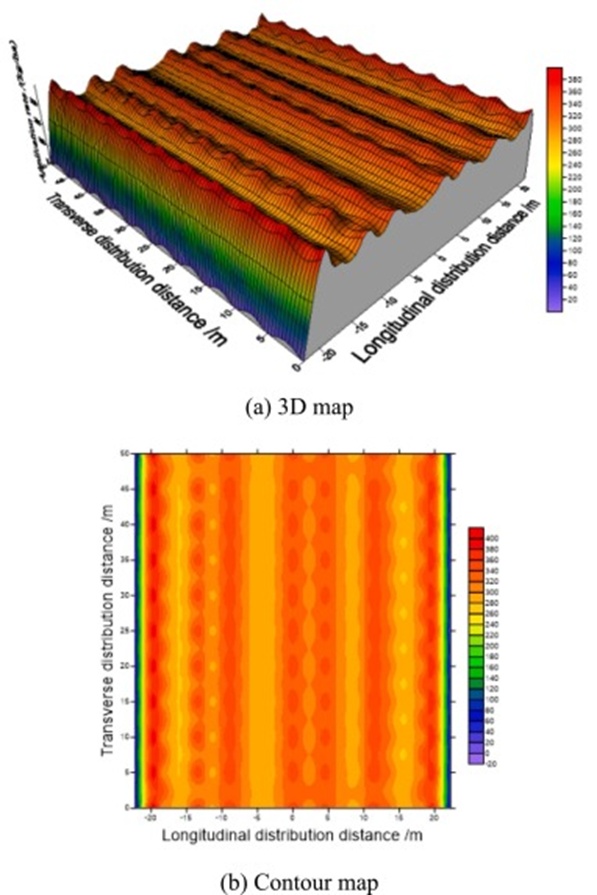
Figure 12. 3D and contour maps of field operation tests of multi-pass overlapping fertilizer.
Table 3. Field test results of fertilizer particle deposition distribution in multi-pass overlapped spread.
Test | Target fertilizer application rate/(kg/ha) | Spacing between adjacent travels/m | Error/% | Actual fertilizer application rate/(kg/ha) | ||
Mean | SD | CV/% | ||||
1 | 300 | 22.58 | 2.42 | 307.44 | 39.53 | 12.86 |
2 | 5.64 | 317.92 | 36.27 | 11.41 | ||
3 | 2.99 | 309.26 | 40.97 | 13.25 | ||
4 | 5.07 | 316.03 | 35.54 | 11.24 | ||
5 | 6.56 | 321.09 | 35.16 | 10.95 | ||
Mean | / | 4.54 | / | 11.94 | ||
The collected evidence reveals that, owing to the interplay of ambient environmental conditions, travel speed fluctuations, paddy terrain, and other practical field-level factors, the evenness of granule placement during multi-pass, overlapped field-scale spreading diminishes, and the CV correspondingly rises. The peak of the average actual delivered application rate was 321.09 kg/ha, the minimum was 307.44 kg/ha, and the mean departure from the prescribed spreading rate was 4.54 %. The highest, lowest, and mean values of the particle distribution CV registered within the working span were 13.25 %, 10.95 %, and 11.94 %, respectively, all of which reside below the 15 % threshold. These figures satisfy the transverse particle distribution criteria applicable to general-purpose centrifugal broadcasting machinery and confirm suitability for multi-pass overlapped fertilization in practical large-scale rice production across rice-wheat rotational growing districts.
The present investigation detected no meaningful difference in the evenness of particle distribution between the racetrack and back-and-forth operational routines. This finding, however, stands in contrast to the outcomes documented by [18]. Their work indicated that the back-and-forth style of multi-pass overlapped spreading yielded inferior particle distribution consistency and a larger CV relative to the racetrack approach. As a result, they concluded that the racetrack multi-pass overlap method is better matched to centrifugal VRF applicators and offers superior distribution uniformity. That particular conclusion arose because their apparatus was a single-disc centrifugal spreader, whose granular spread profile was inherently asymmetric, with the quantity delivered on the right flank consistently outstripping that on the left. Under those circumstances, when consecutive spreading passes proceed in a matching direction (racetrack mode), the superimposed distribution pattern functions such that the material deposited on the right half of the left-side pass and the material deposited on the left half of the right-side pass offset one another, which boosts placement uniformity across the working width and keeps the CV low. Conversely, when adjacent passes follow opposing directions (back-and-forth mode), the overlain pattern results in two passes’ left-half contributions or two passes’ right-half contributions combining, driving the deposited amounts increasingly lower or higher without reciprocal compensation, thereby degrading placement uniformity within the working span and elevating the CV. The present study, by contrast, is founded on a dual-disc centrifugal VRF spreader independently engineered by our research group, for which the granular distribution around the travel centerline is relatively balanced, thereby sidestepping the difficulties noted above, and the unfavorable phenomenon of left-on-left or right-on-right superposition does not materialize. Hence, no notable divergence in the spread pattern of the multi-pass overlapped distribution was observed across the alternative travel modes.
The racetrack routine yielded marginally stronger particle distribution homogeneity (a lower CV) than the back-and-forth routine. This can plausibly be ascribed to the dual-disc spreader’s comparatively symmetrical spread pattern, which profits from uniform overlap in the racetrack layout. That said, the actual granular distribution under operational conditions is not perfectly balanced; under the racetrack approach, the spread contours of the left and right passes can compensate for each other, whereas under the back-and-forth approach, the spread contours are replicated and superimposed without such compensatory reinforcement, leading to an enlarged distribution CV and consequently reduced uniformity. Nevertheless, taking into account idle-running detours, energy expenditure, and system response lag time, among other considerations, and after jointly weighing operational effectiveness, field throughput, and fuel economy, the back-and-forth travel mode is customarily selected as the endorsed procedural choice for multi-pass overlapped nutrient spreading.
This work examines the governing patterns of fertilizer granule placement under multi-pass overlapped distribution, supplying an environmentally sound, economically viable, and operationally efficient strategy for precise VRF execution within the framework of intelligent farming. The outcome carries considerable weight in reducing production costs, improving resource-use efficiency, and curbing environmental contamination. Still, certain limitations attach to this study. The working setting of paddy fields is inherently complex, and the travel speed, together with the attitude of the tractor serving as the power unit for the spreader, is subject to numerous field-derived influences—such as wheel slippage and platform tilting and other unsteady factors—which may in turn impinge upon the pattern of deposited fertilizer granules.
In subsequent research efforts, the focus will be on enhancing the smart capabilities of the spreading unit. As shown in Figure 13, plans involve the assimilation of multiple data streams by merging soil property sensors, remote-sensing satellite imagery, and crop status detector outputs to compile a field-scale nutrient prescription map. Drawing upon cutting-edge technologies encompassing artificial intelligence, large-scale data analytics, and intelligent regulation, and coupled with autonomous navigation platforms, the intention is to craft intelligent decision-making and control routines tailored to the fertilizer spreader, thereby enhancing the cognitive sophistication of the spreading process. Incorporating artificial intelligence methods into VRF application workflows will enhance the machine’s adaptability and robustness under complex field conditions, ultimately improving fertilization outcomes.
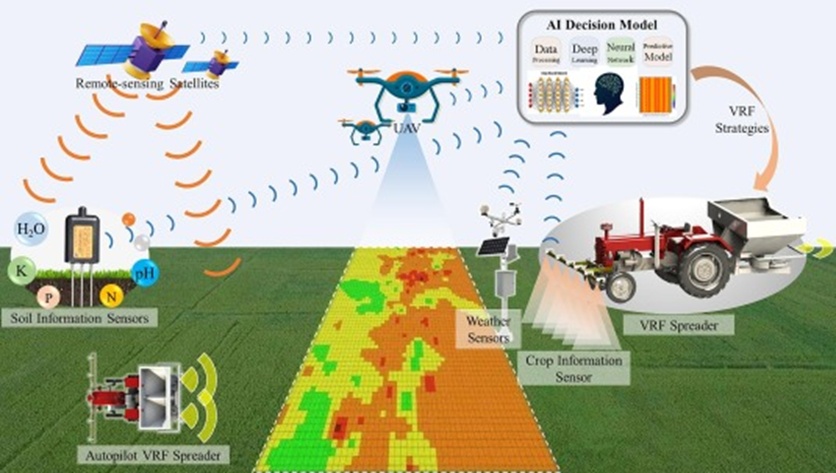
Figure 13. Schematic diagram of VRF operation mode incorporating AI technology.
This work showcases the capability of an independently engineered dual-disc centrifugal VRF spreader to improve both the evenness and precision of fertilizer placement in precision farming. Peak performance was realized at a prescribed application dosage of 300 kg/ha, delivering a functional spread width of 22.58 m alongside a CV of 9.25 % during multi-pass operations. The back-and-forth travel routine was endorsed for its favorable balance between efficacy and field practicality. On-farm validation affirmed the machine’s suitability for real-world deployment, yielding an error rate of 4.54% and a CV of 11.94%, figures that align with accepted sector benchmarks.
These discoveries advance the cause of precision agriculture by providing a practical understanding of multi-pass, overlapped operational conduct and by yielding equipment that reduces the ecological footprint, cuts fertilizer waste, and improves crop performance. Future endeavors should focus on evaluating the spreader’s behavior across a broader range of environmental conditions, trialing it across diverse cropping systems, and embedding sophisticated control algorithms to enable further refinements.
The authors acknowledge financial support provided by the Jiangsu Agricultural Science and Technology Innovation Fund (Grant No. CX(23)3029), the Natural Science Foundation of Jiangsu Province (Grant No. BK20210410), the Fundamental Research Funds for the Central Universities (Grant No. YDZX2024033) and the National Key Project of Research and Development Program (Grant No. 2023YFD200100102, 2023YFD200100204). The authors would like to thank Editage for English language editing. We are also grateful to the editor and the anonymous reviewers for their insightful comments and helpful suggestions, which have improved the quality of our manuscript.
None
None
None
Open Access The author(s) retain copyright. This article is licensed under the Creative Commons Attribution-NonCommercial-ShareAlike 4.0 International License. It may be shared and adapted for non-commercial purposes with appropriate attribution, an indication of changes, and distribution of adaptations under the same license. Third-party material may be subject to separate terms identified in its credit line. View the license at https://creativecommons.org/licenses/by-nc-sa/4.0/.
 Agro Intelligence Research Press