Around the world, livestock producers are under pressure to curb greenhouse gas emissions to limit climate change. One potential avenue for grazing-based dairy enterprises involves adding substances that suppress methane production into the animals’ feed. A novel method for supplying these substances at the required regularity and accuracy is through smart feeders, a current smart farming tool already used to automatically dispense supplements to livestock while they are in the paddock. For this innovation to take hold, however, it must work within existing farm systems and deliver a clear, beneficial value proposition to farmers. This study set out to investigate the farm system and technology attributes that could shape the potential acceptance of in-paddock smart technologies for administering methane inhibitors in pasture-based settings. An adoption prediction instrument (ADOPT) was applied to simulate the diffusion patterns of smart feeders functioning as methane-inhibition delivery mechanisms on dairy operations, with contributions from industry specialists and farmers gathered through focus group discussions. The outcomes revealed that smart-feeder uptake within a pasture-based system framework would be modest. A deeper examination was conducted through a sensitivity analysis of seven decisive ADOPT variables identified as highly influential during the farmer focus group sessions. We modelled the effects of these seven essential ADOPT variables across two distinct smart-feeder designs to compare their adoption prospects. The adoption modelling indicated that, while considerations such as technological cost and capability were significant, uptake would also be profoundly affected by future regulatory directions, uncertainty surrounding the innovation, and how well it fits with farmers’ values and philosophies about their farm system. This investigation emphasized that the in-paddock delivery apparatus and the practical routines for its use on-farm constitute an early-phase innovation; consequently, farmers and other interested parties must be brought into the further refinement process to ensure that adoption barriers are properly addressed.
Across the globe, ruminant livestock enterprises are facing pressure to reduce their environmental footprint, especially regarding methane emissions [1-3]. Scientific work on ruminant methane abatement has centred on selective breeding of animals [4], modifications to the farm system [2, 5], and infrastructure and equipment [6], as well as feed-based tactics that reduce enteric methane production [7]. Compounds that inhibit ruminant methane, such as Asparagopsis taxiformis (Asparagopsis) and 3-Nitrooxypropanol (3-NOP), have demonstrated a notable capacity to reduce enteric methane [7]. Weaving such inhibitors into farm operations is relatively straightforward when animals are fed in confinement, such as in beef feedlots and indoor Total Mixed Ration systems. In contrast, within pasture-reliant livestock operations, the prevalence of extensive grazing and the smaller volumes of supplementary feed delivered diminish the openings within the farm system to mix inhibitors into what the animals eat [8]. Effective feed-based strategies that lower enteric methane output will therefore call for both technological and farm system advances that make financial sense at the individual farm level and at the broader policy or regulatory tier.
Deploying rumen methane inhibitors in pasture-based operations requires a technique that delivers small doses to each animal at multiple points throughout the day [7]. This high frequency of small doses is necessary because the inhibitors only remain active for a brief window [7]. One potential technique is to use smart farming equipment to deliver inhibitors directly to animals in the field. These in-paddock smart-feeders (IPSF), presently operated by farmers and researchers to supply concentrate supplement rations (henceforth called supplements), leverage Radio-Frequency Identification technology to pinpoint individual animals and allocate pre-programmed quantities of feed [9]. On top of that, the units can be moved to different spots around the property and draw power from solar panels and batteries, while maintaining remote internet connectivity via the cellular network. IPSF gear is not in broad circulation on pasture-based properties and is not, at present, used in a commercial capacity to supply inhibitor products carried within supplement feeds. Despite the prospective methane-mitigation benefits of delivering inhibitors at the individual-animal scale in pasture-based livestock operations, there is scant data on the critical on-farm drivers that would lead to the adoption of smart technology delivery systems.
Whether farmers take up smart farming tools like IPSF depends on a diverse set of considerations, such as perceived advantage over current practice, how easy it is to learn and use, compatibility with pre-existing technologies, doubts about how the technology will perform, and the views held by consumers and the wider community [10-12]. When evaluating on-farm application of methane inhibitors, farmers must also consider possible consequences for animal output, the cost of abatement, repercussions for food safety, and the potential to build value-added branding around a low-carbon-emission credential [8]. Layered on top of this is a priority on keeping costs low, holding down capital outlays and labour, and picking systems that naturally suit pasture-based farming. Broadscale, sector-level acceptance of IPSF as a vehicle for inhibitor delivery will hinge on the right socio-economic backdrop, inventive regulatory progress to sidestep approval logjams, and possibly incentives to quicken the pace of uptake [8, 13, 14]. Securing a systems-level grasp of adoption factors from the perspective of the final user is vital to ensure that both the IPSF hardware is designed effectively and the institutional and policy scaffolding needed for the wider agricultural innovation system is in place [15, 16].
This study was undertaken to gain insight into the on-farm practicality of IPSF and to pinpoint any technological and socio-economic refinements that could sway adoption patterns for this category of smart farming technology. This study aimed to examine the farm system and technology factors influencing potential uptake of in-paddock smart technologies for delivering methane inhibitors in pasture-grazed systems. A mixed-method strategy was followed, drawing on focus groups and predictive modelling of IPSF acceptance for inhibitor delivery, anchored in a case analysis of pasture-based dairy producers in New Zealand (NZ). In the sections that follow, we lay out the background to the case study setting, the farm system context into which smart technology development must be embedded, and the methodology used to evaluate the factors that govern the adoption of IPSF technology.
The NZ dairy industry served as a case study in this paper to examine the prospective uptake of IPSFs. Dairying is a major source of export income and a major employer in NZ, accounting for USD$16bn of the national economy and USD$31bn in exports in 2020 [17]. The country’s total GDP that same year reached USD$211bn [18]. Beyond that, the sector provides jobs for roughly 27,500 individuals on farms and a further 13,000 in dairy processing [19], with dairying accounting for as much as one third of all employment in certain regions. NZ dairy farm configurations are built overwhelmingly around pasture, with a single annual spring calving window. The typical herd numbered 444 animals in 2021, with the nationwide herd totaling 4.9 million dairy cows [20]. Cows are normally milked twice daily and live outdoors year-round. The nutritional foundation of almost every NZ dairy property is grazed pasture, and the cultivation and exploitation of pasture stands are supremely important elements of financially healthy dairy farm systems in NZ. DairyNZ applies a five-tier grouping system to sort farms by their reliance on imported feed. Under this scheme, System 1 brings in no outside feed, System 2 incorporates 4%–14% imported feed or sends non-lactating cows elsewhere for winter, System 3 incorporates 10%–20% imported feed or uses supplementary rations to stretch lactation, System 4 incorporates 20%–30% imported feed or uses supplementary rations to lengthen the productive season, and System 5 incorporates 25%–40% imported feed or relies on outside feed the entire year [21]. The breakdown among farm system categories is: low input (Systems 1 and 2), representing 24% of NZ dairy farms; medium input (System 3), at 44%; and high input (Systems 4 and 5), at 32% [22]. NZ dairy farmers typically fixate on maintaining a low cost of production, as shown by possessing the lowest total feed expense per kilogram of milksolids (fat + protein) and the second lowest labour expense per kilogram of milksolids when measured against other leading dairy-producing nations like Australia, the United States, Argentina, Uruguay, South Africa, Ireland, and the United Kingdom [23]. New Zealand dairy farmers lead in labour efficiency, operating with the most cows per FTE (Full Time Equivalent) among major dairy producers [23]. Any deployment of novel technologies, including IPSFs and inhibitor-supplement blends, must be evaluated against this backdrop of efficiency and minimal production costs.
The dairy industry faces intense scrutiny to lessen its ecological footprint [24]. In 2019, methane accounted for 42% of NZ’s overall greenhouse gas emissions; of that, 80% was attributable to ruminant livestock [25]. As part of its obligations under the Paris Agreement, the NZ Government pledged to cut national methane emissions to net zero by 2050. This resulted in the passage of the Climate Change Response Act [26], which mandated that, among other emission reductions, biogenic methane must drop by 10 % from 2017 benchmarks by 2030, and by up to 48 % from 2017 benchmarks by 2050. Spurred by this regulatory framework, research efforts have intensified to find ways to reduce methane emissions from ruminants, with particular attention to dairy cattle. This investigative work largely centres on the creation of a methane vaccine, farm system refinement, early-life rumen manipulation, and chemical agents that suppress rumen methane production (hereafter called ‘inhibitors’) [27, 28].
The mechanism of methane inhibitors involves blocking the terminal step of methanogenesis, which is the formation of methane inside the rumen [27]. Two inhibitory substances have been shown to curb methane production without compromising the yield or quality of meat and milk in treated animals. Asparagopsis (Asparagopsis Taxiformis) is a wild red seaweed indigenous to Australasian waters, whereas Bovaer (3-Nitrooxypropanol, or 3-NOP) is a synthetically produced compound [7]. Studies indicate that Asparagopsis can slash enteric methane production by as much as 80 % when provided in confined feeding operations, while Bovaer has been documented to lower enteric methane output by 20%–40% [27]. A key limitation, however, is that these inhibitors remain active for only a short time (e.g., a handful of hours), so they must be supplied to cattle at frequent, precisely measured intervals to optimize methane suppression. While meeting this requirement is straightforward in Total Mixed Ration setups where dietary intake is tightly controlled [29, 30], obstacles arise when attempting to introduce inhibitors into the diets of grazing animals, as occurs in NZ dairy operations, highlighting the need for a new paddock-based delivery solution. One alternative might be to provide supplements through in-shed feeding apparatus, given that recent statistics reveal 52 % of NZ dairy holdings are equipped with in-shed feeding facilities [31]. The difficulty, however, is that cows in pasture-based dairy setups are generally milked just twice daily, giving them access to in-parlor supplement/inhibitor delivery technology only once every 12 hours, an interval too long to sustain adequate inhibitor activity. A tighter dosing rhythm is needed (e.g., every 3–6 hours), although the ideal rhythm varies by the specific inhibitor product and the farm system [13]. The inhibitors currently being advanced (noted earlier) cannot be administered via reticulated stock drinking water lines, broadcast onto grazing land, or mixed into silage fed on pasture. This situation underscores the need to develop a new delivery mechanism that allows livestock to consume supplement-inhibitor blends multiple times per day while out grazing.
One proposed concept is to provide inhibitors blended into a supplement feed mixture, dispensed to individual animals via in-paddock smart feeders (IPSFs). Although some IPSF units are already on the market, they are still considered an emerging technology in this particular application. Little understanding exists about how such equipment will perform under real commercial farming conditions, for example, how it slots into established grazing management patterns, what it means for farmer routines and financial outlay, and what the design specifications of the equipment ought to include. Studying the elements likely to shape farmers’ acceptance of IPSFs is essential to facilitate sound, accountable technological development through co-design processes that involve farmers as end-users [32, 33].
The uptake of agricultural innovations has attracted extensive scholarly attention, spanning early diffusion-of-innovation theories [34], psychologically grounded investigations and technology evaluation frameworks [35, 36], through to integrated perspectives that consider both internal and external determinants of technology acceptance [11, 37, 38]. One evaluation instrument created over the last decade, the Adoption and Diffusion Outcome Prediction Tool (ADOPT), has been deployed in circumstances where technology uptake is relatively multifaceted and affected not merely by functional performance attributes but also by considerations like the perceived relative superiority of the technology and the process of coming to appreciate that superiority [11]. ADOPT operates by measuring 22 parameters organized into 4 categories that broadly correspond to either characteristics of the intended user community or features of the technology/practice under evaluation. These four categories are: population-related influences on capacity to learn about the practice, the relative advantage within the population, how learnable the practice is, and the relative advantage inherent in the practice. Relative advantage covers aspects relevant to potential adopters (e.g., willingness to take risks, scale of operations) and to the practice or technology per se (e.g., initial capital requirements, ease of reversal, profit uplift). Learning of the relative advantage concerns adopter-specific elements (e.g., quality of advisory networks, applicable competencies, and understanding) and the learnability features of the practice/technology (e.g., simplicity of testing and the visibility of practice outcomes). ADOPT computes the pace of uptake (the time to peak adoption) and the ultimate peak adoption extent, and illustrates the chief forces driving adoption by plotting a temporal adoption diffusion curve [11]. The period to reach peak adoption is driven mainly by how aware the target group is of the technology (its visibility and how readily it can be observed) and by how quickly the relative advantage of the technology is learned (how easy it is to test the technology and how complicated it is to put into practice) [11]. In the following section, we outline the approach to gathering data on farmer preferences, which was then used to model a set of scenarios using ADOPT.
A two-phase research design was utilized for this study, consisting of a) isolating the principal adoption influences via qualitative focus group discussions, and b) simulating potential adoption trajectories based on the insights drawn from those focus groups. We began by examining the likely acceptance of IPSFs within the NZ dairy farming milieu, running four focus groups that included both farmers and other non-farming specialists early in 2022. In the subsequent phase, we turned to the ADOPT model to identify the most decisive adoption levers and their implications for IPSF technology refinement and the successful dispensing of inhibitor products.
Four separate focus group sessions, each lasting 2 hours, were convened to gather viewpoints on the potential on-farm use of IPSFs; details are summarized in Table 1. Growers representing a cross-section of farm system types were deliberately sought out for the study given that imported supplements connected to inhibitor dispensing via IPSFs could affect their farming operations differently (specifically, the effect is projected to be more pronounced for System 1–3 farms that bring in little or no supplementary feed, and less disruptive for System 4–5 farms where feeding infrastructure is already part of the operation). Individuals were sourced via industry connections and dairy-farmer Facebook™ groups managed by DairyNZ. The principal researcher personally phoned each prospective attendee to share more details about the study and extended invitations to those who expressed willingness to join the focus groups. Altogether, 19 individuals participated, offering perspectives from varied backgrounds. In similar research employing qualitative tools such as focus groups, participant numbers of 10–20 have been deemed sufficient to generate rich, textured data and narratives [39, 40]. The focus groups were intentionally structured to yield a deep, nuanced understanding of the on-farm use of IPSF technology rather than to deliver a statistically representative picture of farmers across the NZ dairy industry. Every focus group session was conducted via MS Teams™, enabling participation from individuals in different geographic areas and minimizing health risks associated with the Covid-19 pandemic. Data gathered throughout the focus group proceedings included researcher notes, voice recordings retained for subsequent review, and numerical responses gathered through brief questionnaires administered during the sessions.
Table 1. Summary snapshot of focus group attendees, covering background, farm system classification, and farm scale (where relevant). Low Input = System 1–3; High Input = System 4 and 5 (see main text for explanation).
Focus group 1 | Focus group 2 | Focus group 3 | Focus group 4 |
Objective: Investigate the factors influencing IPSF adoption and evaluate the ADOPT framework. | Objective: Examine the drivers of IPSF adoption in low-input farming systems (Systems 1–3). | Objective: Assess IPSF adoption influences within high-input farming systems (Systems 4–5). | Objective: Review findings from Focus Groups 2 and 3 and determine the key themes identified by farmers. |
Participants: • Social Scientist (innovation and technology) • Scientist (feed base and methane) • Farm Systems Specialist (economics and farm systems) • Economist (agricultural economics) • Scientist (farm systems and innovation) • Scientist (feed base and methane) • Herd Manager (farm management) • Research Technician (farm research) • Scientist (farm systems and technology) | Participants: • Low-Input Farmer (500 cows, Northland) • Low-Input Farmer (550 cows, Waikato) • Low-Input Farmer (450 cows, Waikato) • Research Farm Manager (350 cows, Waikato) | Participants: • High-Input Farmer (300 cows, Waikato) • High-Input Farmer (650 cows, Canterbury) • High-Input Farm Manager (15,000+ cows across 10+ farms, South Island) | Participants: • Social Scientist (innovation and technology) • Scientist (feed base and methane) • Scientist (farm systems and innovation) • Scientist (farm systems and technology) • Scientist (animal physiology and methane) |
Focus group 1 (28 February 2022) brought together individuals from outside farming, including dairy research scientists and sector professionals; the results obtained here were employed to trial and fine-tune the approach used in groups 2 and 3. Focus group 2 (8 March 2022) convened growers whose operations fall into low-imported-feed-input categories (DairyNZ System 1–3). Focus group 3 (10 March 2022) assembled growers managing high levels of imported feed inputs (DairyNZ System 4–5). Across both sessions, the investigators first set the scene for the methane challenge, then steered the conversation toward uncovering what participants already understood about the matter. Additional material was subsequently supplied so attendees could properly evaluate the IPSF concept, comprising a digest of methane abatement options that named Asparagopsis and 3-NOP explicitly, along with their dosing prerequisites and abatement capabilities.
The idea of delivering feed directly in the paddock was unpacked for attendees, covering likely IPSF operating specifications and the practicalities of using the technology to deliver supplement-inhibitor combinations within a grazing environment. Attendees were then asked to sequence a given set of IPSF features based on which they believed would be most pivotal for effective inhibitor compound deployment across NZ dairy systems (Figure 1). The motivation behind this comparison task was to provoke conversation around which IPSF aspects held greatest significance. The feature set was developed by the writing team, informed by their prior hands-on experience with IPSF equipment. SurveyMonkey™ provided the platform for the ranking activity, with the web address pushed out via the MS Teams™ chat pane during the session. Individuals had five minutes during the meeting to finalize their rankings independently. This solitary ranking method was deliberately chosen to counteract groupthink, in which an early-voiced opinion within a group skews the thinking and subsequent contributions of others [41]. While ranking, attendees could nominate supplementary features beyond those on the supplied list via an open-text field. Once the ranking was complete, the collective results served as the basis for a wider conversation, with researchers logging emergent themes and probing how alternative technology configurations might affect dairy farm businesses.
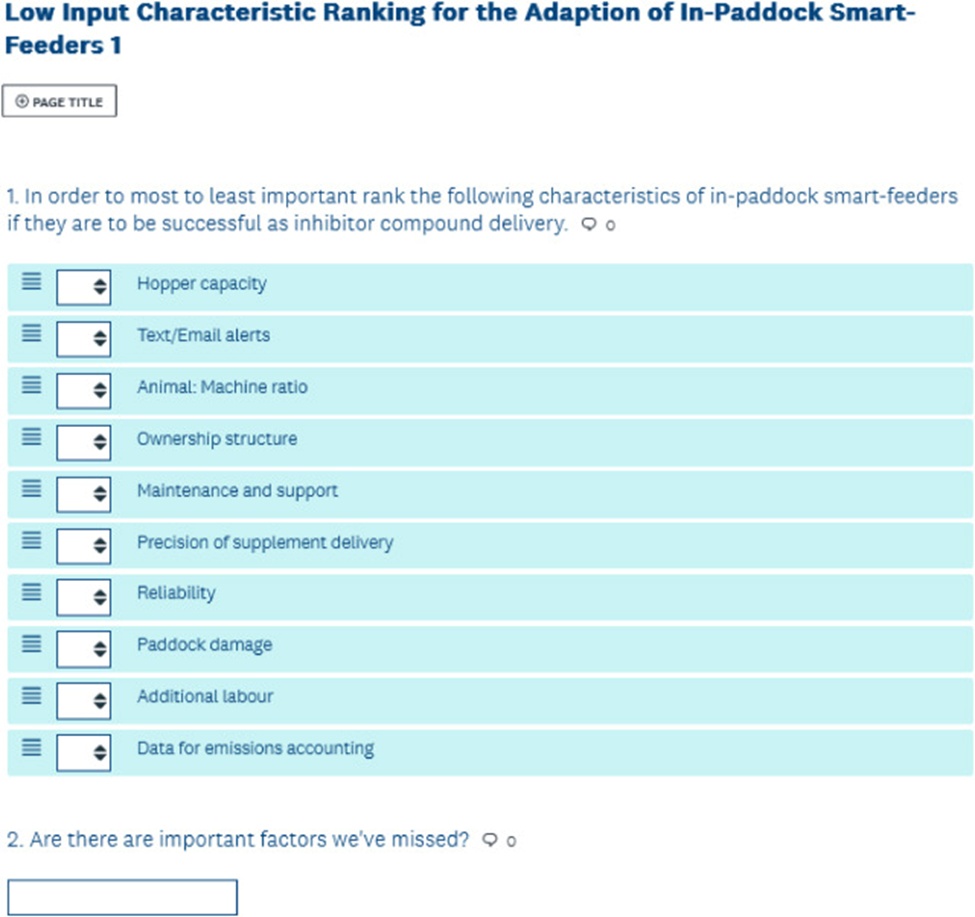
Figure 1. Ranking activity applied in focus groups 2 and 3, with each participant supplied a web link to place the features in order from most to least critical.
To conclude, a side-by-side evaluation method was employed to probe participants’ leanings regarding IPSF functionality [42]. Outlines of two invented and purposefully dissimilar IPSF units were generated by a) isolating key traits for smart feeding devices within grazing-based dairy contexts, and b) laying out a range of values for each trait (Table 2). The two resulting IPSF profiles were: IPSF 1, a compact device distinguished by reduced cost and lower inhibitor delivery performance, and IPSF 2, a bulkier device carrying higher cost but superior performance. Both profiles were presented to attendees to tease out how contrasting characteristics could influence adoption likelihood.
Table 2. Two In-Paddock Smart-Feeder (IPSF) profiles were shown to focus group attendees for their input.
Characteristic | Description | IPSF 1 | IPSF 2 |
Hopper capacity | Estimated interval between supplement feed refills, determined by either a smaller or larger hopper size | Refilling is required every five days | Refilling is required every ten days |
SMS or email notifications | Information remotely communicated to farmers about machine condition and operation, such as empty hoppers or technical faults | Alerts are sent when the machine is empty or malfunctioning | Text notifications are provided only when the device is malfunctioning |
Animal-to-machine ratio | The optimal number of animals serviced by a single machine, associated with hopper size and the feed distribution system | 75 cows serviced per machine | 125 cows serviced per machine |
Ownership model | The arrangement for accessing the machine, such as annual leasing/subscription or direct ownership | Annual rental agreement (approximately NZD$1500 per month) | Outright purchase for approximately NZD$50,000 |
Maintenance and technical support | The support structure available for the upkeep and servicing of the IPSF equipment | Assistance from a local technician with easily accessible replacement parts | Remote support available, with possible delays in obtaining parts |
Accuracy of supplement delivery (feed + inhibitor) | The level of precision in delivering predetermined allocations to individual cows | Most cows receive the intended allocation, although some poaching occurs | All cows receive the intended allocation with no poaching |
Effects on pasture or crop cover | The extent of forage damage caused by animals around the machine location is influenced by factors such as machine placement duration, cow numbers, visitation frequency, soil conditions, and weather | Smaller machine causing minimal pasture damage because it is moved more frequently | Larger machine associated with moderate pasture damage |
Additional labor requirements | The amount of time needed each week for machine maintenance, refilling, and relocation on the farm | Twelve hours per week for each machine | Five hours per week for each machine |
Focus group 4 (16 August 2022) operated as a reflective workshop with farm systems specialists to revisit the threads pulled from the farmer sessions. This reflective stage entailed working through the farmer group findings and sorting the contributions into broad thematic categories ready for feeding into the adoption modelling work.
The adoption modelling exercise was carried out via the ADOPT platform referenced previously. The browser-based, subscription-access iteration of ADOPT (see: https://adopt.csiro.au) was applied to simulate three scenarios capturing plausible adoption trajectories for IPSF within NZ dairy farming. This exercise is intended to isolate the variables exerting the greatest pull on adoption paths for the two conceptual designs – IPSF 1 and 2 (Table 2). The steps for performing the adoption modelling are set out below.
The default questions paired with each of the 22 factors were formulated for broad applicability across diverse settings [11]. For the specific needs of this investigation, the senior researchers (authors 1 and 2) scrutinized the questions. They tailored those needing sharper contextual focus, while being careful not to shift the core intent of any question. To illustrate, for factor 11 (Table 3), the default phrasing ‘What proportion of the target population participates in farmer-based groups that discuss farming?’ became ‘What proportion of New Zealand dairy farmers participate in farmer-based groups that discuss farming?’ The amended questions were trialled with focus group 1 attendees.
Table 3. The four ADOPT model categories and their associated factors [11] (underlined text signals factors with high uncertainty that were carried into the sensitivity analysis).
Relative advantage for the population | Learnability characteristics of the practice | Learnability of the population | Relative advantage of the innovation |
1. Profit orientation | 7. Trialability | 10. Advisory support | 14. Upfront cost of the innovation |
2. Environmental orientation | 8. Innovation complexity | 11. Group involvement | 15. Reversibility of the innovation |
3. Risk orientation | 9. Observability | 12. Relevant existing skills and knowledge | 16. Profit benefit in the years that it is used |
4. Enterprise scale | 13. Innovation awareness | 17. Future profit benefit | |
5. Management horizon | 18. Time until future profit benefits are likely to be realized | ||
6. Short-term constraints | 19. Environmental costs and benefits | ||
20. Time to environmental benefit | |||
21. Risk exposure | |||
22. Ease and convenience |
Several of the factors relate to the intended user base for the innovation rather than to specifics of the innovation per se, so a single generic answer could serve to evaluate both IPSF 1 and 2. Using insights from focus group 1 participants, we grouped the 22 ADOPT factors into 15 low-uncertainty factors and 7 high-uncertainty factors regarding possible IPSF technology attributes (Table 3). The designation of High or Low uncertainty hinged on whether participants in focus group 1 could reach broad agreement on responses to each factor regarding the prospective uptake of IPSF technology.
While locking the responses to the 15 low-uncertainty factors in place across all scenarios, the project group formulated a spread of responses for the 7 high-uncertainty factors to represent low, medium, and high IPSF technology performance (Table 4). These response options were anchored in the commentary provided by participants in focus groups 1–3 on the two IPSF profiles (Table 2). Regarding the element Trialling ease, IPSF 1 was deemed simpler for growers to experiment with because short-term leasing was possible, whereas IPSF 2 demanded a full capital purchase from the outset. These contrasts also meant that IPSF 2 scored as very large or large for Upfront costs of the innovation. In contrast, IPSF 1 scored as Moderate, Minor, or None, depending on the technology performance scenario.
Table 4. Rubric for guiding ADOPT model inputs across seven high-uncertainty factors for low, medium, and high IPSF technology performance under two IPSF profiles.
ADOPT factor | Technology performance (Low) | Technology performance (Medium) | Technology performance (High) | |
IPSF 1 | 7. Ease of trialing | Moderately easy | Easy to trial | Very easy to trial |
8. Complexity of the practice | Difficult to assess | Moderately difficult to assess | Slightly difficult to assess | |
14. Upfront costs | Moderate | Minor | None | |
16. Profit benefit during years of use | Moderate disadvantage | Small disadvantage | Moderate advantage | |
17. Future profit benefit | Moderate disadvantage | No clear advantage or disadvantage | Moderate advantage | |
21. Risk exposure | Small increase | No change | Moderate reduction | |
22. Ease and convenience | Moderate decrease | Small decrease | No change | |
IPSF 2 | 7. Ease of trialing | Not trialable | Difficult to trial | Moderately difficult to trial |
8. Complexity of the practice | Difficult to assess | Moderately difficult to assess | Slightly difficult to assess | |
14. Upfront costs | Very large | Large | Large | |
16. Profit benefit during years of use | Moderate disadvantage | Small disadvantage | Small advantage | |
17. Future profit benefit | Moderate disadvantage | No clear advantage or disadvantage | Small advantage | |
21. Risk exposure | Moderate increase | Small increase | No change | |
22. Ease and convenience | Large decrease | Moderate decrease | Small decrease |
The Practice complexity factor concerns how straightforward it is for users to assess the effects of applying the technology. Matching settings were used for both IPSF profiles, since the immediate methane-reduction impact would not be directly visible to growers. Still, both technology configurations would allow performance monitoring via automatically captured data. For example, information collected from electronic ID tags and onboard sensors can flow to cloud-hosted platforms, allowing growers to track individual cow intake and visit frequency, and, from that, estimate methane suppression.
Looking at Profit benefit in years used and Profit benefit in future, the upfront capital required, and the working life tied to each IPSF type, these factors will heavily condition profitability, along with inhibitor pricing and the need for additional, costly supplements to deliver the inhibitor into the animals. Both device types were assumed to deliver matching profit effects under the Low and Medium scenarios, with IPSF 1 holding a stronger profit position in the High-performance scenario, mainly owing to its smaller initial investment and lower depreciation burden.
The Risk exposure ADOPT factor captures how the technology would shift the farm enterprise’s net risk position. A modestly larger risk reduction was credited to running IPSF 1 versus IPSF 2, because IPSF 1 would be manufactured domestically in NZ and thus serviced through local channels, a potential advantage if equipment failure occurred. Also heightening risk for both technology types is the ongoing security of inhibitor and supplement supply, which could add to the overall risk carried by the farm business.
Ease and Convenience would be affected by elements such as unit dimensions; IPSF 1, being smaller, would therefore be less cumbersome to shift from paddock to paddock. Hopper volume would dictate the gap between supplement replenishments, and IPSF 2’s larger hopper would score better on that measure. Weighing everything together, IPSF 2 was rated as marginally less convenient to operate day-to-day on-farm than IPSF 1.
Applying the rubric set out in Table 4 together with the browser-based ADOPT tool, we ran six scenarios in total (IPSF 1 – low, medium, high; IPSF 2 – low, medium, high). For each scenario, the outputs covering Predicted Adoption Rate as a percentage share of the population and Years to peak adoption were logged (Figures 2 and 3).
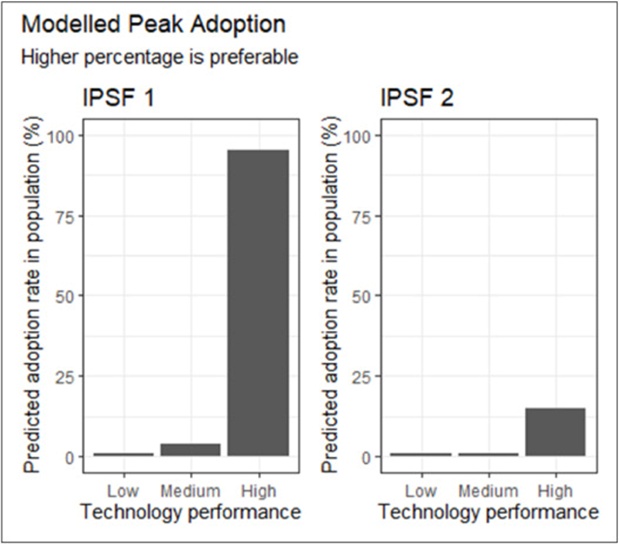
Figure 2. Predicted adoption rate of two in-paddock smart-feeder technologies under ‘low’, ‘medium’, or ‘high’ performance assumptions.
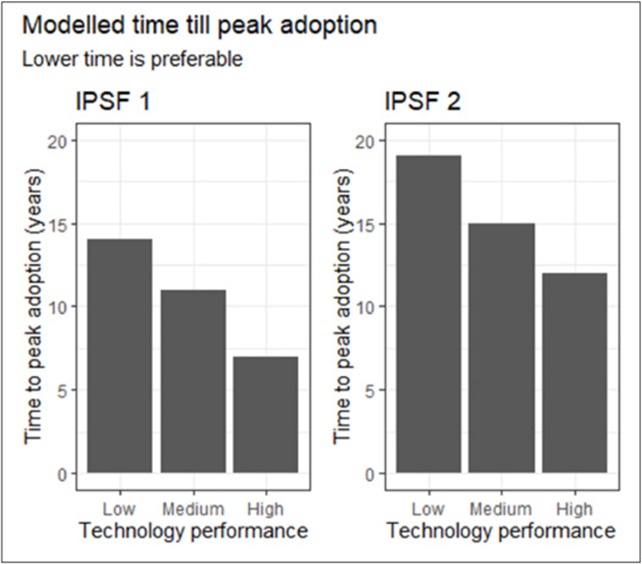
Figure 3. Predicted time to peak adoption of two in-paddock smart-feeder technologies under ‘low’, ‘medium’, or ‘high’ performance assumptions.
The ADOPT platform was deployed to probe the isolated effect of individual adoption factors on adoption rate and peak adoption extent. We treated the medium-performance scenario outputs for IPSF 1 and 2 as the reference case. Then we assessed the consequences of lifting outcomes across the 7 high-uncertainty adoption factors in Table 3.
To shed light on the design attributes most vital to IPSF technology, three enhanced design concepts were put forward, and their prospective adoption outcomes were simulated using ADOPT. The project group leveraged the most powerful factors to shape the three IPSF design concepts. Within each concept, seven factors were raised by one increment (for instance, moving up from ‘Small disadvantage’ to ‘No profit advantage or disadvantage’ on Profit benefit in years used (q16)). The three enhanced concepts consisted of (Table 5): Future product 1 – Stronger profit advantage (q16), dampened business risk (q21), heightened ease (q22); Future product 2 – Clearer path to assess impact (q8), shrunk upfront cost (q14), stronger profit advantage (q16); Future product 3 – shrunk upfront cost (q14), stronger profit advantage (q16), heightened ease (q22).
Attendees in Focus Groups 1–3 were tasked with ordering a predetermined set of IPSF attributes according to their perceived importance for successful inhibitor compound deployment across NZ dairy operations; the outcomes are displayed in Table 6. The attributes deemed most vital for effective IPSF uptake in inhibitor compound delivery were low additional labor demand, hopper volume, and the capacity to capture data for emissions reporting. Falling into the middle tier of importance were features such as dependability, accuracy of supplement dispensing, text or email notifications, the ratio of animals to each machine, and limiting ground damage in paddocks. Regarded as least critical were the model of ownership and the nature of upkeep and assistance services.
Table 5. Prospective adoption level and duration to peak adoption for three refined designs of IPSF 1 and IPSF 2 (Figures in parentheses denote outcomes where two-step improvements were implemented; however, indicates that no second-step improvement was feasible within the ADOPT tool).
ADOPT settings were changed in three alternative designs | Time to peak adoption (years) – IPSF 2 | Time to peak adoption (years) – IPSF 1 | Peak adoption level in population (%) – IPSF 2 | Peak adoption level in population (%) – IPSF 1 |
Future design 1: improved profit advantage (q16), reduced business risk (q21), enhanced ease of use (q22) | 15 (14) | 11 (10) | 4 (30) | 26 (79) |
Future design 2: easier impact evaluation (q8), reduced upfront cost (q14), improved profit advantage (q16) | 13 (11) | 10 (8*) | 2 (4) | 9 (19*) |
Future design 3: reduced upfront cost (q14), improved profit advantage (q16), enhanced ease of use (q22) | 14 (13) | 11 (11*) | 3 (14) | 18 (51*) |
Table 6. Mean rankings supplied by focus group attendees for a selection of predetermined IPSF attributes, where ‘1’ denotes highest importance and ‘10’ lowest importance, concerning IPSF effectiveness for inhibitor compound delivery in NZ dairy farm settings (note: two attributes were adjusted following input from focus group 1: substituting ‘Hopper capacity’ for ‘Refill frequency’, and ‘Text/email alerts’ for ‘Ability to check machine performance via phone’. A further four attributes were introduced at this point: ‘Reliability’, ‘Precision of supplement delivery’, ‘Data for emissions accounting’, and ‘Additional labor’).
Rank | Focus group 1 (non-farming experts) | Focus Group 2 (farmers in low-input farm systems) | Focus Group 3 (farmers in high-input farm systems) |
1 | Animal-to-machine ratio | Additional labour requirements | Data for emissions accounting |
2 | Refill frequency | Animal-to-machine ratio | Hopper capacity |
3 | Ability to monitor machine performance via phone | Hopper capacity | Text/email alerts |
4 | Paddock damage | Data for emissions accounting | Additional labour requirements |
5 | Maintenance and support | Precision of supplement delivery | Maintenance and support |
6 | Ownership structure | Paddock damage | Reliability |
7 | Country of machine manufacture | Reliability | Precision of supplement delivery |
8 | — | Ownership structure | Ownership structure |
9 | — | Text/email alerts | Paddock damage |
10 | — | Maintenance and support | Animal-to-machine ratio |
Upon being shown the two IPSF profiles, participants in focus groups 1–3 offered observations on the principal possible ramifications of deploying IPSFs within grazing-based dairy systems. The research team (authors 1, 2, and 3 of this paper) clustered these ramifications into thematic groupings during the reflective analysis conducted in focus group 4. The themes that emerged were: consequences for established farm systems and routines; consequences for farm finances; modifications to delivery methods; and the drive to capitalize on existing infrastructure. These thematic areas are unpacked below.
A ramification highlighted by participants was the possible drift away from NZ’s pasture-centric dairy model. New Zealand belongs to a limited set of nations where dairy production rests primarily on grazed pasture [43]. Broad deployment of IPSF equipment to administer methane inhibitors would raise typical supplementary feed consumption on NZ dairy properties, thereby shifting farms toward higher supplementary input configurations and possibly undermining NZ dairy enterprises’ capacity to promote their output as largely pasture-derived.
A worry raised by farmers was the degradation of pasture caused by concentrated animal movement near the smart-feeder unit [44]. Apprehension about paddock deterioration may vary with soil composition and the consequent ability of the sward to regenerate once damaged. Attendees proposed that strategies enabling the IPSF to be relocated frequently without requiring extra labor, for instance, by rendering the IPSF self-driven or towed via a winch arrangement, could reduce the toll on pastures. Attendees differed in their degree of unease about the risk of pasture deterioration, and this could be an area where further investigation or guidance is needed to help farmers conduct more informed risk assessments. Pitman [45] reported that farmers tend to inflate the expense of paddock damage in their minds because damaged patches are highly conspicuous and remain top-of-mind.
Participants expressed disquiet about the cost of adopting IPSF technology. Economic sustainability is indispensable for farms, just as for any enterprise, and attendees made it plain that cost neutrality for any methane abatement strategy was a precondition for acceptance. Because of the novelty of employing IPSF for methane inhibitor dispensing and the unpredictability of future carbon pricing regimes, supplying concrete data on the financial outlays and returns of the innovation proved challenging. Even so, the discussion touched on how embracing IPSF could alter operating expenses by introducing new costs associated with smart-feeder acquisition or hire, inhibitor products, additional labor hours, and additional supplement purchases. That said, attendees from focus group 3 (high-input farmers) noted they were less troubled by supplement costs since these were already a committed cost within their farm operations. These growers could shift to using IPSFs as the conduit for supplements they would be feeding anyway, rather than their present delivery approach. Hence, we anticipate that IPSFs will prove more financially attractive in higher-input setups. Another expense element is the animal-to-machine ratio, and thus the quantity of IPSF units that larger properties would need to procure, along with the task of frequently repositioning them between paddocks; this point was flagged as particularly significant by those focus group members operating bigger dairy herds.
Substantial obstacles to IPSF uptake surfaced in the focus groups: the financial and time burdens imposed on the farm system. Doubts about the monetary payoffs of the approach were also underscored. As inhibitor science progresses, the fiscal outlays and gains will come into focus. Participants were unequivocal that the approach’s profitability would be the deciding factor in broad adoption, irrespective of its ecological merits. Focus group attendees reckoned that roughly 6 hours per machine per week would be consumed refilling the hopper and shifting the IPSF along with the herd to fresh grazing areas, a demand they and their staff would find hard to absorb within already crowded working schedules. Providing attendees with precise cost-benefit figures was difficult given the fledgling state of the technology’s development. As both inhibitor products and IPSF hardware mature and future pricing of greenhouse gas emissions becomes clearer, the financial picture will become clearer. Subsequent investigations provided greater clarity on potential profitability, as reflected in the breakeven methane price. They uncovered a broad range of potential financial outcomes for farmers, hinging on variables such as supplement cost and inhibitor performance [13].
Participants conveyed that having autonomy over how they would roll out the smart feeders and the latitude to tailor the approach to their distinct farm conditions were essential. This desire for flexibility was further explored to encompass different periods of the production year, for example, winter grazing blocks. The potential to efficiently supply other supplements or minerals as needed was identified as a possible upside. Furthermore, attendees, especially those drawn from the high-input cohort (Focus group 3), expressed a preference for harnessing existing assets on their properties to dispense methane inhibitors, citing examples such as in-shed feeding systems, trailer-mounted feed troughs, and piped stock-water networks. However, specialists flagged that the available inhibitor formulations could not be effectively administered through drinking water infrastructure. That feed troughs might fall short of the precise, animal-by-animal dosing required. Moreover, because in-shed feeding is restricted to the times cows come in for milking, this would translate to only two chances daily to supply an inhibitor mixture, and possibly fewer depending on the gap between a farm’s milking sessions [46]. For one inhibitor variant, it has been demonstrated that this dosing interval within a grazing context yields negligible abatement benefit [47]. Additionally, owing to the seasonal rhythm of NZ dairy farming, there would be no window to administer the inhibitor via an in-shed setup outside the 250- to 300-day lactation period.
The adoption modelling indicated that neither IPSF technology would see broad uptake under the low- and medium-performance scenarios, and that any adoption would be sluggish. Within the ‘medium’ performance scenario, the ADOPT model indicated modest adoption levels for both technologies (Figure 2), with IPSF1 showing a marginally stronger adoption outlook. Regarding the duration to reach peak adoption (Figure 3) under the medium scenario, ADOPT projected 11 and 15 years for IPSF1 and IPSF2, respectively. In the high-performance scenario, which depicted exceedingly upbeat conditions, the IPSF 1 technology design could attain widespread adoption (91% of the target group). In contrast, IPSF 2 might be adopted by only 15% of farmers. It should be noted, however, that this scenario rests on very favourable assumptions, namely the absence of upfront capital requirements and no adverse effect on farm ease and convenience.
To gauge the influence of differing IPSF technology attributes on future uptake, a sensitivity analysis was carried out using the ADOPT factors identified as carrying the greatest uncertainty in this technology setting. ADOPT parameters were increased by 1, then by 2 ‘step-ups’ for each factor, thereby increasing the favourability of adoption. The modest ceiling for IPSF adoption observed in the sensitivity analysis could reflect the interplay between technological traits and population attributes, as well as the factors the ADOPT sensitivity analysis pinpointed as exerting the largest effect on shifts in peak adoption and the time required to reach it. These technology and population features can propel technology uptake but can equally be shaped by activities and conditions within the broader innovation ecosystem, including regulatory frameworks and corporate policies [10, 12]. IPSF 1 exhibited a minor lift in the prospective adoption rate relative to the baseline of 4% adoption; for instance, adoption rose by 10 percentage points (reaching 14% of the population) with two step-ups applied to factors linked to enhanced profit benefits or diminished business risk. By contrast, the predicted adoption rate for IPSF 2 shifted very little, even when the two step-up settings were applied. For both IPSF technologies, the time to peak adoption showed negligible change under either the one- or two-step-up configurations.
The three ‘improved design’ scenarios underscored that when several adoption factors experienced better outcomes simultaneously, the probability of farmer uptake grew. Future design 1 demonstrated the strongest promise for increasing adoption, registering 26% and 79% adoption for IPSF 1 with one or two step-ups, respectively, across the three factors. IPSF 2 continued to show constrained adoption prospects, reaching 30% adoption across the dairy farmer population under Future design 1 with two step-ups.
This investigation sheds light on both the possibilities and the difficulties associated with on-farm acceptance of a smart farming in-paddock feeding method for supplying rumen methane inhibitors in grazing-based dairy operations. We adopted a mixed-methods approach, collecting farmer-centred input and using those insights to inform modelling of adoption pathways. This enabled pinpointing the likely sector-scale uptake of IPSF technology and the design refinements that could boost the adoption rate (% of population) and shorten the time to peak adoption for this smart farming technique.
Around the globe, ruminant livestock industries are seeking ways to reduce methane emissions [2]. A foundational goal is to deliver reductions without giving rise to unprofitable operations or overly complex setups that demand impractical farm system transformations. The individuals who took part in our study recognized the possible repercussions for pasture-based dairy operations stemming from an IPSF-centred strategy. Among these was a worry about a structural rebalancing between grazed pasture and brought-in supplementary feed. Such a shift could affect the financial viability of pasture-fed dairy systems [48] and have implications for the infrastructure and capabilities needed to operate such farms successfully [49]. Any necessary alteration to feed inputs could also clash with the personal philosophies and values of individual farmers, a point raised by study participants who operate ‘low input’ systems. Our research underscored the importance of these elements in shaping prospective adoption of smart farming technologies.
Further adoption considerations raised by participants included the direct financial outlay for IPSF hardware, as well as recurring expenses for inhibitors, supplementary feeds, labour, and management input. Dairy farmers in pasture-reliant systems (much like farmers generally) face chronic time scarcity [50, 51]; consequently, any modification demanding substantial extra labour must deliver unambiguous payoffs to be considered adoptable. Our study revealed that a successful IPSF design calls for infrequent refilling, minimal time spent moving the unit with the herd (a task typically required every 12 hours in NZ dairy setups), and a farm system fit that captures the greatest methane reductions at the lowest cost in terms of technology hire, labour, and feed/inhibitor inputs. One possible path would be to capitalise on the in-shed feeding hardware already installed on many pasture-based dairy farms [52] by engineering inhibitor products that need only be given at milking times (that is, twice per day). An alternative route could involve reducing labour demands by creating autonomous smart feeders capable of tailing the herd around the property; however, this may introduce additional hurdles, such as cost, safety compliance, and design requirements, as observed in recent studies [53, 54].
The attributes chosen for the two IPSF profiles (IPSF 1 and 2) were deliberately made to diverge. This allowed participants to identify which technology features would affect adoption factors such as profit advantage, trial capacity, user-friendliness, and business risk [11, 55]. The ability to trial the technology and to keep sunk costs low through leasing rather than outright purchase emerged as pivotal factors. Because IPSF technology for inhibitor delivery constitutes an early-phase innovation, providing participants with precise cost and benefit information proved difficult, as methane inhibitors are still awaiting regulatory clearance in NZ and are therefore not yet commercially available. This lack of clarity affected participants’ capacity to confidently assign costs and benefits to the approach. Reducing the uncertainty surrounding novel methane mitigation tools and forthcoming regulations will be essential for their on-farm uptake. The role of uncertainty in relation to smart farming technologies has been underscored across multiple studies [10, 56], and it can be a logical choice for farmers to hold off until greenhouse gas regulations are enacted and technologies are validated under real-world conditions [57, 58]. Farmers’ convictions, values, and the viewpoints held within their influential circles will likewise be central to the acceptance of mitigation measures. Earlier research examining farmer environmental change through the lens of institutional logics theory emphasises the importance of constructing networks, building knowledge, establishing supportive regulatory environments, fostering peer-to-peer backing, and nurturing evolving farming cultures [59, 60]. In light of the global imperative for emission cuts spanning all sectors, innovation-related uncertainty could be tackled through measures such as highly prominent demonstration farms, reduced entry costs for early adopters, adaptable leasing arrangements, and reinforcement or compulsion via government policy or agri-environmental programmes [61].
The adoption hurdles flagged by participants in our study, together with data from modelled adoption trajectories, point to the pressing need for continued design enhancements to inhibitor delivery technology. As the intricacy of technology and systems grows, so too does the need to involve farmers directly in the innovation journey [62]. To guarantee the usability and practical value of inhibitor delivery solutions within a pasture-based farming setting, a farmer-focused design philosophy is advised [63]. Moreover, ensuring the innovation is easy to witness in action is important [11], and this can be realised through on-farm research and demonstration initiatives [64]. In the present study, we focused on smart technology for in-paddock dispensing of inhibitors; in reality, farmers will be expected to embrace a bundled technology package encompassing both the IPSF unit and novel inhibitor compounds. This will heighten the uncertainty surrounding adoption and amplify the need to collaborate with farmers and rural advisors to make certain that adoption factors—such as practice complexity, business risk, knowledge and awareness, and advisory support—are properly managed [11, 55].
The eventual utilisation of IPSF technology within grazing-based livestock operations will be heavily shaped by the types of inhibitor products that become available, their optimum delivery mechanism, and the accompanying regulatory and policy frameworks governing their application. Those who took part in our study were aware of these potential influences; for example, they highlighted the need for straightforward or automated logging of feeding information to provide verifiable evidence of practice for any emissions reporting mandates. Given that farmers are contending with an escalating compliance workload [16, 65], uncomplicated or ‘hands-free’ data capture and reporting will carry considerable weight [66]. The farmers in our study preferred harnessing existing infrastructure, such as in-parlor feeding systems, for inhibitor delivery before committing capital to IPSF units. Accordingly, a more encompassing systems perspective may be required to ensure the effective deployment of inhibitors, which calls for forward-looking policy interventions to address potential market shortcomings in the adoption pathway [67]. The deployment of policy bundles has long been acknowledged as a vital strategy for tackling multifaceted adoption hurdles [67]. Examples of policy bundles designed to spur smart farming technology uptake include measures to address rural connectivity gaps (facilitating real-time transmission of IPSF data), funding for research and development centred on co-design activities, forging links with agri-environmental programmes and regulatory instruments, and cultivating skills and knowledge within advisory networks [68, 69].
Focus groups comprising 8–10 participants would be an ideal size for a study of this nature, and 10 farmers had signalled their intention to join each session and were sent SMS prompts the day before the meeting. Despite reduced attendance by farmers and stakeholders in the focus groups, meaningful insights were obtained that were adequate to underpin the adoption analysis conducted using the ADOPT model. The focus group approach is not designed to yield statistically representative perspectives from the target group (namely, NZ dairy farmers); rather, the method is intended to generate an array of deep, textured insights into a topic, and therefore the smaller participant numbers were nonetheless sufficient to steer the follow-on analysis. Focus group participants also identified additional context-specific adoption considerations beyond the scope of the modelling exercise, underscoring the value of employing a farmer-centred qualitative methodology. The study points to the need for further investigation into the effectiveness of potential delivery technologies for rumen inhibitors in pasture-based settings. Our results can guide IPSF design; however, more research is needed to co-design technologies that function harmoniously within the farm system and are consequently embraced by farmers. Employing co-design practices that centre on the farmer would ensure practical technology advancement [32] and assist technology firms in devising appropriate business models for forthcoming technology and robotics in this domain [70]. Farmers also noted the uncertainty surrounding the on-farm application of the technology and the potential return on investment. Future research ought to concentrate on these twin areas, encompassing formal field trials of the technology to assess its integration within the farm system (e.g., cows per machine, labour demand, effects on animals and pasture), alongside economic modelling to establish financial feasibility and the likely pricing frameworks for IPSF units. The cost and performance of inhibitor-based supplements, along with other variables such as subsidy availability and IPSF unit pricing, will influence the projected adoption rate and the time required to reach peak adoption for IPSF technology. At the point when this study was conducted, limited data existed on these dimensions for pasture-grazed systems; consequently, further adoption modelling is warranted once greater clarity emerges.
The prompt uptake of on-farm innovation aimed at methane abatement will be crucial for the future viability of grazed livestock operations. That said, a broad spectrum of elements can shape the eventual acceptance of smart technology designed to administer inhibitors through feed supplement blends. We draw attention to how the adoption of smart technology is moulded by an array of forces, including uncertainty, regulatory settings, return on investment, repercussions for farm systems, and the extent of on-farm adaptation demanded. Embracing a co-design innovation pathway, in which farmers and other interested parties are embedded in research and development activities, will help ensure that any resulting solutions or smart technologies can be swiftly taken up. The involvement of farmers and other specialists in our study brought to light the principal requirements for smart-feeder technology, among them: 1) simplicity of operation within grazing systems stands as a priority, 2) the design must be mindful of the additional hours needed to replenish and reposition the device, 3) upfront capital outlay must be kept low and trial capacity maximised through leasing arrangements, with costs needing to be balanced against emissions pricing, and 4) automated data gathering and verifiable proof of practice hold significance given the regulatory backdrop of methane emissions reduction. The adoption outcome modelling corroborated the centrality of these features, demonstrating that profit advantage, risk mitigation, and ease and convenience functioned as powerful levers for successful uptake and therefore ought to be a focal point for the development of both smart feeders and inhibitor products.
The authors would like to sincerely thank the farmers and industry stakeholders who participated in the two focus groups. This study was funded by the New Zealand Agricultural Greenhouse Gas Research Centre Innovation Fund and New Zealand dairy farmers through DairyNZ Inc. We would also like to thank the two anonymous reviewers who invested their time and expertise in improving this paper.
None
None
All procedures were performed in compliance with relevant laws and institutional guidelines and have been approved by the University of Waikato Management School Ethics Committee (application 21/238). Informed consent was obtained for experimentation with human subjects, and the privacy rights of human subjects were observed.
Open Access The author(s) retain copyright. This article is licensed under the Creative Commons Attribution-NonCommercial-ShareAlike 4.0 International License. It may be shared and adapted for non-commercial purposes with appropriate attribution, an indication of changes, and distribution of adaptations under the same license. Third-party material may be subject to separate terms identified in its credit line. View the license at https://creativecommons.org/licenses/by-nc-sa/4.0/.
 Agro Intelligence Research Press