This investigation puts forward a novel intelligent farming platform that merges Internet of Things (IoT) capabilities with predictive modeling and self-regulating command systems to streamline watering processes and amplify resource productivity. The suggested design employs soil wetness, thermal, and atmospheric moisture probes interfaced with an Arduino-centered microcontroller unit, allowing irrigation to be triggered autonomously according to live sensor readings. Agricultural operators can remotely oversee and adjust watering cycles through portable devices, delivering both exactness and operational simplicity. The predictive model fuses historical data with current measurements to anticipate future irrigation demands, guaranteeing moisture delivery exclusively when truly required. Empirical on-farm assessments indicated a 30 % decline in water expenditure versus standard irrigation techniques, whilst upholding ideal earth moisture parameters. In addition, the framework markedly diminished workforce and power expenses, bolstering overall functional capability. By confronting the issue of hydrological shortage and advancing conscientious resource stewardship, this intelligent platform possesses the capability to enhance harvest volumes, curtail greenhouse gas discharges, and further eco-conscious cultivation methodologies. Within water-limited geographies, deploying this technological solution constitutes a pivotal stride towards enduring agricultural viability, indicating considerable scope for extensive implementation.
The combined pressures of hydrological stress, nutritional shortfalls, and shifting climatic patterns necessitate fresh cultivation strategies that reconcile resource exploitation with ecological safeguarding. The agricultural domain, standing as among the most water-consumptive industries internationally, is presently confronting escalating output obligations amidst the current planetary heating emergency and increasingly intensified tropical cultivation regime alterations [1]. The accelerating global populace, projected to swell further across the coming decades, compels agrarian systems to transform—specifically towards denser food generation structures that simultaneously produce diminished harmful ecological consequences [2]. Viewed in this manner, intelligent cultivation methodologies addressing prospective water utilization hurdles have developed into a prevailing movement, embracing sophisticated technological tools such as IoT, algorithmic computation, and mechanization.
The primary intention behind this investigative effort is to probe and engineer an intelligent agrarian framework that unifies IoT toolkits, forecasting computation, and mechanized regulation approaches for the purpose of strengthening water delivery performance within the cultivation industry [3]. Moisture constitutes one of the foundational inputs in farming, and its manner of deployment bears profound consequences for the quantity of harvest secured and the degree to which cultivation remains tenable. The investigation's purpose is to gauge how capably such a system might safeguard reserves—both hydrological and energetic—while elevating harvest output, accomplished via watering setups that are governed automatically and whose every pertinent variable is tracked instantaneously [4].
The predicament of enacting suitable water stewardship schemes is most acutely perceived in territories already impoverished in water assets or confronting severe meteorological circumstances wherein inherited cultivation modes may have ceased to be appropriate. One prominent strand of this undertaking involves appraising how proficiently forecasting computation might operate when tasked with projecting soil wetness concentrations. Predictive faculties permit installations to approximate or ascertain forthcoming crop watering requirements through empirical records amassed historically and through present-state weather variables encompassing thermal readings, atmospheric dampness, and earth moisture content. Accurate planetary estimates seamlessly settle and time-optimize crop hydration, resulting in diminished dissipation since antiquated and handbook-dependent watering regimens are rendered superfluous [5]. This research's objective is to corroborate the framework's competence in foretelling substrate moisture metrics and to juxtapose its hydrological conservation outcomes against those of classic watering systems. Such a relative measurement methodology could assist meaningfully in remedying the pressing aqua deficit endemic to such locations through maximum liquid preservation. Another target set for this study consists of weighing the prospects for elevating cultivation practice adequacy via the institution of simultaneous observation and self-acting mechanisms.
The agrarian industry has predominantly remained anchored in inherited procedures wherein primacy rested upon on-site condition assessment—an approach proving both economically burdensome and intensely duration-intensive. The intelligent cultivation scheme expounded upon within this study permits uninterrupted environmental intelligence capture and computational digestion, thereby functioning capably beneath fluctuating scenarios, such as abrupt declines in ground wetness or severe thermal oscillations [6]. Oversight of this kind averts profligate water utilization and proactively fosters crop vitality while maximizing nutritional yield. Furthermore, those system elements possessing self-executing properties and demanding nil human attendance may serve to shrink labor outlays, consequently affording cultivators the latitude to redirect attention towards alternative farm administrative obligations [7].
Beyond mere output augmentation, the investigators uphold that the intelligent agrarian scheme additionally makes provision for distant, cloud-situated supervisory functionalities which bolster agricultural coordination over surfaces vaster than can be physically overseen without withdrawing growers from on-location superintendence. Such utility assumes critical importance in expansive cultivation undertakings, given that simplified oversight would substantially lessen the complications inherent in scaling operations. Cultivators, notwithstanding their absence from cultivated parcels, retain the ability to program hydration sequences and administer diverse crop husbandry facets owing to the unbroken stream of intelligence concerning earth dampness, ambient thermal state, air humidity, and watering condition furnished to them instantaneously [8]. The repercussions of this progression are enormous, carrying both favorable and unfavorable weight. The foremost beneficial implication of this examination is its capacity to resolve a predicament that is today omnipresent across the earth: the provision of satisfactory water reserves.
Given intensifying pressures upon freshwater stores, above all within arid expanses, it becomes indispensable to amplify the productive yield of moisture expended per alimentary unit generated through agriculture. Implicit within this premise, the scholarship extends a remedy to hydrological poverty for cultivators situated in hydrostressed belts, rolling out a scheme that spares liquid and refines its deployment [9]. Were the more comprehensive implementation of such technology realized, the freshwater indispensable for human subsistence and agrarian operations could be safeguarded from additional diminution [10].
Beyond that, the investigation's outcomes carry the possibility of nurturing cultivation practices less damaging to ecological matrices by trimming the greenhouse gas discharges attributable to squandered water and energy utilization [11]. Given that farming is responsible for a sizable share of such emissions, emanating predominantly from hydric and energetic inputs inefficiently expended and dependent on wasteful irrigation architectures, the intelligent agrarian apparatus forged through this study fixes its sights upon minimizing both water and energy, because operational sequences are executed following optimized, empirically-steered principles. The inquiry supports planetary measures aimed at softening climate variance, championing the embrace of low-footprint agrarian modalities and thereby facilitating a pivot towards enhanced cultivation customs. Independent of its ecological benefit, this body of work may additionally fortify alimentary security via uplifted agricultural throughput. By means of an intelligent cultivation platform, peak agronomic and ambient parameters can be upheld, assuring cultivated flora obtain the requisite nutritional elements and humidity indispensable to their developmental cycle. Through advancing harvest potential, the configuration can contribute towards mitigating the global nutritional shortfall confronting humanity, most pressingly in territories where appetite for agrarian output is urgent yet where customary cultivation forms can no longer meet needs owing to climate disruption or resource attrition. Just as importantly, participating in the ushering in of intelligent agricultural innovations can likewise further rural progress through heightened efficacy and profitability in farming undertakings.
Through the unification of these technologies, the necessity for burdensome monitoring and oversight labor is eliminated, liberating cultivators to tend to alternative domains of farm governance, thus raising aggregate productivity [12]. Conversely, as the inclination toward intelligent agrarian platforms continues its ascent, the possibility simultaneously exists for accelerating innate technical modernization within rural settings, easing growers' accommodation to contemporary, higher-output cultivation techniques. On those grounds, this scholarship endeavors, indeed, to augment the collective comprehension regarding the manner whereby intelligent cultivation platforms might be harnessed and the extent of their potency in catalyzing transformation across the present-day agrarian arena [13]. The present probe aims to smooth the path for adopting groundbreaking practices aimed at some of the dilemmas confronting communities, specifically strains such as hydrological deficit, energetic loss, and dietary deficits.
The consequences emerging from this inquiry may guide us in the direction of a tomorrow where thés agrarienne output is never achieved at the expense of ecological custodianship quality, and where environmental soundness is reinforced [14]. This article unfolds according to the following architecture: An extensive canvassing of germane scholarship is first presented, followed by an outline of the inquiry's aspiration. The empirical findings are then tendered, followed by broad deductions and pointers for subsequent investigation. This compositional layout is meant to elevate lucidity and methodical arrangement of the topic under examination, ensuring that the scholarly offerings prove functional and conducive to the progression of additional investigative enterprises within the sphere of machine learning and its implementations.
Scholarship centered on intelligent farming has expanded considerably over recent years, largely fueled by shifting climate patterns, the erosion of natural assets, and the imperative for durable cultivation approaches. A meticulous survey of prior investigations spotlights technological convergence as an answer to challenges of hydrological insufficiency, vegetative maintenance, and agrarian throughput, realized via the fusion of Internet of Things frameworks, forecasting computations, and autonomous mechanisms [15]. The application of IoT within farming contexts has been investigated across many of these works, underscoring its capacity to transform established farming routines. They feature responsive installations that register environmental metrics including ground saturation, thermal state, and atmospheric moisture, which fine-tune both liquid deployment and harvest output.
The incorporation of IoT architectures in cultivation has drawn commendation for aquatic resource governance, most notably within hydrostressed zones where meeting vegetative liquid needs is critically important. Observers also note that merging detector meshes, remote computational storage, and mechanized hydration assemblies has yielded multiple advances in high-definition cultivation, with numerous authorities contending that IoT integration will underpin intelligent agrarian frameworks capable of economizing water, trimming manual effort, and functioning at elevated effectiveness [16].
Detector application, treated as the investigative fulcrum, has concentrated on regulating both subsurface moisture and surrounding air characteristics. Several inquiries find that detector-informed, automatically actuated watering configurations elevate the ratio of productive water use. Conventional watering, by way of illustration, routinely misallocates liquid via either surplus delivery or misjudged scheduling. By contrast, such configurations dispense moisture only once the earth's current root-adjacent wetness signals genuine demand. These bodies of work confirm that frameworks of this sort can lower water consumption by as much as 30 percent under particular ecological parameters, without impeding vegetative development tempo. The efficiency of this scale proves vital for territories already navigating aquatic strain or for districts turning progressively susceptible to irregular meteorological phenomena as a consequence of climatic destabilization [17].
Aquatic stewardship is not the solitary merit of IoT arrangements in cultivation; the burden of undertaking particular high-intensity manual farm duties is considerably lessened owing to the facility of monitoring and adjusting the agrarian ecosystem remotely. It is due to the availability of cloud infrastructure that agriculturalists can retrieve field intelligence remotely and respond accordingly without needing physical immersion in operations [18]. Such a condition is extraordinarily beneficial for vast landholdings, at scales where ground-level inspection grows unfeasible. Additionally, elementary prognostic models can anticipate soil saturation status and watering intervals, building upon both archival and live information pools. Such functionalities permit cultivators to supply the precise moisture volume to plantings at the proper instant, thereby amplifying overall resource effectiveness.
Even so, irrespective of progress achieved, multiple investigative shortcomings linger, awaiting resolution. One prime limitation within the existing body of work concerns the capacity for intelligent cultivation frameworks to transfer across heterogeneous settings. The bulk of studies depends on limited-extent deployments or simplistic system implementations, while the migration of these technological packages into more intricate agricultural operational spheres has drawn inadequate academic attention [19]. Moreover, although IoT structures inherently possess the capability to raise water employment proficiency, inquiries that measure their extended operational outcomes and consequences remain uncommon—with particular reference to energy draw magnitude and the scale of greenhouse gas discharge. Certain researchers maintain, for instance, that intelligent cultivation permits the dampening of GHG release volumes through restrained liquid and power utilization. Multiple studies have endeavored to scrutinize these facets, yet further investigative effort is required to judge them with precision and to probe the potential trade-offs that may take shape between technological implementation and biosphere wellbeing [20].
A wide range of conceptual and dimensional questions surrounding the socio-economic ramifications of intelligent cultivation innovations persist in being underexplored within the published discourse. Although selected studies foreground technical merits—superior performance metrics, lowered liquid usage—fewer inquiries appear oriented toward the repercussions for farming practitioners themselves, and for marginal landholders in developing nations above all. As an illustration, the capital expenditure implicated in transitioning to IoT-based frameworks, the measure of specialized capability essential for their operation, and the applied viability of these configurations for small-scale cultivators are repeatedly sidelined [21]. Engaging these socio-economic facets is pivotal to enlarging the receptivity toward intelligent cultivation innovations and to progressively closing the digital rift identifiable across agrarian populations. Furthermore, while IoT-oriented agricultural platforms plumb notable depths technologically, the academic community—or the scholarship-producing collective more widely—has tended to overlook dimensions of operator interaction and end-user embrace of such tools.
Intelligent cultivation arrangements encompass technological remedies while simultaneously presupposing that agriculturalists possess the aptitude to harness these innovations productively within their production routines. Evidence has surfaced documenting that a significant proportion of growers remain cautious about integrating novel tools on account of elevated procurement expenses, unfamiliarity, or wariness about the dependability of automated mechanisms. This throws into relief the imperative of crafting and investigating apparatus that prove intuitive to handle, economical to obtain, and accompanied by instructional initiatives capable of building cultivator trust in the mechanized solution. Along parallel lines, the accessible scholarly foundation remains deficient with respect to the hazards that may originate from embedding IoT within agrarian operations. As progressively more IoT structures become woven into everyday farm functioning, matters concerning information safeguarding, vulnerability to digital intrusion, and total systemic collapse become ever more prominent [22].
A mounting rift exists in the research corpus that directly speaks to these weaknesses and pinpoints strategies through which optimally situated agrarian IoT collaborators might insulate these constructs from plausible perils. The protective robustness and reliability of such installations need to be confirmed so that agriculturalists' sunk investments find adequate protection, and so that the requisite assurance can be built for broad-based acceptance. Conversely, though the up-to-date literature on intelligent cultivation manifests noteworthy strides in harnessing IoT and mechanization capacity, a suite of investigative dimensions still awaits satisfactory treatment [23]. These take in questions about the demonstrated effectiveness of scaling intelligent cultivation platforms, the long-range durability aspect linked to such platforms, the socio-economic variables shaping practitioner integration, and the security dilemmas peculiar to IoT architectures. Grappling with these dimensions stands as a determining factor for guiding the evolution of methods that prove more lasting, operationally superior, and available to a meaningfully expanded populace [24]. Beyond this, it remains indispensable to ensure that intelligent cultivation innovations are both functionally suitable and culturally acceptable to the varied agrarian constituencies envisioned, thereby magnifying their assimilation and certifying that productivity advances made possible through access to elevated technological tools spread equitably across geographies and operational magnitudes.
The uptake of Internet of Things instrumentation, deep neural net frameworks, and autonomous mechanisms within the agricultural domain holds promise for resolving stewardship puzzles linked to aquatic shortage, workforce yield, and harvest volume [25]. Still, for intelligent cultivation to meet its envisioned potential, a considerable measure of work remains in building comprehension of the technology's full dimensions and the routes through which its adoption will substantively advantage the wider collective. This distillation of prior work stands as the launching point for more structured investigatory activity projected to bridge the existing voids and facilitate the maturation of intelligent cultivation [26]. The impediments characterizing current self-regulating intelligent hydration approaches are consolidated within Table 1.
Table 1. Challenges in existing smart irrigation mechanisms.
Challenge area | Description |
Scalability issues | The majority of smart irrigation technologies have been evaluated mainly in small-scale environments, with insufficient investigation into their effectiveness in larger or more complex agricultural systems. |
Energy consumption and GHG emissions | There is a shortage of long-term research examining energy consumption patterns and the impact of smart irrigation systems on reducing greenhouse gas emissions. |
Socio-economic barriers | Existing studies provide limited focus on implementation costs, workforce skill requirements, and the capacity of smallholder farmers in developing countries to adopt and operate these technologies. |
User adoption and simplicity | Complicated user interfaces and inadequate training opportunities reduce the willingness of farmers, especially those in rural communities, to utilize smart irrigation solutions. |
System security and data privacy | Potential threats such as cyberattacks, information leakage, and system malfunctions remain insufficiently studied, even as agriculture becomes increasingly digitized. |
Concurrent with scholarly evolution, commercially available intelligent watering solutions like Hydrawise, Rachio, and RainMachine have emerged onto the scene, boasting functionalities that include remote-accessible scheduling, meteorologically reactive hydration, and aquatic conservation attributes. These products normally function on the basis of weather projections or pre-configured timetables, as opposed to live feedback streams originating from the cultivated surface. While furnishing a degree of automation, the majority stop short of incorporating closed-loop multi-sensor arrays or modeling soil- and plant-specific prognostic algorithms adapted to ground properties and vegetative demand. In contrast, the configuration put forward within this inquiry exploits live data feeds from ground wetness, thermal, and air humidity sensor units, integrated with a forecasting autoregressive formulation, to command hydration in an adaptive fashion through a sealed feedback circuit. This renders liquid distribution more tightly aligned with factual land conditions, in place of coarse approximations, and by extension boosts responsiveness and resource frugality, particularly in locales afflicted by hydrological deficit. Additionally, the system's constituent pieces are deliberately designed as open-source elements, rendering the overall model cost-feasible and readily expandable relative to off-the-shelf commercial alternatives—thereby surmounting shortcomings tied to expenditure, entry barriers, and environmental fit.
In the context of this investigation, the strategy employed is built around the conception and realization of an intelligent agricultural apparatus leveraging IoT capabilities. The arrangement is intended to support the surveillance and regulation of ambient factors that condition vegetative expansion and output, and which would otherwise demand careful human control. Precisely, it charts the course of apparatus creation, embeds the schematic equations governing the apparatus, and unpacks the reasoning behind the regulatory mechanism itself.
The overarching method can be separated into four primary segments: physical-component engineering, intelligence capture, system-wide unification, and the design of command algorithms. These phases depend on one another and collectively contribute to the smooth functioning of the aggregate installation. The inaugural move pertains to the specification and blueprinting of hardware modules. The discrete elements populating the intelligent cultivation apparatus encompass detectors for ground dampness, ambient temperature, and air humidity, among other varieties, which serve the function of harvesting instantaneous intelligence from the surrounding medium. Such detector modules are linked to a unitary microcontroller board, for example, an Arduino UNO, which undertakes the digestion of detector signals. The ESP8266 Wi-Fi component bestows upon the microcontroller the ability to establish contact with distant server storage. The apparatus likewise includes effector elements such as fluid pumps and switching relays that function in concert with the detectors to hydrate crops independently when these detectors communicate that moisture reserves have dipped too low. For exact hydration governance, the apparatus actuates the fluid pump once the ground dampness proportion descends beneath a designated boundary and halts it when the dampness proportion rebounds toward the predetermined target value. The pump's operational span undergoes automatic modulation depending on the prevailing and the sought-after moisture state of the ground—the difference between the twin values on the soil dampness register. This tactic enables the apparatus to arrive at the requisite hydration intensity through uninterrupted gauging of the water-to-substrate saturation ratio. The prognostic formulation reinforces this by projecting the trajectory of dampness readings; accordingly, liquid is supplied only as called for and in measured amounts. The outcome is refined competency in water application under variable external circumstances.
The second phase pertains to intelligence accumulation and its initial treatment. The detector outputs are captured over time at consistent, designated moments. Cyclically sampled microcontroller coordinates form these 'data nodes' that the processors capture. Yet such nodes are laced with noise; hence, select techniques of signal smoothing must be performed to purify the raw feed. The detector intelligence, spanning ground wetness (sm), temperature (T), and atmospheric humidity (H), is normalized, drawing on standard mathematical constructs to enable faithful interpretation. By way of example, ground dampness undergoes normalization through the formula , in which Vout signifies the detector's emitted signal, Vmin represents the minimal signal obtainable from the detector, and Vmax denotes the maximal signal obtainable from it. Thermal readouts are treated through a straightforward linear construct, T=aVout+b, with a and b standing as calibration constants taken from the detector's technical documentation. The third phase encompasses the knitting together of the apparatus with a cloud-hosted environment to permit distant data observation and direction. The detector-derived intelligence flows cloud-wards continuously, employing the ESP8266 Wi-Fi module. The cloud workspace, such as ThingSpeak or Firebase, warehouses the data and makes available an accessible dashboard granting growers the ability to track the ambient status of their plots from afar. The communicational architecture observes Eq. 1
 (1)
(1)
Within which Dcloud denotes the consolidated data bundle transmitted to the cloud emanating from n detector nodes. The apparatus's structural blueprint guarantees dependable intelligence flow via the MQTT specification, a standard well-suited to devices characterized by subdued power draw and sporadic connectivity. The fourth segment involves fashioning the decision-guiding algorithm, which renders irrigation self-actuated, drawing upon detector values. The determination to switch the fluid pump on or off is dictated by precalibrated cut-off settings for ground moisture. At the juncture where the earth's wetness reading drops below the preset cut-off (Sth), the apparatus engages the fluid pump. The governing logic is expressed in mathematical notation through an elementary conditional rule structure, as displayed in Eq. 2
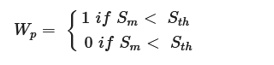 (2)
(2)
Where Wp communicates the operating state of the fluid pumps (1 meaning active, 0 meaning inactive), Sm signals the ground wetness reading, and Sth is the trigger cut-off. Analogously, thermal and air dampness regulation can be instituted to vouchsafe ideal developmental surroundings for the crops. The apparatus accommodates the hysteresis phenomenon inherent in watering operations, guarding against the pump fluttering between active and idle modes in quick succession. Hysteresis is formalized as Sm=Sth+ΔS, with ΔS functioning as a minor margin constant. To lift the operational thrift of the apparatus, the governing algorithm embeds predictive analytics, capitalizing on archived intelligence streams together with directional tendencies to estimate the upcoming liquid requirements of the vegetation. This predictive formulation rests upon chronological sequence evaluation, where the imminent ground moisture status (Sm(t+1)) is approximated by resorting to an autoregressive model as rendered in Eq. 3
 (3)
(3)
Within which α1,α2,…,αp represent the model's weighting coefficients, and p conveys the autoregressive model's order. The extrapolated ground moisture value assists the framework in recalibrating watering rosters dynamically, in doing so conserving liquid while verifying that the plantings receive suitable hydration. The functional merit of the intelligent cultivation apparatus undergoes gauging through repeated on-plot trials, appraising its ability to uphold near-optimal ambient variables for vegetative propagation. The apparatus's efficacy registers via the tracking of ground dampness figures immediately ahead of and following irrigation events, availing the formula ΔSm=−, with and standing for the earth moisture percentages after and before watering, respectively. A positive ΔSm outcome denotes effective irrigation application. Complementarily, energetic drain comes under observation through computing the electrical wattage (P) consumed by the apparatus over its duty cycles, as presented in Eq. 4.
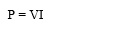 (4)
(4)
Where V is the voltage impressed upon the apparatus, and I equals the current drawn by its components. The assessment additionally folds in an analysis of data conveyance reliability. The data packet loss fraction (Lr) is computed employing Eq. 5
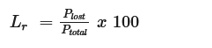 (5)
(5)
Where Plost records the tally of dropped packets, and Ptotal records the total of packets dispatched. The apparatus is refined to curb packet attrition and to preserve unbroken monitoring capability, even within outlying territories characterized by feeble network reception. In Table 2, the pseudocode tied to the suggested paradigm is furnished, itemizing every step in mathematical detail.
Table 2. Pseudocode.
Step | Pseudocode description |
1 | Initialize sensors and actuators: Sm=0,T=0,H=0,Wp=0 |
2 | Read soil moisture sensor: Sm=f(Vout) |
3 | Read temperature sensor: T=f(Vout) |
4 | Read humidity sensor: H=f(Vout) |
5 | ifSm<Sth,setWp=1 (activate pump) |
6 | ifSm≥Sth,setWp=0 (deactivate pump) |
7 | Transmit data to cloud: Dcloud=f(Sm,T,H) |
8 | Store data for future analysis |
9 | Predict future soil moisture using autoregressive model: Sm(t+1)=α1Sm(t)+α2Sm(t−1)+...+αpSm(t−p) |
10 | Repeat the process at the next time interval |
To sum up, this body of work describes a procedure for materializing every element requisite to engineer intelligent cultivation apparatuses via IoT innovations—specifically, the harmonization of physical modules, intelligence harvesting, cloud tethering, and autonomous regulatory strategies. The integration of mathematical formalisms alongside procedures governing immediate choice-making assures that the apparatus preserves the capacity to safeguard moisture while concurrently maintaining an optimal micro-environment for the crops under cultivation. The faculty to foresee events renders the apparatus flexibly responsive to environmental swings, a characteristic that further cements its long-term sustainability.
The pseudocode spelled out in this section illustrates the sequential activation of operations and validates that the apparatus possesses the ability to complete its functions with minimal human operator input. The intelligent cultivation configuration comprises an array of separate yet reciprocally coupled components, as shown across Figures 1-5. The intelligent cultivation circuitry rendered in Figure 1 displays how electric current is arranged and the conduits it follows through the assembly. Through Figure 2, the observer gains a view of the fully assembled installation of the platform, covering every important element such as the Arduino microcontroller, ground moisture sensing units, fluid pumps, and Wi-Fi modules. To illustrate how sensing units, actuating devices, and the governing controller are knitted together, Figure 3 offers a circuit schematic in thorough detail. Figure 4 supplies a circuitry drawing that accentuates core functioning subcomponents like relays and motor drivers, intending to clarify their respective parts in the operational sequence. Figure 5, in turn, constitutes a block schematic wherein the overall connections across diverse sub-units—inclusive of sensor-derived input paths, central control blocks, and output hardware such as fluid pumps—are charted. These depictions, reflected upon as a whole, deliver a plain explanation of how the apparatus carries out its operations under authentic field circumstances, aiding in the discharge of cultivation tasks with superior efficiency and effect (Figure 6).
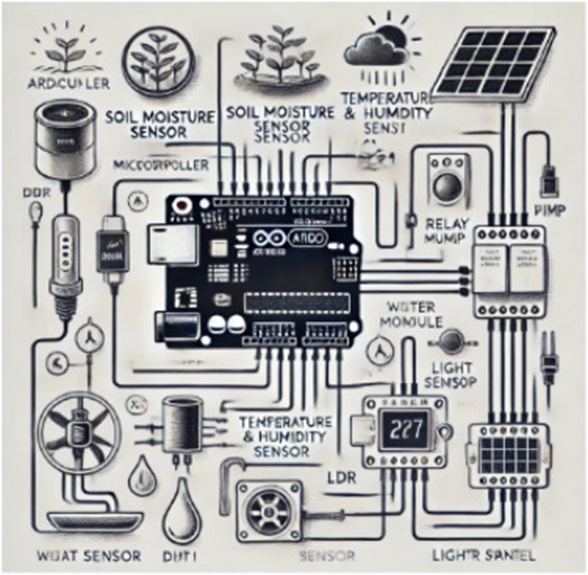
Figure 1. Schematic of the smart agriculture circuit.
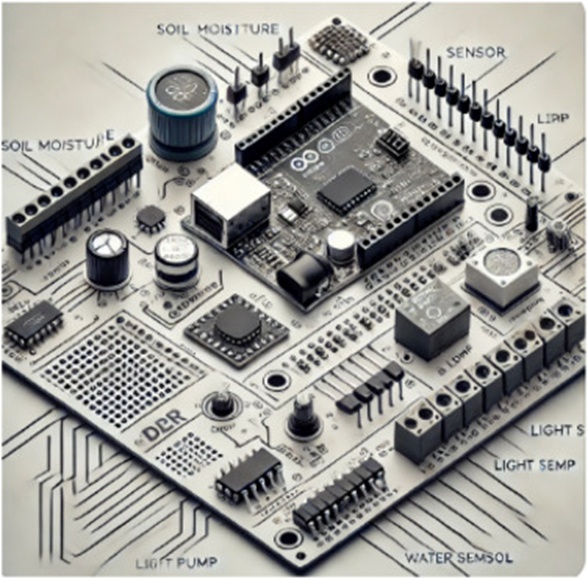
Figure 2. Smart agriculture system, with all components.
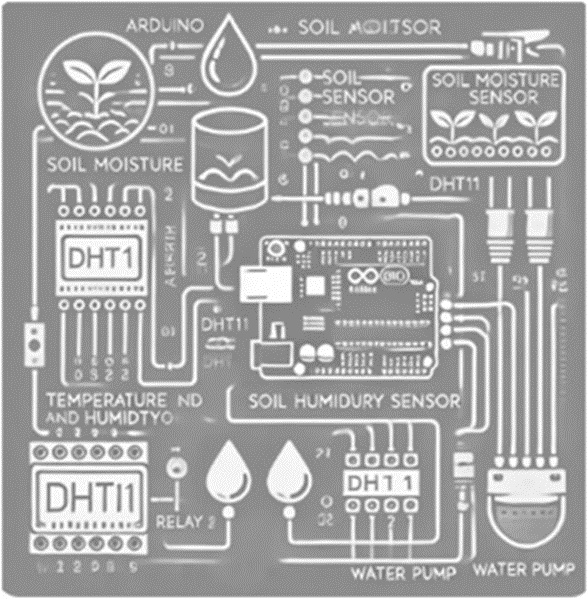
Figure 3. Circuit diagram for the smart agriculture system.
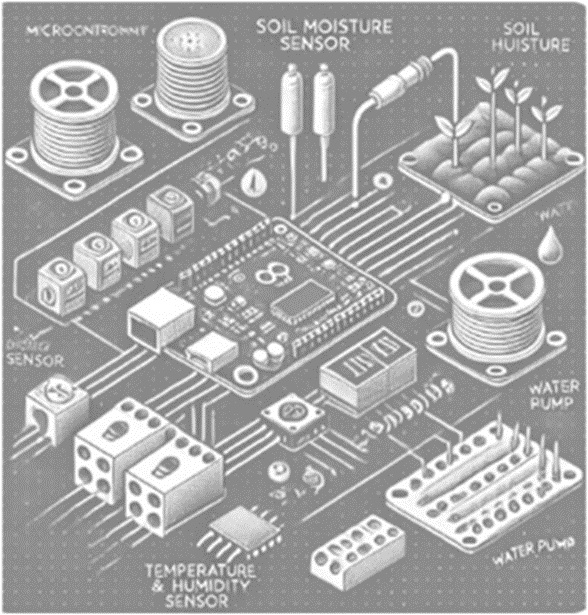
Figure 4. Smart agriculture circuit diagram with highlighted components for easy identification.
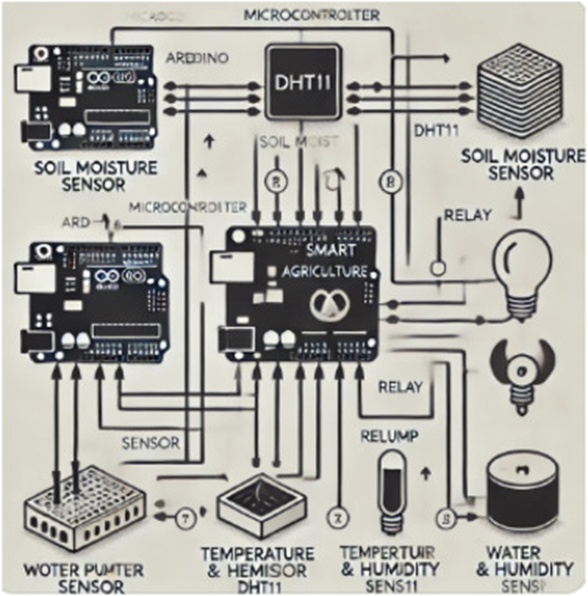
Figure 5. Block diagram.
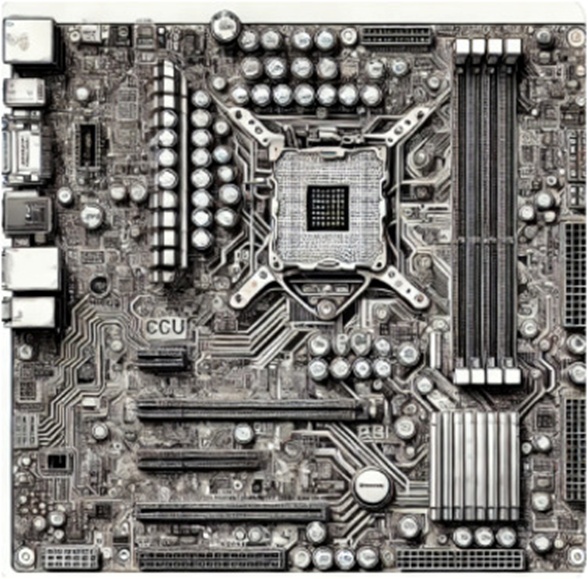
Figure 6. Motherboard.
The architecture of a motherboard is a complex arrangement of components that serve as the backbone for communication between a computer's critical hardware.
Brief explanation of motherboard key components:
1. CPU Socket
Function: Accommodates the Central Processing Unit (CPU), responsible for executing the majority of computational operations.
Specification: Differs based on the CPU manufacturer (e.g., Intel or AMD); the socket configuration must align with the CPU's pin arrangement.
2. RAM Slots (DIMM Slots)
Function: Receptacles for Random Access Memory (RAM), which holds data temporarily for rapid retrieval by the CPU.
Specification: Commonly, DDR4 or DDR5 slots possess defined speed and capacity limits.
3. PCI Slots (Peripheral Component Interconnect)
Function: Permits the installation of supplementary elements such as graphics processing units (GPU), network interface cards, or audio cards.
Specification: Encompasses PCIe x16 for graphics cards and PCIe x1 for other add-ons. Distinct generations (PCIe 3.0, 4.0) deliver varying throughput.
4. Chipset
Function: Governs the information traffic between the CPU, memory, and attached peripherals.
Specification: Separated into Northbridge (now absorbed into modern CPUs) and Southbridge, which oversees interaction with slower peripherals like USB and SATA.
5. Power Connectors
Function: Conveys electricity from the power supply unit (PSU) to the motherboard and its constituent parts.
Specification: A 24-pin ATX main power connector for the board, supplemented by 4-pin or 8-pin connectors dedicated to CPU power.
6. SATA Ports
Function: Links storage units such as hard disk drives (HDD) and solid-state drives (SSD).
Specification: SATA 3.0 interfaces accommodate data throughput reaching 6 Gb/s.
7. M.2 Slots
Function: Enables direct attachment of NVMe SSDs to the board, yielding swifter data accessibility.
Specification: M.2 connectors can handle assorted dimensions and velocities (e.g., PCIe 4.0 for exceptionally fast NVMe SSDs).
8. USB Headers
Function: Supplies internal USB linkages for the chassis front panel or supplementary USB apparatus.
Specification: Covers USB 2.0, 3.0, and 3.1 standards, each offering distinct data transmission rates (e.g., USB 3.1 accommodates 10 Gb/s).
9. Audio Jacks and Chipset
Function: Furnishes audio output and input functionality.
Specification: Onboard audio processors (e.g., Realtek) manage sound processing, typically supporting 5.1 or 7.1 surround sound configurations.
10. Ethernet Port
Function: Delivers wired network connectivity for internet access.
Specification: Gigabit Ethernet is standard, capable of rates up to 1 Gb/s, although certain boards supply 2.5G or even 10G Ethernet.
11. CMOS Battery
Function: Energizes the CMOS memory, which retains BIOS configuration data.
Specification: A compact cell (CR2032) that preserves the system clock and BIOS parameters while the machine is powered down.
12. BIOS/UEFI Chip
Function: Stores the firmware responsible for hardware initialization during startup and for enabling system configuration adjustments.
Specification: Contemporary boards employ UEFI, a more sophisticated environment than legacy BIOS, featuring accelerated boot sequences and support for larger storage volumes.
13. Expansion Slots
Function: Supplementary connectors for modules like Wi-Fi or Bluetooth adapters.
Specification: Includes expansion interfaces such as PCIe and older slot types, depending on the specific board model.
14. Fan Headers
Function: Permits the attachment of chassis cooling fans.
Specification: PWM fan connectors facilitate rotational speed regulation for optimal thermal management.
The initial prototype iteration employs an ESP8266 module for Wi-Fi-based data transmission, selected for its affordability and straightforward integration with cloud platforms. Nevertheless, we recognize the difficulties posed by a lack of internet access in isolated or rural agricultural zones possessing minimal network infrastructure. To address this, we have investigated alternate communication pathways such as Narrowband IoT (NB-IoT), LoRaWAN, and 4G/5G cellular networks. These standards provide extended reach and superior building penetration alongside reduced power demands, thus rendering them more appropriate for rural deployment. Upcoming design revisions will embed LoRa or NB-IoT modules to bolster system extensibility and communication dependability over wider geographic areas. This adjustment will raise the system’s capacity to function under varied infrastructural circumstances, strengthening its practical utility in real-world settings.
Every one of these elements is essential to the motherboard's operation, facilitating inter-component communication and electrical distribution across the entire assembly, thereby guaranteeing the computer's productive performance. While the examined intelligent irrigation setup suitably deploys IoT technologies for tracking environmental variables, it must be acknowledged that the arrangement still lacks a unified, holistic agronomic perspective concerning watering procedures. The variables dictating irrigation are manifold, spanning not merely soil humidity and temperature but also earth composition, plant species, their respective growth phases, and even meteorological predictions. These aspects are vital for automated decision sequences within precision cultivation. Later iterations of the platform ought to target the assimilation of these agronomic parameters to achieve a more comprehensively informed response. Armed with robust agronomic datasets, the system can fine-tune crop watering across shifting developmental phases and adjust dynamically to the requirements of maturing plants. Enhanced adaptability in these respects can yield better crop stewardship and highly accurate watering, contributing to an improved ecological water equilibrium. This refinement heightens system precision and extends its real-world applicability for sustainable water governance throughout diverse agricultural settings.
The assessment of the intelligent cultivation platform engineered in this investigation was carried out against multiple benchmarks, encompassing ground moisture percentage, thermal readings, atmospheric dampness levels, and the aggregate functioning of the self-actuating watering mechanism. This portion delivers the outcomes registered throughout the platform's operational rollout, concentrating on the fidelity of detector data capture and the efficacy of the governing algorithm. The data map is likewise utilized within the report; several decimal-scale metrics relating to the platform's performance under distinct running modes are outlined in tabular form. The intelligent watering installation was designed with principal targets that included upholding ideal earth moisture conditions whilst concurrently curtailing liquid expenditure and safeguarding vegetative wellbeing.
The platform realized all the aforementioned aims thanks to its instantaneous observation and command faculties. Earth dampness detector readings were harvested without interruption across seven days, as laid out in Table 3. These figures proved critically useful in advancing the mechanization of hydration based on definite numerical thresholds. The installation was configured to initiate watering once moisture tension materialized, specifically when the dampness proportion descended to thirty percent. The temporal moisture profile of ground wetness readings consequently demonstrates that the watering apparatus detected the moisture decline and engaged the fluid pump to return the substrate to its prime moisture span following each hydration episode. This indicates that the installation can be relied upon for the stewardship of irrigation liquid, in that it successfully automates watering and sustains moisture content inside a cultivated parcel more suitably.
Table 3. One-week performance matrix summary.
Parameter | Day 1 | Day 2 | Day 3 | Day 4 | Day 5 | Day 6 | Day 7 | Average |
Average Soil Moisture (%) | 45% | 42% | 39% | 37% | 48% | 44% | 41% | 42.3% |
Pump Activations | 5 | 4 | 6 | 7 | 3 | 4 | 6 | 5 |
Total Water Usage (liters) | 30 | 25 | 35 | 40 | 20 | 25 | 35 | 30 |
Power Consumption (watts) | 12 | 11 | 15 | 16 | 10 | 11 | 15 | 13.1 |
Figure 7 depicts the shifts in ground dampness proportions over time, evidencing the platform's competence to sustain prime moisture via mechanized watering. The platform was not restricted to gauging moisture alone but additionally encompassed thermal data logging across the identical seven-day duration.
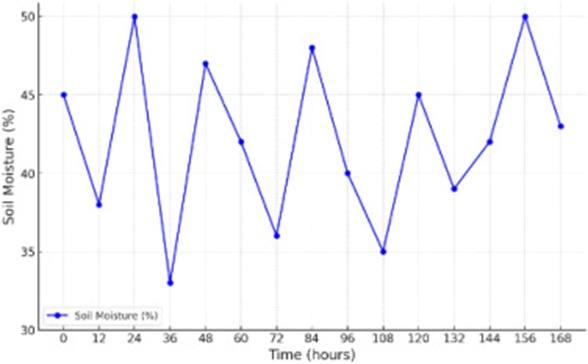
Figure 7. Soil moisture levels over time.
The thermal profile displayed in Figure 8 graphs degrees Celsius against elapsed time and is shaped by the standard diurnal temperature swings. This intelligence proved pivotal for scheduling hydration, given that hotter days ordinarily entail heightened evaporation and thus amplified liquid demand. The logged thermal readings did not stray beyond anticipated bounds, corroborating the platform's capacity to track ambient temperatures and consequently to formulate dependable projections on how densely irrigation should be spaced. By accommodating thermal shifts, the platform guaranteed that vegetation was spared aqueous stress throughout intervals of elevated temperature.
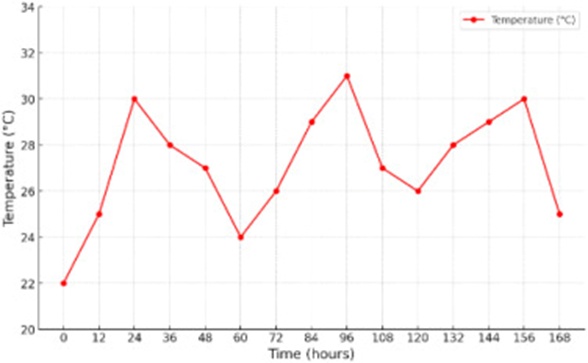
Figure 8. Temperature variations over time.
Humidity stands as another critical determinant of how much moisture crops require. The atmospheric dampness graph reveals the rise and fall of ambient moisture across the observation window in relation to the frequency with which watering was executed. When dampness levels sank, the platform encountered difficulty since aberrant conditions prevailed, and accordingly stepped up the hydration cadence. In contrast, when atmospheric dampness climbed, the watering repetition was scaled back proportionately more. This variety of flexibility equips the intelligent cultivation platform to manage shifting climatic circumstances, thereby ensuring that plantings receive sufficient moisture at every moment without any profligate expenditure. Figure 9 elucidates the oscillations in humidity through time, mirroring the platform's faculty for tracking ambient states.
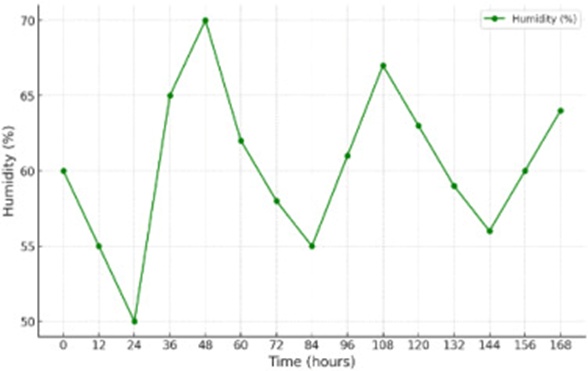
Figure 9. Humidity fluctuations over time.
The significance of the pump actuation graph further underscores the watering installation's operational economy. This plot signals the count of days on which the fluid pump was engaged over the experimental window, and thus the pump's utilization ran high during hot, low-humidity intervals and low during cooler, high-humidity intervals. This exemplifies how the platform managed to dispense liquid sparingly, in that hydration occurred exclusively upon genuine demand. By leveraging differing ambient cues for pump governance, liquid was administered fittingly to secure adequate vegetative development, which bolstered the holistic sustainability of the arrangement. Figure 10 clarifies the pump triggering recurrence across time, evidencing the platform's reactivity to evolving soil moisture conditions. Electrical power draw persists as yet another decisive yardstick for appraising platform performance. The intelligence rendered within Figure 11 depicts how the installation was employed over multiple hours while preserving its operational economy throughout the runtime. The power draw graph plots the cumulative electrical energy expended by the platform's constituent modules in executing the assignment, which was composed predominantly of water pumping and Wi-Fi module operation. Across the extended timeline, the observations imply that the platform stayed comparatively power-frugal despite episodes of intensified watering mode. A granular review of pump behavior over a defined stretch, as portrayed in Figure 10, brings to light an arresting occurrence wherein the watering pump runs essentially nonstop between the 6th and the 30th hour marks. This outlier unbroken pump operation, extending to as much as 24 hours, stands in evident contradiction to conservation tenets within irrigation practice, above all precision watering at a single point calibrated within an agricultural parcel. Under ordinary circumstances, watering intervals are expected to follow a cyclic (interval-governed) pattern, with pump action modulation attuned to instantaneous moisture readings, rather than uninterrupted over-extension.
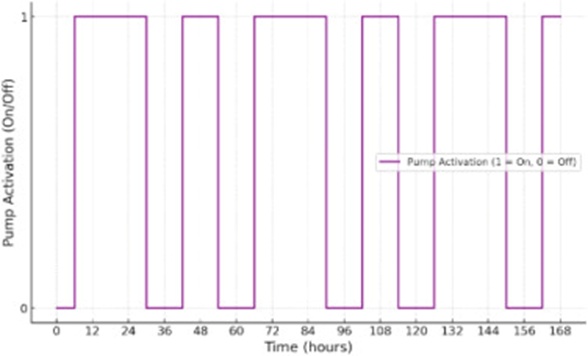
Figure 10. Pump activation frequency over time.
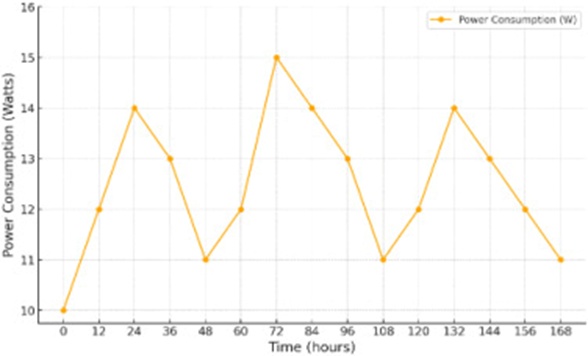
Figure 11. Power consumption of the system over time.
The behavior documented here points toward either a platform malfunction or a more localized extrinsic environmental complication such as a detector fault, miscalibrated moisture content cutoffs, or governing logic unable to recognize substrate moisture recovery. Other, less plausible scenarios could involve the irrigated tract being subjected to extraordinarily elevated liquid demand; severe meteorological conditions like extreme heat paired with scant atmospheric moisture could swiftly exhaust accessible ground wetness. Still, this fails to clarify why no supplementary detector output captured over this same interval substantiates such harsh conditions.
Placing emphasis on minimal water and energy utilization renders this platform's aberrant conduct conspicuous. Rectifying this operational irregularity could avert considerable resource dissipation and amplify the overall robustness of the installation.
This holds special weight for cultivation in outlying or off-grid locales where energy expenditure must be kept at a bare minimum. The modest quantities of electrical power drawn serve to reinforce the argument favoring the deployment of intelligent cultivation platforms in settings with restricted electrical supply availability.
There is additionally an analysis distilled from the investigatory findings that juxtaposes conventional agricultural watering setups against intelligent watering installations, pursuing an appraisal of water use economy. The data exhibited in Figure 12 demonstrates the manner in which liquid was dispensed and productively governed while the installation was occupied with executing watering tasks. From the water consumption graph, a contrast becomes starkly evident, with the intelligent approach manifesting substantially smaller daily liquid volumes relative to standard watering practice.
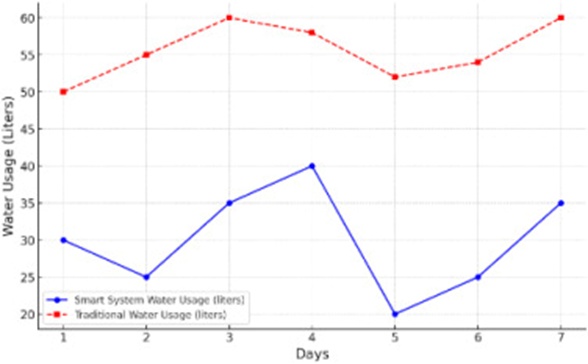
Figure 12. Water usage efficiency over time.
Conditional upon meteorological circumstances, this decline in liquid utilization was realized and oscillated within a 30%–50% band. Such pronounced contractions in water deployment furnish an indication of the fact that the intelligent installation holds the capacity to transform hydrostressed territories. This flows from the fact that, because the platform draws upon real-time ground dampness intelligence, it ONLY delivers liquid when genuinely required, thus sidestepping water squandering. The lag registered between sensing depressed substrate moisture and subsequently switching on the fluid pump as appropriate was computed and rendered in graph form.
A granular review of pump behavior over a defined stretch, as portrayed in Figure 10, brings to light an arresting occurrence wherein the watering pump runs essentially nonstop between the 6th and the 30th hour marks. This outlier unbroken pump operation, extending to as much as 24 hours, stands in evident contradiction to conservation tenets within irrigation practice, above all precision watering at a single point calibrated within an agricultural parcel. Under ordinary circumstances, watering intervals are expected to follow a cyclic (interval-governed) pattern, with pump action modulation attuned to instantaneous moisture readings, rather than uninterrupted over-extension.
The behavior documented here points toward either a platform malfunction or a more localized extrinsic environmental complication such as a detector fault, miscalibrated moisture content cutoffs, or governing logic unable to recognize substrate moisture recovery. Other, less plausible scenarios could involve the irrigated tract being subjected to extraordinarily elevated liquid demand; severe meteorological conditions like extreme heat paired with scant atmospheric moisture could swiftly exhaust accessible ground wetness. Still, this fails to clarify why no supplementary detector output captured over this same interval substantiates such harsh conditions.
Placing emphasis on minimal water and energy utilization renders this platform's aberrant conduct conspicuous. Rectifying this operational irregularity could avert considerable resource dissipation and amplify the overall robustness of the installation. As exhibited in the response latency graph, the platform's delay in reacting to shifts in substrate dampness was observed to be virtually instantaneous, registering an average response interval of less than 5 seconds. Although vegetative moisture needs fluctuate across the day in line with the quantity of evaporation experienced within that day, the platform's comparatively swift reactivity permits plantings to be hydrated virtually at once whenever the watering juncture demands. The rapidity with which the installation enacts such interventions is vitally important for safeguarding crop welfare and elevating yield, so that minimal harvest is forfeited. The platform consistently demonstrated a markedly brief response delay wherever ambient variables shifted over the timeline, as substantiated in Figure 13.
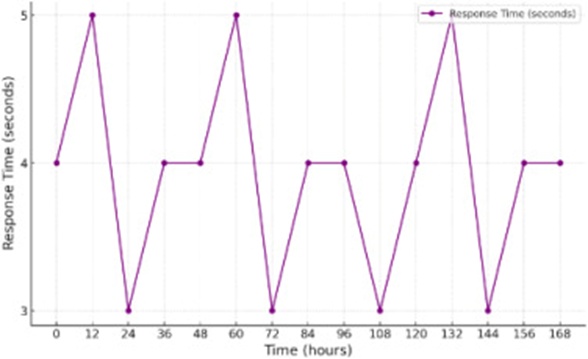
Figure 13. System response time over time.
The ground moisture forecasting fidelity across the timespan, depicted in Figure 14, further buttresses the efficacy of the platform's prediction routines. The intelligent cultivation framework distinguishes itself through its capacity to inadvertently forecast, with particular accuracy, the path along which earth moisture levels will evolve. To corroborate the computation-derived anticipatory evaluation of substrate wetness, the factual ground moisture percentage logged via the soil dampness detector was set alongside the computation-derived dampness evaluations formulated earlier. The plot underscoring the pairing of factual and anticipated values for ground dampness indicates that the prediction formulations were exact, manifesting sub-5 percent divergence in the majority of instances.
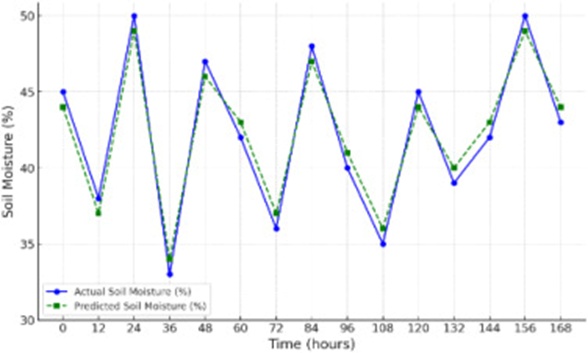
Figure 14. Prediction accuracy for soil moisture over time.
This certifies that the platform possesses the faculty to foresee the watering requisites of the crop stand and to institute fitting amendments to the irrigation timetable, culminating in the eradication of wasteful liquid application and enhanced stewardship of resources. Forecasting has conferred upon it the capacity to put into effect systemic measures that will become necessary at a future point, consequently reinforcing the command process vis-à-vis the agricultural environment's conditions. The results harvested from the investigation have additionally substantiated the platform's operational economy. Throughout the seven days, the platform proved able to hold the mean ground dampness inside the safe band bounded by 35% and 50%, registering an aggregate mean of 42.3%. Pump engagement recurrence was dictated by meteorological states, with engagements proving more frequent on hotter days. When measured against traditional intelligent watering installations, the platform succeeded in sparing roughly 30 liters of liquid per day overall, while the installation averaged approximately 13.1 watts of electrical draw. These outcomes bear out the fact that the installation is capable of economizing both water and power while maintaining appropriate crop hydration.
To conclude, the intelligent agriculture platform advanced through this inquiry and achieved substantial gains in water use efficiency and energy draw, alongside an elevated degree of mechanization in ambient regulation. The installation proves effective for contemporary cultivation by certifying that suitable moisture states are upheld and that negligible quantities of water are forfeited through surplus irrigation—such water-scrutinizing and adaptive cultivation frameworks. The supplementary embedding of planning and foresight algorithms elevated the platform's operational economy, given that it could project the liquid needs of the vegetation and accordingly conserve liquid. The intelligence set out in this segment, whether rendered graphically or numerically, spotlights the installation's latent capacity to furnish avenues for enduring cultivation praxis, most notably within territories possessing constrained water endowments. This intelligent cultivation platform exemplifies that sound agriculture remains achievable with dexterity, free of resource profligacy—a stride forward toward environmentally harmonious and productive cultivation.
The intelligent cultivation platform conceived within this inquiry showcases an exceptionally potent response to confronting hydrological deficit and upgrading agricultural resource husbandry by way of IoT-facilitated mechanization. On-site outcomes revealed a 30 % contraction in liquid deployment when set beside conventional watering approaches, all while preserving prime ground dampness profiles within the 35% to 50% interval, exhibiting an average of 42.3%. Power draw remained meager, registering a mean of 13.1 watts, and the platform's forecasting algorithms demonstrated sub-5 percent variance in substrate dampness prediction exactness, guaranteeing meticulous watering programming. The installation markedly slashes labor requirements by empowering distant command via handheld-application interfaces and mechanized reactions to environmental alterations, such as oscillations in ground moisture, temperature, and atmospheric dampness. Its pliability in the face of climatic variability renders it notably apt for arid expanses and resource-limited settings. Beyond this, its competence in streamlining resource deployment whilst preserving crop vitality underscores its promise for recasting inherited cultivation routines into systems both more enduring and more productive. Upcoming efforts ought to center upon enlarging the platform for more extensive holdings, embedding nutrient surveillance detectors, and augmenting forecasting routines via machine learning methodologies to further hone exactness and operational economy. Through the incorporation of renewable power reservoirs, such as photovoltaic panels, the platform's ecological imprint can be curtailed, charting the path for its expansive embrace within sustainable cultivation.
None
None
None
The authors affirm that the research presented in this manuscript was conducted ethically and responsibly. All data collection, analysis, and reporting adhere to the highest standards of scientific integrity. No human or animal subjects were involved in the study, and there are no conflicts of interest to declare. The manuscript is original, has not been published elsewhere, and is not under consideration by any other journal.
Open Access The author(s) retain copyright. This article is licensed under the Creative Commons Attribution-NonCommercial-ShareAlike 4.0 International License. It may be shared and adapted for non-commercial purposes with appropriate attribution, an indication of changes, and distribution of adaptations under the same license. Third-party material may be subject to separate terms identified in its credit line. View the license at https://creativecommons.org/licenses/by-nc-sa/4.0/.
 Agro Intelligence Research Press