Intelligent agriculture is increasingly shaped by automation, data platforms, decision-support tools, robotics, sensors, and algorithmic advisory systems. These technologies are promoted as ways to improve productivity, precision, efficiency, and sustainability in farming. Yet they also alter how agricultural decisions are made, who participates in those decisions, and whose knowledge is treated as authoritative. The central problem addressed in this article is that intelligent agriculture is often presented as a technical improvement while its implications for farmer agency remain contested. Farmer autonomy, judgement, dependency, skill, and voice can be strengthened by digital tools, but they can also be narrowed when systems become opaque, prescriptive, proprietary, or difficult to contest. This tension makes farmer agency a core question for responsible intelligent agriculture. This critical interpretive review examines how automation, platformization, and participatory design reshape farmer agency. It interprets agency not as an individual trait that farmers either possess or lose, but as a socio-technical capacity formed through relations among farmers, machines, platforms, data infrastructures, advisors, markets, and governance arrangements. The review therefore focuses on how agency is enabled, constrained, redistributed, and contested. The article examines key concepts, tensions, and assumptions in the reviewed literature. It does not report new primary empirical data, but critically synthesises existing scholarship to clarify how intelligent agriculture reorganises decision-making, knowledge, dependency, participation, power, and accountability. Particular attention is given to tensions between efficiency and autonomy, automation and situated judgement, platform convenience and dependency, data-driven advice and local knowledge, and participation and tokenism. The review argues that farmer agency is redistributed through socio-technical arrangements rather than simply preserved or removed by technology adoption. Responsible intelligent agriculture requires accountable automation, fair platform governance, participatory design, recognition of local knowledge, and institutional mechanisms that give farmers meaningful voice. Farmer agency should therefore be treated as a condition of technological legitimacy, not as an afterthought to innovation.
Intelligent agriculture has become a defining expression of digital transformation in farming, bringing together sensors, robotics, data analytics, farm management software, smart machinery, and algorithmic advisory systems. Critical social-science scholarship shows that these technologies cannot be understood only as technical instruments, because they reorganise knowledge, institutions, labour, and relations among agricultural actors [1]. Big-data architectures in smart farming further demonstrate that farm decisions are increasingly mediated by connected devices, analytics platforms, and data infrastructures that extend decision-making beyond the individual farm [2].
The promise of intelligent agriculture is usually framed through productivity, precision, efficiency, sustainability, and risk management. However, responsible innovation scholarship argues that smart farming also raises questions about inclusion, anticipation, reflexivity, and governance, because technological pathways shape who participates in agricultural futures [3]. A political reading of digital agricultural technologies shows that ownership, surveillance, labour, inequality, and control are not secondary concerns but central dimensions of technological change [4].
The central concern of this article is farmer agency: the capacity of farmers to interpret conditions, exercise judgement, make decisions, act on situated knowledge, and influence the systems that shape their work. In intelligent agriculture, this agency may be enabled when farmers gain better information, improved timing, or reduced burdens, yet it may also be constrained when decisions are embedded in proprietary analytics, automated prescriptions, or platform-mediated service relations [1, 2]. The question is therefore not whether intelligent agriculture is good or bad for farmers in general, but how agency is redistributed through particular socio-technical arrangements.
This critical interpretive review examines automation, platformization, and participatory design as three linked arenas in which farmer agency is reshaped. It first frames farmer agency as a socio-technical problem, then analyses automation as decision redistribution, platformization as dependency and governance, and participatory design as a contested route for recognising local knowledge. The later sections synthesise power, control, farmer voice, and future research priorities in order to show why farmer agency must be treated as a central condition of responsible intelligent agriculture [3, 4]. Figure 1 presents the “Farmer Agency Redistribution Pathway in Intelligent Agriculture,” illustrating how automation, platformization, advisory systems, data infrastructures, and participatory design redistribute farmer agency across socio-technical relations.
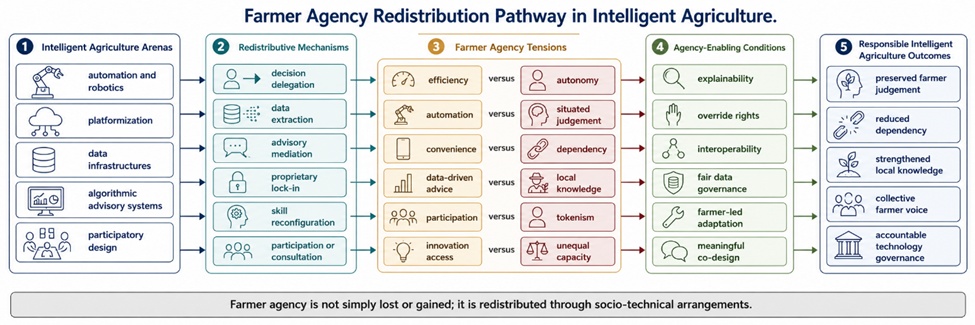
Figure 1. Farmer Agency Redistribution Pathway in Intelligent Agriculture
Farmer agency refers to more than the freedom to adopt or reject a technology. It includes the capacity to interpret agronomic conditions, assess risk, draw on local knowledge, negotiate market and ecological constraints, and influence the tools and institutions that structure farm work. Uneven engagement with digital farming shows that this capacity is not distributed equally, because innovation agendas may privilege farmers and organisations already positioned to benefit from data-intensive systems [5]. Perceptions of big data in the grains sector similarly indicate that farmers ask whether digital agriculture is designed for a broad farming public or mainly for larger and better-resourced operations [6].
Agency is socio-technical because it emerges through relations among farmers, machines, data, advisors, platforms, institutions, markets, and environments. Trust is especially important in these relations, since farmers may be reluctant to treat digital tools as legitimate extensions of decision-making when data uses, benefits, and responsibilities are unclear [7]. Adoption should therefore be interpreted not as passive acceptance, but as an active and situated negotiation in which farmers test whether precision technologies fit their knowledge, routines, material conditions, and practical judgement [8].
This interpretation challenges the common assumption that greater technological capability automatically expands farmer autonomy. Intelligent systems can give farmers more timely information, but they can also narrow the range of acceptable decisions when recommendations are difficult to understand, override, or adapt. The agency question is therefore inseparable from design, access, explainability, ownership, interoperability, accountability, and the social relations through which digital tools become authoritative [5, 7].
Treating farmer agency as a socio-technical problem also changes how success should be evaluated. A technology that increases efficiency may still weaken agency if it reduces farmers to data suppliers, locks them into proprietary systems, or dismisses local knowledge as noise. Conversely, digital tools can strengthen agency when they support interpretation, preserve room for judgement, and make farmers co-authors of technological change rather than mere users of finished systems [6, 8].
Automation in intelligent agriculture includes robotics, autonomous machinery, sensor-based control, precision spraying, automated irrigation, predictive analytics, and algorithmic decision support. The economics of robots and automation in field crop production show that automation is tied to capital investment, labour substitution, operational scale, and technical feasibility, which means it redistributes action as well as cost [9]. Ethical and policy analysis of agricultural robots further shows that autonomous systems raise questions about control, responsibility, safety, and the future organisation of agricultural work [10].
Automation should therefore be interpreted as decision redistribution rather than simple labour replacement. Apple producers preparing for AI robotics illustrate that farmers reorganise practices, expectations, and production systems even before autonomous technologies become fully embedded on farms [11]. The prospect of autonomous AgTech also changes the social meaning of agricultural skill, because expertise may be shifted from embodied judgement in the field toward managing, interpreting, or supervising technical systems [12].
This redistribution can support farmer agency when automated systems reduce repetitive burdens, improve timing, detect patterns that are difficult to observe manually, or provide farmers with additional decision resources. Yet the same redistribution can constrain agency when algorithms become prescriptive, machine operations are difficult to interrupt, or technical systems are poorly adapted to local soils, crops, labour arrangements, and weather variability. In this sense, the critical issue is not whether machines act, but whether farmers retain meaningful interpretive, supervisory, and contestatory roles in automated decision environments [9, 12].
Automation also raises accountability questions because decisions may be distributed across farmers, engineers, software providers, machinery manufacturers, advisors, and platform operators. When a robotic sprayer, predictive model, or automated irrigation system produces harmful outcomes, responsibility cannot be located only in the farmer who used the system. Table 1 summarises how automation redistributes agricultural decision-making across farmers, algorithms, machines, advisors, and platform providers. This redistribution makes accountable design and clear override pathways essential to farmer agency [10, 11].
Table 1. Automation and Decision Redistribution in Intelligent Agriculture: Decision Domains, Human Roles, Machine Functions, Agency Risks, and Accountability Questions
Decision domain | Farmer role | Algorithmic or machine function | Advisor or provider role | Agency risk | Accountability question |
Crop monitoring | Interprets field conditions and validates sensor outputs | Detects patterns, anomalies, stress signals, or growth variation | Provides analytics dashboards or monitoring services | Farmer observation may be displaced by remote metrics | Who is responsible when sensor interpretation conflicts with field experience? |
Precision spraying | Sets priorities, evaluates risk, and decides acceptable intervention | Identifies target zones and automates application | Supplies machinery, software, prescriptions, or input recommendations | Prescriptive application may reduce farmer discretion | Who can explain and contest an automated treatment recommendation? |
Automated irrigation | Balances crop demand, water access, costs, and local constraints | Uses sensors and models to trigger irrigation decisions | Maintains systems, models thresholds, or provides cloud analytics | Local water knowledge may be subordinated to model thresholds | Who is accountable when automated thresholds produce crop or resource harm? |
Robotic harvesting | Organises labour, timing, crop handling, and quality expectations | Performs detection, movement, picking, or sorting tasks | Designs robot capability and service support | Skill may be redefined around machine readiness rather than crop judgement | Who decides whether the crop or farm system must adapt to the robot? |
Predictive advisory systems | Assesses recommendations against experience, risk tolerance, and farm goals | Generates forecasts, alerts, rankings, or prescriptions | Provides decision-support interface and advisory interpretation | Recommendations may become difficult to challenge | What mechanisms allow farmers to override or question the system? |
Farm machinery automation | Supervises operations and manages exceptions | Automates steering, task execution, or field operations | Controls software updates, repair access, and technical standards | Farmer control may depend on proprietary service arrangements | Who controls access to repair, adjustment, and operational data? |
Livestock monitoring | Interprets animal behaviour, welfare, and production context | Flags health, movement, feeding, or productivity patterns | Provides platform services and performance analytics | Animal care may be reduced to measurable indicators | How are farmer judgement and animal welfare knowledge included in automated alerts? |
Whole-farm optimisation | Balances economic, ecological, labour, and family objectives | Integrates data to recommend resource allocation or management changes | Structures platform analytics, subscriptions, and decision pathways | Farm goals may be narrowed to optimisation metrics | Who defines the objectives that the system optimises? |
Platformization in intelligent agriculture refers to the growing organisation of farm work through farm management platforms, cloud analytics, proprietary software, subscription services, input-provider systems, digital advisory tools, and integrated data ecosystems. In these arrangements, farmer agency is shaped not only by whether a farmer uses a digital tool, but by who defines data rights, controls access, sets standards, and determines how farm data can be reused. Legal analysis of farmers’ reluctance to share data shows that opacity around data access, ownership, and downstream use can make digital systems difficult to trust as instruments of autonomous decision-making [13].
Dependency also emerges through perceived benefit distribution. Farmers’ willingness to share data is shaped by whether they believe the value generated from farm data will return to them, remain with service providers, or strengthen actors already positioned within agribusiness data systems [14]. This means that platform convenience can become an agency risk when participation requires farmers to surrender data without meaningful influence over analytics, pricing, interoperability, or future use.
A critical interpretation of platformization must therefore move beyond the language of connectivity and service integration. Precision agriculture may expand data extraction beyond the field, creating new forms of accumulation in which the informational value of farming becomes available to firms, platforms, and investors beyond the farm gate [15]. In this sense, platforms do not merely support decisions; they can reorganise who benefits from agricultural knowledge and who controls the infrastructures through which decisions are made.
Platformization becomes especially consequential when agricultural digital services are organised through concentrated platform ecosystems. Oligopolistic dynamics in agricultural platformization show that strategic control can accumulate around large agribusiness and technology actors that define standards, services, interfaces, and data flows [16]. Farmer agency is constrained when platforms become unavoidable gateways to advice, inputs, analytics, machinery functions, repair access, or market participation.
Participatory design is often presented as a response to top-down intelligent agriculture because it promises to bring farmers, advisors, and technology developers into more reciprocal relations. Work on digital innovation with advisors in smart farming shows that intermediaries can translate digital tools into farm-specific practice, making participation a practical process of interpretation rather than a single consultation event [17]. This matters for farmer agency because farmers often depend on advisory relationships to connect data outputs with local agronomic judgement.
Local knowledge is central to intelligent agriculture because farming decisions are shaped by soil, weather, crop history, labour availability, market risk, cultural practice, animal behaviour, and lived experience. Digitalisation changes how agricultural knowledge is produced, validated, circulated, and trusted, which means that local knowledge can either be amplified through better tools or marginalised by abstracted data systems [18]. The agency question is whether intelligent systems treat farmer knowledge as an input to be extracted or as a form of situated expertise that can shape design and governance.
Agricultural knowledge and advice networks are also being redistributed through digitalisation. Reviews of digital agricultural knowledge systems show that authority may shift among farmers, advisors, platforms, analytics providers, and institutional actors as advisory services become data-mediated [19]. Farmer agency is strengthened when this redistribution broadens interpretive capacity, but weakened when advisory authority is displaced into proprietary recommendations that farmers cannot interrogate.
Participation should therefore be judged by its depth, timing, and consequences rather than by the mere presence of farmers in design activities. Evidence from digital livestock technology adoption shows that end-user participation depends on expectations, performance, relationships, and continuing support, not only on initial design inclusion [20]. Table 2 compares participatory design approaches for strengthening farmer agency and integrating local knowledge into intelligent agriculture. The central risk is tokenism: farmers may be invited to validate technologies without gaining influence over problem definition, technical choices, data governance, or accountability [17-20].
Table 2. Participatory Design and Local Knowledge in Intelligent Agriculture: Farmer Roles, Knowledge Contributions, Design Mechanisms, Agency Benefits, and Risks of Tokenism
Participatory approach | Farmer role | Local knowledge contribution | Design mechanism | Agency benefit | Risk of tokenism |
Early problem framing | Co-defines the problem before technical solutions are selected | Identifies practical constraints, seasonal pressures, labour realities, and farm priorities | Workshops, interviews, farm walks, participatory diagnosis | Aligns technology with farmer-defined needs | Farmers may be asked only to confirm developer assumptions |
Co-design of tools | Collaborates on interface, workflow, alerts, and decision pathways | Explains how decisions are actually made under uncertainty | Iterative prototypes, usability sessions, field trials | Preserves room for judgement and override | Design input may be limited to cosmetic interface changes |
Living lab experimentation | Tests tools in real farming contexts with multiple actors | Reveals ecological variability, market pressures, and social constraints | On-farm experimentation, multi-actor learning, reflexive evaluation | Makes design responsive to context | Living labs may privilege already-connected farmers |
Advisor-mediated participation | Works with advisors to interpret and adapt digital tools | Combines experiential knowledge with advisory expertise | Advisory networks, demonstration farms, peer learning | Strengthens translation between data and practice | Advisor priorities may replace farmer voice |
Participatory data governance | Helps define data access, sharing, benefit, and accountability rules | Identifies what data is sensitive, valuable, or risky in practice | Data agreements, governance forums, cooperative models | Expands farmer control over data relations | Governance may remain symbolic if platforms retain control |
Participatory technology assessment | Evaluates social, ethical, labour, and ecological implications | Identifies unintended consequences before widespread adoption | Scenario building, deliberation, impact assessment | Makes contestation part of innovation | Assessment may occur too late to change technical direction |
Farmer-led adaptation | Modifies or repurposes tools for local conditions | Applies situated judgement to adjust thresholds, practices, or workflows | Open configuration, modular design, repair access | Protects autonomy and practical experimentation | Proprietary systems may block adaptation |
Collective participation | Organises farmers as groups rather than isolated users | Builds shared priorities and bargaining power | Cooperatives, producer organisations, farmer panels | Strengthens voice in markets and governance | Participation may exclude marginalised or less-resourced producers |
Power in intelligent agriculture is often hidden beneath the language of innovation. Discourses of precision agriculture can present technological change as universally beneficial while leaving unclear who is imagined as the primary beneficiary and whose priorities define progress [21]. A farmer-agency perspective therefore asks whether innovation narratives recognise farmers as decision-makers and co-governors, or whether they position farmers mainly as adopters of preconfigured systems.
Control is also exercised through the reorganisation of labour. Digital agriculture may promise efficiency while changing work rhythms, surveillance possibilities, skill requirements, and the social sustainability of farm labour [22]. When intelligent systems monitor productivity, automate tasks, or translate worker activity into performance data, agency questions extend beyond farm owners to employees, contractors, seasonal workers, and other people whose work becomes digitally visible.
Farmer voice becomes especially important in data governance. Stakeholder perspectives on agricultural data sharing show that governance debates involve contested views about common good, value, control, and responsibility [23]. These debates indicate that farmers should not be treated merely as data producers or platform users, because data governance shapes who can negotiate value, refuse harmful arrangements, and contest decisions made through digital infrastructures.
The politics of farmer voice also varies across farm scale, tenure, region, gender, digital access, and bargaining position. Innovation discourses may foreground technologically ready farms, while labour and data-governance debates reveal that less visible actors can bear risks without gaining authority [21-23]. Farmer agency therefore requires institutional mechanisms for transparency, contestation, negotiation, collective representation, and accountability across diverse agricultural contexts.
The central interpretation of this review is that intelligent agriculture neither simply empowers nor disempowers farmers. Instead, it redistributes agency across automation, platforms, advisory systems, design processes, and governance arrangements. Agriculture 4.0 should therefore be assessed through its effects on people, production, and the planet together, rather than through productivity metrics alone [24]. A socio-cyber-physical reading further shows that agency is distributed across social, cyber, and physical relations, not located only in individual farmers [25].
This redistribution produces a set of recurring tensions. Responsible digitalisation frameworks suggest that digital tools may enable better coordination and accountability while also creating new dependencies, exclusions, and trade-offs across contexts [26]. The interpretive task is to ask where agency is being enabled, where it is being depleted, and where it is being redirected toward actors such as platforms, machines, advisors, or data-service providers.
The reviewed literature also contains competing narratives rather than a single settled account of digital agriculture. Social and behavioural research on digital agriculture shows that narratives of innovation, adoption, efficiency, inclusion, risk, and governance coexist and often pull in different directions [27]. This is why a critical interpretive synthesis must examine meanings, assumptions, and power relations rather than simply counting whether technologies are adopted.
Figure 2 presents the “Agency-Centred Governance Framework for Responsible Intelligent Agriculture,” showing the governance and design conditions required to protect farmer autonomy, local knowledge, accountability, and collective voice.
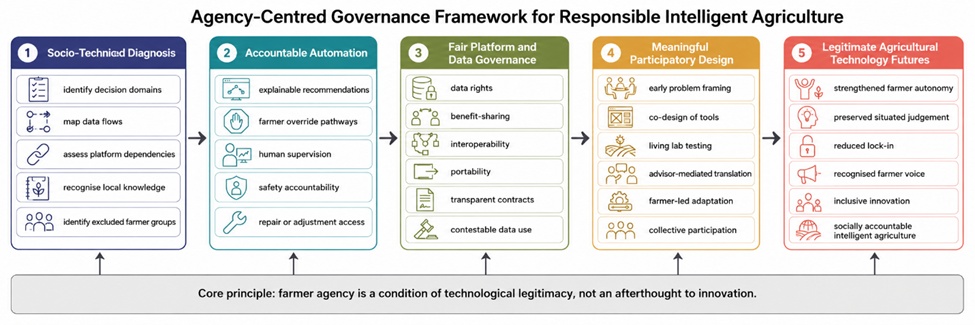
Figure 2. Agency-Centred Governance Framework for Responsible Intelligent Agriculture
Farmer agency can be protected when intelligent systems are explainable, contestable, locally adaptable, interoperable, and governed with meaningful farmer participation. Automation requires clear override rights, platformization requires fair data governance, and participatory design requires influence over problem framing rather than symbolic consultation [24-27]. Table 3 presents the critical interpretive synthesis of farmer agency across automation, platformization, participatory design, power, and voice. The synthesis shows that agency is strongest when farmers can interpret, negotiate, modify, refuse, and collectively govern intelligent agricultural systems.
Table 3. Critical Interpretive Synthesis of Farmer Agency in Intelligent Agriculture: Automation, Platformization, Participation, Power Relations, and Future Research Priorities
Dimension | Agency-enabling possibility | Agency-constraining risk | Central interpretive tension | Governance or design response | Future research priority |
Automation | Reduces burdens and improves timing, monitoring, and operational precision | Makes decisions opaque, prescriptive, or difficult to override | Efficiency versus autonomy | Explainable automation, human override, clear accountability | Study how farmers supervise, contest, and adapt automated systems |
Robotics | Addresses labour bottlenecks and enables new forms of farm management | Reorganises skills, labour, and farm systems around machine requirements | Automation versus situated judgement | Inclusive robotics design and practical repair or adjustment access | Examine who is included in robotics design and whose labour is displaced |
Decision support | Provides forecasts, alerts, and integrated information | Turns advisory outputs into algorithmic authority | Data-driven optimisation versus farmer judgement | Transparent models and farmer-controlled thresholds | Analyse farmer-centred explainability and contestability |
Platformization | Integrates services, data, analytics, markets, and advice | Creates lock-in, dependency, and asymmetric control | Convenience versus dependency | Interoperability, fair contracts, data rights, portability | Investigate platform power, vendor lock-in, and farmer bargaining capacity |
Data governance | Enables shared learning and coordinated decision-making | Extracts value from farmers without fair return or voice | Data value versus data control | Farmer-led data governance and benefit-sharing | Connect data justice with agricultural platform governance |
Advisory relations | Helps translate digital outputs into local practice | Displaces trusted advisors or narrows advice to platform recommendations | Expert advice versus proprietary prescription | Hybrid advisory models and accountable digital services | Study how advisory authority changes under digitalisation |
Participatory design | Incorporates farmer knowledge, constraints, and priorities | Becomes tokenistic when farmers cannot shape decisions | Participation versus consultation | Co-design from problem framing through post-adoption support | Compare participatory methods across farm types and regions |
Local knowledge | Grounds digital tools in soils, weather, labour, culture, and experience | Is treated as anecdotal or inferior to data analytics | Local knowledge versus abstract optimisation | Configurable tools and recognition of situated expertise | Examine how local knowledge can be encoded without being extracted |
Farmer voice | Builds legitimacy, accountability, and collective influence | Is weakened when farmers are isolated users of closed systems | Voice versus user compliance | Collective governance forums and transparent accountability routes | Study collective farmer agency, refusal, and negotiation |
Social justice | Opens opportunities for inclusive innovation | Deepens digital divides across scale, gender, tenure, and region | Innovation access versus unequal capacity | Inclusion requirements and public-interest governance | Research smallholder, gendered, tenant, and digitally excluded experiences |
Future research on farmer agency should examine how intelligent agriculture changes the practical conditions of decision-making over time. Priority research questions for digital agriculture already highlight the need to investigate value, governance, impacts, collaboration, and the social organisation of innovation [28]. Building from this agenda, farmer-centred research should examine explainability, override mechanisms, refusal, repair access, interoperability, and the long-term consequences of delegating decisions to automated and platform-mediated systems.
Robotics and automation require particular attention to inclusion. Research on agricultural robotics development shows that participation is shaped by who is included, how inclusion is organised, and why particular actors become visible in development processes [29]. Future studies should therefore investigate not only whether farmers accept robots, but whether small farms, women farmers, tenant farmers, workers, advisors, and digitally excluded producers can shape robotic design, deployment, and governance.
Platform governance should also be connected more directly with data justice and collective farmer voice. Ground-up approaches to agricultural data governance show that agri-food movements can reframe data relations around justice, collective agency, and accountability rather than only efficiency or innovation [30]. Future research should bring agricultural engineering, rural sociology, human-computer interaction, critical data studies, responsible innovation, and food-system governance into deeper conversation about farmer autonomy, local knowledge, platform dependency, labour, and democratic control.
This critical interpretive review has argued that farmer agency in intelligent agriculture is not simply preserved or lost through technology adoption. It is redistributed through automation, platformization, advisory relations, participatory design, data governance, and institutional power. The key question is therefore not whether intelligent agriculture should proceed, but under what conditions it can strengthen farmers’ capacity to interpret, decide, negotiate, adapt, and contest.
Farmer agency should not be treated as a secondary social issue that follows technical innovation. It is a core condition for responsible intelligent agriculture because technologies that reshape decisions also reshape autonomy, knowledge, labour, dependency, and voice. Systems that improve efficiency while narrowing farmer control risk producing technically sophisticated but socially fragile agricultural futures.
A more responsible path for intelligent agriculture requires accountable automation, fair platform governance, meaningful participatory design, and stronger recognition of local knowledge. It also requires institutional arrangements that allow farmers to question recommendations, negotiate data relations, influence design choices, and participate in governance. Intelligent agriculture will be more legitimate and more durable when it strengthens farmer autonomy, limits dependency, respects situated knowledge, and gives farmers a meaningful voice in technological futures.
None
None
None
None
Open Access The author(s) retain copyright. This article is licensed under the Creative Commons Attribution-NonCommercial-ShareAlike 4.0 International License. It may be shared and adapted for non-commercial purposes with appropriate attribution, an indication of changes, and distribution of adaptations under the same license. Third-party material may be subject to separate terms identified in its credit line. View the license at https://creativecommons.org/licenses/by-nc-sa/4.0/.
 Agro Intelligence Research Press